
Washington: reading the National Mall
Five chapters in Washington connect government, documentary evidence and the changing forms of public remembrance.
Begin the visual journeyPlan a real visit to Washington National MallExplore 9 reviewed views along the routeGuided visual journey
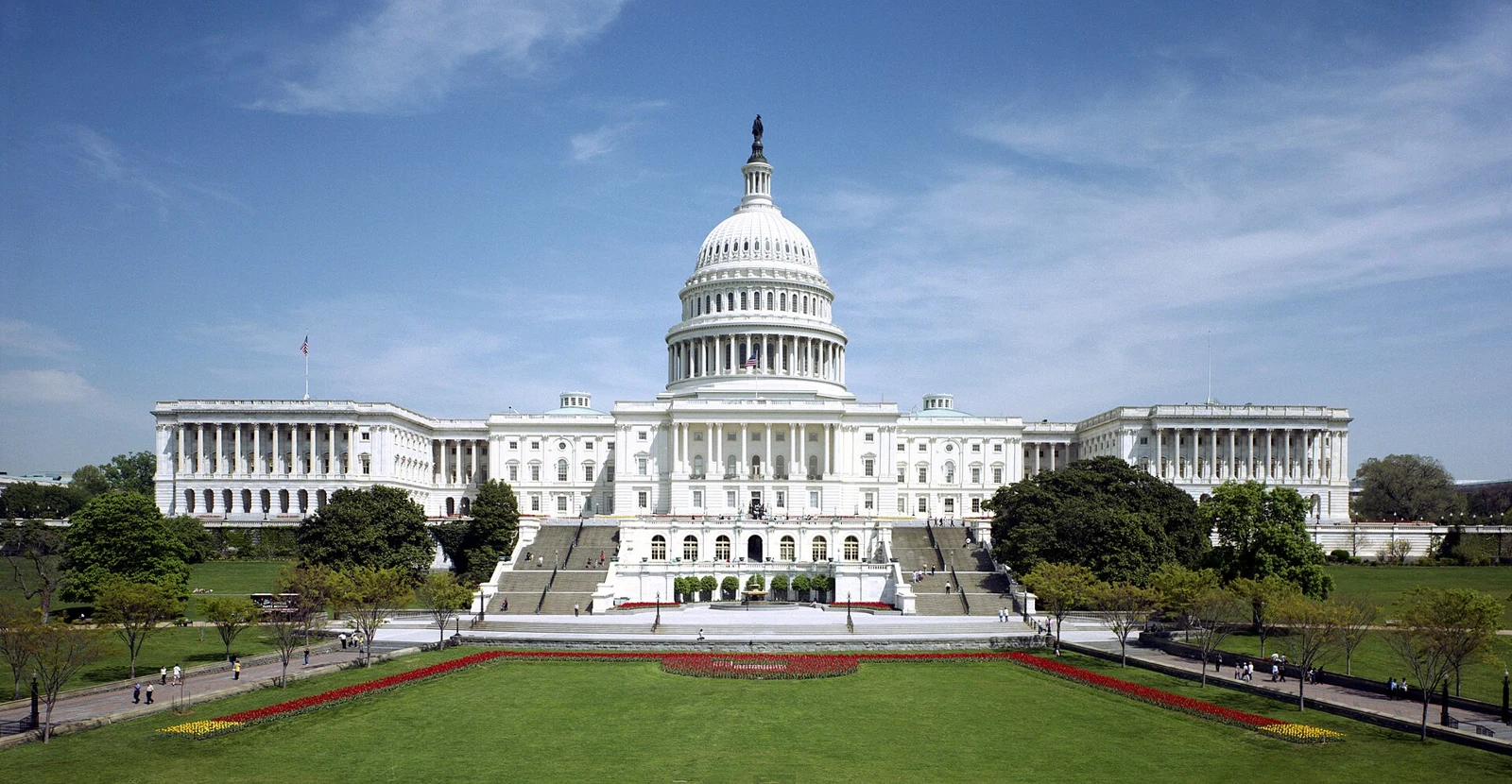
United States Capitol west facade above lawns and terraces · Architect of the Capitol · Public domain · Resized and converted to WebP
Reading mode
Place stories to read at your own pace
Compare independent photographs from different dates and viewpoints.
Chapter 1
Read the Capitol’s changing silhouette
Begin at the Capitol by separating a familiar silhouette into its parts: the dome, the long wings and the ground that gives the building room to appear monumental. The dome is not simply a stone crown from the republic’s beginnings. The Architect of the Capitol identifies it as cast iron, designed by Thomas U. Walter and built between 1856 and 1866. That interval is useful to hold in mind while looking at the exterior. A landmark that appears settled in a postcard belongs to a history of additions, engineering decisions and changes in national life.
Compare the whole building with the closer architectural view and the wider setting. How does repetition make a very large institution readable from a distance? Where does the outline direct your eye upward, and where do horizontal elements bring it back toward the ground? These are prompts for observation, rather than a claim that every photograph was taken from a single approach. The photographs have independent dates and viewpoints; they cannot reconstruct one uninterrupted arrival.
The Grant Memorial is an optional change of scale, from legislative architecture to a sculpted military figure. Our next main chapter turns instead toward the National Archives, where government becomes something preserved on paper. That connection is an editorial transition between separate local scenes. This chapter remains outside: it does not establish access to working congressional spaces, a security procedure or a current visitor entrance. Consider the contrast between the long congressional wings and the dome: a horizontal institution and a vertical emblem share one composition.
Real-travel note
Independent capture dates and local scenes; inter-site transitions are editorial. Check actual access separately.
Compare independent photographs from different dates and viewpoints.
Chapter 2
Evidence at the National Archives
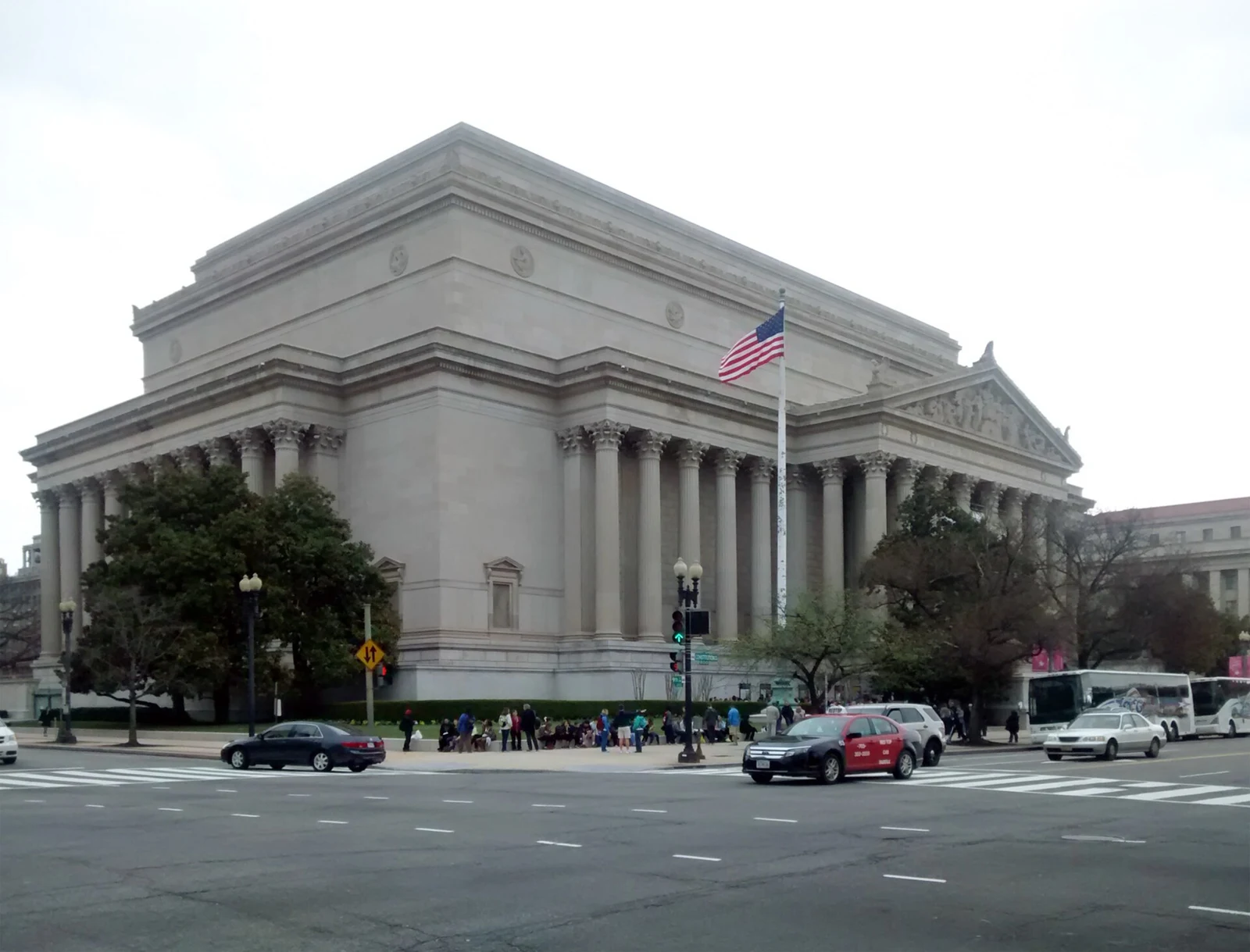
The National Archives presents a different kind of governmental authority: records that can be stored, consulted and interpreted. Begin with the exterior as an argument about permanence. Compare the building’s mass with its architectural openings, and consider the difference between seeing an institution from the street and reading evidence held inside. The National Archives identifies John Russell Pope as its architect. Its building history records staff moving into the unfinished structure in 1935 and completion in 1937. A ceremonial appearance should not hide that practical history of workplaces, storage and construction.
The same institutional history dates the transfer of the Declaration of Independence and the Constitution from the Library of Congress to December 1952. The documents now strongly associated with this building were not here when it was completed. That distinction changes how to read a landmark: a building’s origin and the arrival of its best-known contents are separate events. An exterior photograph cannot show the documents, their condition or the experience of viewing them.
Try comparing the scale of the frontage with the smallness of a sheet of writing. Why give paper such a monumental architectural setting? What changes when a document is treated as a national symbol as well as historical evidence? The nearby National Gallery of Art Sculpture Garden offers an optional comparison with another institution’s outdoor space. The next chapter moves editorially to the Washington Monument; it is not a recorded walk across the intervening streets. Check present admission, security and actual approaches independently.
Read further: Washington’s National Archives: a house for paperReal-travel note
Independent capture dates and local scenes; inter-site transitions are editorial. Check actual access separately.
Compare independent photographs from different dates and viewpoints.
Chapter 3
A simple shape, a long construction
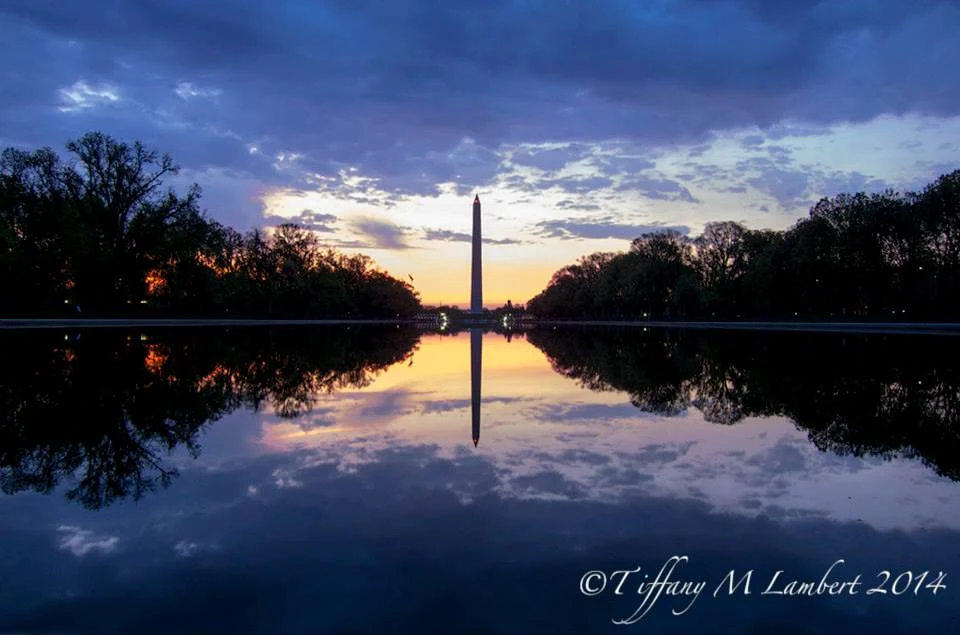
At the Washington Monument, begin with a simple shape and a complicated timeline. An obelisk can seem almost outside history when viewed against the sky, yet its construction depended on money, institutions and engineering. The National Park Service describes two phases: a privately supported campaign from 1848 to 1854, followed by a public phase from 1876 to 1884. Its construction timeline records the capstone and aluminum point being placed on December 6, 1884. Completion was a process, not a single founding gesture.
Look at the relationship between the narrow shaft and the space around its base. How much of its apparent height comes from the open ground that allows you to see it? Compare independent views before drawing conclusions about surface color or lighting. Different cameras, weather and capture dates can change the appearance of stone; an image is evidence of a particular moment, not a material survey. The photograph of flags at the base shifts attention from the shaft to its civic setting; it is not a close inspection of masonry.
This chapter concerns the monument from outside. It does not include an elevator ascent, a view from the observation level or a promise of present tickets. Those experiences require separate planning. Our next chapter shifts from an individual president’s memorial to a collective wartime memorial at ground level. Notice how that change alters the questions you ask: from the reach of a vertical marker to the organization of a public gathering space. As an editorial comparison, the change in scale matters: a single elevated marker gives way to a lower composition that draws attention across a space rather than toward a summit.
Read further: Washington Monument: stone and the long pauseReal-travel note
Independent capture dates and local scenes; inter-site transitions are editorial. Check actual access separately.
Compare independent photographs from different dates and viewpoints.
Chapter 4
Collective memory at the World War II Memorial
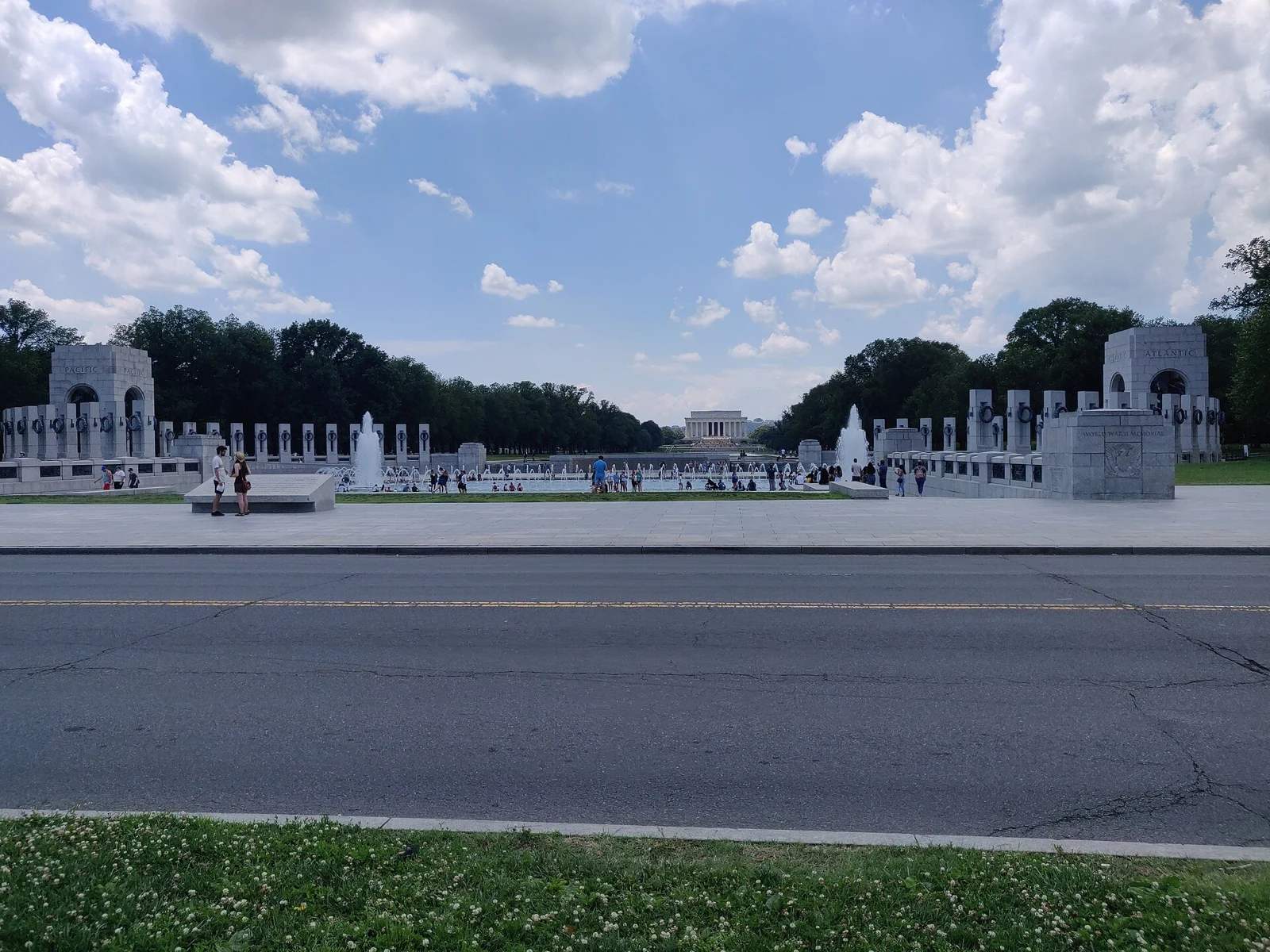
The World War II Memorial changes the scale of attention. Instead of following one vertical shaft into the sky, consider a space organized around a central water feature and a surrounding sequence of pillars. The National Park Service explains that the fifty-six columns represent the forty-eight states, seven federal territories and the District of Columbia of the wartime period. Their arrangement asks the viewer to think about collective participation through a geography that differs from the present map of states. Do not read those labels as a timeless list.
A second register is the Freedom Wall. The Park Service records 4,048 gold stars, each standing for approximately one hundred American service members who died. A repeated symbol makes an enormous loss visible while also placing many individual lives behind a single mark. Compare that method of commemoration with the named president at the previous chapter. What can a shared symbol communicate, and what must remain beyond its surface?
These questions do not require treating the memorial as a complete account of the war. Its commemorative focus is specific; an outdoor image cannot supply the experiences of every country, civilian or military participant. Compare the independent photographs for scale, enclosure and the relation between broad composition and smaller features. Water, crowds and maintenance can differ across capture dates. The Vietnam Veterans Memorial is an optional discovery for comparing a different language of remembrance. The next main chapter turns toward Lincoln through an editorial transition. Before leaving this scene, compare the column rhythm with the isolated obelisk: one repeats a shared architectural unit, while the other concentrates attention in a single shaft.
Real-travel note
Independent capture dates and local scenes; inter-site transitions are editorial. Check actual access separately.
Compare independent photographs from different dates and viewpoints.
Chapter 5
The Lincoln Memorial and the distance of time
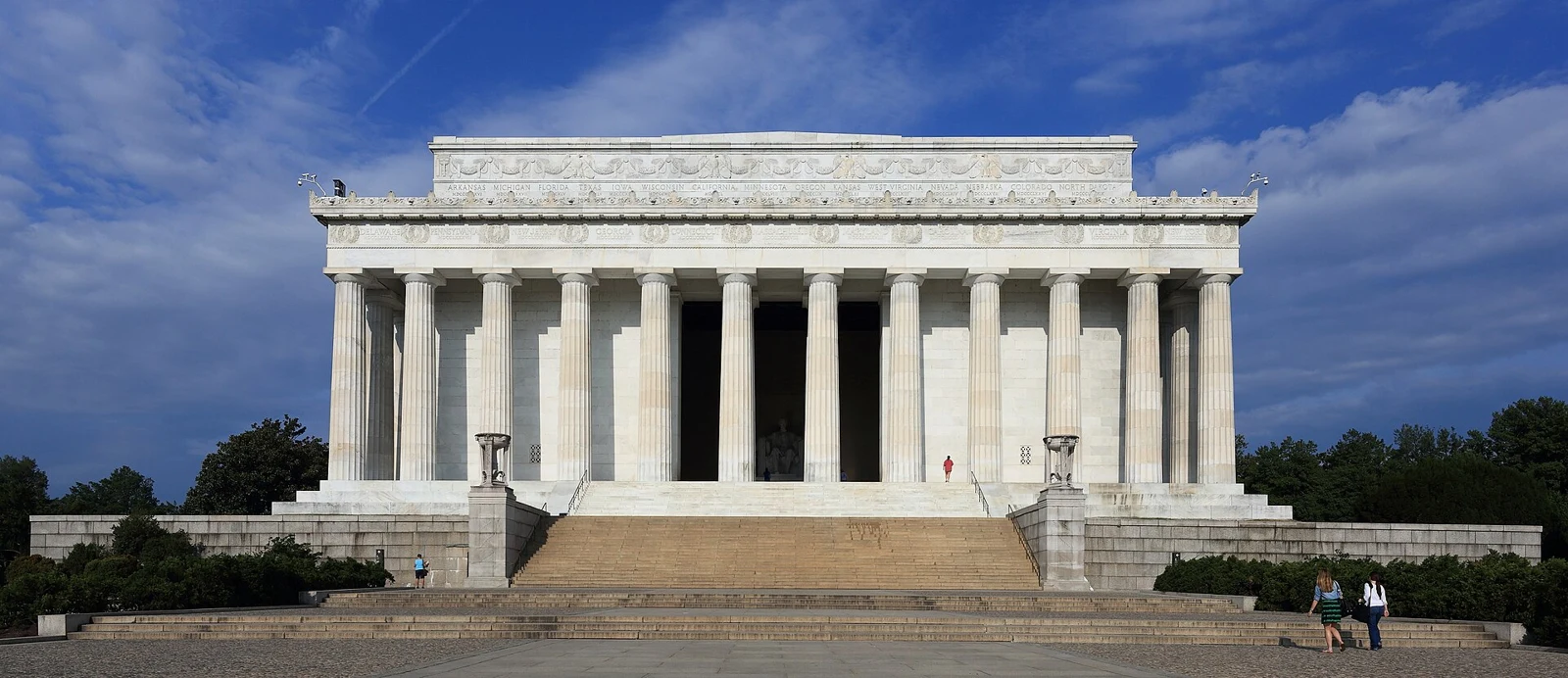
End at the Lincoln Memorial by looking at the exterior as a frame for public memory. The National Park Service explains that its thirty-six surrounding Doric columns represent the states in the Union when Lincoln died. Its building statistics record the dedication on May 30, 1922. Those two dates belong to different layers: the life being remembered and the later society that built a place to remember it. Monumental architecture often draws them together so convincingly that the gap can disappear from view.
Compare the horizontal roofline, the repeated columns and the approach to the building. How does a sequence of similar forms establish rhythm, and what happens when a person enters that rhythm? The gallery combines an exterior view with two independently captured interior views of Lincoln’s statue. These interior photographs are separate from the exterior Google scene and do not establish present admission or a continuous entry into the chamber. An inscription outside a photograph’s frame cannot be read from that image. A distant view of a memorial and a close view of architectural material offer different kinds of evidence.
Return mentally to the Capitol at the opening chapter. Legislative authority, archival evidence, a presidential monument and two forms of collective remembrance have each asked for attention in a different way. The Mall is not a single completed statement that settles all those meanings. The Martin Luther King, Jr. Memorial is an optional further scene for considering how speech and demands for equality become a landscape of remembrance. End with a comparison rather than an invented continuous arrival: photographs and local interactive scenes have independent capture histories, and actual visiting arrangements remain separate.
Real-travel note
Independent capture dates and local scenes; inter-site transitions are editorial. Check actual access separately.
9 reviewed experiences
Explore along the route
Step into the places along this journey. Choose a view independently of the story chapters. Free previews do not count toward chapter progress. Return to the journey above to continue through its stops.
Read the Capitol’s changing silhouette Short observation sequence
2025-08 · 5 connected local positions and return. First Street NW facing the Capitol west front across the lawn; a distant exterior view, without entering the grounds or building.
Reviewed 2026-10-31 · Nearby viewpoint
Explore at your own pace; these views do not count toward chapter completion. Check each point's coverage note before navigating provider imagery. Availability may change.
Sources
- America’s Founding Documents — National Archives
- Capitol Dome — Architect of the Capitol
- A History of the National Archives Building — National Archives
- History & Culture: Washington Monument — National Park Service
- Washington Monument Construction Timeline — National Park Service
- National Capital Region proposed regulations: memorial description, page 23 — National Park Service
- Wall of Stars — National Park Service
- Exterior Features — National Park Service
- Lincoln Memorial Building Statistics — National Park Service
- Ulysses S. Grant Memorial — Architect of the Capitol
- Our History — National Gallery of Art
- Vietnam Veterans Memorial — National Park Service
- Martin Luther King, Jr. Memorial — National Park Service
- Book a Tour — U.S. Capitol Visitor Center
- Visit the National Archives — National Archives
- Plan Your Visit — National Park Service
- United States Capitol - west front.jpg — Architect of the Capitol
- US Capitol 2012 02.jpg — Photograph by Mike Peel (www.mikepeel.net).
- 2018-03-25 – United States Capitol West Front, viewed from the Newseum terrace – Washington, D.C., United States.jpg — Beethoven
- 2014-04-04-National-Archives-Building-Washington-DC.jpg — Gunnar Klack
- National Archives Building Portico 20240531.jpg — 颐园居
- Washington Monument & reflecting pool at sunrise.jpg — Tiffany M Lambert
- U.S. flags - Washington Monument base.jpg — AgnosticPreachersKid
- Washington Monument Reflecting Pool (48872758288).jpg — Jonathan Cutrer from San Angelo, Texas, United States
- World War II Monument and Lincoln Memorial.jpg — Kurt Kaiser
- National World War II Memorial drained for maintenance, 1 February 2024.jpg — BrayLockBoy
- Pacific side of World War II memorial in dc.jpg — RandomPerson238
- Lincoln Memorial east side.JPG — Martin Falbisoner
- Abraham Lincoln v2.jpg — Cathy Rowe
- Statue of Abraham Lincoln, Lincoln Memorial (2024)-L1005507.jpg — Frank Schulenburg
- US Capitol and Grant Memorial.JPG — Martin Falbisoner
- Fountain at the National Gallery of Art Sculpture Gardens, 8-27-17.jpg — Korengel1
- US Flags at the Vietnam Veterans Memorial Wall in Washington DC - Flickr - Au Kirk.jpg — Austin Kirk
- Cherry Blossom Trees in Washington, DC (0676ca21-3cc2-4237-b9da-638e9a04f835).jpg — Rachel Hendrix
- National Archives building north pediment on Constitution Avenue in Washington, D. C.jpg — archivesnews


Your journey, remembered.
Explored 0 of 5 stops. Explore every stop to unlock your keepsake.
5 stops to your keepsakeExplore every stop to share or download your keepsake.
Plan separate site visits
Allow half a day to a day as an outdoor planning estimate; actual connections and interiors require additional planning.
Official sources checked:
Check actual connections
Five chapters and four discoveries connect independent local scenes through editorial transitions. They do not record a continuous National Mall walk. Check streets, crossings, construction and individual access needs separately; no continuous or step-free route is established.
Arrange interiors separately
The journey focuses on exteriors. Photographs and interactive scenes have independent capture dates and do not establish present opening, security or tickets. Check congressional visits, Archives admission, monument ascent and memorial interiors with the responsible institutions.