
Washington’s National Archives: a house for paper
The building and its famous documents arrived on different timelines. Read the exterior alongside the history of storage, display and public access, with National Archives references.
Washington National MallObservation essay
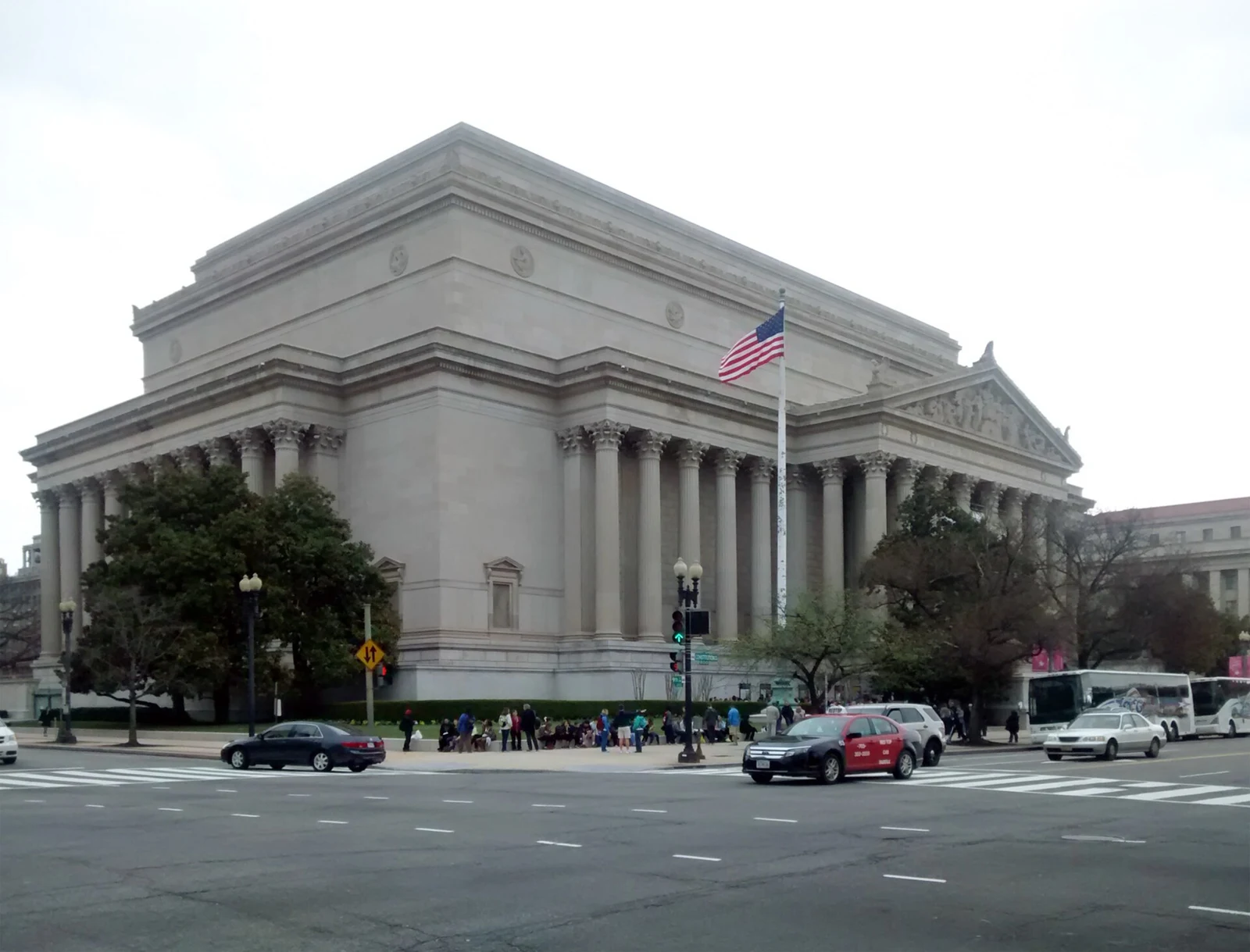
A substantial home for something thin
In the street view, columns, raised steps and a deep portico give the National Archives considerable weight. Paper has almost none. The contrast offers a useful opening question: why give things that fit inside a folder such a monumental address?
The institution holds far more than a few celebrated documents. Yet for many visitors, the Declaration of Independence and Constitution provide the first point of recognition. Starting there can lead beyond recognition to questions about arrival, preservation and public reading.
The building came first
The Archives’ building history supplies two distinct dates: completion in 1937, and the Declaration and Constitution’s transfer from the Library of Congress in 1952. The familiar association between building and documents was not fully present at the beginning.
Fifteen years matter here. A façade can appear to have been waiting for precisely the contents now associated with it, but appearance compresses chronology. Building completion, institutional work and the arrival of important holdings can follow separate, intersecting timelines.
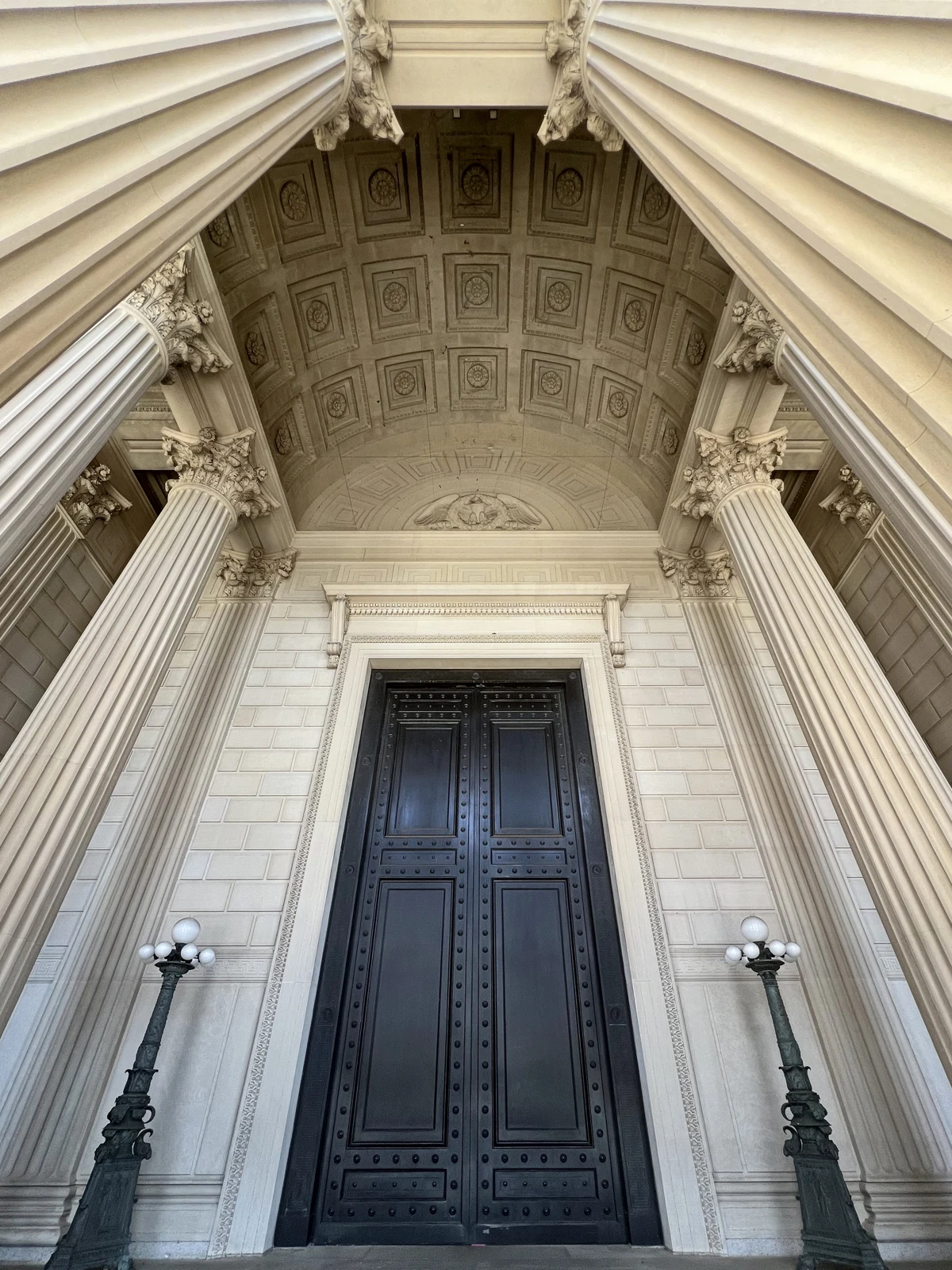
Looking up, then reading closely
The portico photograph makes height and shadow more immediate than the street view. Looking upwards is almost an architectural invitation. Reading a document asks for another posture: proximity, stillness and attention narrowed to a sentence or even a word.
These exterior photographs do not show the documents in their cases. Leave that distinction intact. A building can shape an arrival without explaining the words inside it. An official transcript offers a practical way to prepare a question before seeking an encounter with an original.
Three texts, different tasks
The Archives’ document guide distinguishes the Declaration, Constitution and Bill of Rights. They are often discussed together, but their tasks differ: explaining separation, defining a federal framework, and setting out rights through the first ten constitutional amendments.
There is no requirement to read everything at once. Choose a passage and compare its wording with an exhibition’s summary. That small preparation can shift attention from having seen an important object towards understanding a particular claim made in writing.
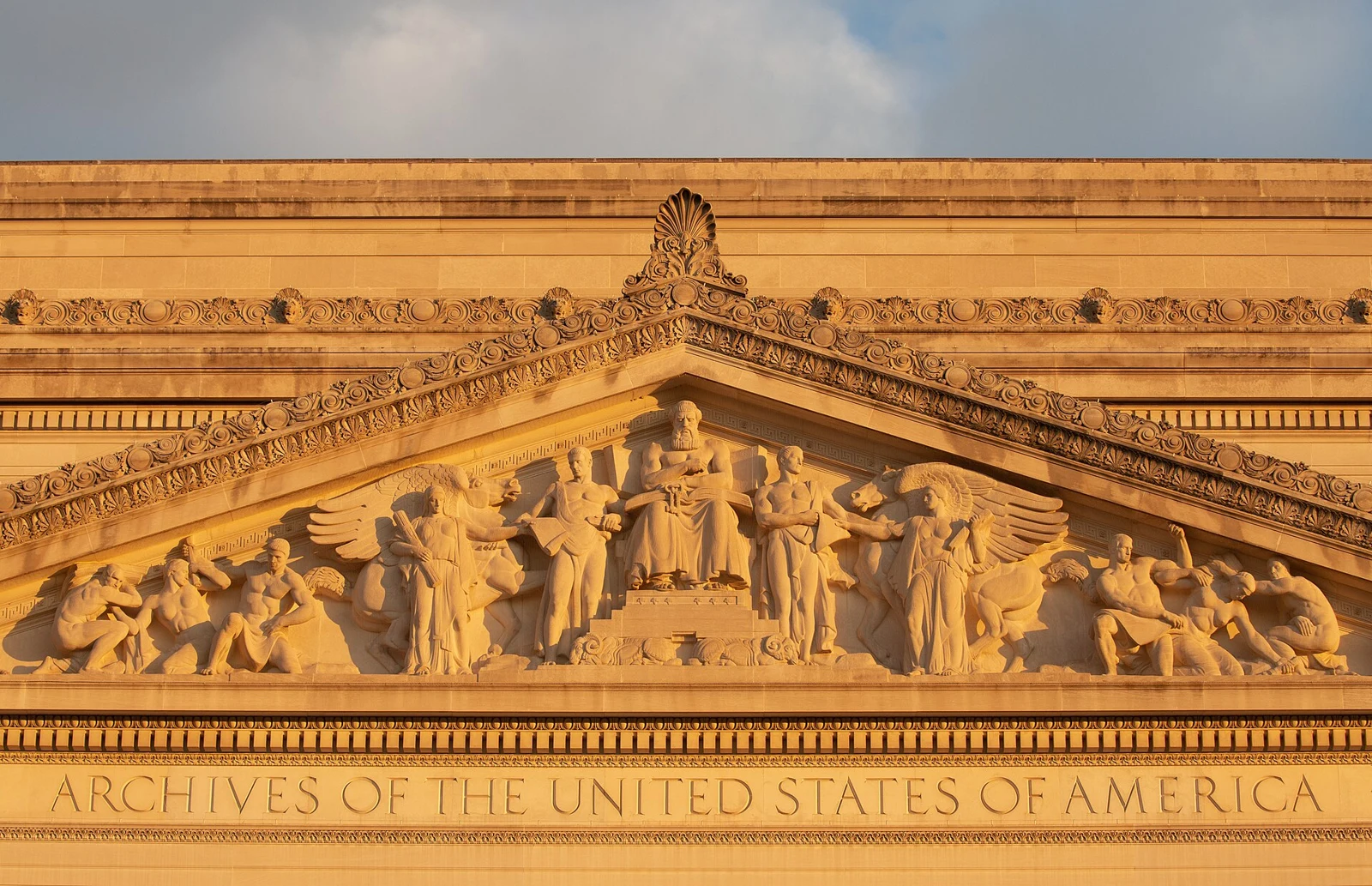
Permanence takes maintenance
Warm light falls across the carved pediment in the third photograph. Stone can suggest that something has been settled for good. Paper preservation, however, does not happen automatically behind a reassuring exterior; symbolic permanence depends on work that a street photograph cannot show.
The institutional history records the documents returning to display in new sealed cases in 2003. Continuity can therefore involve changing methods. Even when a familiar frontage appears stable, the conditions under which material is protected and displayed may be revised.
Begin with a page
A manageable preparation is to choose one official transcript and note one question. Compare that reading with the interpretation encountered later. Publicly available text also offers a starting point for someone who will never travel to Washington.
Use the current visitor site for entry, booking and security guidance; a photographed doorway cannot establish today’s route. Remembering the building, documents and preservation work separately makes the place more intelligible. Keeping paper available for reading requires more than a container.
References
These sources inform the essay’s historical and local context. Its observations and interpretations are original to WalkThere.
National Archives
A History of the National Archives BuildingOfficial building history covering completion, the 1952 transfer and new cases in 2003.
National Archives
America’s Founding DocumentsIntroductions and public transcripts for the three founding documents.
National Archives
Visit the National ArchivesCheck current admission, preparation and accessibility information.
More journey background
Related journey sources
- Capitol Dome — Architect of the Capitol
- History & Culture: Washington Monument — National Park Service
- Washington Monument Construction Timeline — National Park Service
- National Capital Region proposed regulations: memorial description, page 23 — National Park Service
- Wall of Stars — National Park Service
- Exterior Features — National Park Service
- Lincoln Memorial Building Statistics — National Park Service
- Ulysses S. Grant Memorial — Architect of the Capitol
- Our History — National Gallery of Art
- Vietnam Veterans Memorial — National Park Service
- Martin Luther King, Jr. Memorial — National Park Service
- Book a Tour — U.S. Capitol Visitor Center
- Plan Your Visit — National Park Service