
A day in Nara, from the station to the sacred forest
Begin among city streets, then follow water, deer and temple paths toward Todaiji and Kasugataisha. Six real places reveal how history, belief and everyday life meet in Nara.
Nara Park immersive scenes
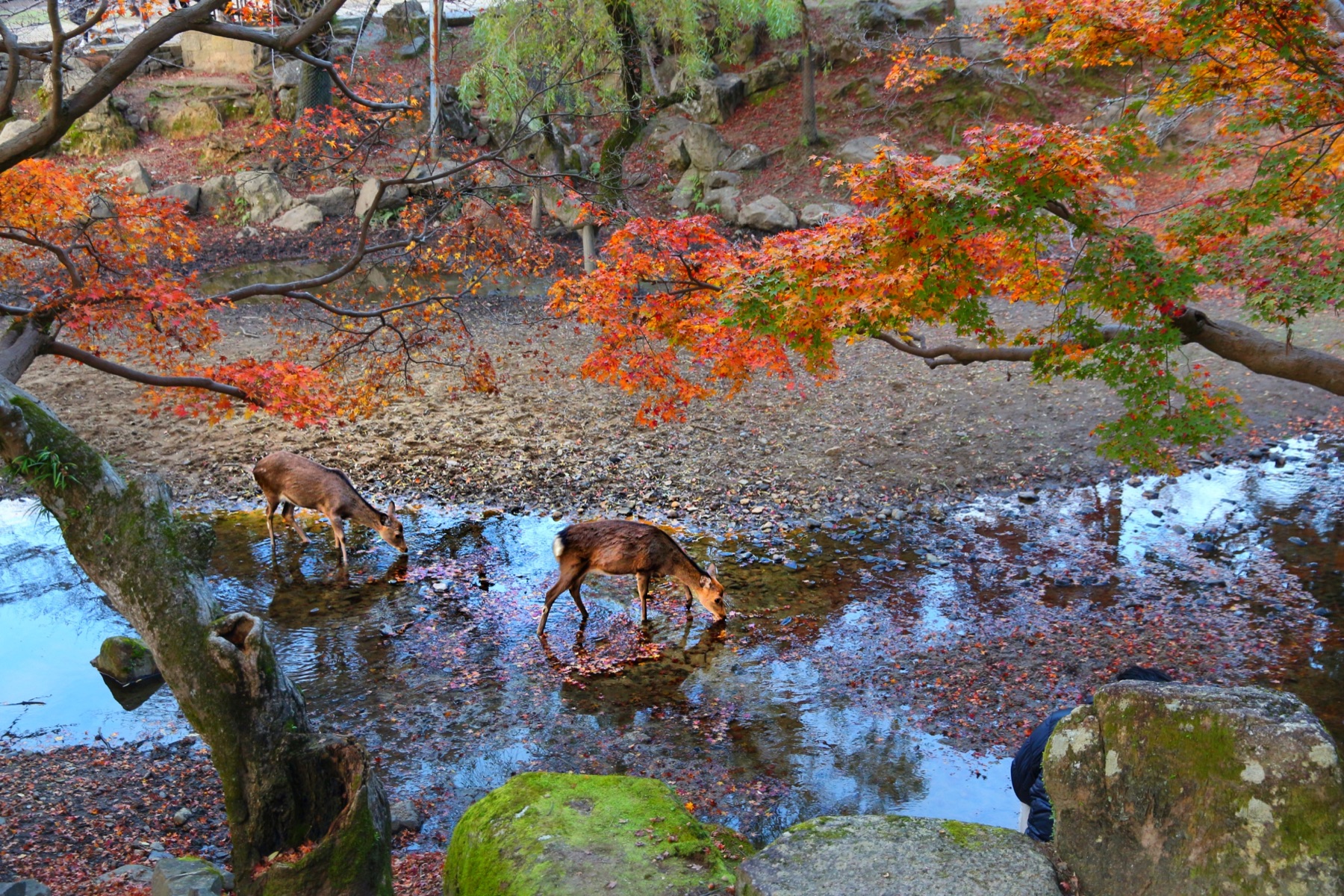
Documentary photograph of Nara Park (resized for web) · Marek Ślusarczyk · CC BY 3.0
Reading mode
Six stories to read at your own pace

Chapter 1 · Arriving in the old capital
Kintetsu-Nara: where the journey really begins
Kintetsu-Nara is more than a station to hurry through. It is a useful place to understand how the contemporary city opens onto the old capital. Nara’s eighth-century temples still set the scale of the centre, yet most visitors arrive through an underground concourse and emerge among buses, shopfronts and commuters. The official travel guide puts both Kyoto and Osaka at roughly half an hour away by rail, and the station has a visitor centre with current event, transport and multilingual information. Walk east and the change comes gradually rather than theatrically: signs thin out, the sky opens and the roofs of Kofukuji begin to appear. The pleasure of this first chapter is not a sudden “arrival at the attraction,” but watching present-day Nara make room, street by street, for the older city beneath it.
- Recorded coordinates
- 34.6844361, 135.8274194
- From Kyoto
- The official guide lists the Kintetsu limited express journey at about 34 minutes. Travel to Nara
- Practical help
- The station visitor centre provides event, sightseeing and transport information. Kintetsu Nara Station Tourist Information Center
Real-travel note
Before leaving, note your return entrance and last-train time. The station visitor centre can help with same-day transport and event information.
Chapter 2 · Water and temple roofs
Sarusawa Pond: Kofukuji reflected in the city
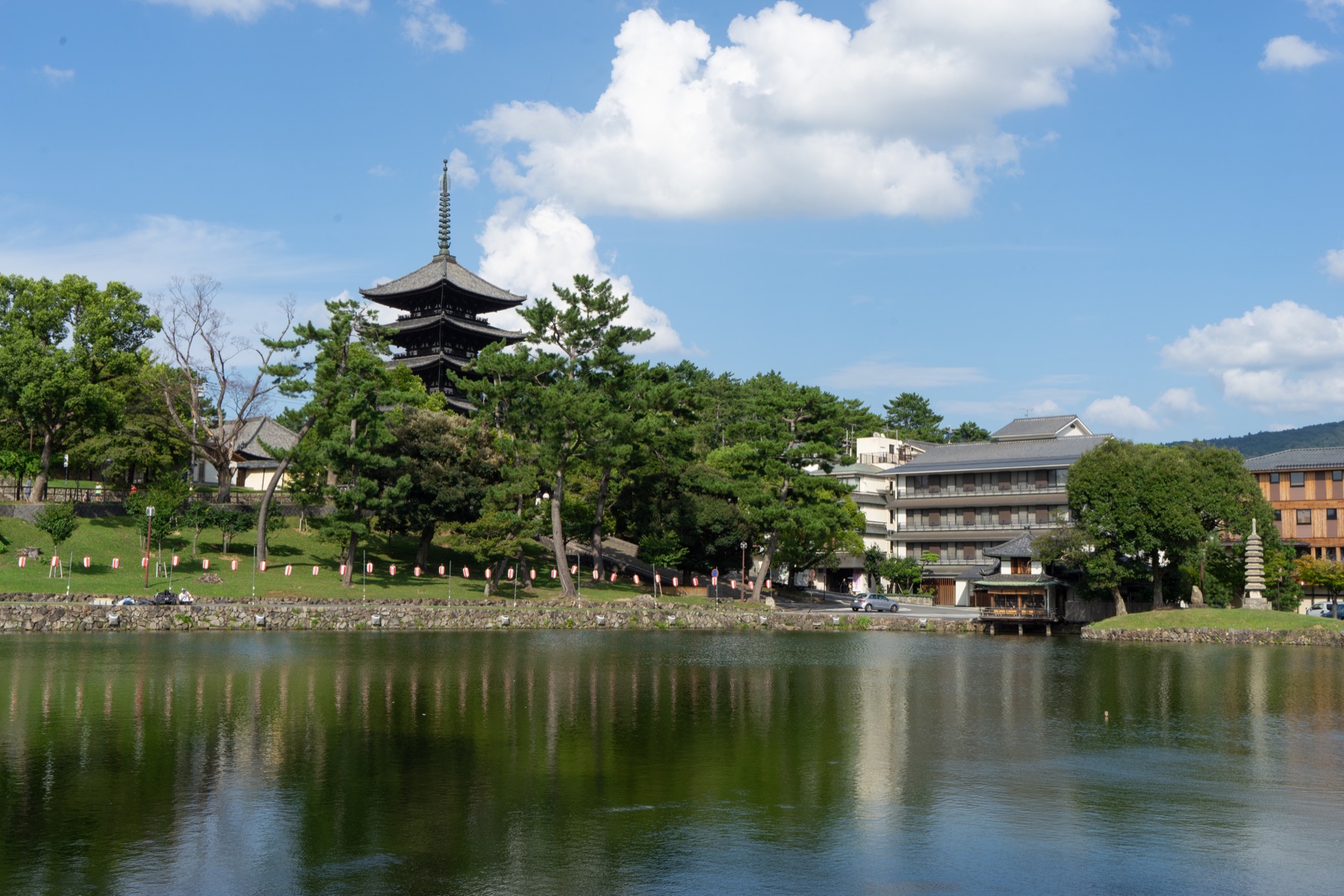
East of the station, Sarusawa Pond feels like a quiet threshold where the commercial streets begin to release their hold. The pond was made in 749 as a hojo pond for Kofukuji, while construction of the temple itself began when the capital moved to Heijo-kyo in 710. Kofukuji was the temple of the powerful Fujiwara clan and once occupied much of what is now central Nara, yet the present scene is intimate: turtles at the edge, willow branches, birds and the five-storey pagoda held in the water. A local legend adds a darker layer. It tells of Uneme, a court lady who drowned herself after losing the emperor’s favour. Versions differ, so this should be understood as tradition rather than established history; the autumn Uneme Festival keeps the story in the cultural life of the pond. At dawn or dusk, the small details matter more than imperial scale, which is exactly why Sarusawa is such a natural entrance to historic Nara.
- Recorded coordinates
- 34.681389, 135.830831
- Origin
- The official guide dates the pond to 749, when it was created for Kofukuji. Naramachi Area Guide
- Legend
- The story of Uneme drowning in the pond is local tradition, not verified history. Naramachi Area Guide
Real-travel note
The pond path is open and largely level. Visit earlier or later for quieter reflections, and check the current official programme if you hope to see a festival.
Chapter 3 · A park shared with deer
Nara Park: why the deer walk free
Nara Park is not a conventional fenced urban park. Its roughly 660 hectares join Todaiji, Kofukuji, Kasugataisha and Mount Wakakusa in one open landscape, and deer move through roads, lawns and sacred precincts alongside people. Official visitor information estimates a population of about 1,400 and identifies the herd as protected Natural Monuments, but their deeper place in Nara comes from Shinto tradition. Legend says the deity Takemikazuchi travelled from Kashima in eastern Japan to Mount Mikasa on a white deer, giving the animals their status as divine messengers. That legend explains belief, not animal behaviour: the deer in front of you remain wild. Special shika senbei may be offered, but people should not chase, tease or surround the animals, and loose food or plastic bags must be kept out of reach. Watching a herd choose its own path through shade and foot traffic tells you more about everyday Nara than staging one more bowing-deer photograph.
- Recorded coordinates
- 34.68545, 135.84341
- Scale
- The Nara Park area covers about 660 hectares and links major temples, shrines and hills. Nara Park Area Guide
- The herd
- Official guidance estimates about 1,400 deer and reminds visitors that they are wild animals. The Sacred Deer of Nara
- Sacred-deer legend
- The white deer carrying a deity to Mount Mikasa belongs to Kasuga belief and tradition. Kasugataisha
Real-travel note
Offer only the approved deer crackers, keep bags secure and give extra room to mothers with fawns or stags carrying antlers.
Chapter 4 · Passing the great gate
Todaiji Nandaimon: two guardians beneath the timber
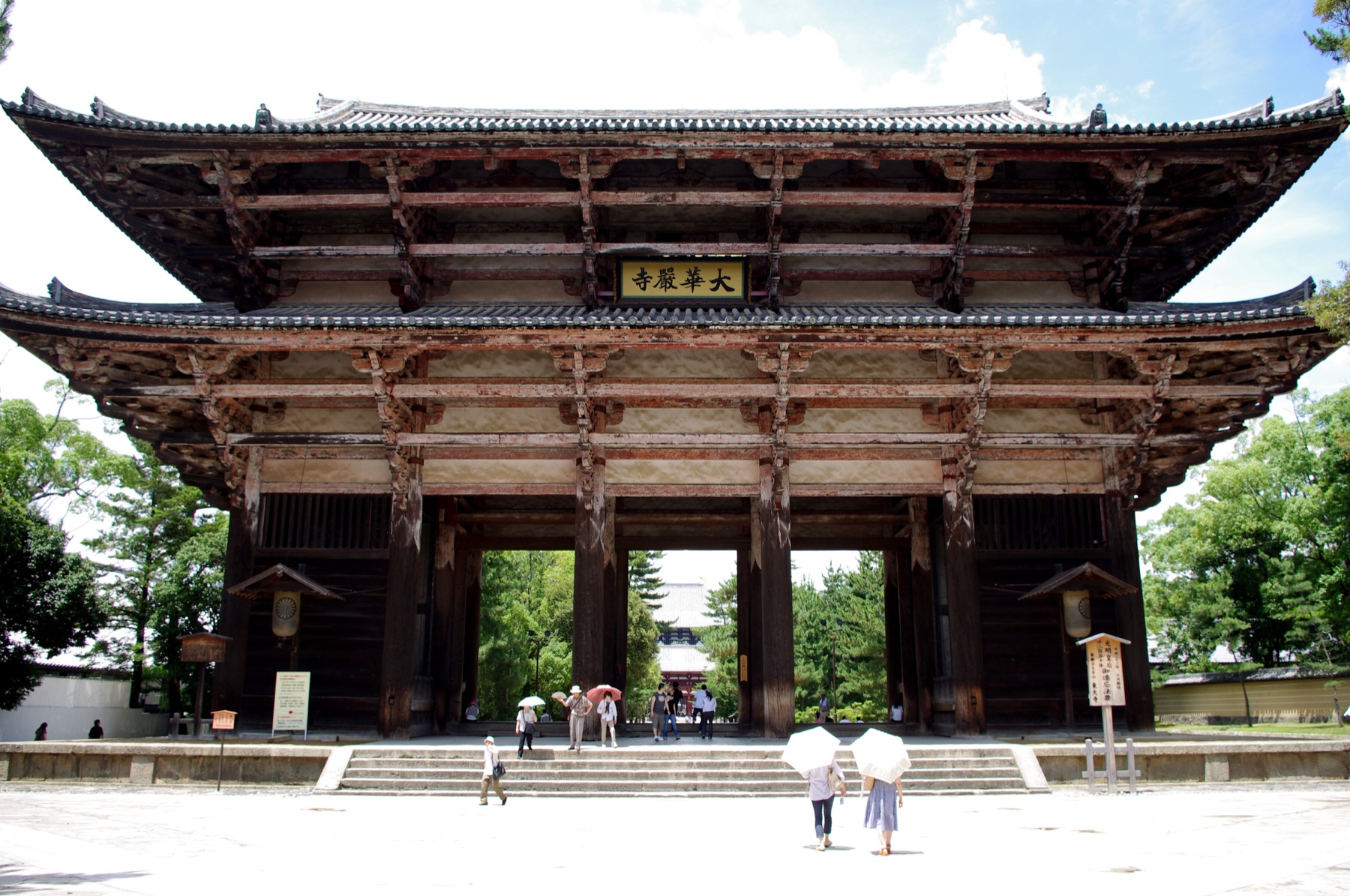
On the approach to Todaiji, Nandaimon changes the scale of the walk before you have entered a hall. Inside the immense timber gate stand two Kongo Rikishi guardians, each about eight metres tall and associated with the master sculptors Unkei and Kaikei during the late-twelfth-century rebuilding. Their open and closed mouths, straining muscles and agitated drapery make protective force feel carved into the air. Beyond them, Todaiji was one of the most important Buddhist institutions when Nara was the national capital. The official Nara history describes Emperor Shomu promoting the temple after war, smallpox and crop failure in the hope that Buddhism could help unite and protect the country. Its roughly fifteen-metre bronze Buddha was consecrated in 752 and required more than four hundred tonnes of bronze. Fires, conflict and rebuilding mean that “ancient” here does not mean untouched since the eighth century; it means a public memory repeatedly repaired and reinterpreted. Looking up beneath Nandaimon gives that history a physical scale.
- Recorded coordinates
- 34.685798, 135.839874
- Guardians
- Nandaimon houses two Kongo Rikishi figures about eight metres tall. Explore Nara's World Heritage Sites
- Great Buddha
- The roughly fifteen-metre Buddha was consecrated in 752. Explore Nara's World Heritage Sites
Real-travel note
Nandaimon is an open passage used by crowds and deer. Keep the centre moving while viewing the statues, and check Todaiji for current hall hours and admission.
Chapter 5 · Climbing to Nigatsudo
Nigatsudo: fire, sacred water and the evening city
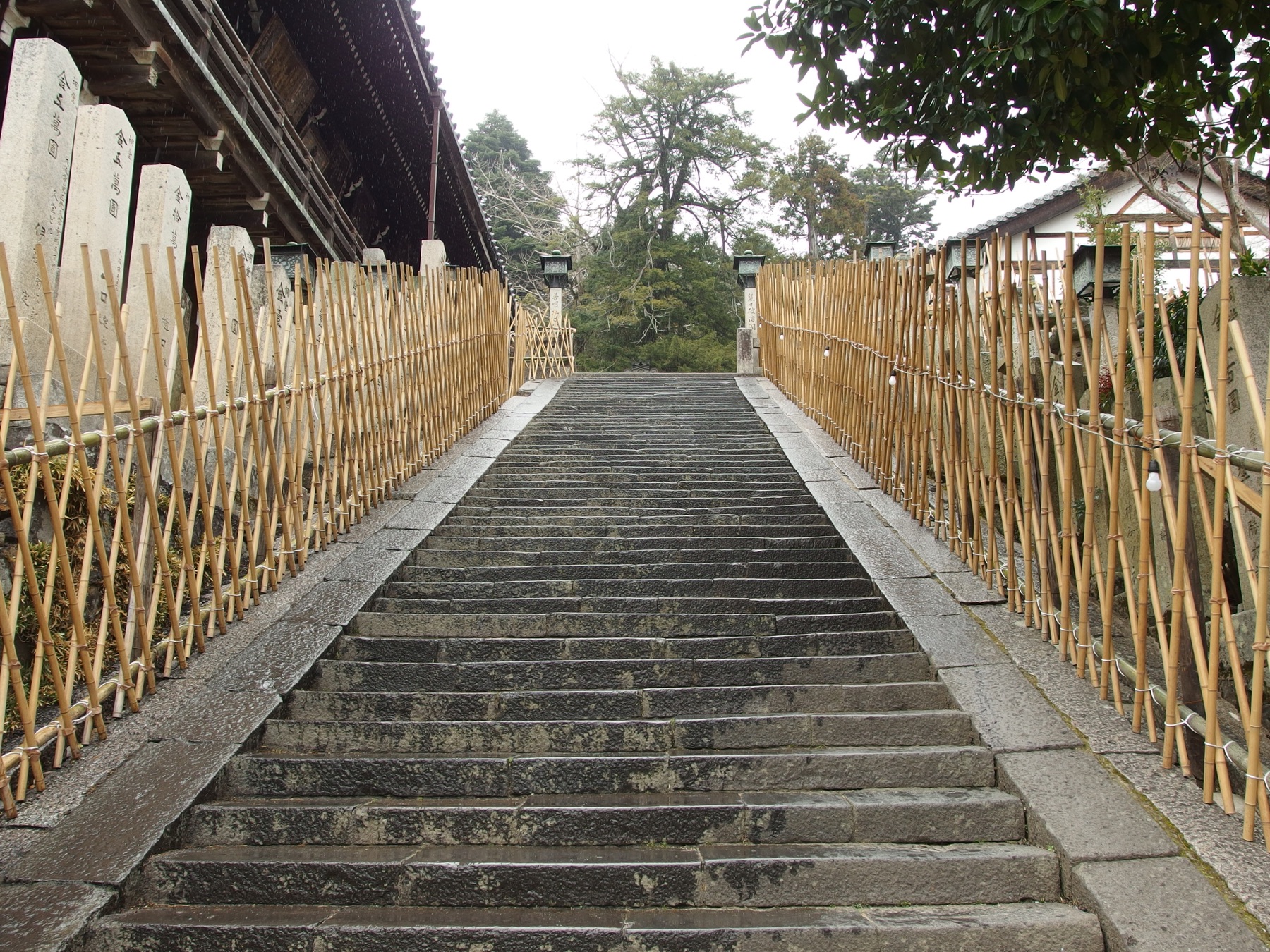
Past Todaiji’s Great Buddha Hall, the route begins to rise and stone walls, steps and covered timber passages gradually filter the crowds away. Nigatsudo belongs to Todaiji but has a rhythm of its own. From the raised stage, rooftops fall away toward the Nara basin; after sunset, lantern light clarifies the silhouette of the building while the city grows softer below. The hall is best known for Shunie, often called Omizutori. According to the official guide, this observance has continued without interruption since 752. On 12 March, enormous flaming torches are carried out over the balcony; the following day, sacred water is drawn from a well beneath the hall. Tradition attributes healing qualities to that water, a religious belief that should not be read as a medical claim. Even outside the festival, the approach through stone steps or the covered rear stair shows that Nigatsudo is not merely a viewpoint. It is a living sacred space where the passing year is still measured through ritual.
- Recorded coordinates
- 34.689278, 135.844278
- Shunie
- The official guide says the Nigatsudo ceremony has continued without a break since 752. Nigatsudo
- Religious tradition
- Healing qualities attributed to the well water are a matter of belief, not a medical conclusion. Nigatsudo
Real-travel note
Expect steps and slopes, especially slippery after rain or snow. Shunie brings heavy crowds and restrictions, so follow Todaiji’s current notices.
Chapter 6 · Journey into the forest
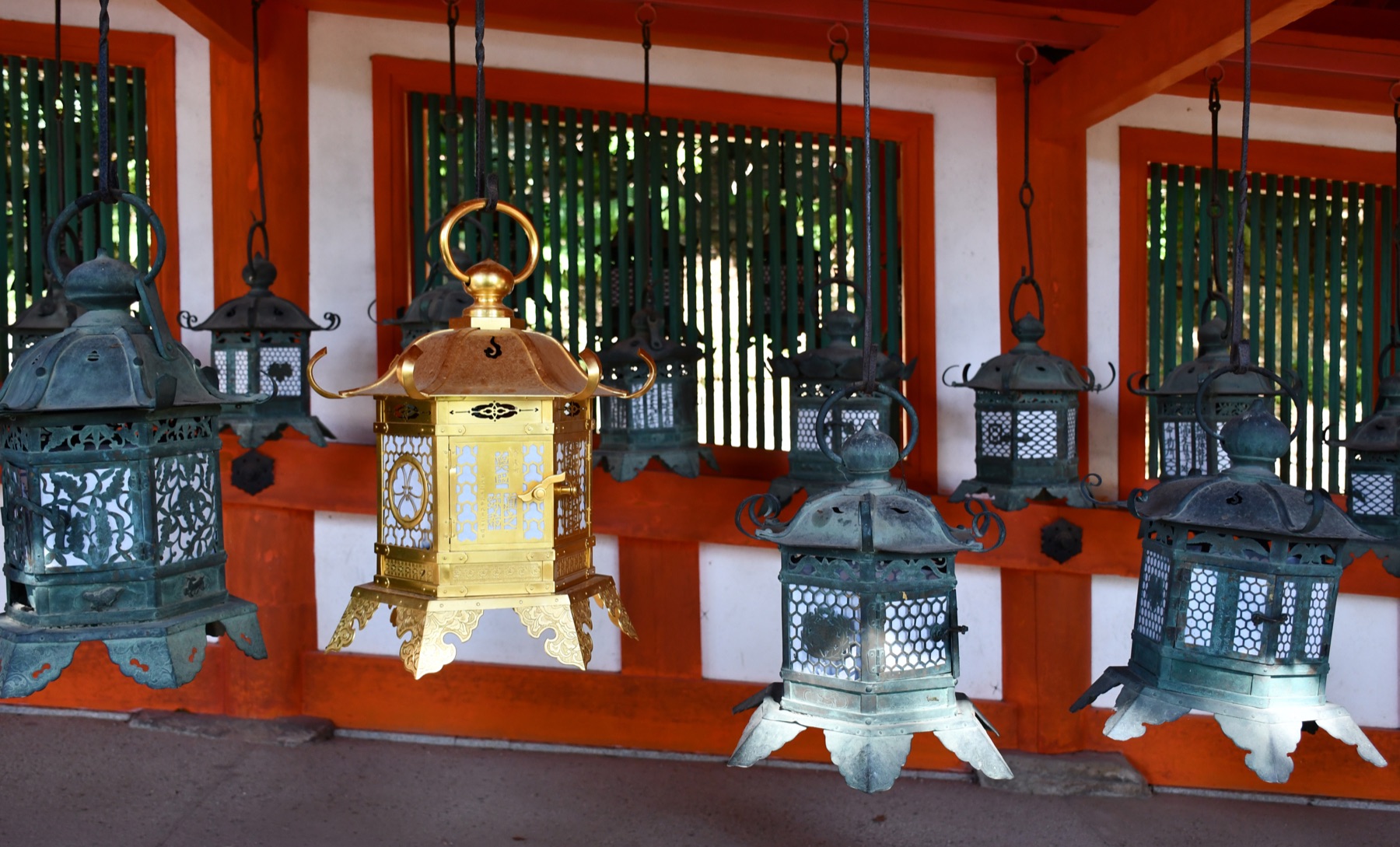
Kasugataisha: three thousand lanterns in vermilion and green
South from Nigatsudo, the woodland thickens and rows of moss-covered stone lanterns make even daylight seem slower. Kasugataisha was founded in 768 and became closely tied to the Fujiwara family and the protection of the capital. Its vermilion buildings, bronze hanging lanterns and long forest approach now form one of Nara’s most recognisable ensembles. The official guide counts about three thousand stone and bronze lanterns, some carrying centuries of donor history; during the Mantoro observances, their light returns in winter and summer. The story of Takemikazuchi arriving on a white deer is a legend within Kasuga belief, explaining why deer became sacred messengers rather than documenting a historical journey. Behind the shrine, the Kasugayama Primeval Forest has been protected from logging for more than a thousand years and is included with the shrine in the UNESCO property Historic Monuments of Ancient Nara. By this final chapter, Nara is no longer temple, animal or forest alone, but the landscape made by their long coexistence.
- Recorded coordinates
- 34.68139, 135.84833
- Foundation
- Kasugataisha was founded in 768 and was closely associated with the Fujiwara family. Kasugataisha
- Lanterns
- The shrine precinct contains about three thousand stone and bronze lanterns. Kasugataisha
- World Heritage
- Kasugataisha and the Kasugayama Primeval Forest are part of Historic Monuments of Ancient Nara. World Heritage in Nara
Real-travel note
Kasugataisha remains a place of worship. Keep voices low, observe no-photography signs and check the shrine for current Mantoro dates and visiting hours.
Sources
- Travel to Nara — Official Nara Travel Guide
- History of Nara — Official Nara Travel Guide
- Kintetsu Nara Station Tourist Information Center — Official Nara Travel Guide
- Naramachi Area Guide — Official Nara Travel Guide
- Nara Park Area Guide — Official Nara Travel Guide
- The Sacred Deer of Nara — Official Nara Travel Guide
- Explore Nara's World Heritage Sites — Official Nara Travel Guide
- Nigatsudo — Official Nara Travel Guide
- Kasugataisha — Official Nara Travel Guide
- World Heritage in Nara — Official Nara Travel Guide
- Kintetsu Nara Station — Wikidata
- Sarusawa Pond — Wikidata
- Nara Park — Wikidata
- Nandaimon — OpenStreetMap contributors
- Nigatsudo — OpenStreetMap contributors
- Kasugataisha approach — OpenStreetMap contributors
- Kintetsu-Nara Station at night — Wikimedia Commons
- Sarusawa Pond and Kofukuji — Wikimedia Commons
- Deer beneath autumn leaves in Nara Park — Wikimedia Commons
- Todaiji Nandaimon — Wikimedia Commons
- Nigatsudo at Todaiji — Wikimedia Commons
- Bronze lanterns at Kasugataisha — Wikimedia Commons


.jpg)
