
Nara Park beyond the deer: ponds, paths and temple approaches
Nara Park is more than its deer. Look at Sarusawa Pond, shaded paths and temple approaches to see the wider landscape.
Nara ParkObservation essay
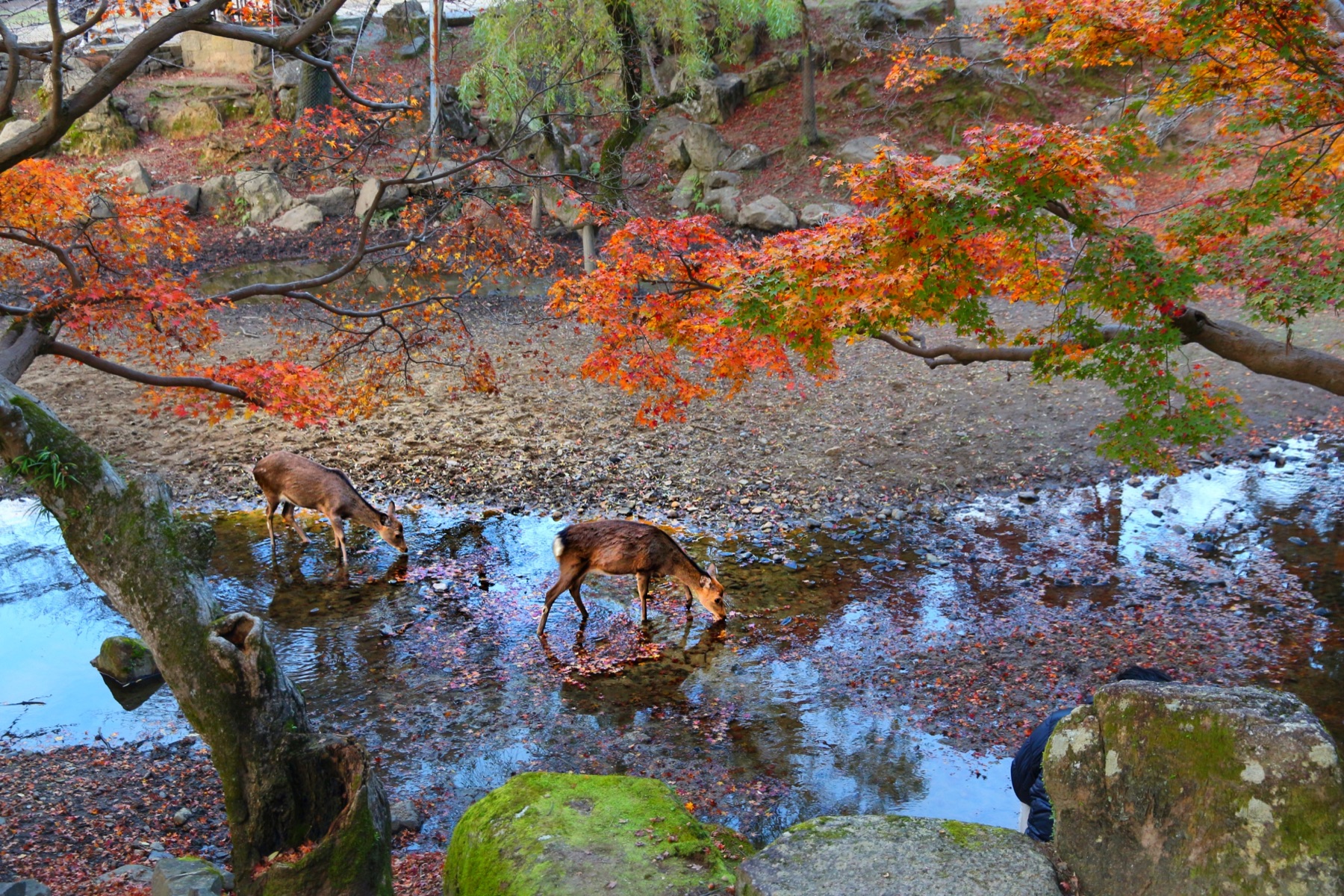
Start outside the photograph’s subject
A photograph of Nara often draws the eye straight to a deer. Look wider and another scene appears: shade beneath a tree, the edge between grass and pavement, people pausing on a path. Try looking for the setting before looking for the subject. What lets these different activities occupy the same frame?
Try dividing the photograph into near, middle and distant layers. There is texture underfoot, the placement of people and animals, and perhaps trees or buildings beyond. As your eye moves between them, the deer becomes a living part of a setting rather than an isolated subject. You do not need photographic training to do this, only a little more time with the frame.
Change the distance of your attention
In the visual journey, find a path and then the open space beside it. Notice where people gather and where the view opens up. This is a way to read space, not to guess what an animal will do next. A photograph records one moment; a visit may look very different.
Repeat the exercise with another image. Before reading its title, find somewhere you might choose to pause and ask why. Is it the shade, or an open view that makes your direction clearer? Different viewers will choose different places. Noticing your own attention can be more revealing than trying to reproduce somebody else’s favourite angle.
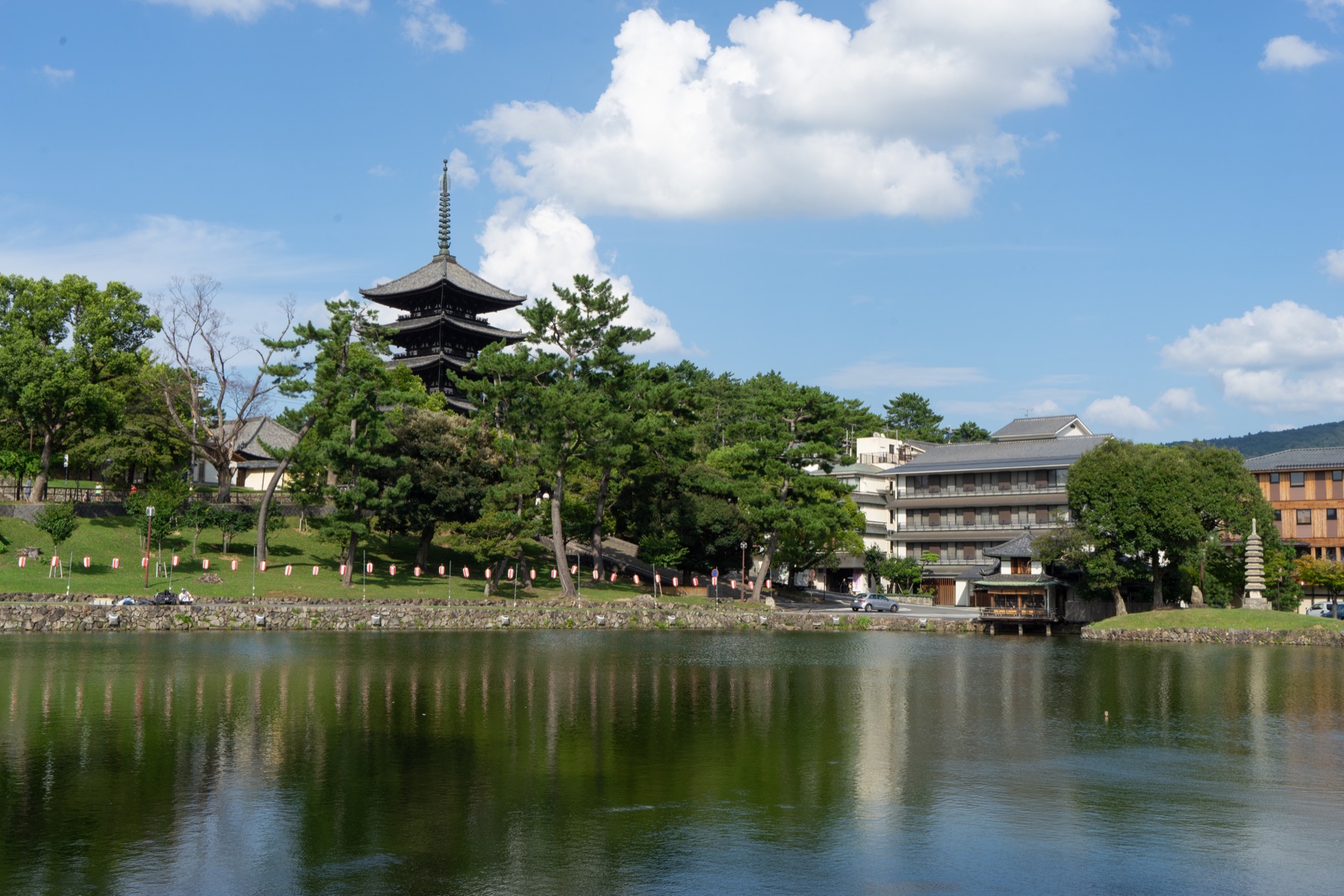
Sarusawa Pond: water, banks and temple reflections
Sarusawa Pond offers another pace of looking. Compared with animals on grass, water draws attention to reflections, the shoreline and buildings beyond. When you encounter a local legend, set it aside briefly and ask what the image itself shows: the brightness of the sky, the shape of trees, or the contrast between water and land.
Then return to the words. The journey labels documented history and local legend separately, leaving room for your judgement. Images make a place concrete; sources give it context. Together they offer more than a date remembered in isolation or a reflection admired without a setting.
Leave room for uncertainty
The journey distinguishes local beliefs from animal behaviour. Keep that distinction while reading: a cultural story can explain how people regard deer without predicting their reactions. Before a real visit, consult the official park and animal guidance linked in the journey.
Online we can move closer to an image whenever we like; in a real place, distance depends on the situation. An apparently gentle pose is still just a recorded instant. This essay invites an approach that leaves space: an encounter need not become a photograph with an animal, and the animal need not fit the story we hoped to tell.
From tree shade to an architectural edge
Place a temple-entrance image beside the park photograph. Compare how a passage takes shape: sometimes framed by trees, sometimes by columns and a doorway. Asking similar questions across places helps reveal the movement between open and enclosed space.
There is no need to settle every image into a conclusion. Record one detail: a shadow, a space before a gate, or the scale suggested by a person beside a building. Then enter the related chapter and see whether its sources add context. Reading and looking can move each other forward without forcing a single answer.
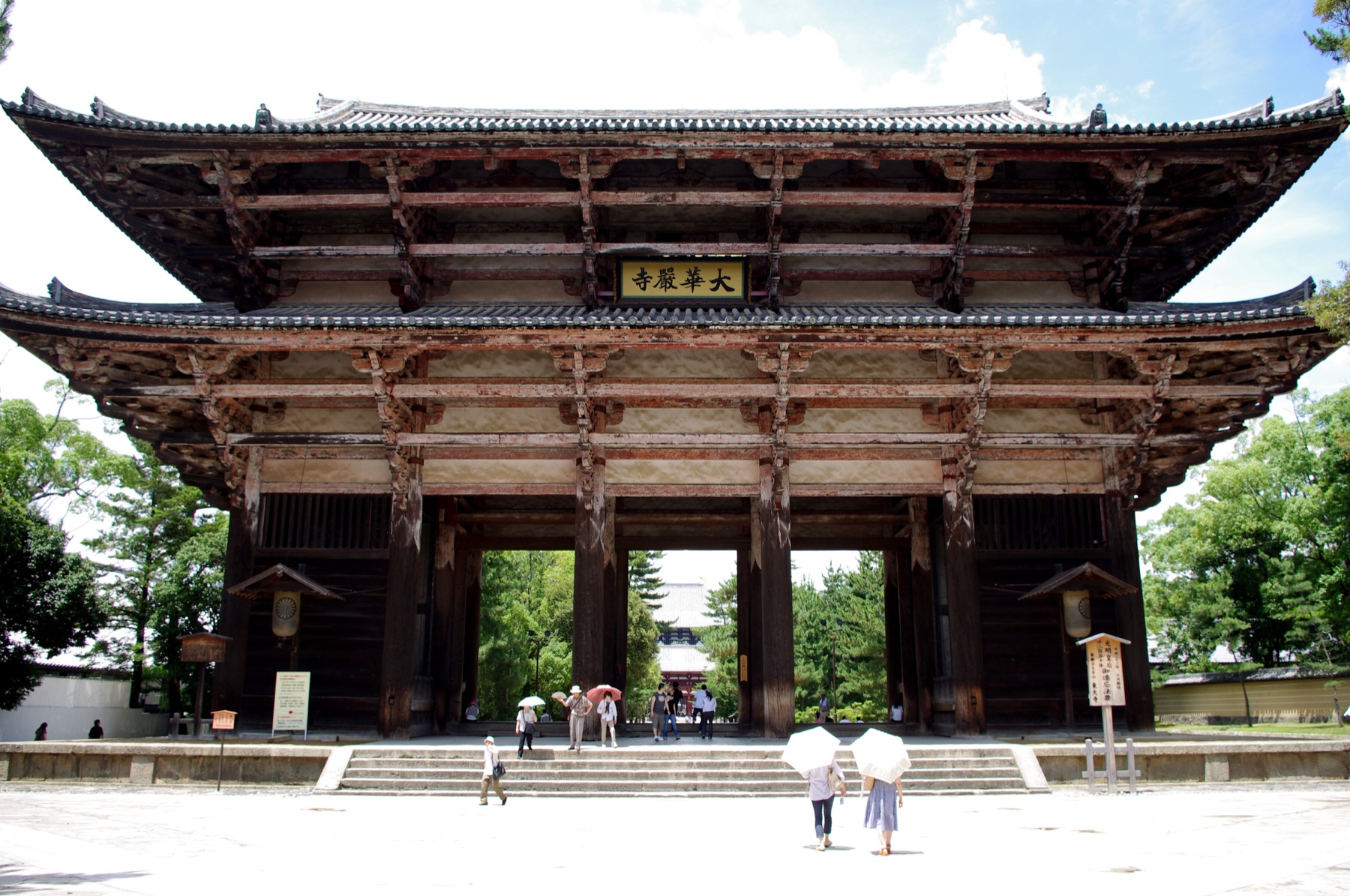
Take one question into the journey
As you enter Nara, ask: if the deer were outside the frame, which features of the park would I still recognise? Trees, paths, temple approaches and people resting might offer a different answer.
Take the same question elsewhere. At a temple, look at the road beyond the entrance; at a pond, notice how the bank makes room for people to pause. Connections between places often sit in details treated as background. After the journey, return to the first deer photograph and see whether different things now hold your attention.
Further reading and journey sources
This is an original WalkThere observation essay. These sources provide context for the related journey; imagery does not establish current conditions.
Place context
- Travel to Nara — Official Nara Travel Guide
- History of Nara — Official Nara Travel Guide
- Kintetsu Nara Station Tourist Information Center — Official Nara Travel Guide
- Naramachi Area Guide — Official Nara Travel Guide
- Nara Park Area Guide — Official Nara Travel Guide
- The Sacred Deer of Nara — Official Nara Travel Guide
- Explore Nara's World Heritage Sites — Official Nara Travel Guide
- Nigatsudo — Official Nara Travel Guide
- Kasugataisha — Official Nara Travel Guide
- World Heritage in Nara — Official Nara Travel Guide