
Yasaka Pagoda: a landmark between the roofs
Compare Yasaka Pagoda, Sannenzaka and Ninenzaka to read slopes, turns and changing rooflines in Kyoto Higashiyama, with official cultural-property references.
Kyoto Higashiyama at DawnObservation essay
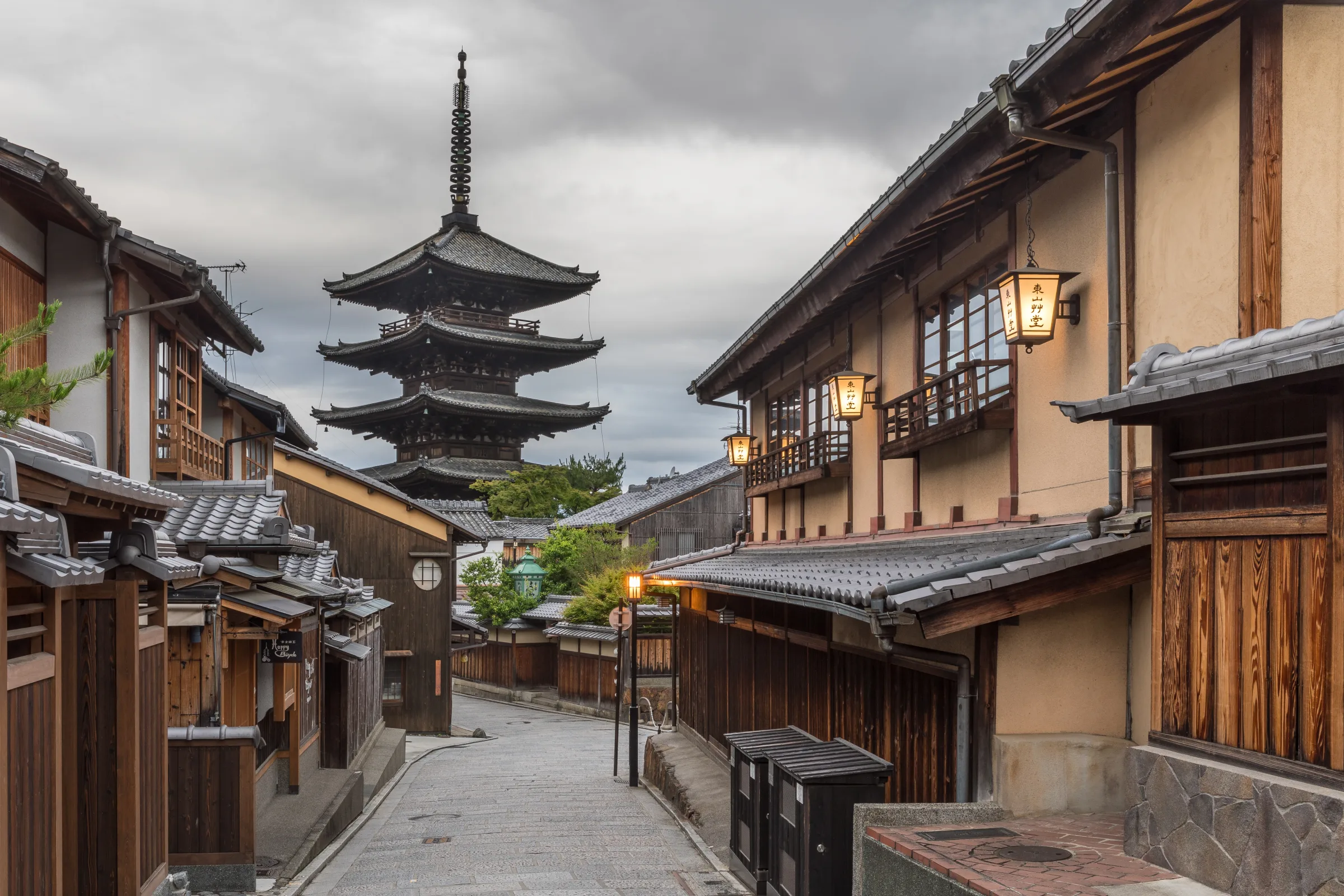
A partial arrival
Yasaka Pagoda is recognisable through projecting tiers and its slender finial. On the street, however, nearby roofs can hide its lower parts. Another turn reveals more of the tower between buildings.
The landmark stays in place while the foreground changes. Walking supplies a succession of partial views, each shaped by the width, direction and level of the immediate street. A fixed point on a map becomes several different encounters.
A date attached to a building
Japan’s cultural-property database identifies Hōkan-ji’s five-storey pagoda as an Important Cultural Property dated 1440. Kyoto’s official account names it as Yasaka Pagoda at Hōkan-ji. The precise identity helps among neighbouring places sharing Yasaka in their names.
Its five eaves belong to this particular structure rather than a general Kyoto motif. Earlier origin traditions and arrangements for visiting require their own accounts. They need not be compressed into a single date.
A slope rearranges the roofs
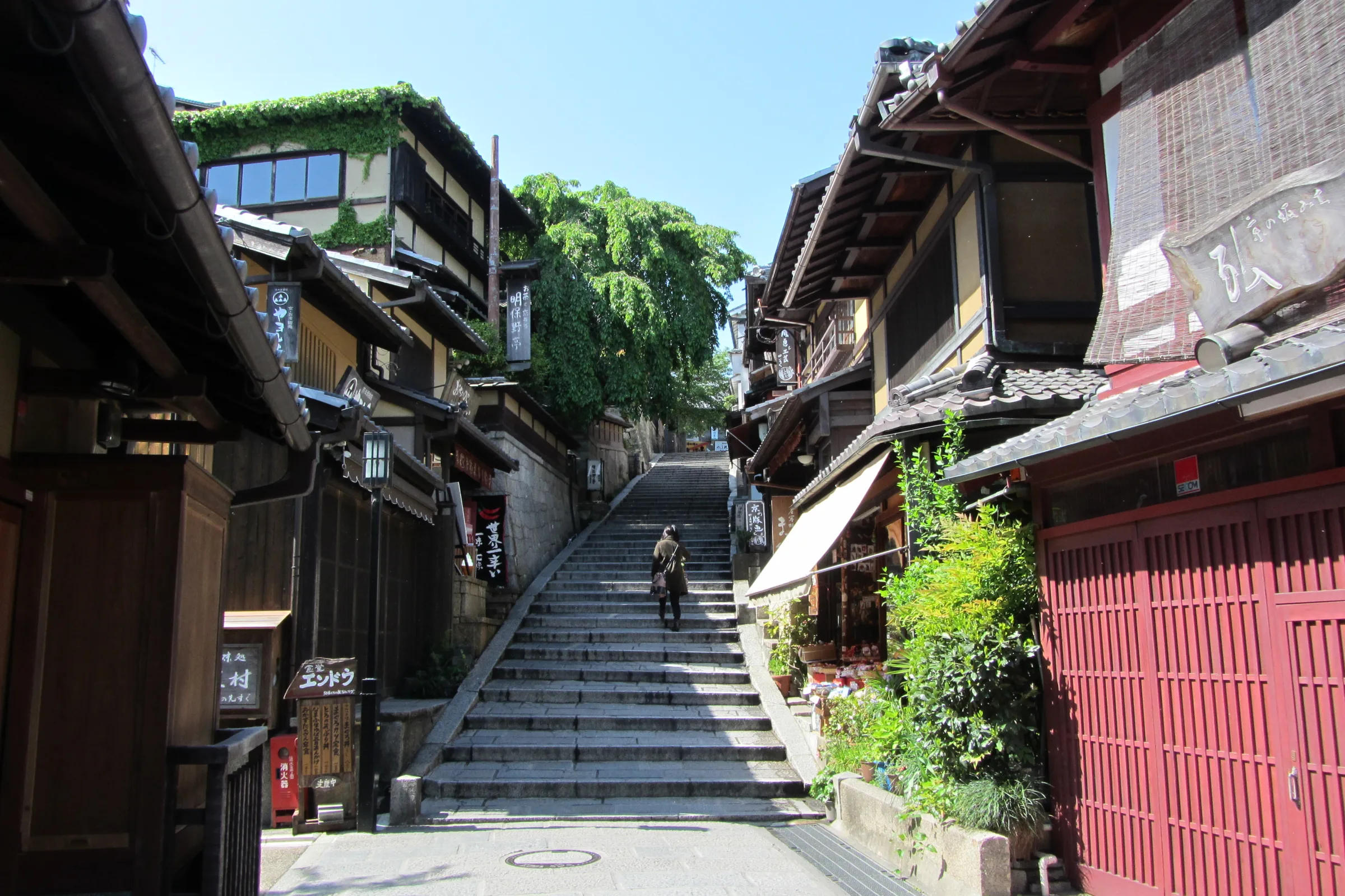
The Sannenzaka photograph draws attention to the road’s relationship with the buildings beside it. Moving on a slope changes what a nearby eave hides or reveals. Buildings only a short distance apart on a plan acquire distinct visual layers.
Uneven roof heights combine with changing ground level. The street does more than lead towards a landmark: it determines how much becomes visible along the way. The tower can help establish direction without always occupying the centre of attention.
Steps divide the pace
Ninenzaka supplies another street view. Steps and paving give movement a rhythm, while doors and sheltered edges remain close to bodily scale. A small landing or doorway can attract attention away from a distant silhouette.
Attractive paving does not establish a level route. An image may reveal changes of height without proving suitability for a wheelchair or luggage. For an actual walk, steps belong among route conditions as well as visual impressions.
An empty street records a moment
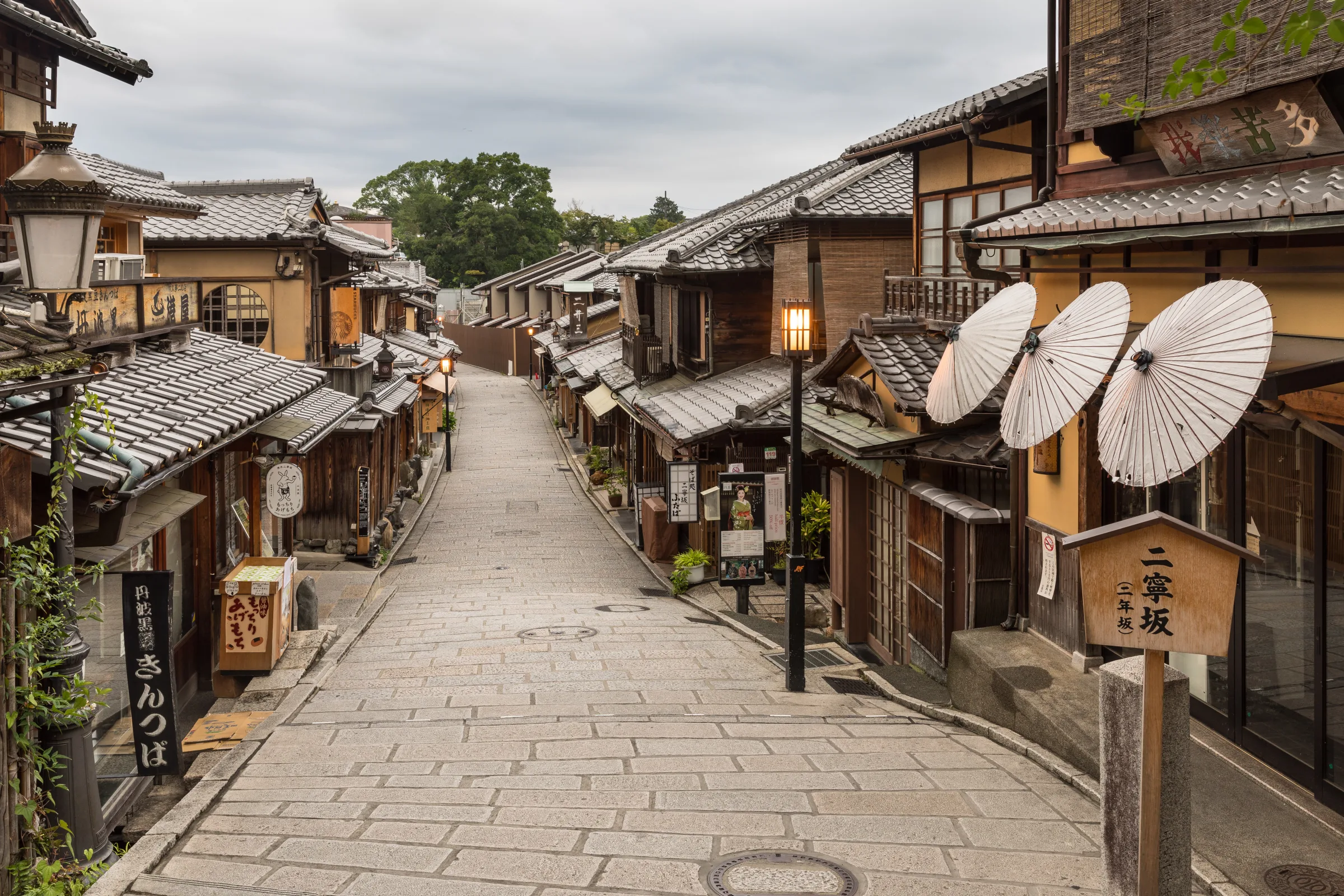
Quiet early photographs make street lines easier to see. That quiet belongs to a particular moment; it does not show that surrounding buildings lack occupants or daily uses. Doorways and narrow passages can remain part of work and homeward routes.
If a remembered photographic position is busy, moving a few steps changes the relationship between tower and roofs. A walk need not become a wait for the street to reproduce an old image. The present position supplies its own foreground.
Direction, then nearby detail
A landmark can restore orientation when an unfamiliar street becomes confusing. A few eaves visible through an opening may reconnect the immediate surroundings with a wider sense of place. Once oriented, attention can return to paving and doors.
These photographs show the pagoda street, Sannenzaka and Ninenzaka separately rather than a continuous camera sequence. Together they compare a fixed landmark with changing foregrounds. Another old city may offer the same question: did recognition depend on the whole building, or a fragment between the roofs?
References
These sources inform the essay’s historical and local context. Its observations and interpretations are original to WalkThere.
Agency for Cultural Affairs
Hokan-ji five-storey pagodaDocuments the pagoda’s 1440 date and Important Cultural Property status.
Kyoto City Tourism Association
Hokan-ji (Yasaka Pagoda)Local official context identifying Yasaka Pagoda at Hōkan-ji.
More journey background
Related journey sources
- Higashiyama at Dawn — Kyoto Tourism Federation
- How to avoid the crowds while accessing Kiyomizu Temple and Higashiyama — Kyoto Tourism Federation
- Learn: history and the Main Hall — Kiyomizu-dera
- Visit — Kiyomizu-dera
- FAQ — Kiyomizu-dera
- Access and 2026 opening hours — Kiyomizu-dera
- History — Yasaka Shrine
- Historic Monuments of Ancient Kyoto — UNESCO World Heritage Centre
- Visiting hours and admission — Kodai-ji