
Vienna State Opera: a familiar façade, a rebuilt theatre
The street view leads to two openings, destruction and a company that kept performing while its main house was rebuilt.
Vienna Old Town & RingstrasseObservation essay
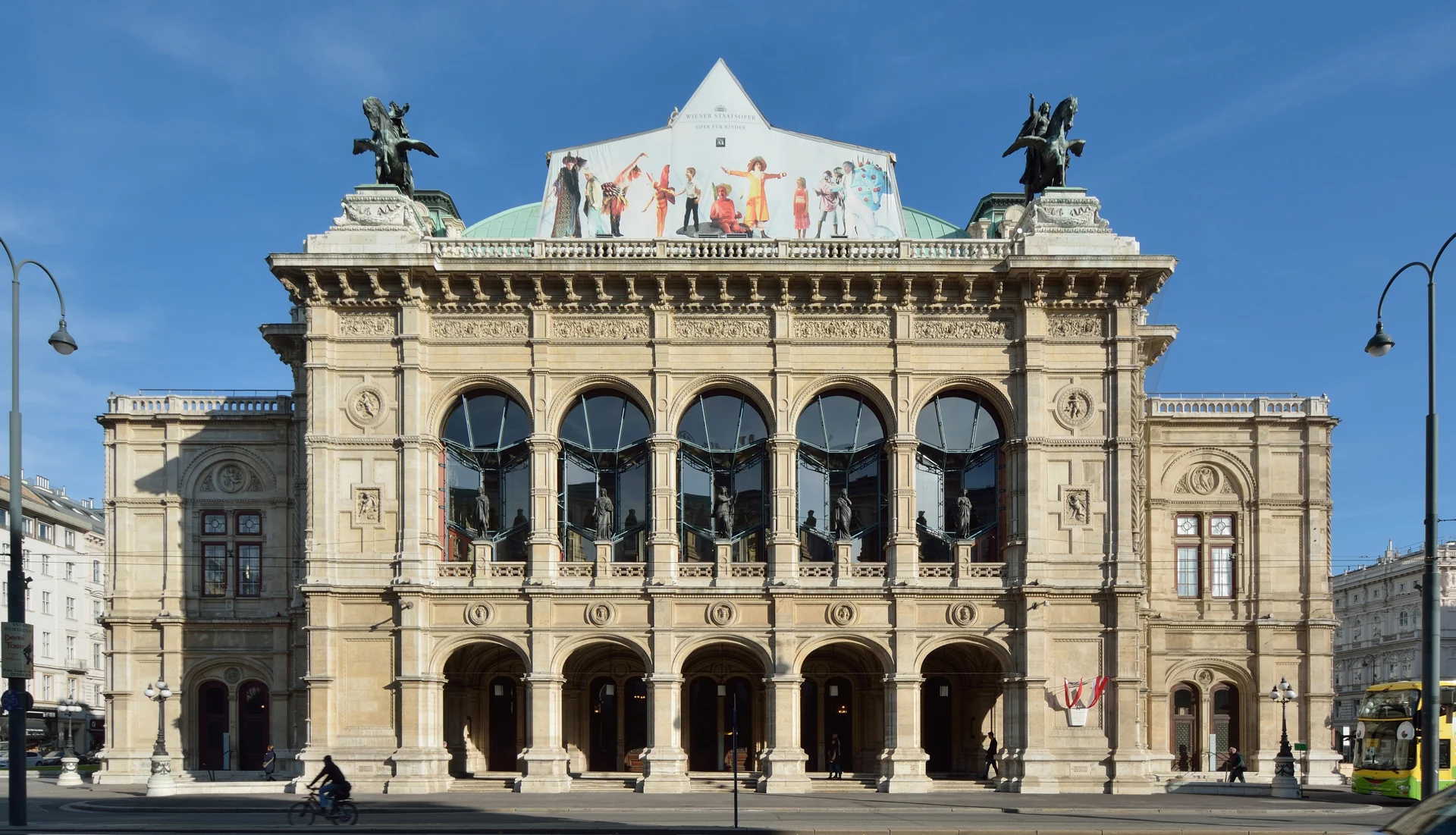
Put the opera house back in the street
Across the road, the State Opera first appears as a whole building. Traffic, crossings and pedestrians keep it within ordinary Vienna. Its cultural reputation has not removed it from the street. Begin with the Ringstrasse rather than with a famous composer.
The opera’s official history connects its construction with the 1857 decision to remove the city walls and create the boulevard. The façade belongs to a cultural institution and an urban transformation. The setting is part of the account, not merely a convenient place to take a photograph.
A new house needed an opening work
In 1869 the house opened with Mozart’s Don Giovanni, performed in German. Completion meant more than finishing construction: the theatre could finally address an audience through a performance. The new building had to become a place where something happened.
There are two kinds of evidence here. Stone, frontage and entrances appear in photographs; rehearsal, stage work and listening require other records or an actual performance. A portal detail brings the architecture closer without pretending to supply an experience of the auditorium.
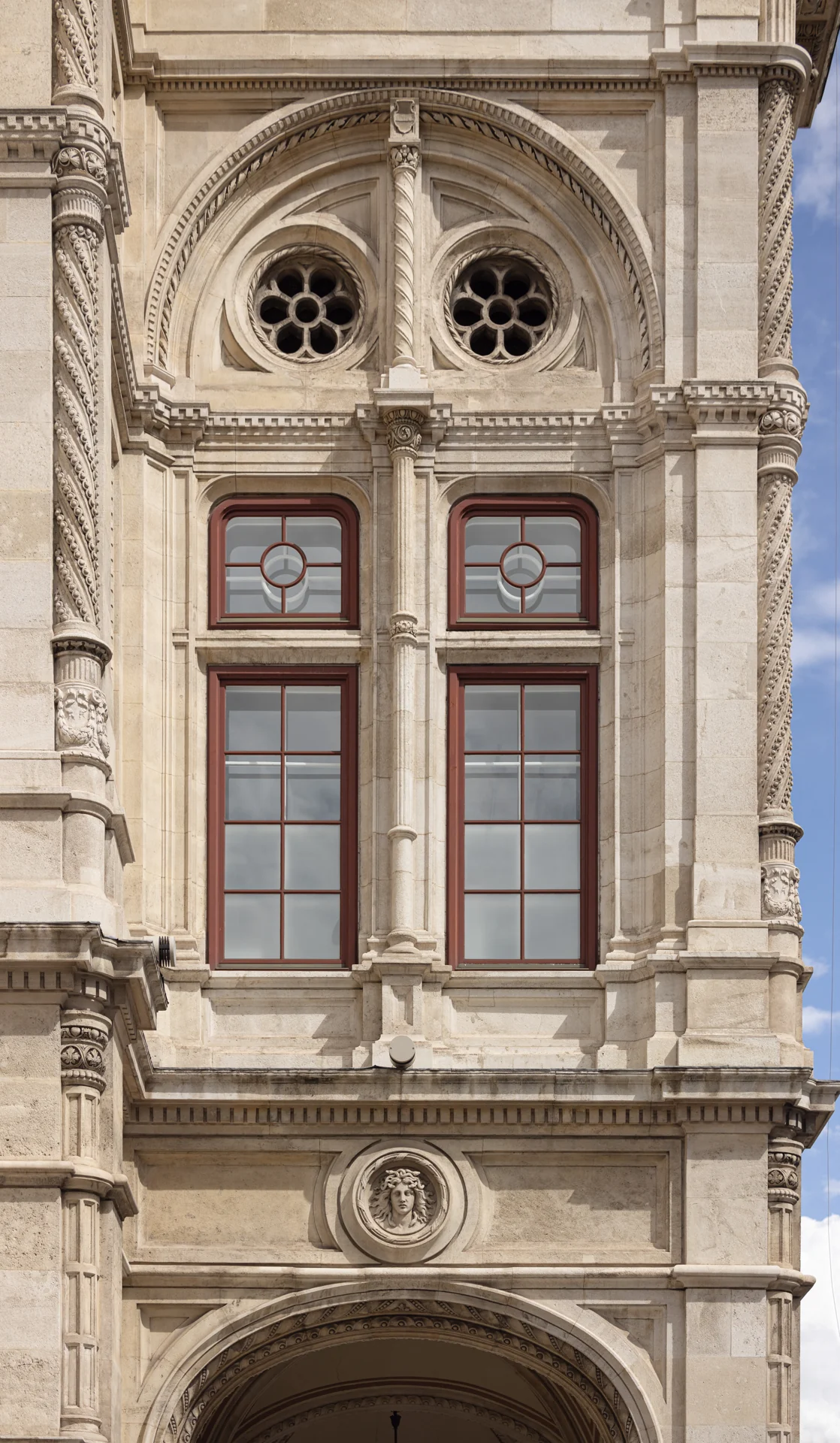
Destruction came after the familiar outline
The opera’s wartime account records bombing and fire on 12 March 1945, including the loss of stage and auditorium. Today’s complete exterior should not suggest that every part of the house has remained unchanged since the nineteenth century.
Nor was the rupture only architectural. Official history also addresses exclusion and persecution of employees and artists after 1938. Repairing rooms and recovering an artistic institution are different matters. Reconnecting walls and roofs cannot by itself restore interrupted lives and careers.
The company performed elsewhere
While the main house was unusable, performances continued in replacement venues, including the Volksoper and Theater an der Wien. For a period, the name State Opera referred particularly clearly to a working company rather than only to its familiar address.
Buildings easily stand for cultural institutions in photographs. Temporary venues draw attention to what is less visible: people, rehearsals, organisation and moving work between spaces. An audience could enter another door while the institution maintained a continuity beyond its damaged auditorium.
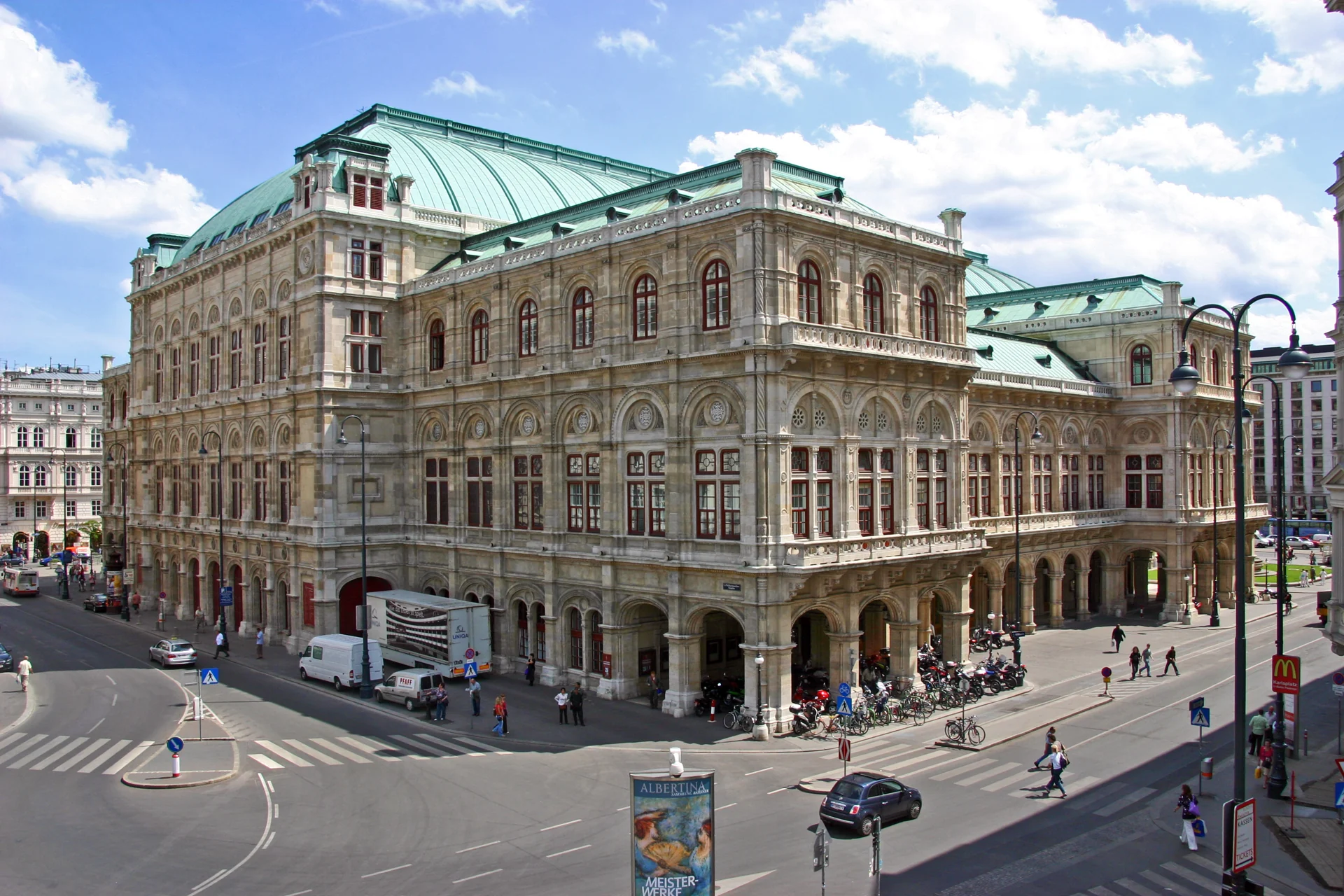
Returning did not mean everything was unchanged
The rebuilt house reopened on 5 November 1955 with Beethoven’s Fidelio. Its new auditorium and stage technology made reconstruction more than the reproduction of an old image. Surviving elements and post-war decisions occupied the same building.
Those phases are difficult to read from the street alone. Knowing they exist changes the encounter nevertheless. A historic cultural identity can continue through updated spaces and equipment; the apparent familiarity of a façade does not settle the age of everything behind it.
A building visit and a performance are different plans
An official tour can develop an interest in the building; a performance offers another encounter with the institution at work. Check current official arrangements for each. The three photographs here show frontage, portal and an oblique street view, without claiming an interior visit.
Take away two years, 1869 and 1955, as reminders that the house has opened more than once. Its façade makes it recognisable, while reconstruction and continuing performance keep it a theatre. Together those ideas explain more than a generic description of a musical landmark.
References
These sources inform the essay’s historical and local context. Its observations and interpretations are original to WalkThere.
Vienna State Opera
History of the Vienna State OperaDocuments the 1869 opening, wartime rupture and 1955 reopening.
Vienna State Opera
Zerstört und wiederaufgebaut: 80 Jahre nach den BombenAn account of destruction, replacement venues and post-war rebuilding.
More journey background
Related journey sources
- St Stephen’s Cathedral — Vienna Tourist Board
- The plague column — a column of honour — Archdiocese of Vienna
- Hofburg and Heldenplatz — Vienna Tourist Board
- Heldenplatz: place and history — House of Austrian History
- Guided tours — Vienna State Opera
- State Hall — Austrian National Library
- Peterskirche — St Peter’s Church