
Vienna’s Graben: epidemic memory on a shopping street
Move from the street setting to the Plague Column’s east side and inscription, with historical context from the Archdiocese of Vienna and nearby church information.
Vienna Old Town & RingstrasseObservation essay
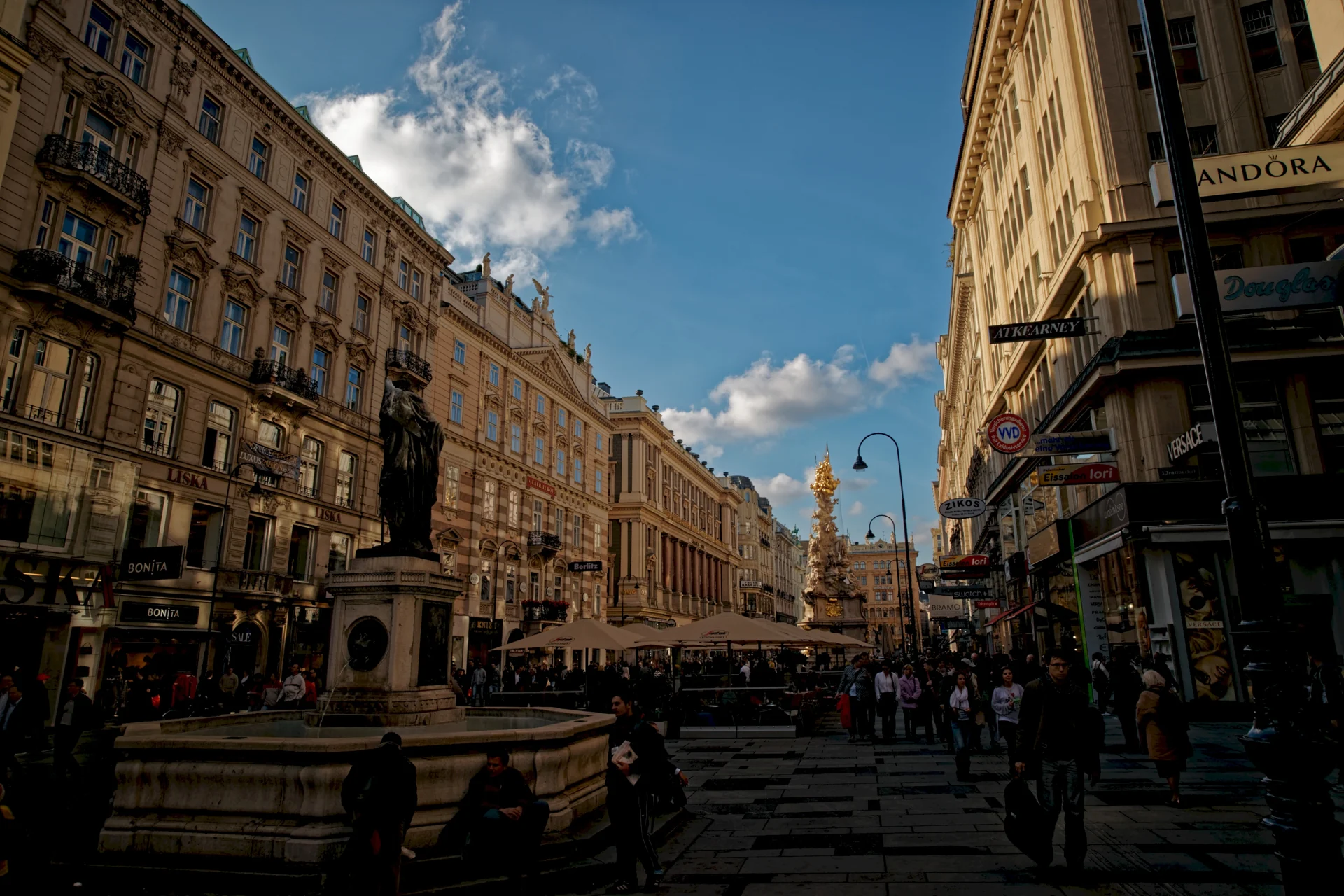
A vertical marker in the street
In the broad Graben photograph, the column draws the eye upwards while repeated windows extend along the surrounding buildings. Even without knowing its subject, someone can use it to orient a position in the street.
Leopold Fountain shares the wider setting. These monuments stand within circulation rather than occupying separate enclosed rooms. To examine the column, find a position that leaves passage clear, then follow the composition down towards its base.
Public prayer in 1679
The Archdiocese of Vienna connects the monument with the epidemic of 1679. Citizens and a religious brotherhood planned a column around which sermons and prayers could take place publicly. That purpose helps explain its presence amid everyday movement.
The account describes a religious response to illness. It does not establish medical effectiveness. Understanding the fear and petitions of the period requires keeping historical belief distinct from a claim about how disease was prevented.
The first column was wooden
The diocesan history records a wooden predecessor erected in October 1679, which became a focus for devotion. The densely worked surfaces visible today cannot simply be used as an illustration of that first structure.
An epidemic date and the date of every surviving element are different questions. Asking what was actually erected at the beginning keeps the chronology open to later construction. These photographs do not reconstruct the wooden column.
The east side separates the forms
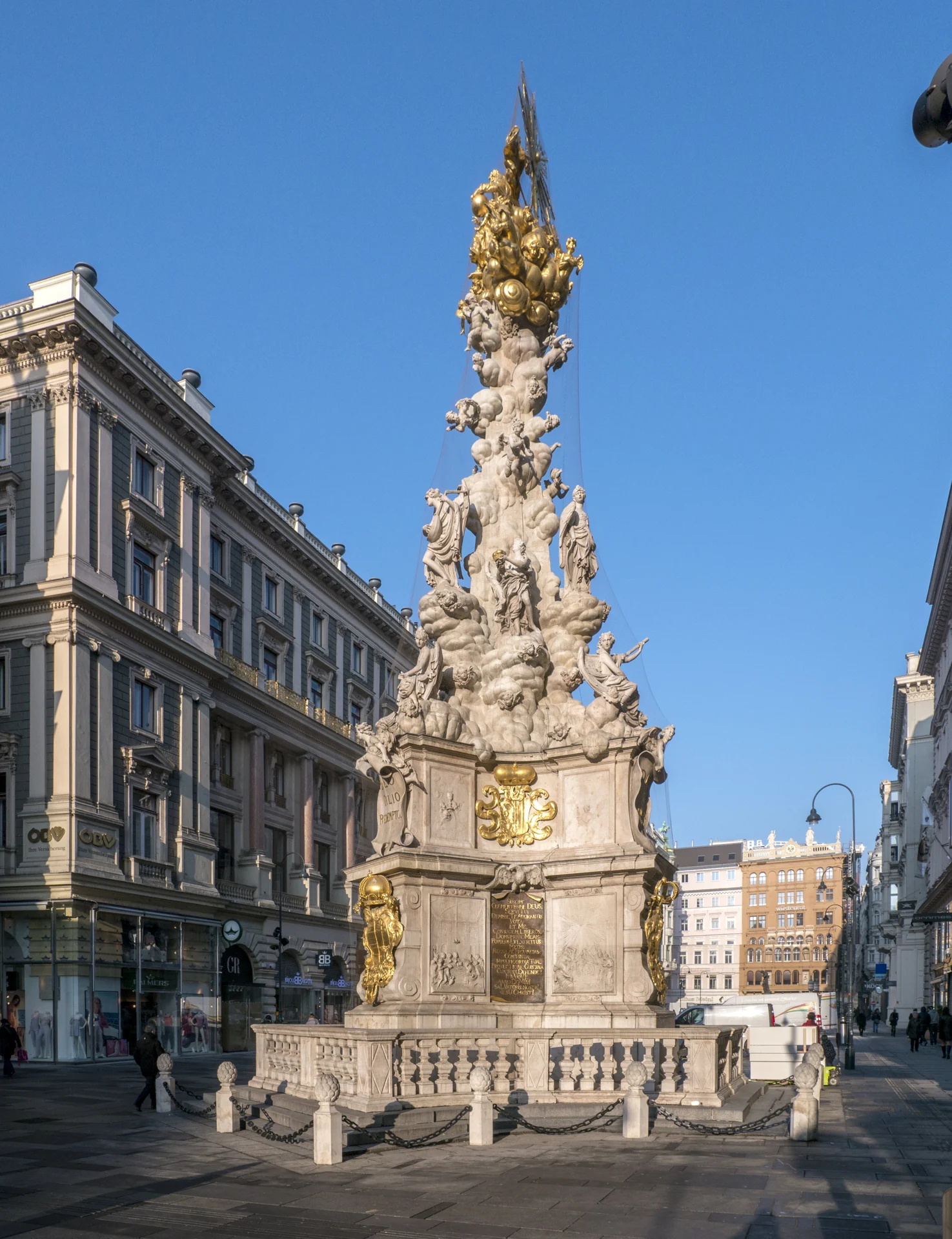
The east-side photograph brings overlapping outlines and shadows closer than the street view allows. Begin with the visible arrangement: which forms project, which disappear behind others, and how does the composition lead attention upwards?
A different viewpoint would reveal different material. One side cannot provide a complete account around the monument. Figures without a checked identification can remain unidentified while further iconographic references are consulted.
At the base, looking becomes reading
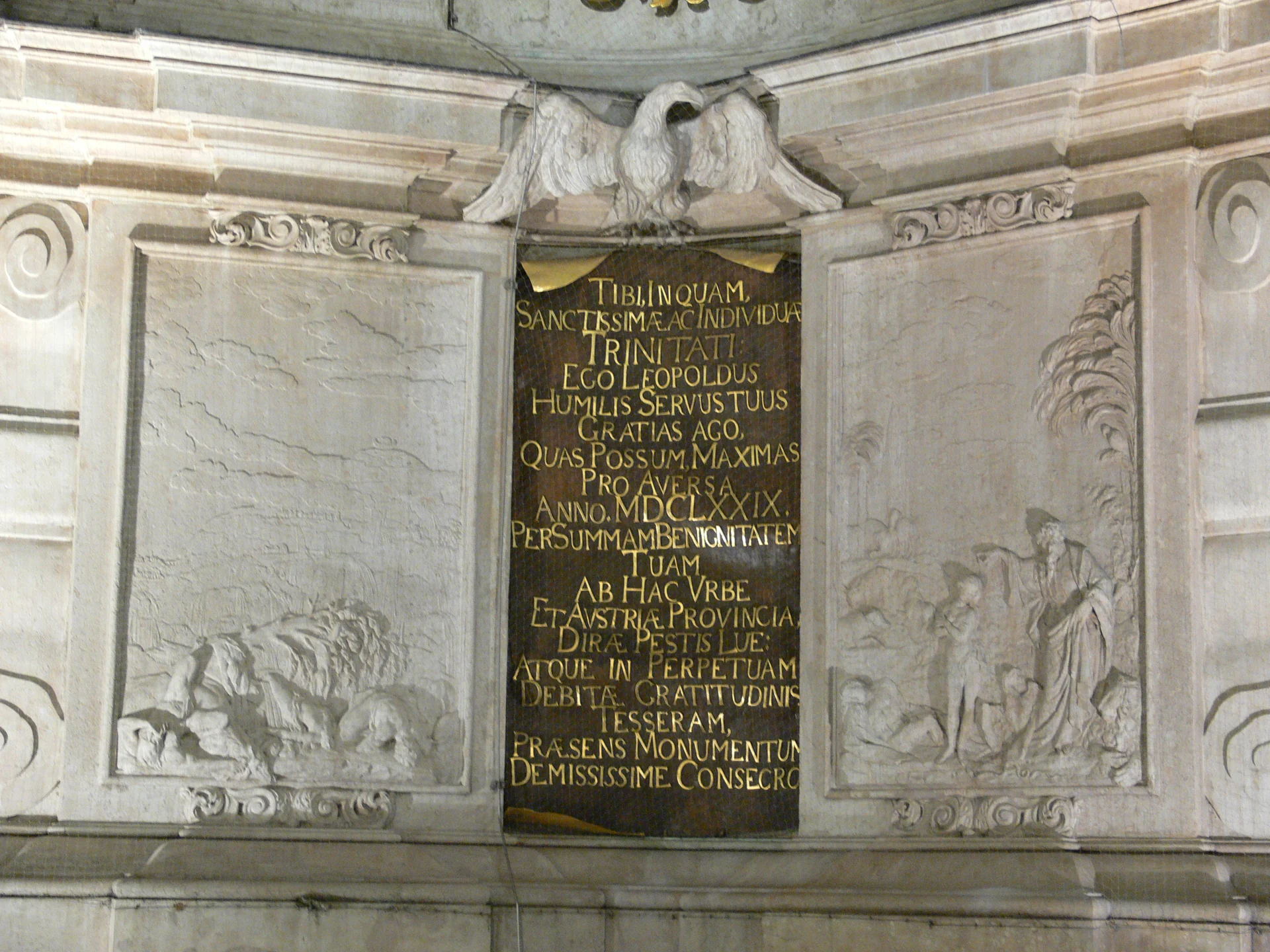
The third photograph isolates an inscription. Lettering asks for a different pace from sculpture: individual shapes, line divisions and possibly translation. A close view can establish the presence of words without making every character sufficiently clear for transcription.
Looking returns towards ground level here. Someone preparing a visit might note the inscription’s location before seeking an authoritative transcript. This essay does not fill unclear letters or supply a translation guessed from the photograph.
A nearby religious setting
The diocesan account says an early proposal considered the cemetery of St Peter’s Church as the location. That unrealised setting connects the street monument with nearby religious space. The church’s official information offers a next step for exploring the area.
Current worship and visiting arrangements require separate checking; these street photographs do not document admission. Return to the wide view with both inscription and wooden predecessor in mind, allowing them a place beside the bright upper details that first attract attention.
References
These sources inform the essay’s historical and local context. Its observations and interpretations are original to WalkThere.
Archdiocese of Vienna
The plague column — a column of honourDiocesan history of the 1679 epidemic, wooden predecessor and public devotion.
St Peter’s Church
PeterskircheOfficial introduction and current information for nearby St Peter’s Church.
More journey background
Related journey sources
- History of the Vienna State Opera — Vienna State Opera
- Zerstört und wiederaufgebaut: 80 Jahre nach den Bomben — Vienna State Opera
- St Stephen’s Cathedral — Vienna Tourist Board
- Hofburg and Heldenplatz — Vienna Tourist Board
- Heldenplatz: place and history — House of Austrian History
- Guided tours — Vienna State Opera
- State Hall — Austrian National Library