
Tallinn from Kohtuotsa: roofs close, streets out of sight
Compare rooftops, the viewing parapet and a cloudy skyline from Kohtuotsa, with context on Tallinn’s upper and lower towns from UNESCO and Visit Estonia.
Tallinn Old TownObservation essay
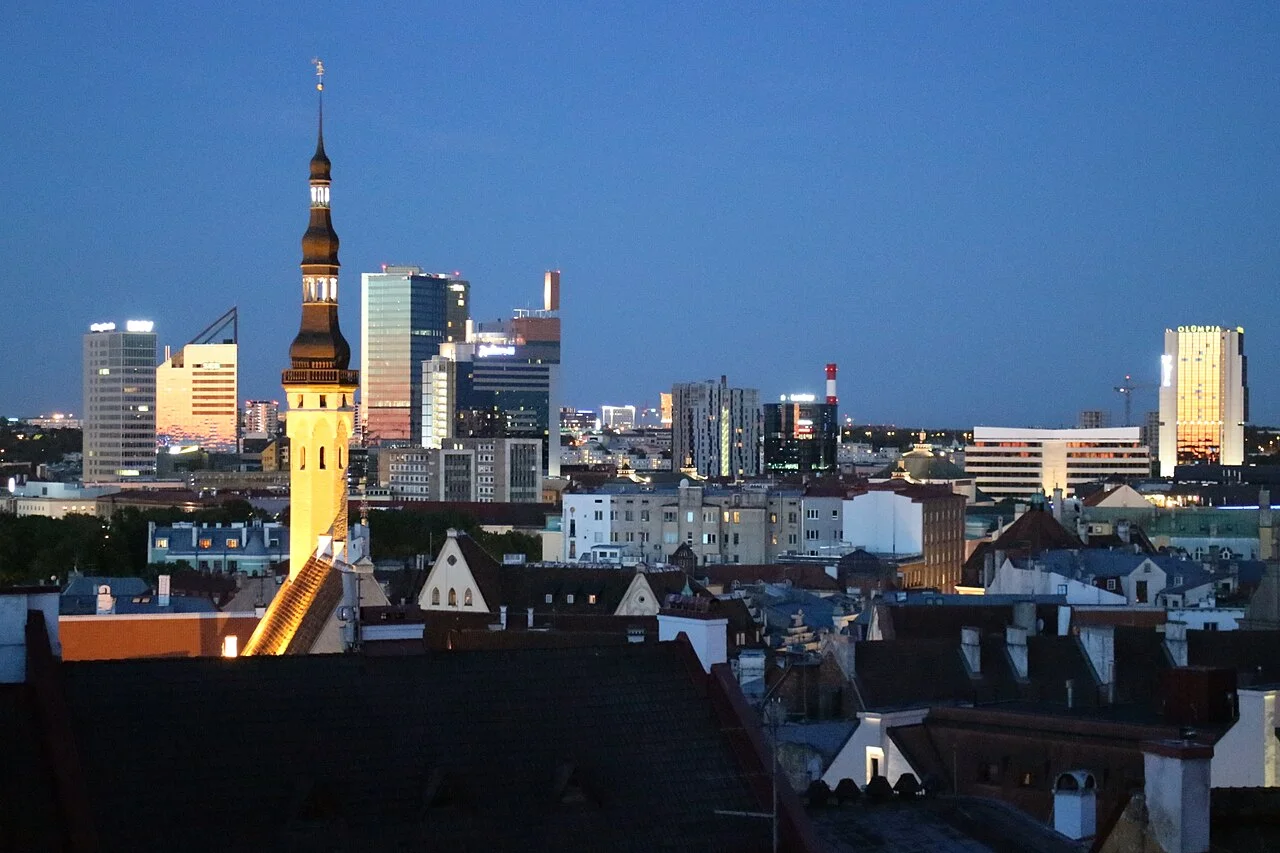
The roofs become readable first
Nearby roofs gather tightly in the wide view while taller, differently shaped buildings appear farther away. A person navigating at street level may attend mainly to the next turn; from here, several blocks can be compared within one frame.
That clarity is selective. Roof relationships become visible while much of the street network remains concealed. Remember a spire’s position beside a patch of roof without assuming the photograph supplies a route to every entrance below.
The hill supplies the viewpoint
Visit Estonia locates Kohtuotsa on the northern side of Toompea Hill and describes views across the old town and the wider city. The view depends on a specific relationship between high and low ground, not an interchangeable rooftop position.
For a visit, establish the location before borrowing someone else’s walking estimate. A short line on a map does not explain gradients, steps or temporary diversions. These photographs do not survey a continuous or step-free approach to the platform.
Upper and lower towns had different roles
UNESCO describes the hilltop administrative centre alongside the trading town below. That background shifts attention from an isolated picturesque tower towards relationships between parts of the city occupying different levels.
A roof cannot reliably identify a building’s original use. The image provides questions about density, prominent outlines and concealment. Attributing a particular merchant or civic function requires records about the building rather than an interpretation based on its roof colour.
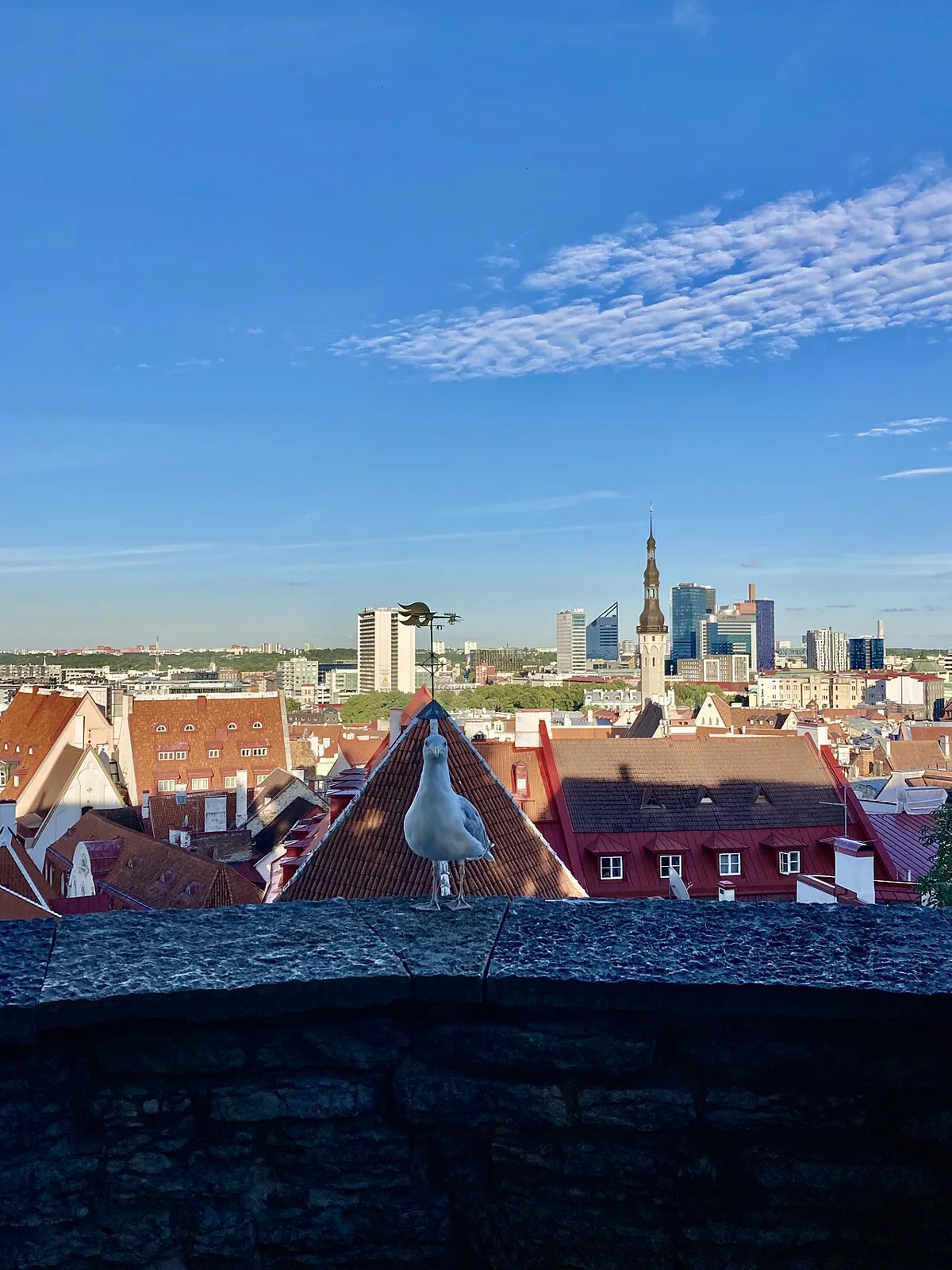
The parapet restores the observer
The second photograph includes the stone parapet. Its distance from the roofs makes the observer’s position tangible: someone stands within a bounded platform and looks into a much larger city. A small sideways move can change overlapping forms.
Leave viewing room for others and remain within the available boundary. A photograph records one chosen composition, not an entitlement to an unobstructed position. Excluding a railing from a frame is never a reason to cross it.
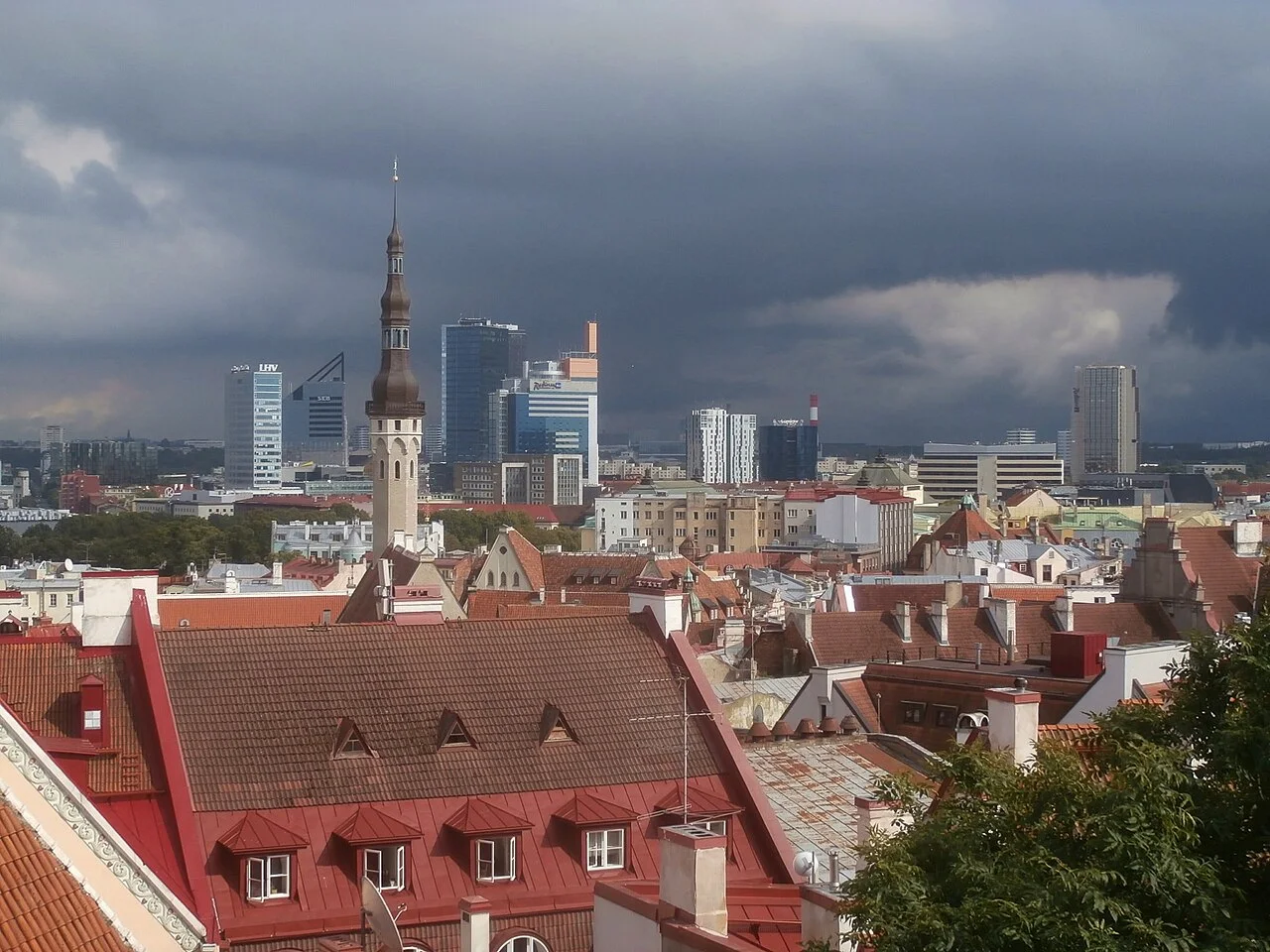
Cloud changes the contrast
Dark cloud changes the balance between roofs and distant buildings in the third image. Compare stable outlines first, then notice how light brings surfaces forward or allows them to recede. A greyer wall alone cannot establish a change of material.
The photographs date from 2018, 2022 and 2019. They are neither one day’s weather sequence nor a controlled before-and-after survey. Different camera directions and capture conditions make them useful for visual comparison without proving particular building changes.
The city extends beyond the roofscape
The first image records old-town roofs together with modern Tallinn. Keeping the farther buildings in view gives the historic district a setting within a continuing city. The platform need not supply only an image emptied of later development.
Remember the things the roofs conceal too: entrances, courtyards and people travelling along streets. Choose one place for closer investigation and check its ground-level approach. The overview supplies relationships while a subsequent street encounter proceeds at its own pace.
References
These sources inform the essay’s historical and local context. Its observations and interpretations are original to WalkThere.
Visit Estonia
Kohtuotsa viewing platformOfficial location on Toompea Hill and context for the wider city view.
UNESCO World Heritage Centre
Historic Centre (Old Town) of TallinnHeritage context for the upper administrative town, lower trading town and skyline.
More journey background
Related journey sources
- Town Hall tower — Visit Tallinn
- Old Town sights — Visit Tallinn
- Nun’s Tower and City Wall Platform — Visit Tallinn
- Toompea Castle — Riigikogu
- Kohtuotsa viewing platform — Visit Tallinn
- Town Hall Pharmacy — Visit Tallinn
- Great Guild Hall: city museum map — Visit Tallinn
- Alexander Nevsky Cathedral: city guide — Visit Tallinn
- Patkuli viewing platform — Visit Tallinn
- Toompea Castle and Riigikogu building — Riigikogu