
Tallinn Old Town: civic square, walls and hill
Explore Tallinn through a civic square, a landmark spire, surviving defences and the changing perspectives of Toompea.
Begin the visual journeyPlan a real visit to Tallinn Old TownExplore 8 reviewed views along the routeGuided visual journey
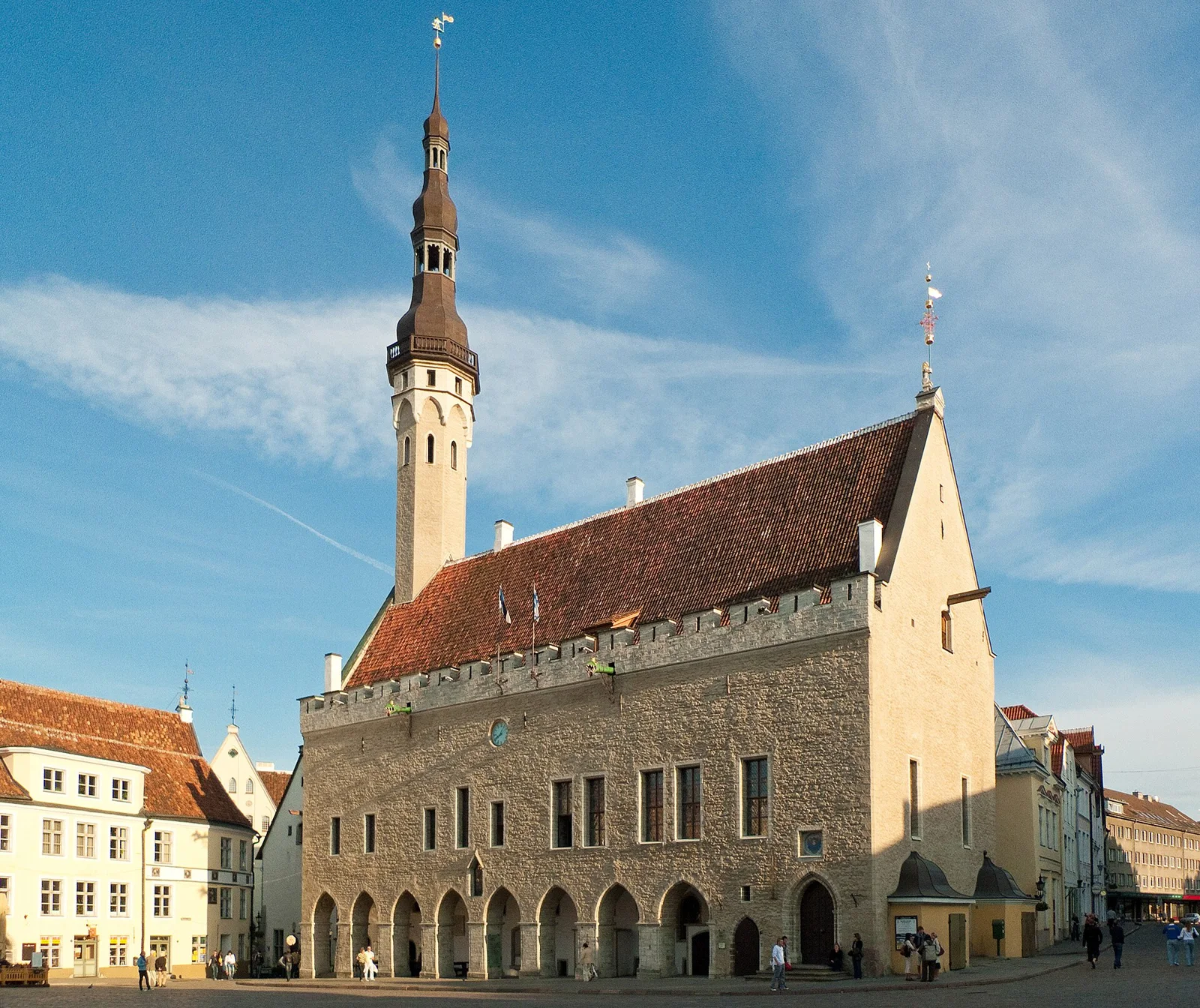
Tallinn Town Hall and its tower above Town Hall Square · Tallinn_Town_Hall.jpg: Medvedev uploaded and derivative work by: MrPanyGoff · CC BY-SA 3.0 · Resized and converted to WebP
Reading mode
Place stories to read at your own pace
Compare independently captured photographs and viewpoints, each with its own date.
Chapter 1
Town Hall: a civic room in the Lower Town
Begin in Town Hall Square, where the space between buildings matters as much as the most recognisable façade. The square lets you stand back from the Town Hall and read its length, roof and tower together. A narrow street tends to reveal architecture piece by piece; an open square gives a civic building room to address a larger public. Look at where the building touches the ground, then follow its outline upward. The tower establishes a vertical accent without making the rest of the composition disappear.
The city’s tourism service dates the Town Hall tower and the associated building campaign to 1402–1404. Treat that as a historical anchor rather than a date for every visible surface. Repair, reuse and photography all intervene between the medieval building and the image before you. The Town Hall belongs to the Lower Town, whose merchant institutions offer a different perspective from the governing buildings on Toompea. The optional Raeapteek discovery brings attention back to a smaller frontage on the same square and to the history of an everyday service.
Compare the wide photograph with the detail and context views. An opening or roof edge that seems minor at a distance may organise the closer composition. Conversely, a striking detail can distract from the relationship between the building and the square. Notice where neighbouring façades enter the frame and how they give the Town Hall a scale. The photographs are separate records, so differences in crowds, weather or furniture do not describe one unfolding visit. They offer complementary ways of looking at a civic setting.
This chapter stays with the exterior and its public surroundings. A local interactive scene does not include a visit to the hall, its upper floors or its tower, and an apparently open door cannot establish admission. Any actual interior visit needs its own arrangements with the operator. Before leaving the images, look once more at the interval of open ground: it allows the building to become a shared point of orientation rather than simply an object seen close up.
Real-travel note
Independent exterior scenes do not establish interior admission, current opening or a continuous or step-free inter-site walk.
Compare independently captured photographs and viewpoints, each with its own date.
Chapter 2
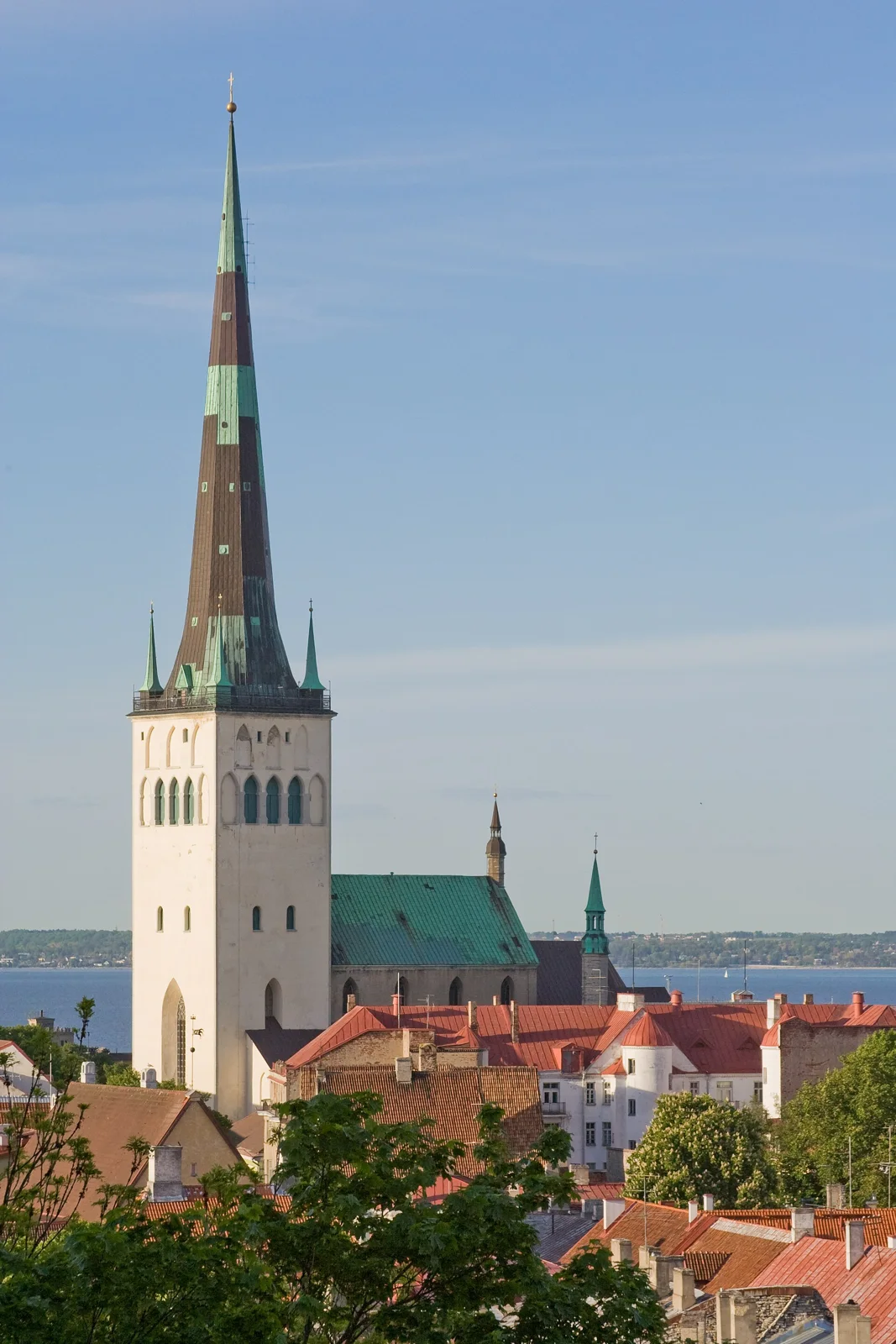
St Olaf: a spire above the merchant streets
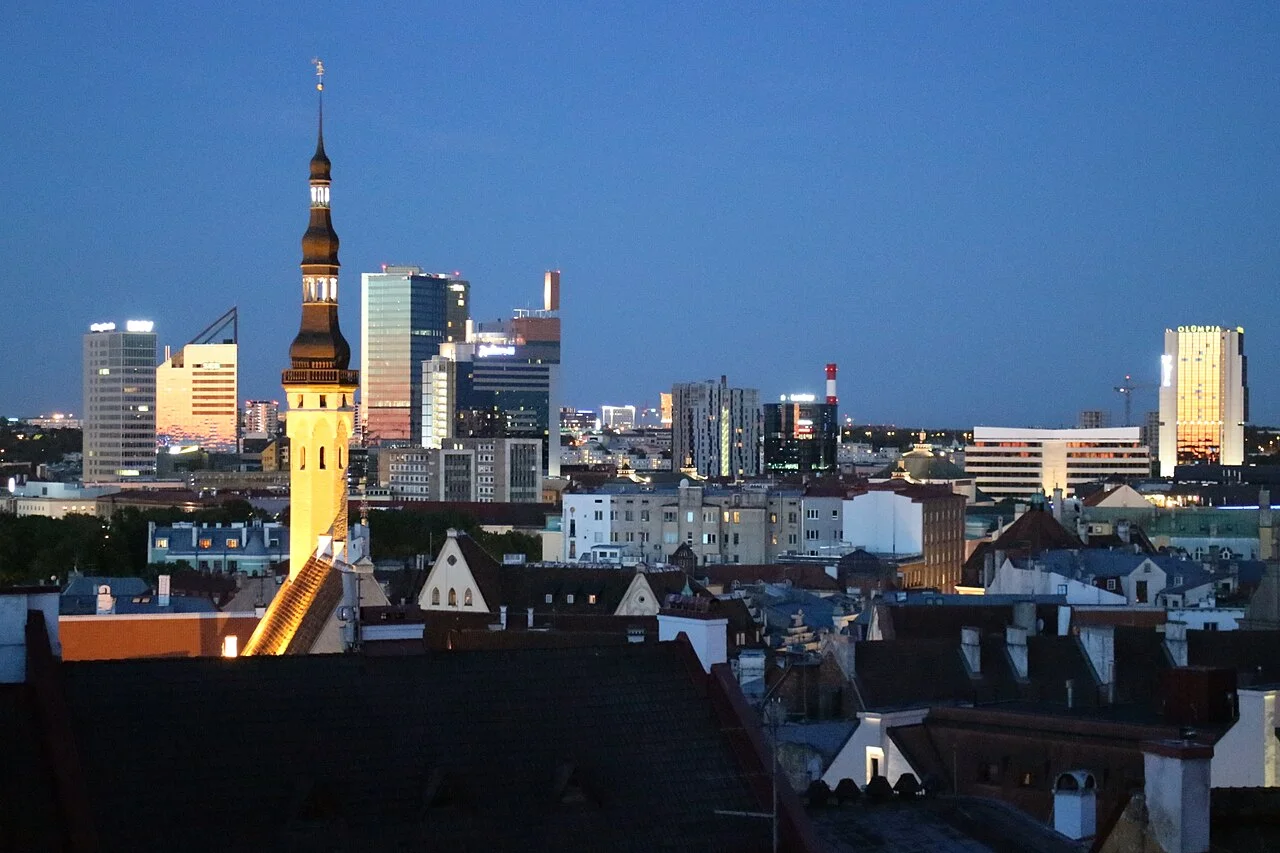
St Olaf’s Church changes the scale of attention from a civic frontage to a tall landmark. Its spire can organise a view long before the church’s entrance becomes legible. Start by separating the narrow upper silhouette from the broader body below. Ask which surrounding roofs give it an apparent height and how much of the church the camera actually shows. A landmark seen from a distance is often a partial building, completed in the viewer’s imagination by its most distinctive feature.
Visit Tallinn lists the church and its tower among the Old Town’s sights. UNESCO’s account places the historic centre within the history of a northern European trading city. Together these references give a useful urban frame without requiring a superlative about the spire. Claims that it was once the world’s tallest building are deliberately not used here: competing historical heights are unnecessary to appreciate its role in the skyline. Instead, compare the tower with the scale of streets, roofs and neighbouring buildings visible around it.
The three photographs invite a change of distance. The wider frame makes the spire part of Tallinn’s urban silhouette, while the closer image allows attention to architectural mass and surface. The context frame restores the streets around the church. Where walls overlap, notice how little of the ground may remain visible. A photograph can make a place feel easy to understand while withholding the approach, the doorway and any stairs. The Great Guild discovery adds another institutional building to the merchant-city comparison, without claiming that this sequence follows one verified street route.
The church is a place of religious use, not simply an observation structure. Exterior imagery supplies neither access to worship spaces nor a climb of the tower. Opening arrangements, weather restrictions and the suitability of stairs require separate checking with the responsible venue. Use the local interactive fragment to understand its immediate outdoor setting. Then return to the skyline and consider how one slender form can connect several otherwise separate photographs in the mind, even when those pictures were captured on different days.
Real-travel note
Independent exterior scenes do not establish interior admission, current opening or a continuous or step-free inter-site walk.
Compare independently captured photographs and viewpoints, each with its own date.
Chapter 3
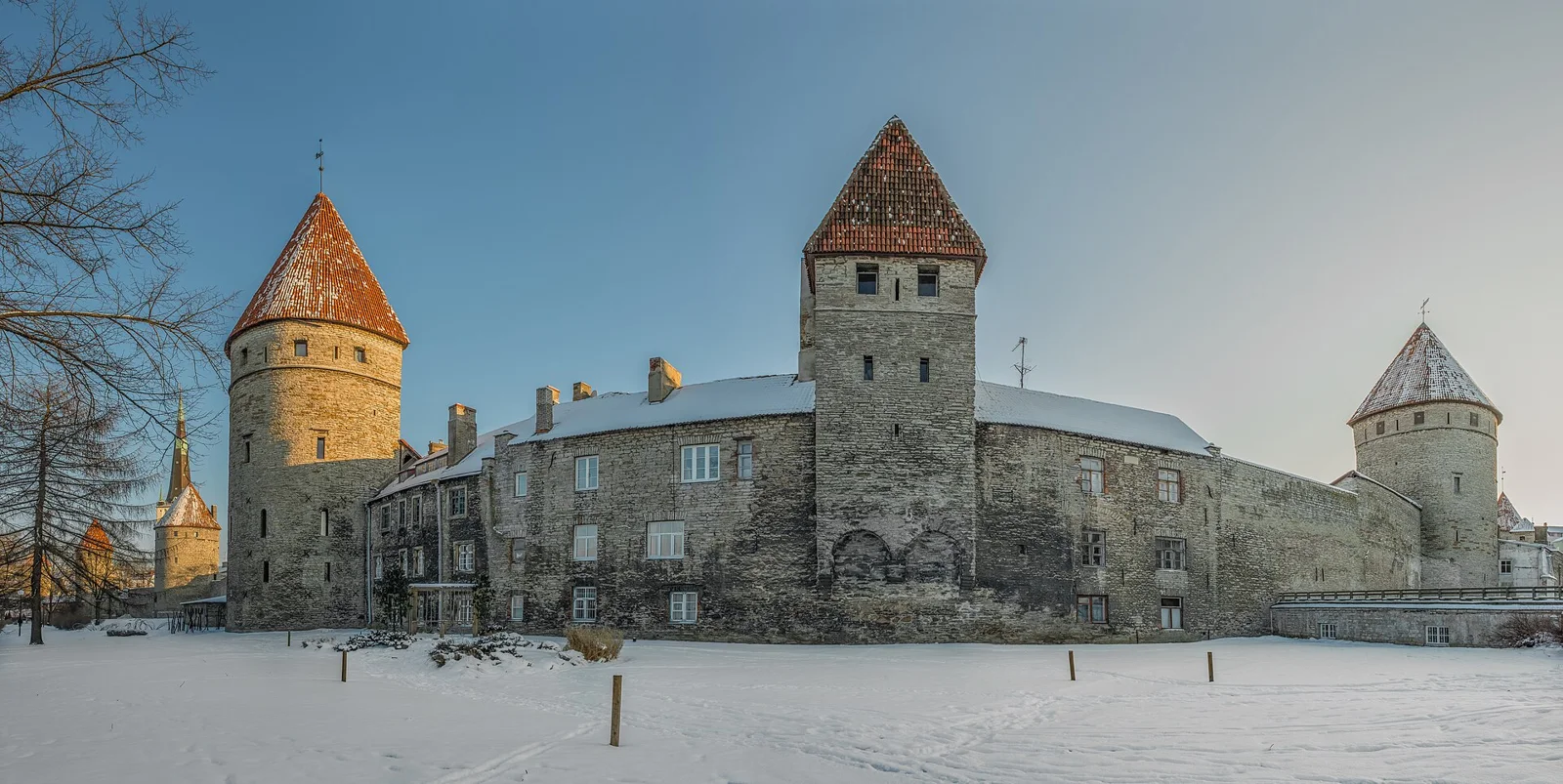
City walls: the thickness of an urban boundary
A city wall is easiest to recognise as a line of towers, but its more interesting quality is thickness. Look for the relationship between vertical stone faces, tower volumes and the ground beside them. A defensive boundary once organised movement by separating an inside from an outside. In photographs, that separation can become less obvious because trees, paths and later buildings occupy the foreground. Start with the broad outline, then ask where the boundary is solid, where it changes direction and where the image stops explaining it.
Visit Tallinn describes a surviving wall section connecting the Nun’s, Sauna and Golden Foot towers, identifying those towers with the fourteenth century. That specific example helps explain the defensive ensemble without suggesting that every surviving tower belongs to the same building campaign. Different portions of a fortification can preserve different histories of construction and repair. The wider UNESCO heritage description provides the city context; the local reference supplies a more precise architectural anchor. Neither reference makes a photograph into a complete archaeological survey.
Compare the rhythm of towers in the wide and context images. Their spacing may look regular from one angle and compressed from another. A nearer detail can help you notice the material and the scale of openings, but colour alone cannot distinguish original masonry from later work. If an elevated passage appears, do not assume that every visible section connects to the next or that the photographed position is available today. The Alexander Nevsky discovery introduces a very different architectural layer into the wider Old Town story, moving attention from defence to religious and imperial representation.
The local interactive fragment is an independent outdoor scene. It offers no ticket, wall-top walk, tower interior or museum visit. Those experiences may involve separate operators and stairs, and should be planned individually. Finish by reading the boundary as part of the city’s organisation rather than a decorative backdrop. Its surviving forms help explain why urban edges matter, while the gaps and modern surroundings remind us that a historic city remains a place shaped by later life.
Real-travel note
Independent exterior scenes do not establish interior admission, current opening or a continuous or step-free inter-site walk.
Compare independently captured photographs and viewpoints, each with its own date.
Chapter 4
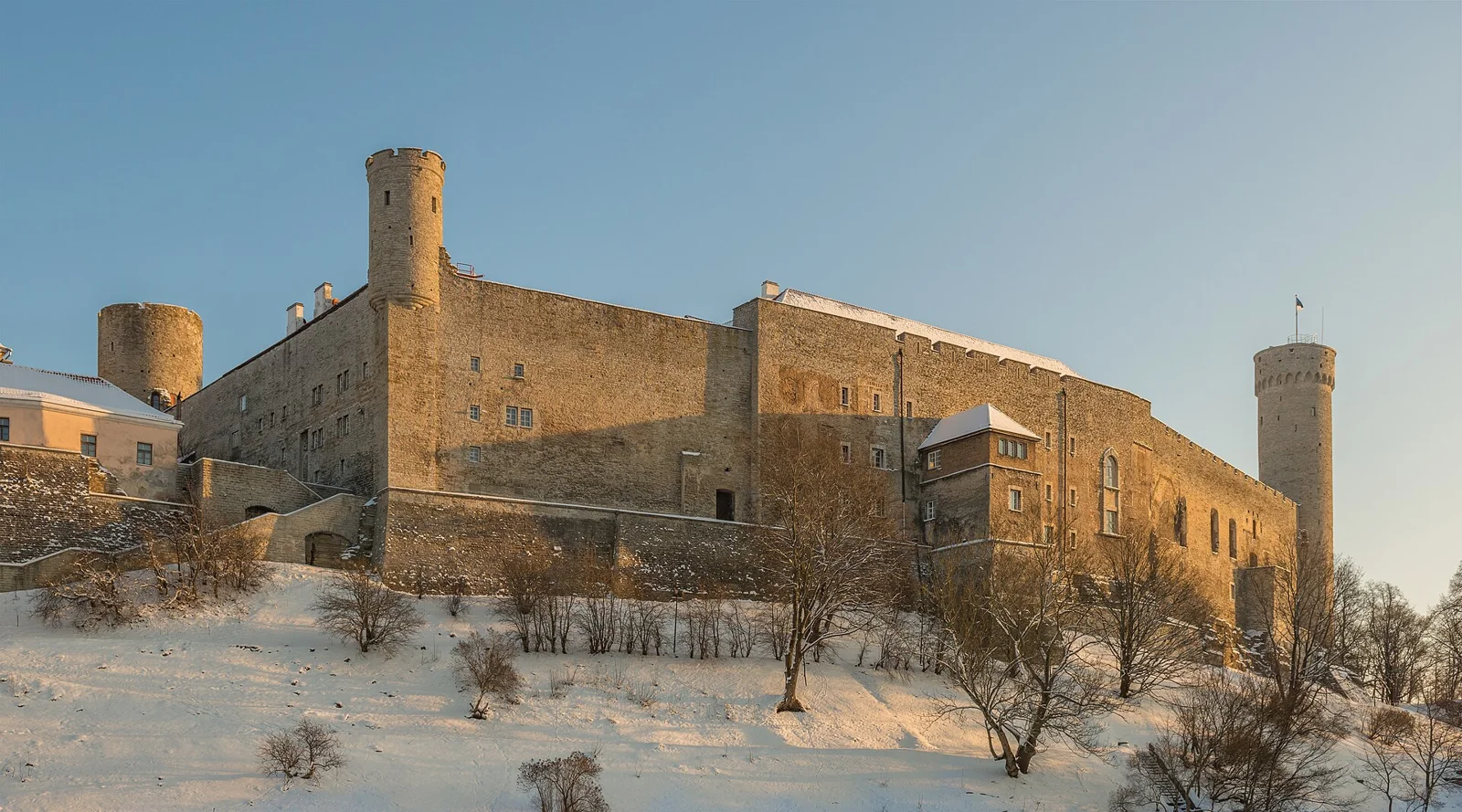
Toompea: power written in different façades
Toompea introduces a different relationship between height and authority. The hill separates its governing ensemble from the Lower Town, but no single façade can explain the whole complex. Begin with the mass of the buildings and the shape of their surroundings. A palace-like front and a defensive wall address viewers in different ways: one organises an approach through ordered windows and a formal surface, while the other makes the hill’s edge feel more substantial. They can belong to the same complex without sharing one date or purpose.
The Riigikogu’s account describes Toompea Castle as an ensemble transformed across centuries. Its medieval western walls and towers, the later provincial-government façade facing Castle Square, and the parliamentary building inside the walls represent distinct phases. The parliament’s own history dates its purpose-built building to 1920–1922. This distinction matters in Estonia: imperial administrative architecture and the institutions of the independent republic should not be collapsed into a timeless story of the same rulers. Present-day parliamentary use gives the complex a civic meaning that differs from its earlier governing roles.
The photographs help compare outward appearances rather than promising a complete inspection. Look at where changes of material, roof height or window rhythm suggest a shift between parts of the ensemble. Such observations are starting points for questions, not a substitute for documented dating. A view from below can emphasise the defensive side; a street-facing image may emphasise the formal façade. The optional Patkuli discovery adds another perspective from the hill, shifting attention outward to the town rather than into the governing buildings.
An exterior panorama does not establish admission to the Riigikogu, an interior chamber, courtyard or tower. Parliamentary visits have their own arrangements, which should be checked with the institution. Nor does this chapter verify an accessible climb from the preceding wall scene. Treat the transition as editorial. Holding the separate building phases in view allows Toompea to become a legible historical ensemble while preserving the differences between medieval fortification, imperial administration and Estonia’s parliamentary life.
Real-travel note
Independent exterior scenes do not establish interior admission, current opening or a continuous or step-free inter-site walk.
Patkuli redirects attention from Toompea’s governing buildings toward the town below. Visit Tallinn describes its views of the walls and towers and dates the associated stairway to 1903. The stairs are part of the viewpoint’s own history, rather than proof that the journey includes a tested descent. Look at how the city wall becomes a rhythm across the landscape instead of the close surface studied earlier. Roofs, vegetation and more distant buildings establish layers of depth. Compare this preview with the following Kohtuotsa chapter without assuming that two viewpoints offer identical directions or the same visible landmarks. A slight change in position can alter which tower dominates and how much of the surrounding city enters the image. Patkuli is a photo-only discovery in this journey. The photograph records one angle and one moment; visibility and crowding will vary. It does not confirm a step-free approach or continuous passage to another scene. Plan physical movement separately, and use the comparison to understand how a hill can produce several distinct readings of the city.
Chapter 5
Kohtuotsa: putting the city back together
Kohtuotsa closes the journey by changing the direction of looking. Rather than standing beneath individual towers, the viewer can read roofs, spires and more distant parts of Tallinn together. Begin with the foreground edge, then move through the middle distance to the horizon. Each band has a different scale. A nearby roof may occupy more of the frame than a much larger distant building, so apparent size should not be mistaken for a measured comparison of architecture.
Visit Tallinn places Kohtuotsa on the northern side of Toompea and describes views toward the Gulf of Finland, the harbour and Pirita. These references place the Old Town within a wider coastal city. What is visible in a particular photograph still depends on its direction, framing and atmosphere. Do not force every named destination into every image. Instead, notice how the compact pattern of older roofs meets the more varied silhouette beyond. The heritage district is part of Tallinn, rather than the whole of the contemporary city.
Return mentally to the previous chapters. The Town Hall, St Olaf’s spire, the walls and the governing hill supplied different ways of organising space: civic openness, vertical orientation, defensive edges and elevated authority. A panorama lets these ideas coexist without making all the buildings look the same age. Compare the wide view with its selected detail and context photographs. Where a skyline is partly obscured, allow the image to remain incomplete. A patch of sky, trees or distant water can be as important to the composition as a named monument.
The scene is an independent record of an outdoor viewpoint, not a live report of visibility or crowding. It does not verify the condition of any approach, a step-free connection to other chapters, or access to the interiors visible below. Plan practical movement separately, especially where slopes and stairs matter. End by choosing one relationship to remember: roof against spire, wall against vegetation, or the historic centre against the coastal horizon. That comparison carries more of the city’s structure than a checklist of landmarks alone.
Real-travel note
Independent exterior scenes do not establish interior admission, current opening or a continuous or step-free inter-site walk.
8 reviewed experiences
Explore along the route
Step into the places along this journey. Choose a view independently of the story chapters. Free previews do not count toward chapter progress. Return to the journey above to continue through its stops.
Town Hall: a civic room in the Lower Town Short observation sequence
2026-04 · 5 connected local positions and return. Town Hall side doorway and adjoining Raekoja lanes; the square and main façade are not continuously in view. Capture-date archive; current access and arrangements may differ.
Reviewed 2026-11-08 · Nearby viewpoint
Explore at your own pace; these views do not count toward chapter completion. Check each point's coverage note before navigating provider imagery. Availability may change.
Sources
- Town Hall tower — Visit Tallinn
- Old Town sights — Visit Tallinn
- Nun’s Tower and City Wall Platform — Visit Tallinn
- Toompea Castle — Riigikogu
- Kohtuotsa viewing platform — Visit Tallinn
- Town Hall Pharmacy — Visit Tallinn
- Great Guild Hall: city museum map — Visit Tallinn
- Alexander Nevsky Cathedral: city guide — Visit Tallinn
- Patkuli viewing platform — Visit Tallinn
- Historic Centre (Old Town) of Tallinn — UNESCO World Heritage Centre
- Toompea Castle and Riigikogu building — Riigikogu
- Tallinn Town Hall and its tower above Town Hall Square — Tallinn_Town_Hall.jpg: Medvedev uploaded and derivative work by: MrPanyGoff
- Coat of arms on Tallinn Town Hall — Diego Delso
- Town Hall facade beside the square — Diego Delso
- St Olaf’s Church spire above Tallinn rooftops — Olga Itenberg
- Gothic window and doorway of St Olaf’s Church — Diego Delso
- St Olaf’s Church tower viewed from the street — Diego Delso
- Medieval wall towers beside Towers Square in winter — Abrget47j
- Stone city wall and defensive towers in Tallinn — Cayambe
- Covered wall walk and tower beside a Tallinn street — Diego Delso
- Toompea Castle and Tall Hermann in winter light — Abrget47j
- Toompea Castle stone fortifications on the hill — Ivar Leidus
- Pink facade of the Estonian parliament at Toompea — Diego Delso
- Old town roofs and modern Tallinn from Kohtuotsa — Suicasmo
- Stone parapet and rooftops at Kohtuotsa viewpoint — Ursula Roomere
- Tallinn skyline from Kohtuotsa under dark clouds — Pjotr Mahhonin
- Town Hall Pharmacy exterior — exterior and setting — Diego Delso
- Pointed entrance doorway of the Great Guild Hall — Diego Delso
- Alexander Nevsky Cathedral with its onion domes — kallerna
- Tallinn towers in sunrise mist from Patkuli viewpoint — Hendrik Mändla


Your journey, remembered.
Explored 0 of 5 stops. Explore every stop to unlock your keepsake.
5 stops to your keepsakeExplore every stop to share or download your keepsake.
Plan separate Tallinn visits
Explore five urban settings; arrange inter-site travel and interior visits separately.
Official sources checked:
Independent scenes and editorial transitions
Five chapters and four discoveries follow an editorial sequence. Google local scenes are independent and may have different capture dates; they do not form a verified continuous or step-free walk. Check actual surfaces, stairs, crossings and temporary arrangements separately.
Exterior scenes and building admission
The local imagery shows a Town Hall side-gate setting, Raekoja Square, Tolli Lane near St Olaf’s, the wall surroundings, Toompea exteriors and viewpoint approaches; it establishes no admission to the Town Hall, churches, wall towers or parliament. Confirm interior visits with the responsible operators. Photographs promise neither present opening nor prices or interior passage.