
Strasbourg’s Petite France: roofs above working water
Read the half-timbered façades alongside drying lofts, quays and lock equipment, following practical uses beyond the flower boxes.
Strasbourg Old TownObservation essay
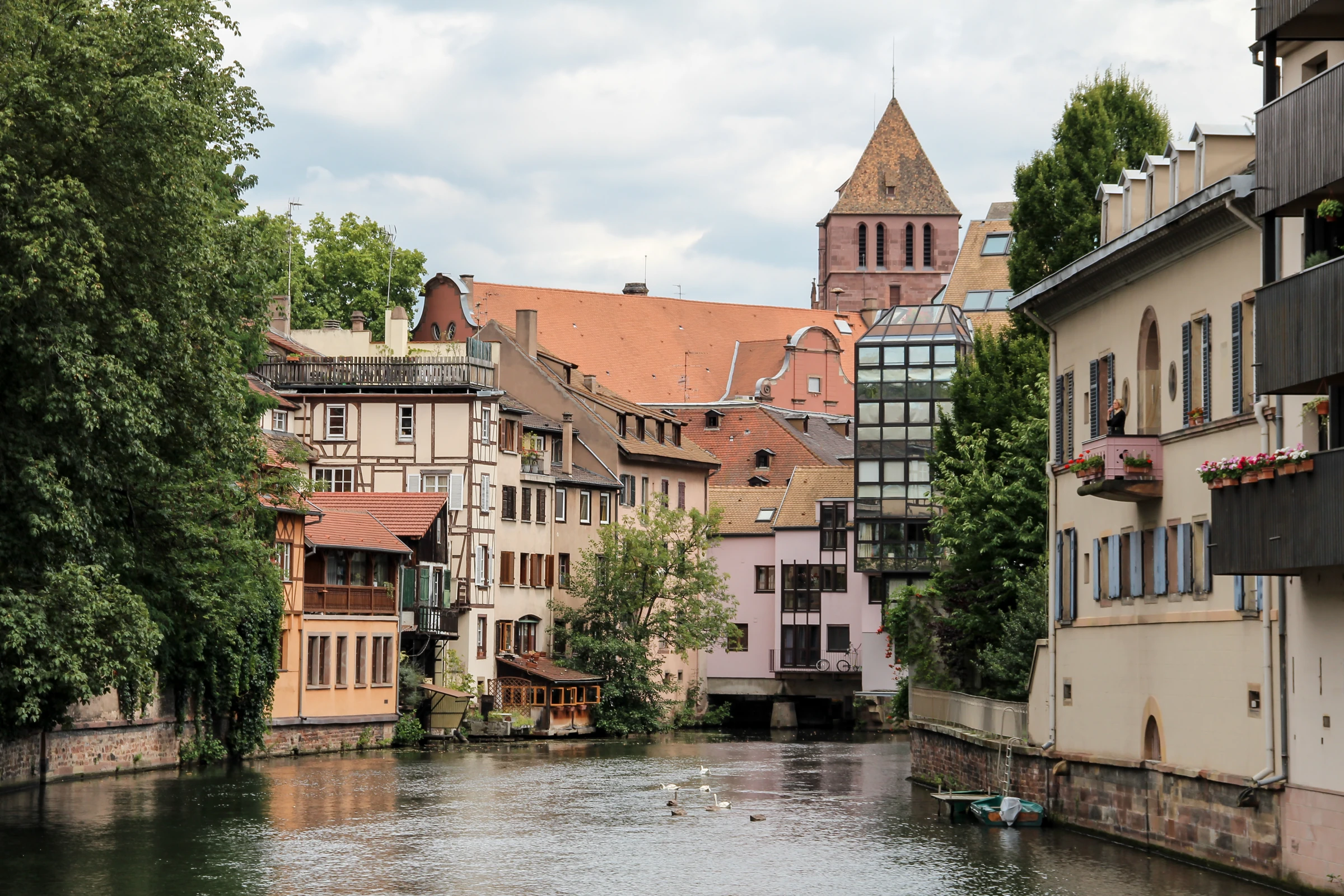
Follow the foot of the walls
The opening photograph mixes timber framing with plain walls, trees and a glazed volume. Water occupies the foreground, while usable ground is less obvious. The buildings meet the channel closely.
Across an ordinary street, a viewer can approach a window and retreat to inspect the façade. Across water, that movement depends on bridges and paths. A photograph compresses the banks into one surface; reaching the opposite side takes a different route.
Look above the flower boxes
In the second view, dark framing divides pale walls into rectangles and diagonals. Above the flower boxes, roof shapes vary: pointed gables sit beside long slopes with horizontal openings. Their proportions deserve attention as much as their colours.
The tourist office associates nearby Rue du Bain-aux-Plantes with tanning and describes open upper roof spaces used to dry skins. This supplies a specific architectural question, without identifying the age or purpose of every opening in the selected photograph.
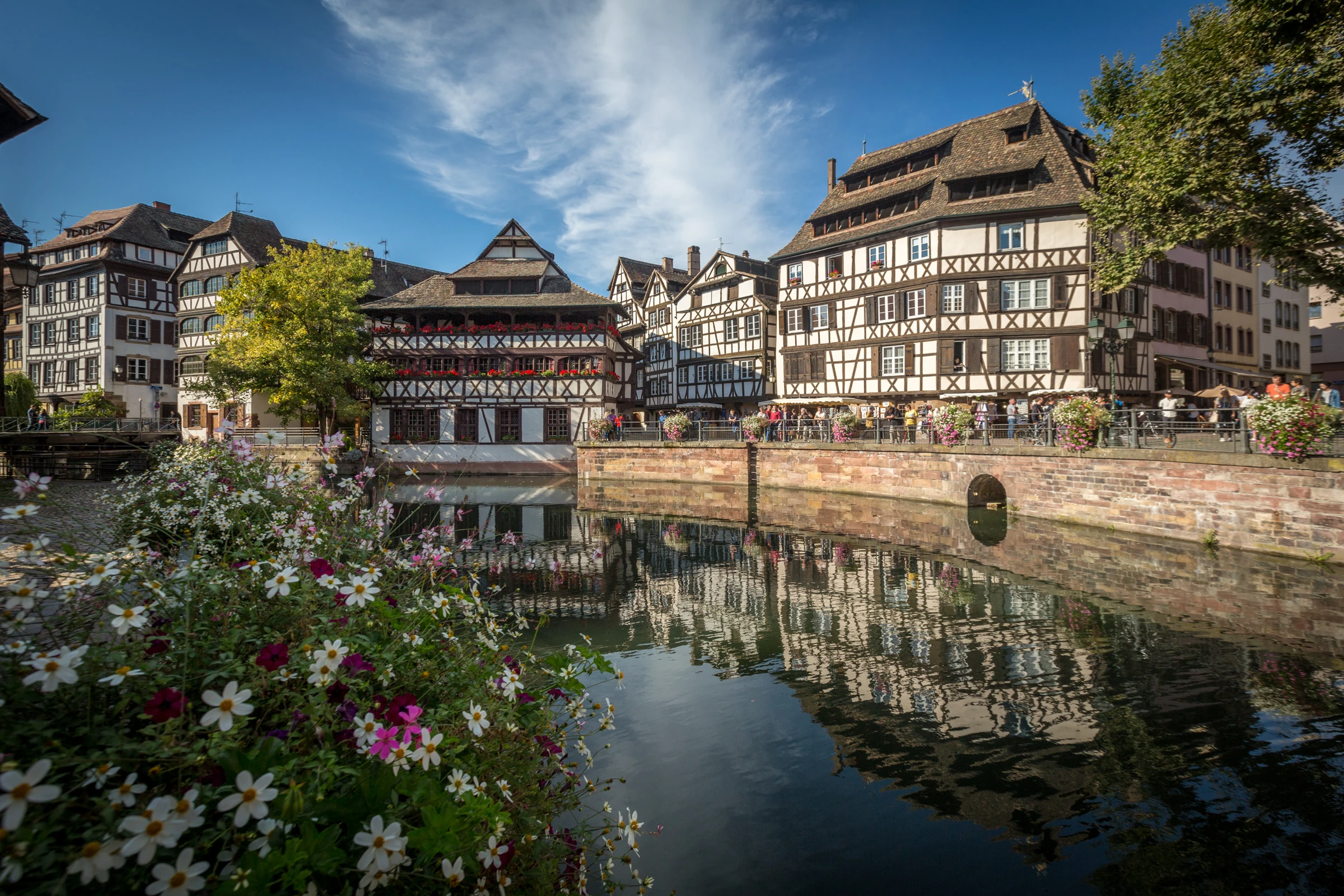
Drying skins changes how a roof is read
Follow the lower windows upwards towards the long openings, then compare the roof with the volume beneath it. A present-day viewer might imagine bedrooms or a loft. A working space could instead require ventilation and room to handle materials.
The images do not record tanning itself. Inventing smells, tools and workers’ movements would exceed their evidence. The documented connection between drying and roof space already gives a useful reason to inspect the proportions more carefully.
At the lock, reflection gives way to equipment
The third photograph brings gates, a narrow channel and a railed pedestrian path into the foreground. Damp marks and green growth remain visible on the walls. Water meets barriers and changes of level rather than simply reflecting a façade.
A still image cannot demonstrate a full locking sequence or identify the present operator. It does place two routes together: people move beside the channel while navigation requires equipment to manage passage and water levels. This view retains the maintained infrastructure that a collection of flower-box pictures could easily omit.
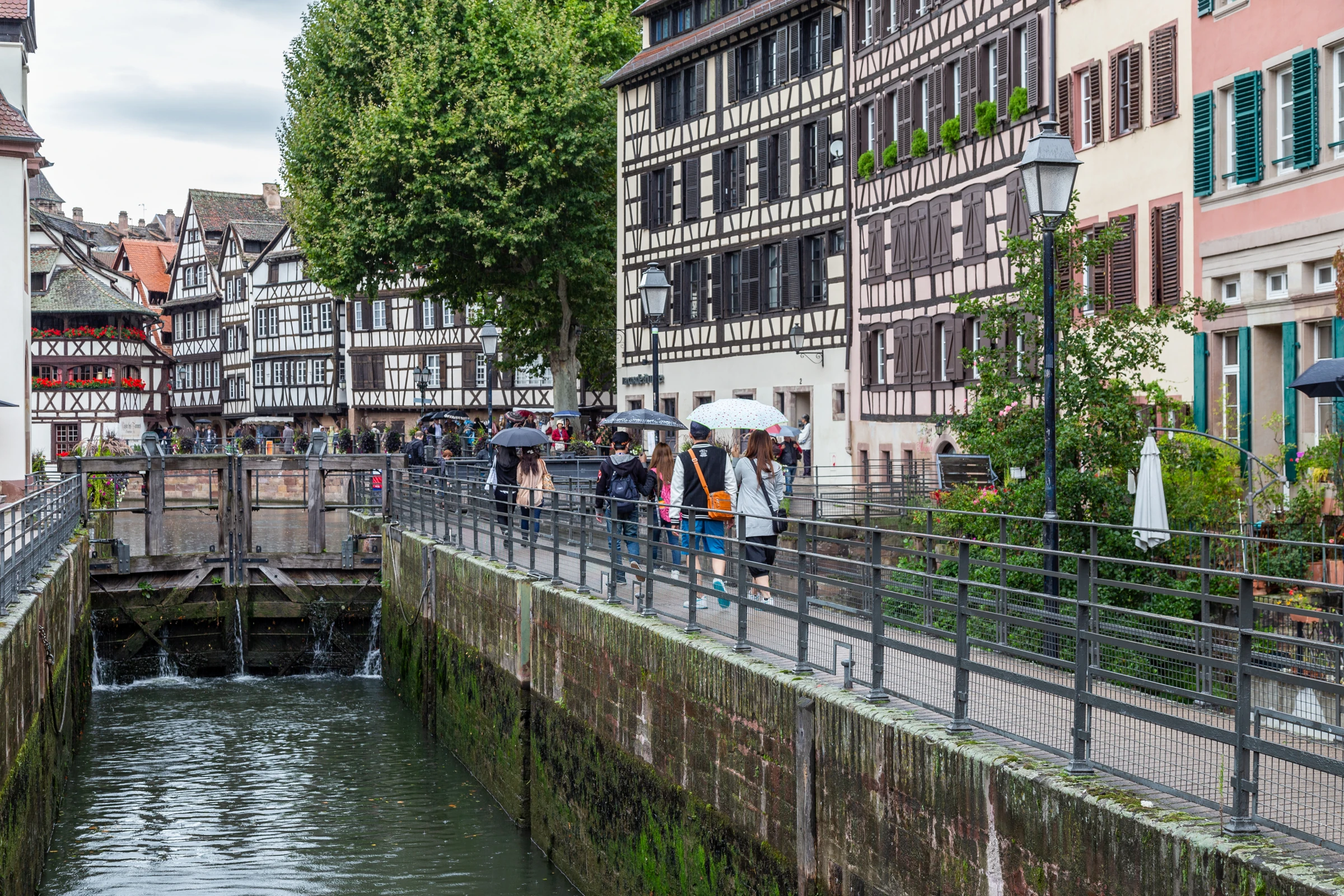
A quay belongs to a larger city
UNESCO relates the city’s perspectives around the cathedral to a landscape organised by rivers and canals. That scale extends well beyond these few waterfront houses. A local reflection should not be treated as a complete account of the historic centre.
In the second photograph, a retaining wall supports a railing and people on one bank, while some buildings stand closer to the water opposite. Different edges offer different room to stop. Notice where people gather and what they can see from there, rather than seeking only an empty composition.
Keep one detail without flowers
The photographs date from 2011, 2015 and 2014. They record different conditions rather than a continuous walk, and do not guarantee current planting, businesses or water conditions. Check present information when arranging an actual visit.
Choose one unflowered detail to remember: a row of roof openings, a wall meeting the water or the narrow path beside the lock. It can direct a later look towards use and access. The flowers and reflections can remain part of the view alongside those practical questions.
References
These sources inform the essay’s historical and local context. Its observations and interpretations are original to WalkThere.
Strasbourg Tourist Office
The Petite FranceTourist office account of timber-framed streets, drying lofts and waterway structures.
UNESCO World Heritage Centre
Strasbourg, Grande-Île and NeustadtContext for the waterfront within the city’s landscape of rivers and canals.
More journey background
Related journey sources
- The cathedral — Strasbourg Tourist Office