
Stockholm’s Stortorget: literature in the Exchange Building
Beyond the colourful façades, Börshuset brings trading, civic meetings, ceremonies and literary life under one roof.
Stockholm Old Town & Royal WaterfrontObservation essay
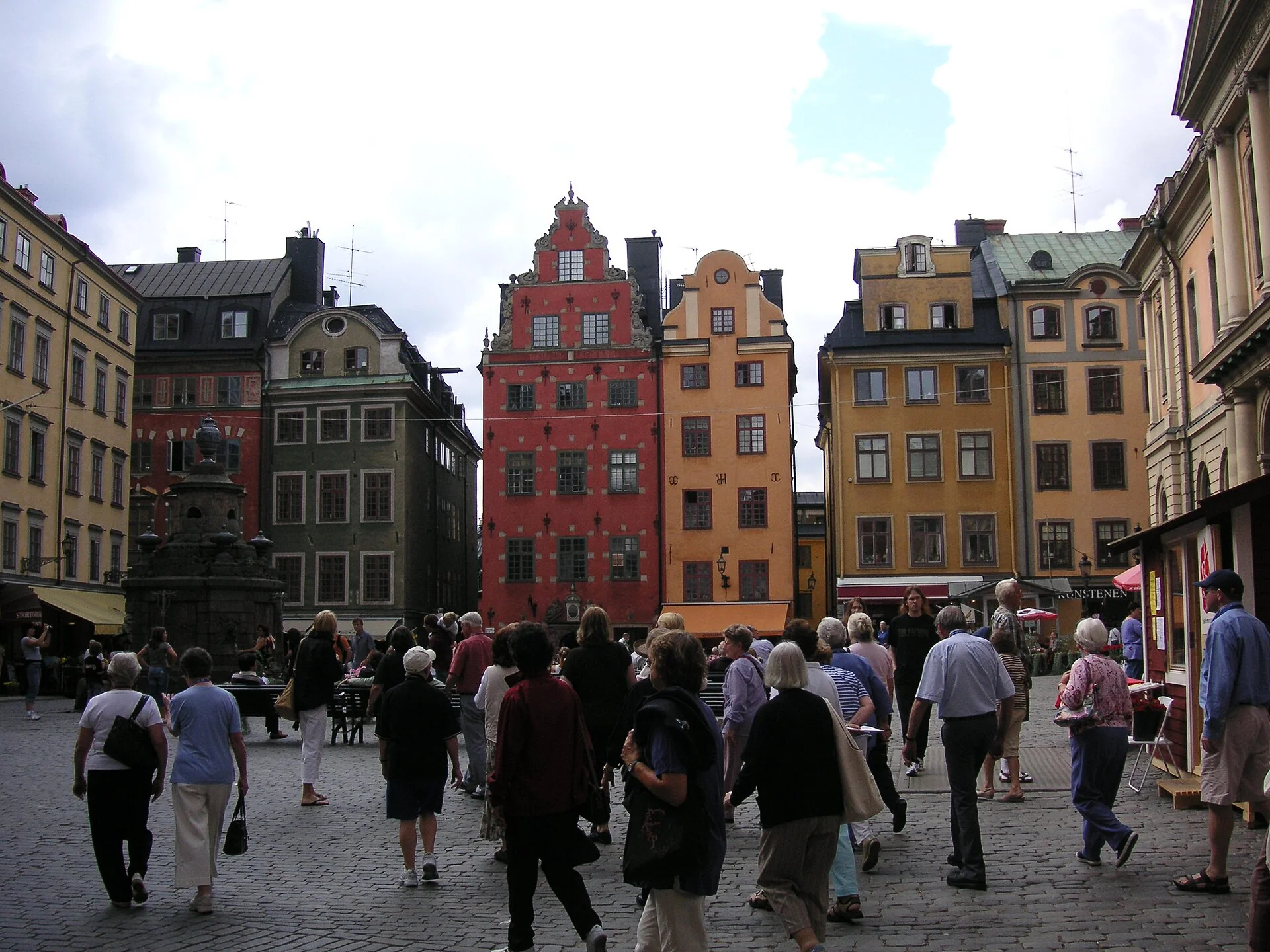
Change the question beside the colourful houses
Stortorget photographs often begin with the narrow coloured façades. Rooflines differ while windows divide the colours into ordered groups. Looking across the square changes the scale and the question.
Börshuset’s name points towards commerce, while the Swedish Academy’s name on its façade points towards literature. Those identities need not compete. Ask instead who used the rooms and floors. An old building can outlast a single purpose without losing every trace of it.
Trading below, other activities above
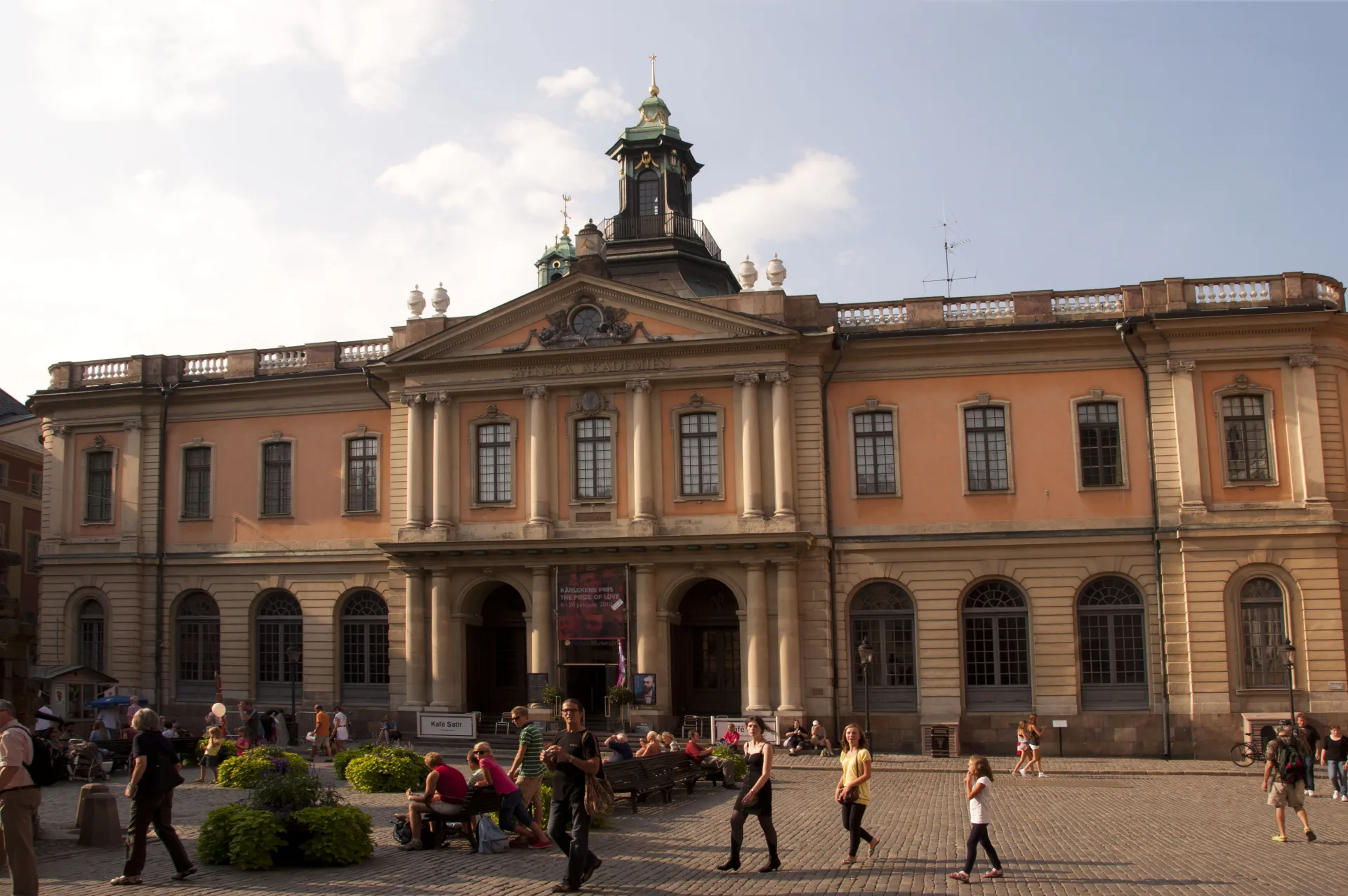
The Swedish Academy identifies a building designed by Erik Palmstedt and constructed between 1767 and 1778, with the exchange below and space for the city’s burghers above. Floors separated activities within a shared address.
The photograph presents an ordered whole: entrance, upper windows and roof belong together. Knowledge of the internal uses complicates that apparent unity. A coherent façade need not imply that everything behind it was organised for one task.
A hall could hold different voices
The Academy’s account also describes the hall’s use for council meetings, gatherings and balls. Windows that now form a quiet frontage once belonged to rooms accommodating more than commercial exchange.
There is no need to invent a particular conversation. The documented variety is enough to make the elevation less mute. What survives may be a capacity for people to gather repeatedly, rather than the exact contents of one historic occasion.
An institutional address was not immediate
The Academy held annual ceremonies in the hall long before its permanent accommodation was settled, moving in definitively in 1921. A location that seems inevitable now involved rights of use and a process of relocation.
A working institution needs rooms; a recurring ceremony needs a setting. Those requirements do not always become secure together. Keeping them distinct is more informative than compressing the account into an old institution occupying an old home.
A museum offered another way inside
The Nobel Prize Museum records its opening in Börshuset in 2001. For a visitor in the square, the building gained another point of entry: exhibitions exploring prizes, people and creative work, alongside recognition of the Academy’s address.
Museum visits, literature-prize announcements and Nobel award ceremonies are distinct activities. A shared name does not put them in the same room. The photographs here show the square and exterior, not an interior visit; consult the relevant institutions for current arrangements.
Keep the old name without stopping at it
Return to the colourful houses and the broad building across the square acquires more than a supporting role in a photograph. It connects the place to commerce, civic life and literary judgement without requiring a new site for each account.
The name Börshuset retains one useful thread, while the Academy and museum extend the story. Remembering one change of use gives a familiar old-town view something more particular than a general impression of attractive architecture.
References
These sources inform the essay’s historical and local context. Its observations and interpretations are original to WalkThere.
Swedish Academy
BörshusetThe building’s floor uses, civic hall and the Academy’s move.
Nobel Prize Museum
About the Nobel Prize MuseumDocuments the Nobel Prize Museum’s opening in the building in 2001.
More journey background
Related journey sources
- Gamla Stan / Old Town — Visit Stockholm
- Visiting Stockholm Cathedral — Church of Sweden
- The Royal Palace — The Royal Palaces
- Visit the Riddarholmen Church — The Royal Palaces
- The Riddarholmen Church — Visit Stockholm