
Stockholm’s Royal Palace: a working address
Compare courtyard, waterfront and winter views of a palace that accommodates royal work, official receptions and public visiting, with official references.
Stockholm Old Town & Royal WaterfrontObservation essay
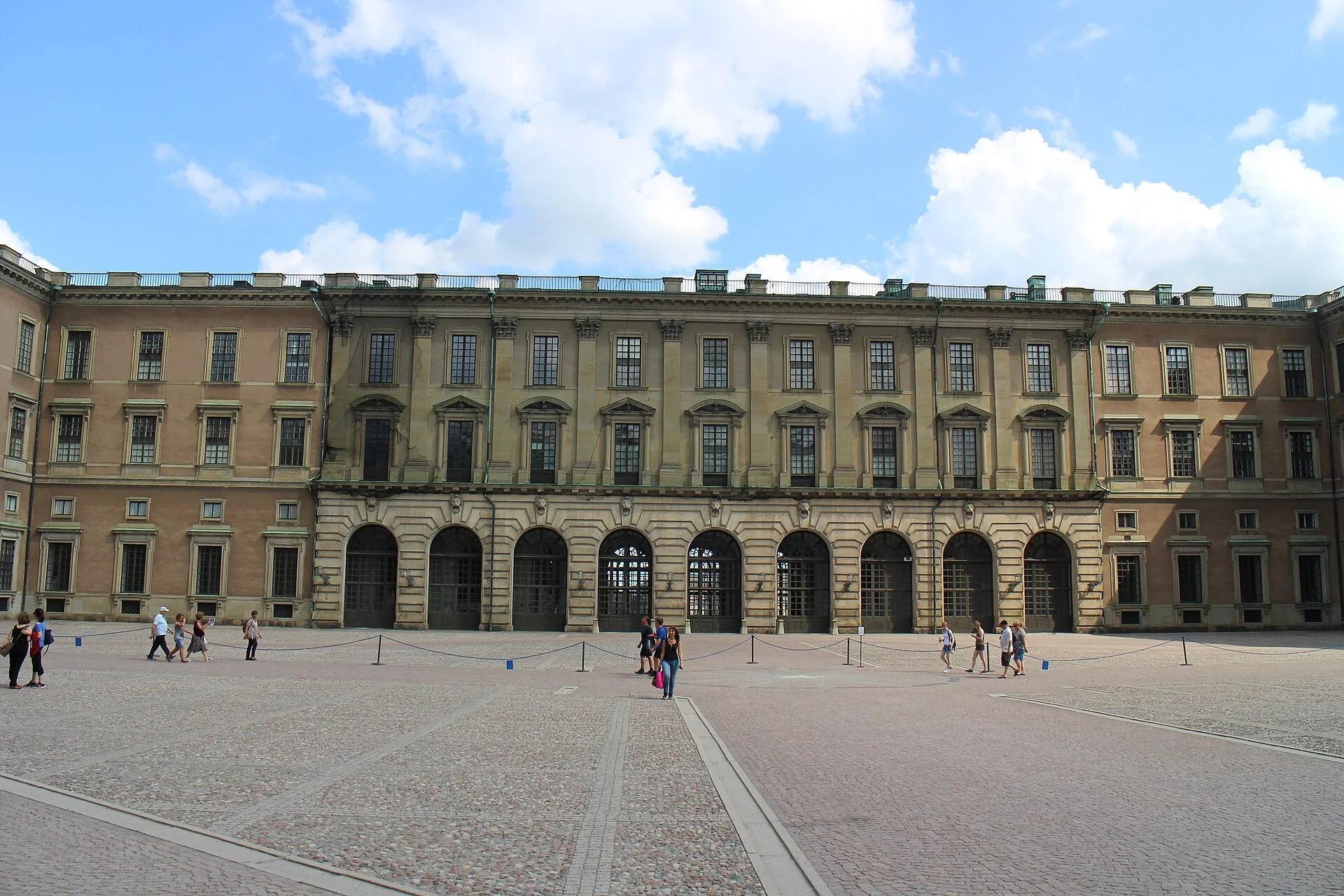
Begin with a row of windows
Repeated windows make the palace’s scale apparent before a single doorway commands attention. The long frontage offers a different viewing problem from the smaller houses of the old town: the eye must travel across a substantial elevation.
Find a person or entrance as a reference, then include the surrounding ground. Courtyards and street edges establish where someone can stand and move. The walls dominate a photograph, but the approach depends on the space around them.
People work here
The Royal Palaces’ official account identifies workplaces for the King and Queen and Royal Court offices, alongside official receptions. Gates, guards and access arrangements belong within that active setting. Public visiting shares an address with other responsibilities.
This does not reveal what happens in any particular room. It does make the current official calendar useful when planning. Access on an earlier date cannot guarantee admission later, and temporary arrangements need to be understood through present guidance.
Keep the courtyard in the picture
The courtyard-facing view gives the ground a substantial role. Open space establishes a distance from which the elevation can be seen. Cropping tightly to the wall loses some of the practical arrangement between building and observer.
Guards and barriers belong in that reading too. A photographer chooses a frame, while a visitor must follow the available boundaries. An attractive doorway may need to remain clear for use rather than become a convenient place to stop.
The waterfront restores the surroundings
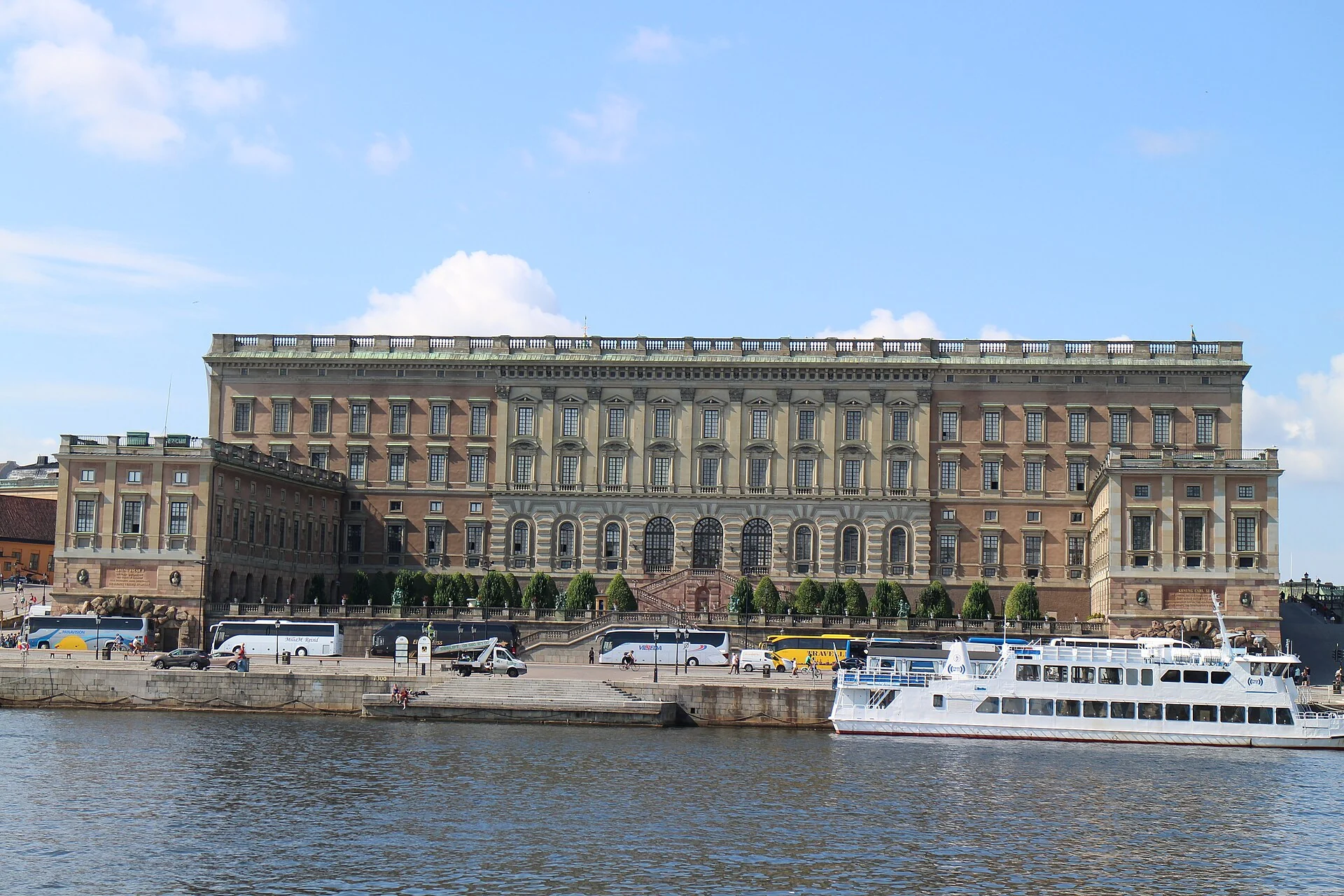
The waterside photograph changes the viewing distance again. Shoreline and frontage share the composition, placing the palace within a broader urban setting before attention settles on its architectural detail.
A boat in a picture establishes a captured scene, not a transport plan. Getting to the palace from another district still requires separate route information. A distant view can help with orientation while leaving crossings and the actual visitor entrance to closer inspection.
Winter provides another comparison
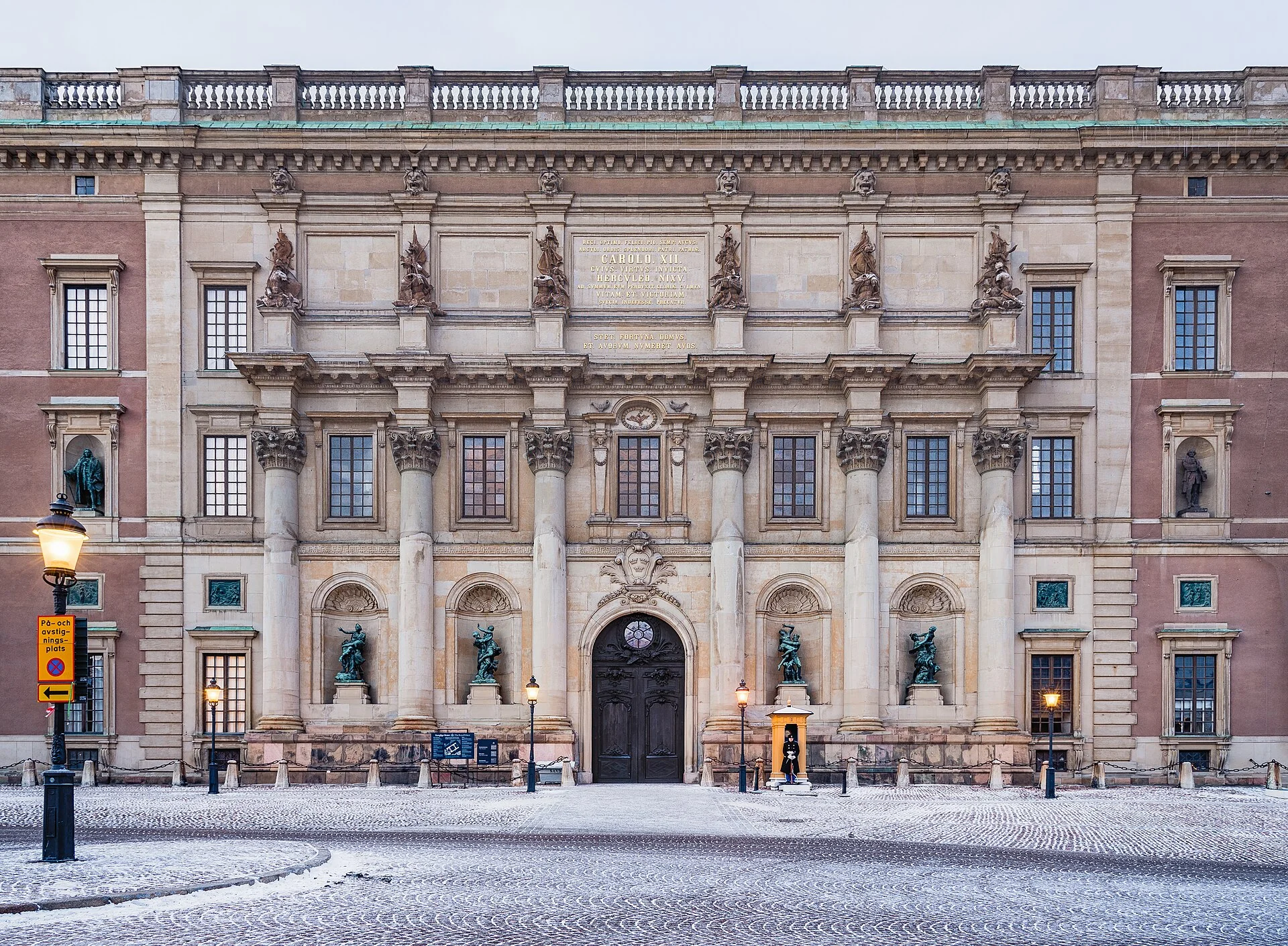
The winter view from Slottsbacken differs in light and ground colour from the summer photographs. Compare elements that remain legible across those differences: repeated windows, the entrance’s position and the outline against the sky.
Independent viewpoints should not be joined into an imagined passage through the building. Snow and shadow may conceal surfaces or steps, so these images cannot establish present accessibility. Their value is in comparison, with the limits of each view retained.
Choose a particular visit
The official site distinguishes several places to visit, including the Royal Apartments and museums. Choosing an interest first makes it easier to consult the relevant opening, ticket and calendar information without assuming the whole palace is one undifferentiated experience.
An exterior introduction can instead compare courtyard and waterfront distances, then examine the entrance in its winter street setting. Interior furnishings and ceremonial events require their own evidence. These photographs remain an account of the building from outside.
References
These sources inform the essay’s historical and local context. Its observations and interpretations are original to WalkThere.
The Royal Palaces
The Royal PalaceOfficial information on royal work, receptions and the distinct visitor areas.
Visit Stockholm
Gamla Stan / Old TownCity tourism context for the surrounding old-town district.
More journey background
Related journey sources
- Börshuset — Swedish Academy
- About the Nobel Prize Museum — Nobel Prize Museum
- Visiting Stockholm Cathedral — Church of Sweden
- Visit the Riddarholmen Church — The Royal Palaces
- The Riddarholmen Church — Visit Stockholm