
Piazza Navona: the stadium shape that stayed
Follow the long edges of Rome’s Piazza Navona, its fountains and the ancient stadium below, with official city references and three distinct photographs.
Rome Historic CentreObservation essay
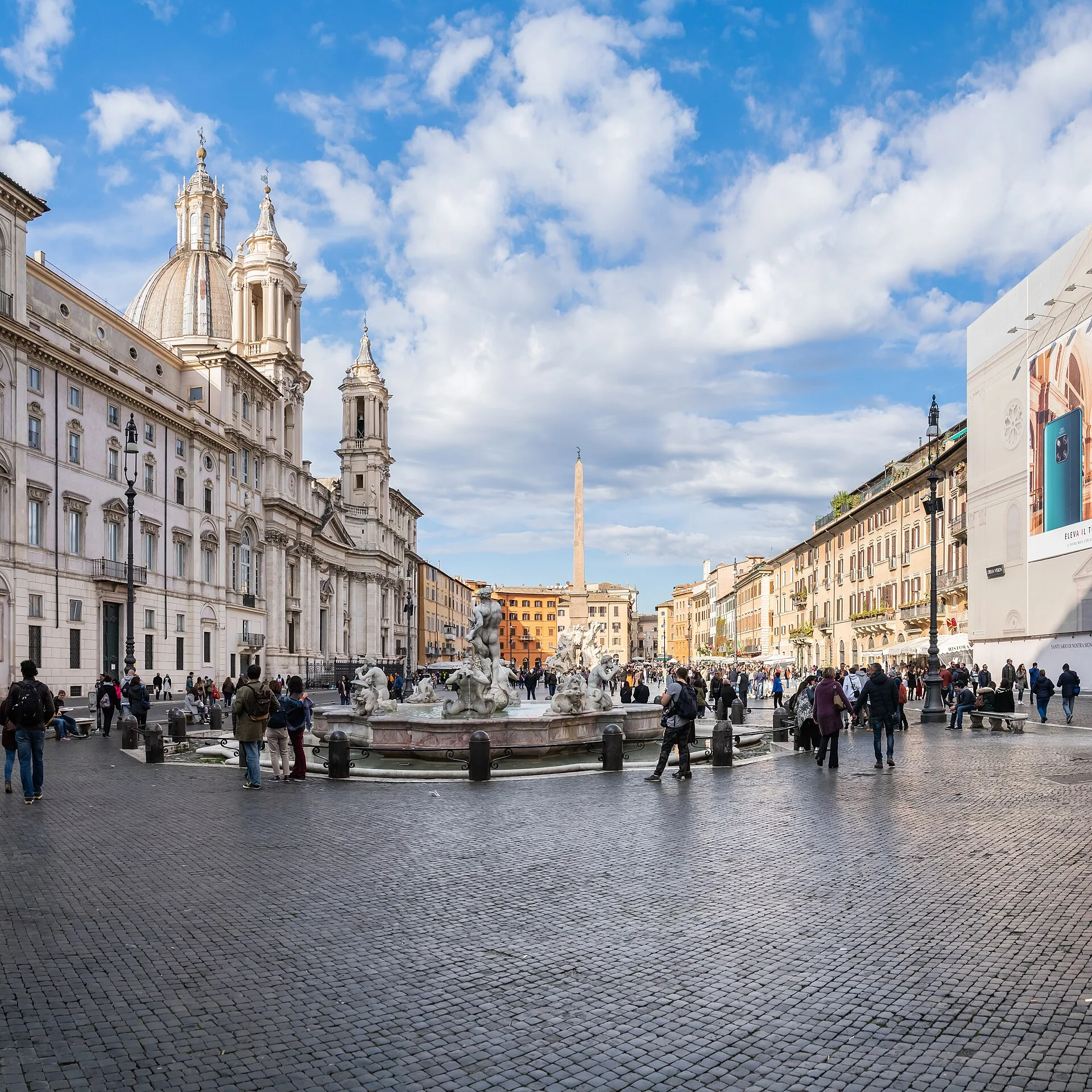
Notice the ground between the monuments
Fountains and façades readily command attention in a photograph of Piazza Navona. The open ground has a strong form of its own: it extends along a long axis, with buildings carrying the eye towards the far end.
Find the long edges and the places where they turn. This establishes a sense of width and direction before the names of sculptors enter the account. The ancient stadium then becomes easier to relate to a particular piece of ground.
A stadium beneath the street
Rome’s official tourism account places the square above the remains of Domitian’s stadium. The remains lie below the present street level; the city’s pages give somewhat different depth measurements. Exterior photographs cannot reveal that whole relationship at once.
An inherited boundary can continue to affect later use even as surrounding buildings change. For the stadium’s structure, archaeological documentation offers firmer evidence than imagining stands from a contemporary photograph. The square supplies an initial clue through its proportions.
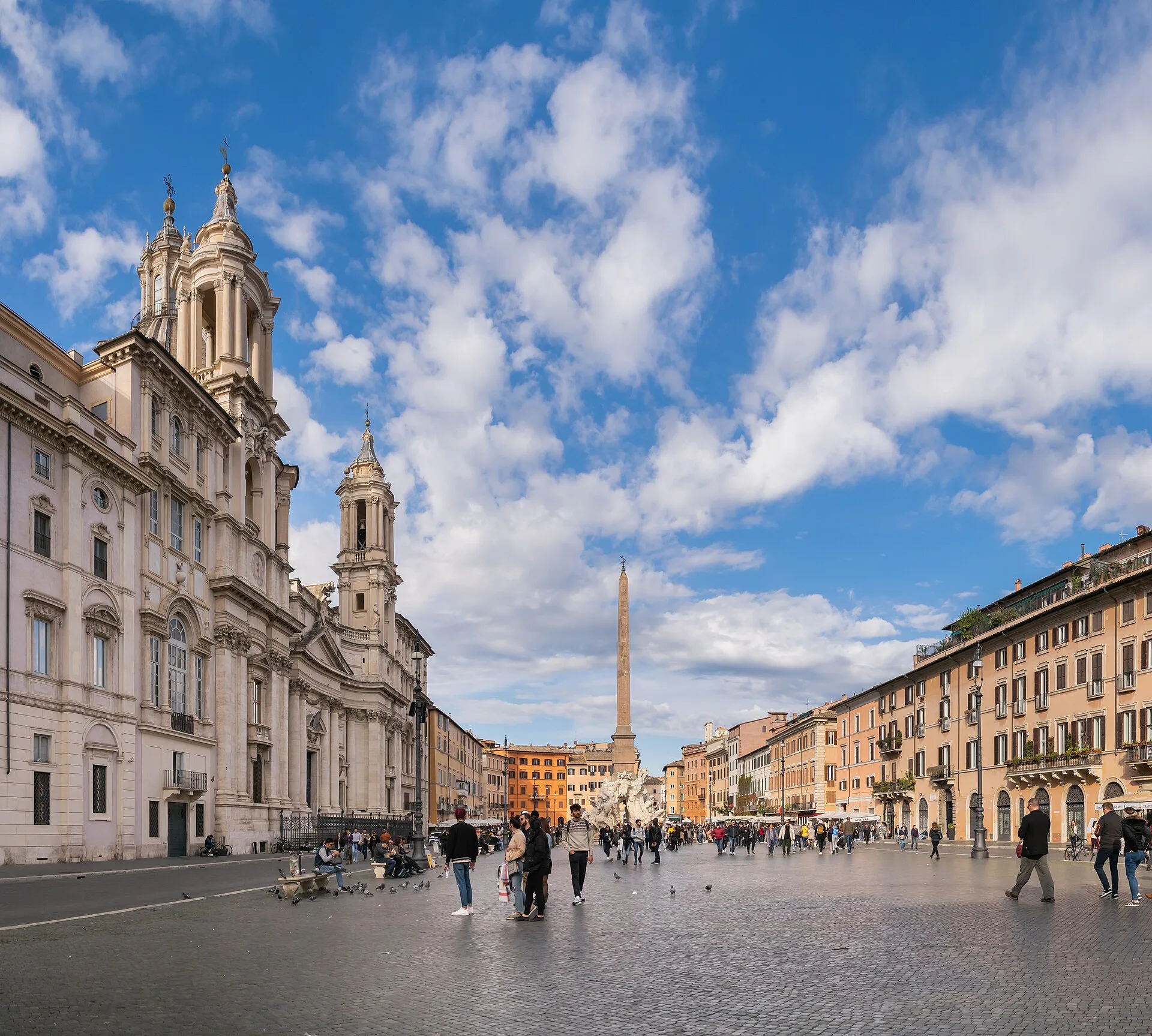
Three fountains, several stopping points
The city identifies three fountains: the Moor, Neptune and the central Four Rivers. Knowing their distribution helps a first-time visitor divide a long space into manageable parts before learning each sculpted figure’s identity.
In the second view, compare the ground around a fountain with the distance to the buildings. Moving around an obstacle reveals another portion of the square. A photograph can aid orientation without prescribing a walking route through whatever activity happens to occupy the space today.
A river given a body
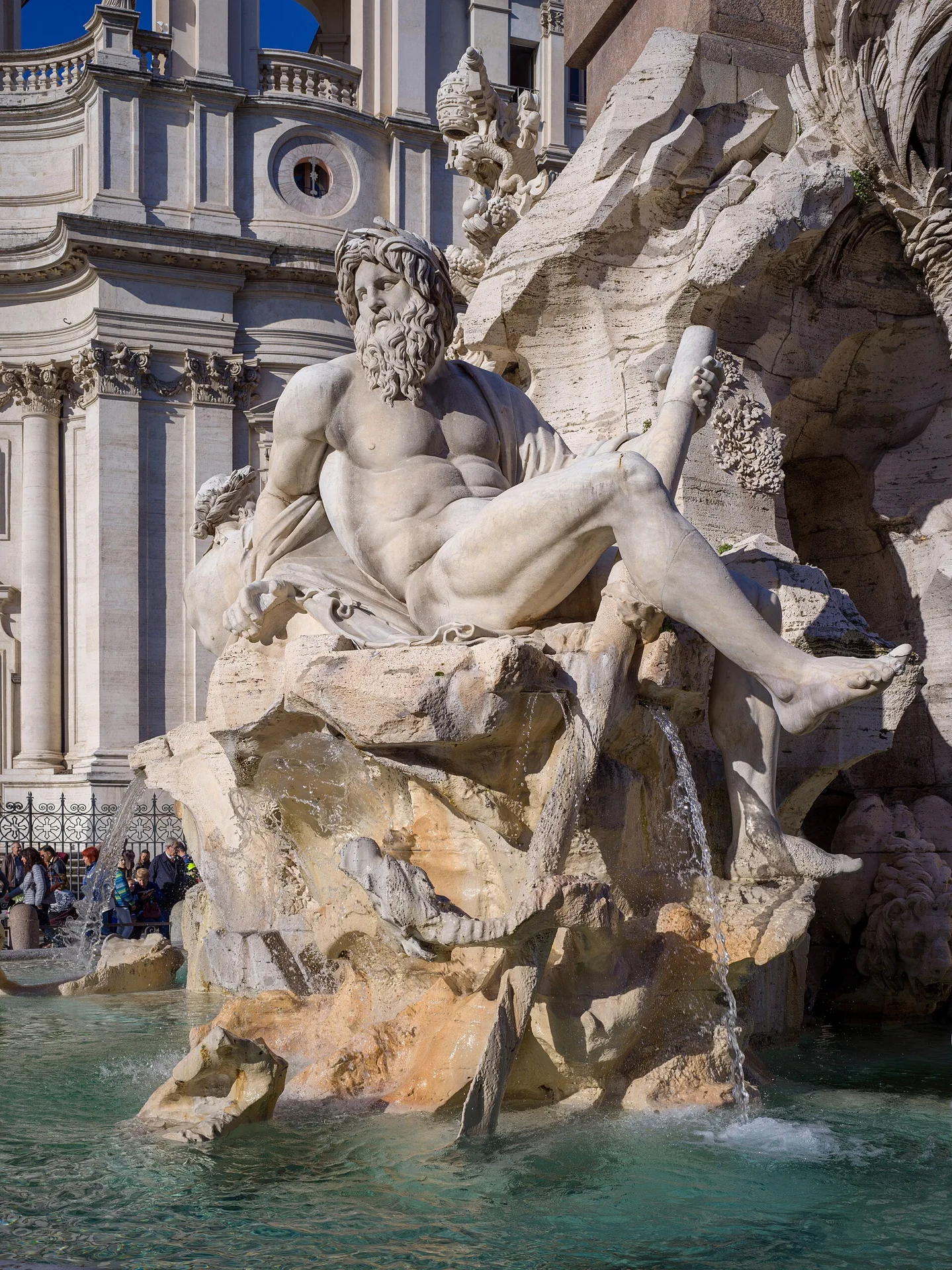
The detail photograph shows the Ganges figure on the Fountain of the Four Rivers. Attention narrows from the whole square to a body, a worked surface and adjoining forms. A geographical name meets a visible sculptural arrangement.
Identification and observation can happen separately. Look at the figure’s turn and the relationship between limbs and neighbouring elements, then consult the fountain’s interpretation. Symbolic details without a checked explanation can remain unanswered instead of acquiring an improvised story.
Other uses followed the contests
The official square introduction also records later popular festivities, races and riding events. Activities and their participants belonged to different periods. The space accumulated uses after its ancient sporting role, rather than freezing at that first association.
Doors and places to pause belong in a present-day reading too. Monuments occupy part of the ground while people still need room to cross, meet and look. Historical context explains origins; consideration for other users remains an immediate concern on a visit.
Separate the two visits
A short exterior stop can begin with a simple question about length. Change position and compare how fountains and buildings conceal or reveal the far end. These are things the open square allows someone to investigate directly.
The underground remains require separate time and current admission guidance. These three images show the square and fountain sculpture above ground. Keeping those experiences distinct helps preserve an unhurried walk while identifying what further archaeological reading or visiting might answer.
References
These sources inform the essay’s historical and local context. Its observations and interpretations are original to WalkThere.
Turismo Roma
Navona SquareCity account of the square, its three fountains and later public uses.
Turismo Roma
The Stadium of Domitian Archaeological AreaLocation and archaeological context for the stadium remains below the square.
More journey background
Related journey sources
- The Pantheon — Turismo Roma
- Pantheon: history and visitor information — National Museums of Rome
- Campo de’ Fiori — Turismo Roma
- Ponte Sant’Angelo — Turismo Roma
- Castel Sant’Angelo National Museum — National Museums of Rome
- Castel Sant’Angelo National Museum — Italia.it
- Piazza della Minerva — Turismo Roma
- Pasquino — Turismo Roma
- The heart of Rome: Piazza Navona and Campo de’ Fiori — Turismo Roma