
Rome’s Pantheon: whose name is above the door?
Begin with AGRIPPA rather than the dome. A visible name, a surviving building and its later uses do not necessarily share one date.
Rome Historic CentreObservation essay
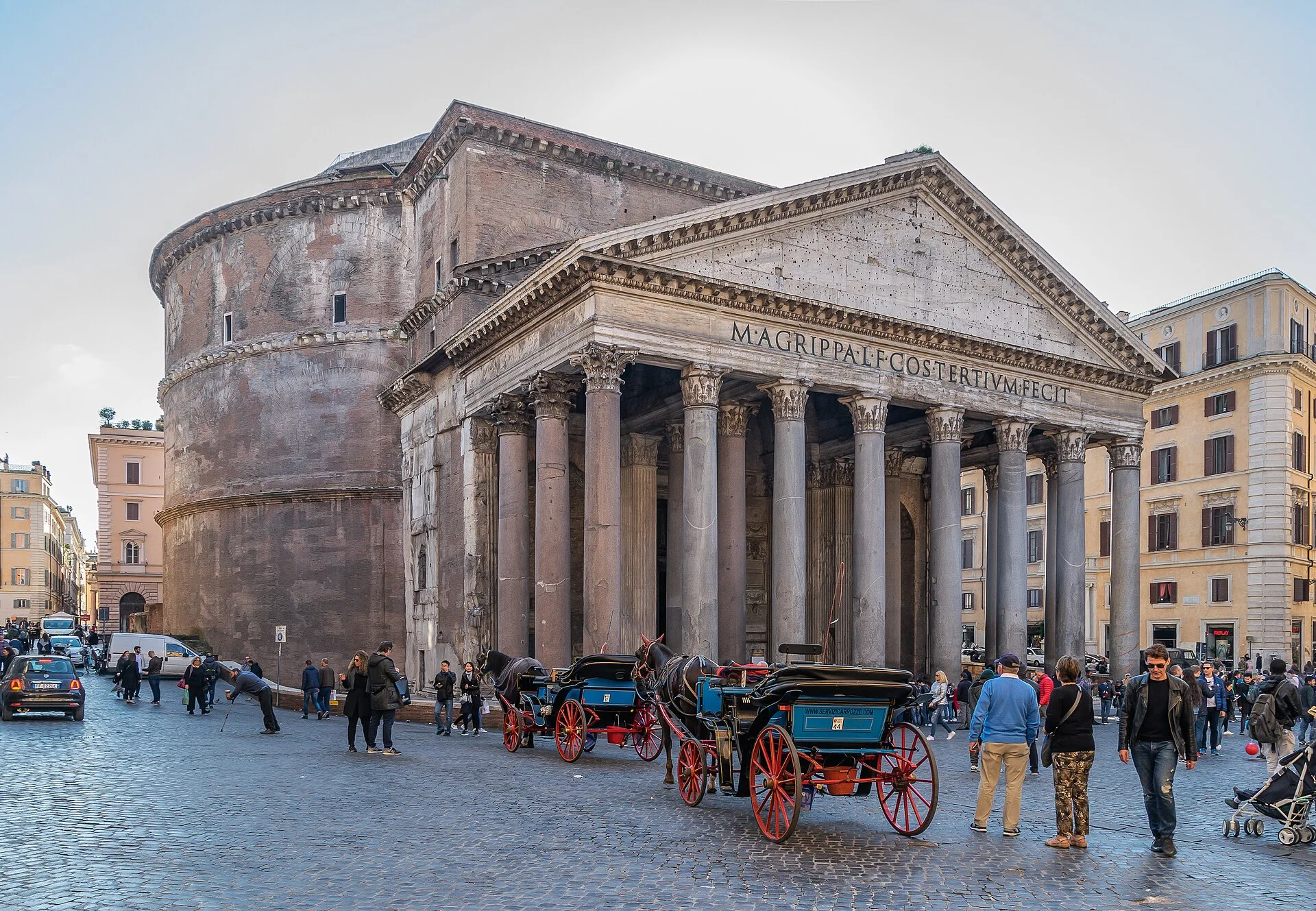
Read one line before looking for the dome
Approaching from Piazza della Rotonda, the first encounter is with columns, a triangular pediment and a line of lettering. AGRIPPA can be recognised without reading the whole Latin inscription. It is a specific historical clue rather than an incidental strip of decoration.
The tempting conclusion is that the named person built everything now visible. Rome’s official tourism account distinguishes Agrippa’s earlier building from a radical reconstruction under Hadrian. The name and the surviving architecture do not simply coincide.
Two names separate two kinds of building
Agrippa and Hadrian belong to different periods. An earlier monument was followed by substantial rebuilding, while the earlier name remained prominent on the front. The inscription preserves a relationship with a predecessor rather than supplying a complete construction history.
The useful distinction is between an original foundation and the date of surviving architecture. Many monuments have long histories of alteration. The Pantheon makes that distinction unusually conspicuous, offering a reason to change how we read a building before entering it.
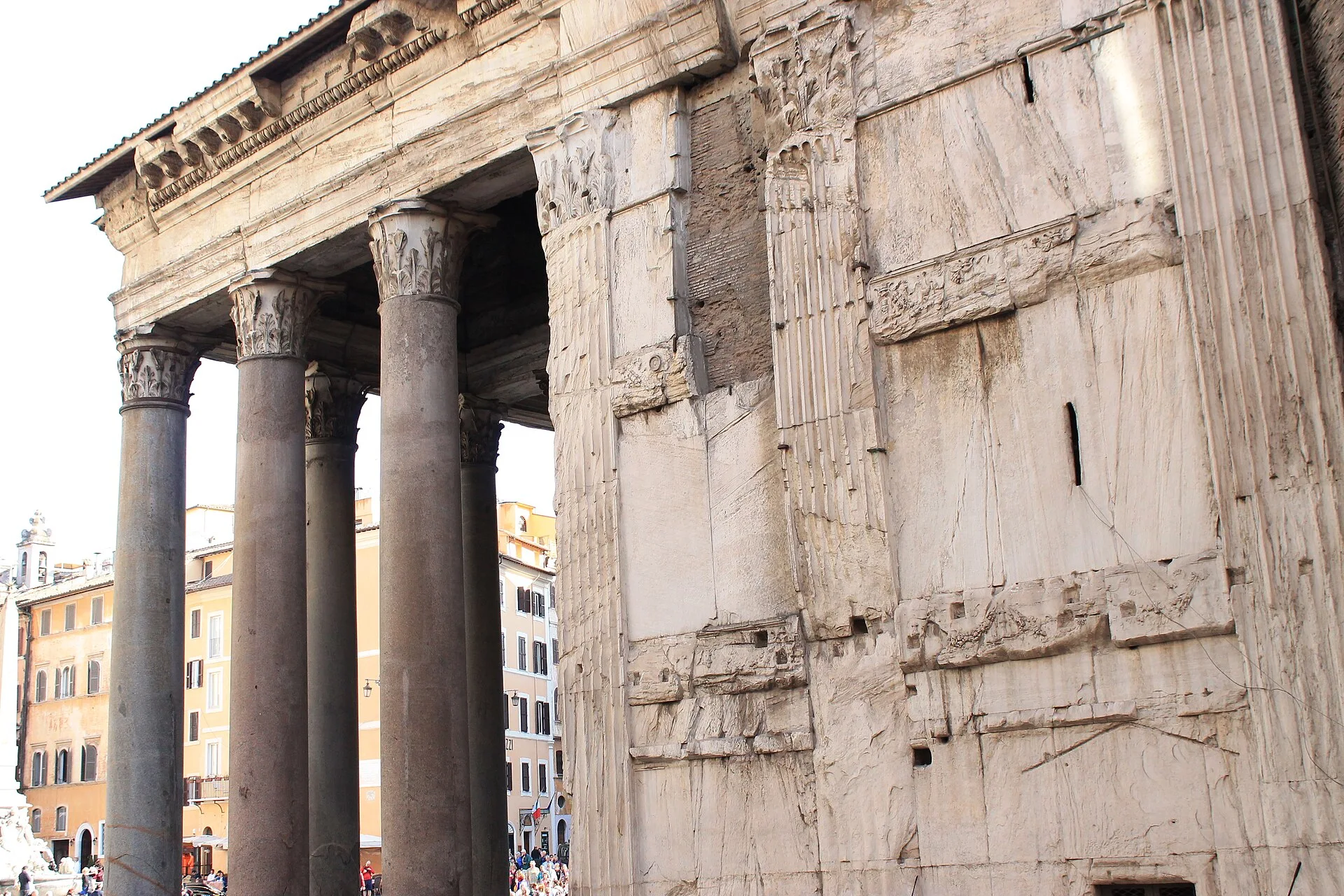
The portico does not predict the whole plan
The oblique lead photograph shows the columned front beside the large rounded body behind it. Upright columns and pediment do not describe everything that follows. Two different spatial forms can be recognised without first learning architectural terminology.
The closer view changes scale again, bringing stone surfaces, joints and overhead elements into attention. Those observations can generate questions. Differences in colour alone cannot assign individual pieces to particular building campaigns; dating still needs documentary and architectural evidence.
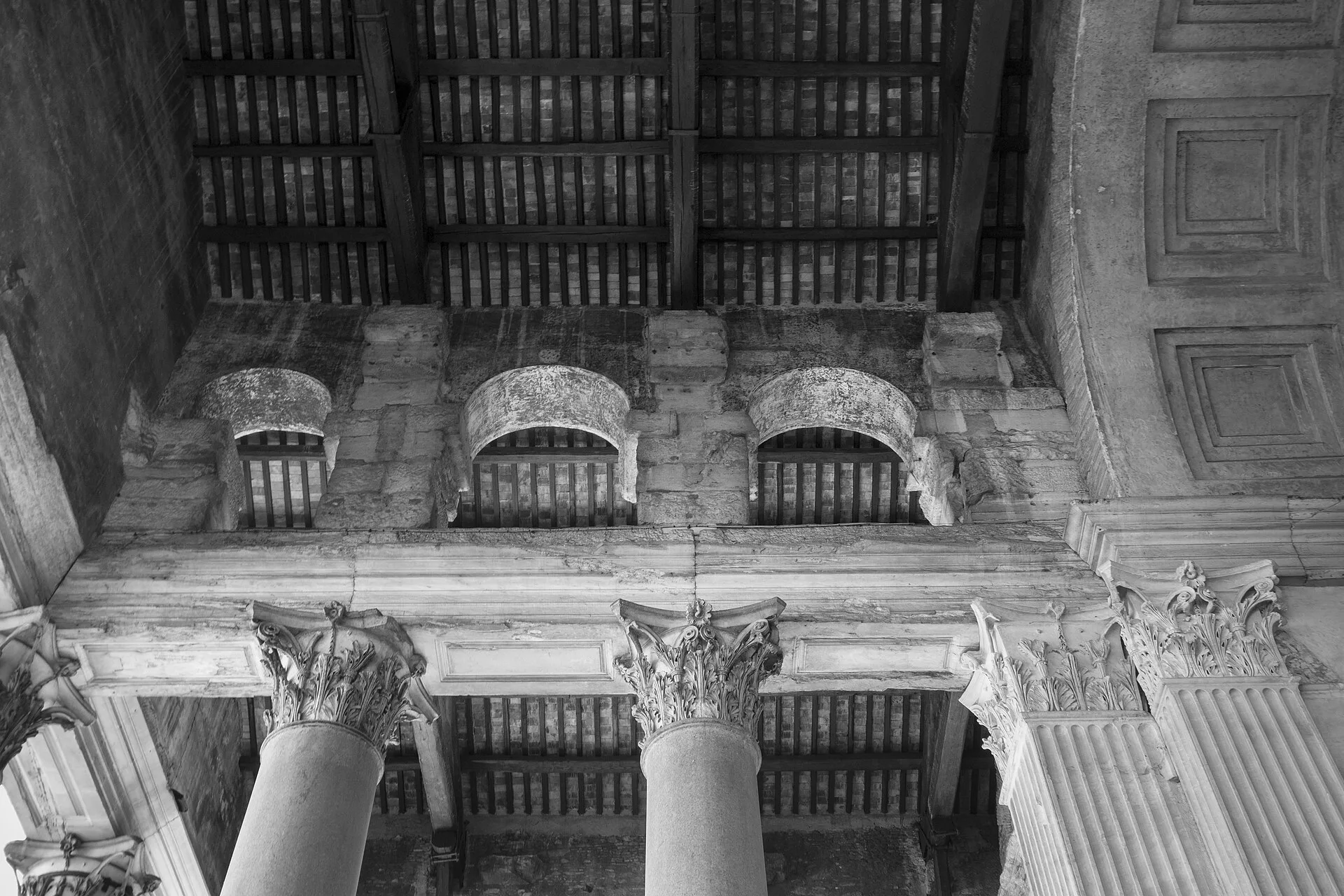
This ceiling is not the famous dome
The third photograph shows the ceiling of the open portico, not the interior rotunda. Looking upwards at the front and entering the domed room are different encounters. Keeping the camera position clear makes a travel record more accurate.
The portico deserves attention in its own right. The square remains visible between columns, while a roof has already introduced shelter. It occupies the transition between street and interior, allowing light, cover and direction to change before the next doorway.
Another use added another name
The building later became the church of Santa Maria ad Martyres. Religious use belongs to its subsequent life, rather than treating it solely as an abandoned ancient object. Pantheon and the church name describe different layers of the same place.
Foundation, reconstruction and change of use should not dissolve into one vague sense of age. They answer separate questions. If entering, consult current official information about visits and worship; exterior photographs cannot establish arrangements for a particular day.
Write a caption that leaves room for history
A useful caption can identify Agrippa’s inscription on the front, then explain the surviving building’s relationship to Hadrianic reconstruction. It separates what the photograph shows from what research establishes, without asking either to impersonate the other.
That small distinction changes the rest of the encounter. Dome and portico belong to a building repeatedly named, altered and used. The prominent name provides a beginning, rather than a convenient full stop to its history.
References
These sources inform the essay’s historical and local context. Its observations and interpretations are original to WalkThere.
Turismo Roma
The PantheonContext for Agrippa’s inscription, Hadrianic rebuilding and church use.
National Museums of Rome
Pantheon: history and visitor informationThe national museum’s resource for the monument and visiting information.
More journey background
Related journey sources
- Navona Square — Turismo Roma
- The Stadium of Domitian Archaeological Area — Turismo Roma
- Campo de’ Fiori — Turismo Roma
- Ponte Sant’Angelo — Turismo Roma
- Castel Sant’Angelo National Museum — National Museums of Rome
- Castel Sant’Angelo National Museum — Italia.it
- Piazza della Minerva — Turismo Roma
- Pasquino — Turismo Roma
- The heart of Rome: Piazza Navona and Campo de’ Fiori — Turismo Roma