
Riga’s Three Brothers: different lives behind adjoining walls
Read adjoining gables, the doorway at number 17 and the street setting alongside domestic history and conservation, with European Commission and LiveRiga references.
Riga Old TownObservation essay
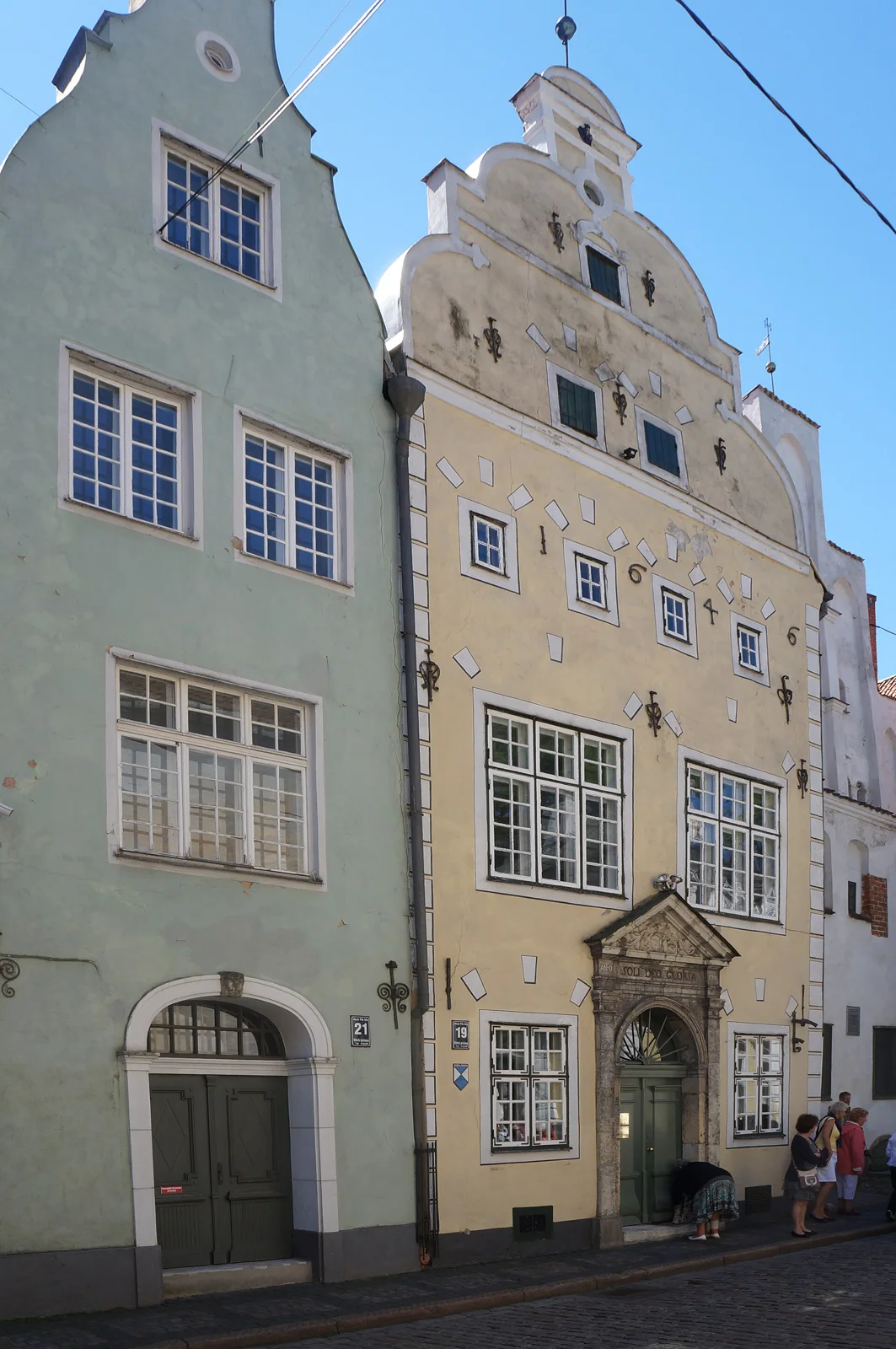
Adjoining roofs, different arrangements
The wide photograph invites comparison from roofline down to windows. Neighbouring gables differ in outline and in the amount of wall surrounding their openings. A shared nickname has not made their elevations identical.
Three houses are a manageable number to examine. Choose one doorway, follow its relationship with the windows above, then repeat next door. These visible differences offer a starting point without requiring a list of architectural styles.
A name with a story attached
LiveRiga identifies the ensemble as the city’s oldest residential complex and explicitly calls the account of men from one family building it a legend. The memorable name should not quietly turn that story into an established family history.
The addresses, Mazā Pils Street 17–21, provide a more practical reference for further reading. On the street, identifying a particular house by number helps separate evidence about it from a general impression of the group.
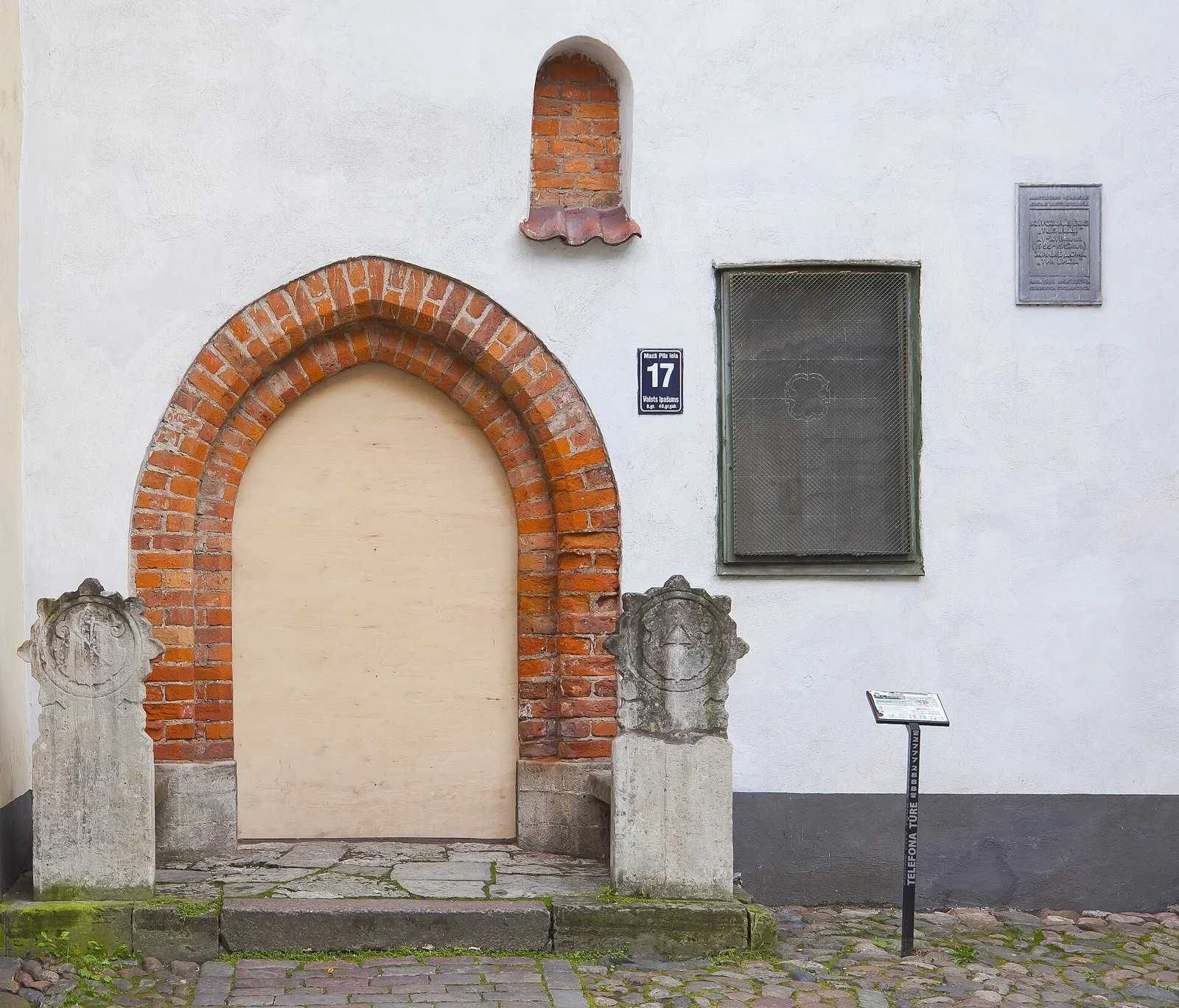
Several kinds of life in one room
The local account describes work, trade and daily living sharing one large room in the early house at number 17. That detail gives the doorway a domestic and practical background beyond its appearance as an old architectural feature.
The photograph shows the brick opening rather than a complete interior plan. Compare arch and wall, and the entrance’s proximity to the street. Reconstructing furniture, goods or a household scene would require evidence that this exterior view does not supply.
Living space acquires divisions
LiveRiga contrasts the houses’ arrangements, including more differentiated living spaces and small apartments on individual floors. Their adjacency therefore offers questions about how rooms were used as well as how façades changed over time.
Windows can suggest questions but cannot replace floor plans. Visitors in the street photograph restore an everyday scale to doors and walls. These were spaces people used; anyone looking today should leave room for people who still need to enter or pass.
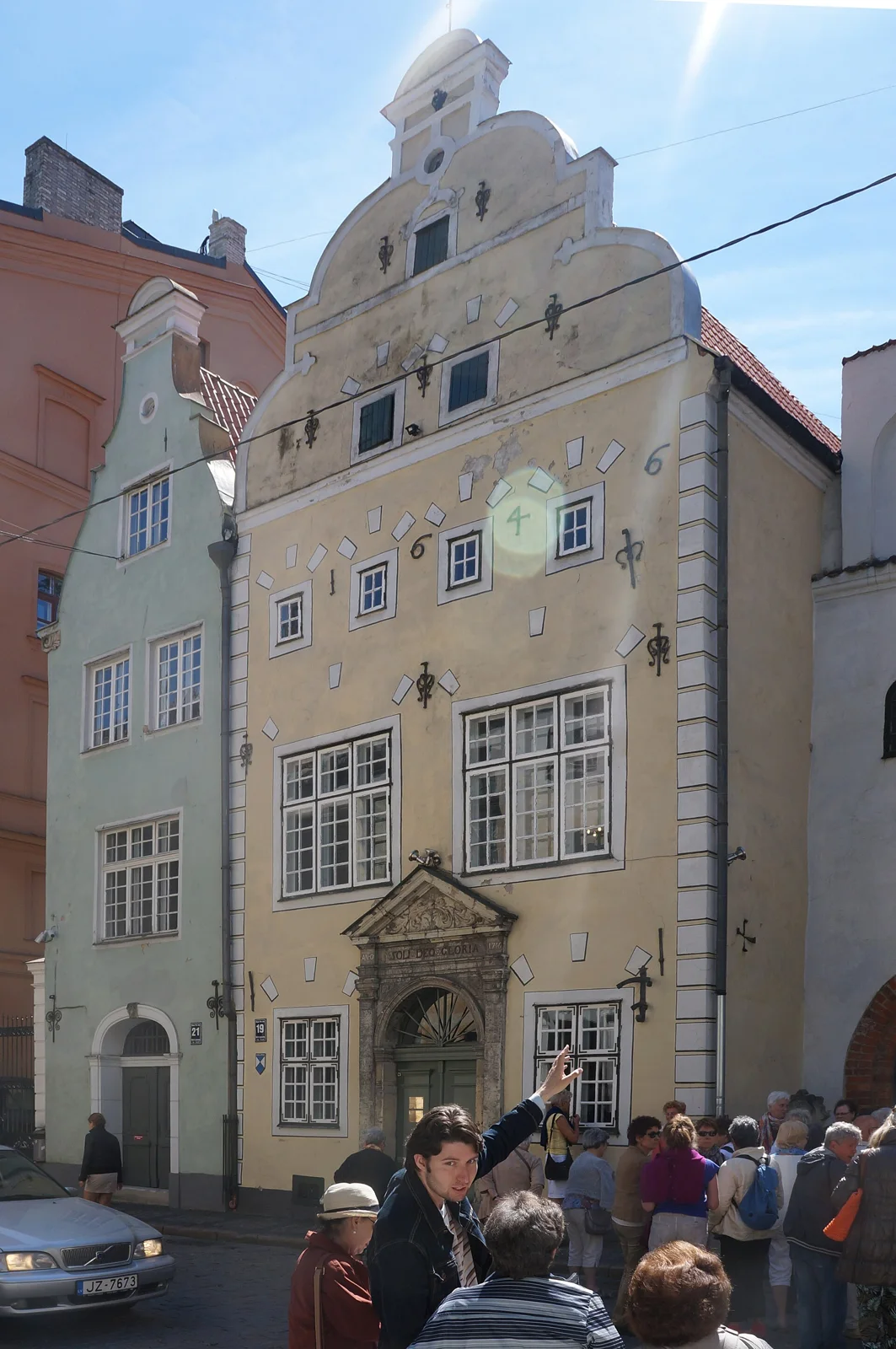
Old material in a later repair
The European Commission records the incorporation of elements from other destroyed buildings during the restoration campaign of the 1950s. Its account also describes an approach that sought to retain historic material, including wear.
Material can consequently have a history beyond its current position. This essay does not identify transferred pieces from colour or surface alone. The documented reuse is enough to distinguish a repaired ensemble from an assumption that every component has always occupied the same place.
Continue indoors as a separate visit
The ensemble is associated with the architecture museum and heritage protection institutions. Someone interested in rooms, building fragments and conservation can consult current museum information before visiting, rather than assume every open doorway admits the public.
These independently dated photographs remain exterior observations. Return to the rooflines afterwards with addresses, room uses and reused material in mind. They offer more particular questions than simply asking how old a row of houses looks.
References
These sources inform the essay’s historical and local context. Its observations and interpretations are original to WalkThere.
European Commission
The Three BrothersEuropean heritage account of the houses, 1950s restoration, reused elements and conservation approach.
LiveRiga
Three BrothersLocal account of addresses, domestic arrangements and the legend behind the name.
More journey background
Related journey sources
- Town Hall Square — LiveRiga
- Best Sights of Riga 2026 — LiveRiga
- St Peter’s Church — LiveRiga
- Riga Cathedral history — Riga Cathedral
- Riga Castle — Chancery of the President of Latvia
- History — House of the Black Heads
- Medieval Riga: what survived — LiveRiga
- Swedish Gate — LiveRiga
- The Powder Tower — LiveRiga