
Québec’s Saint-Louis Gate: rebuilding an entrance
Read the gate alongside nineteenth-century demolition, traffic demands and conservation, using three distinct exterior photographs and official local histories.
Québec Old TownObservation essay
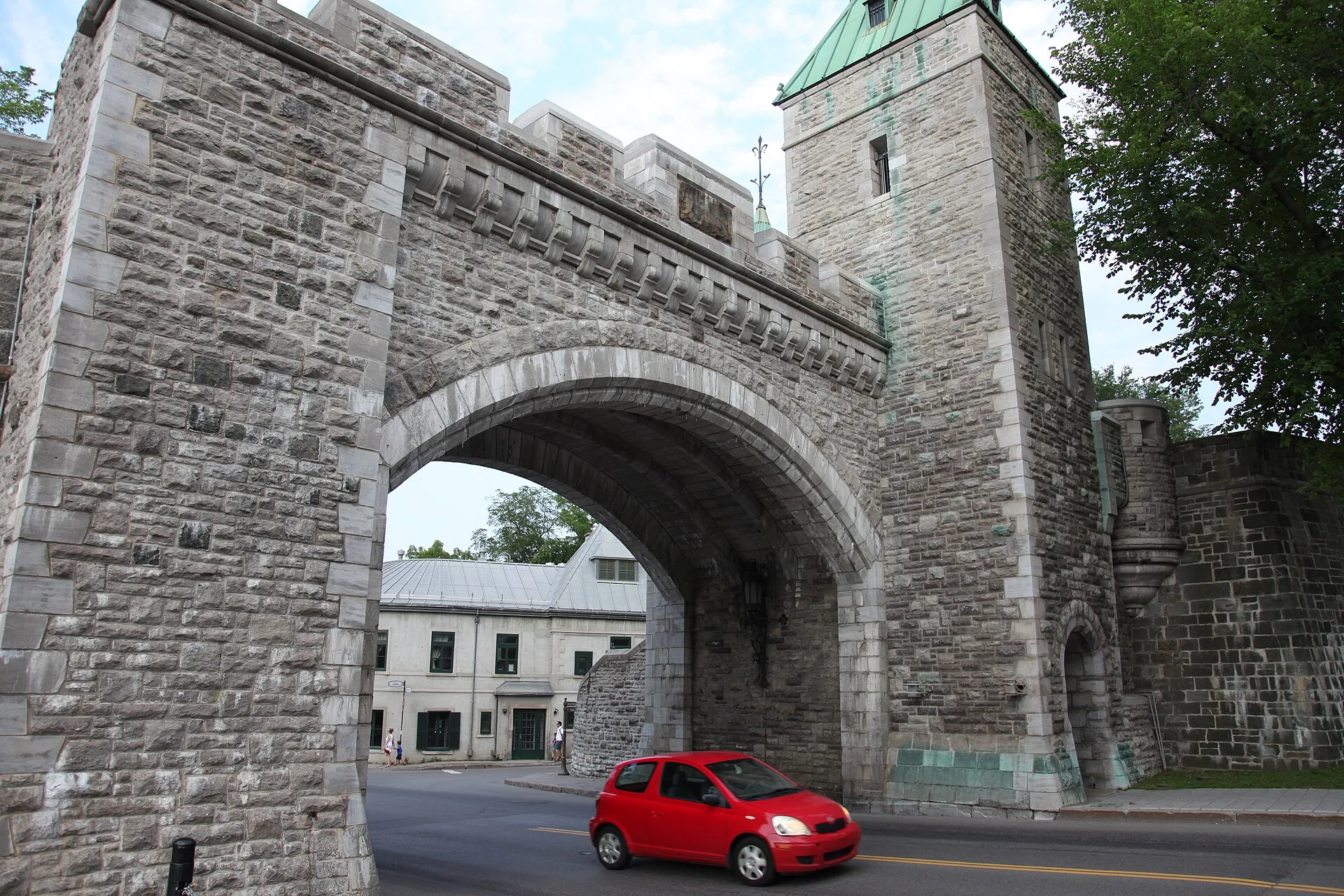
The car supplies a date of its own
A car passes beneath the arch in one photograph. The towers suggest a distant past, while the vehicle places the gate within an active road. Fortification and circulation occupy the same frame.
Compare the opening with the adjoining wall. Stone establishes a boundary, but an entrance must accommodate movement. The picture cannot establish current traffic rules; its proportions do help explain why gates became practical problems for a changing city.
An earlier gate was removed
The city’s fortifications history records the removal of Saint-Louis Gate and other narrow entrances to ease congestion. The present opening therefore belongs within a history of complaints about getting into the city centre.
Keeping walls can seem self-evidently desirable from a visitor’s perspective. Understanding the reasons for removal makes the later conservation question more concrete: people still needed to use the roads, and admiration alone could not resolve that requirement.
The new work began in 1878
The destination authority dates the present gate to 1878, and the municipal account records new construction that year. Its towers and arches evoke older forms, but that appearance should not assign every visible element an early colonial date.
Conservation can include later construction undertaken to preserve an established setting. A name may continue while the physical entrance and its capacity change. Keeping those different timelines separate makes the surviving structure easier to understand.
A conservation plan had neighbours
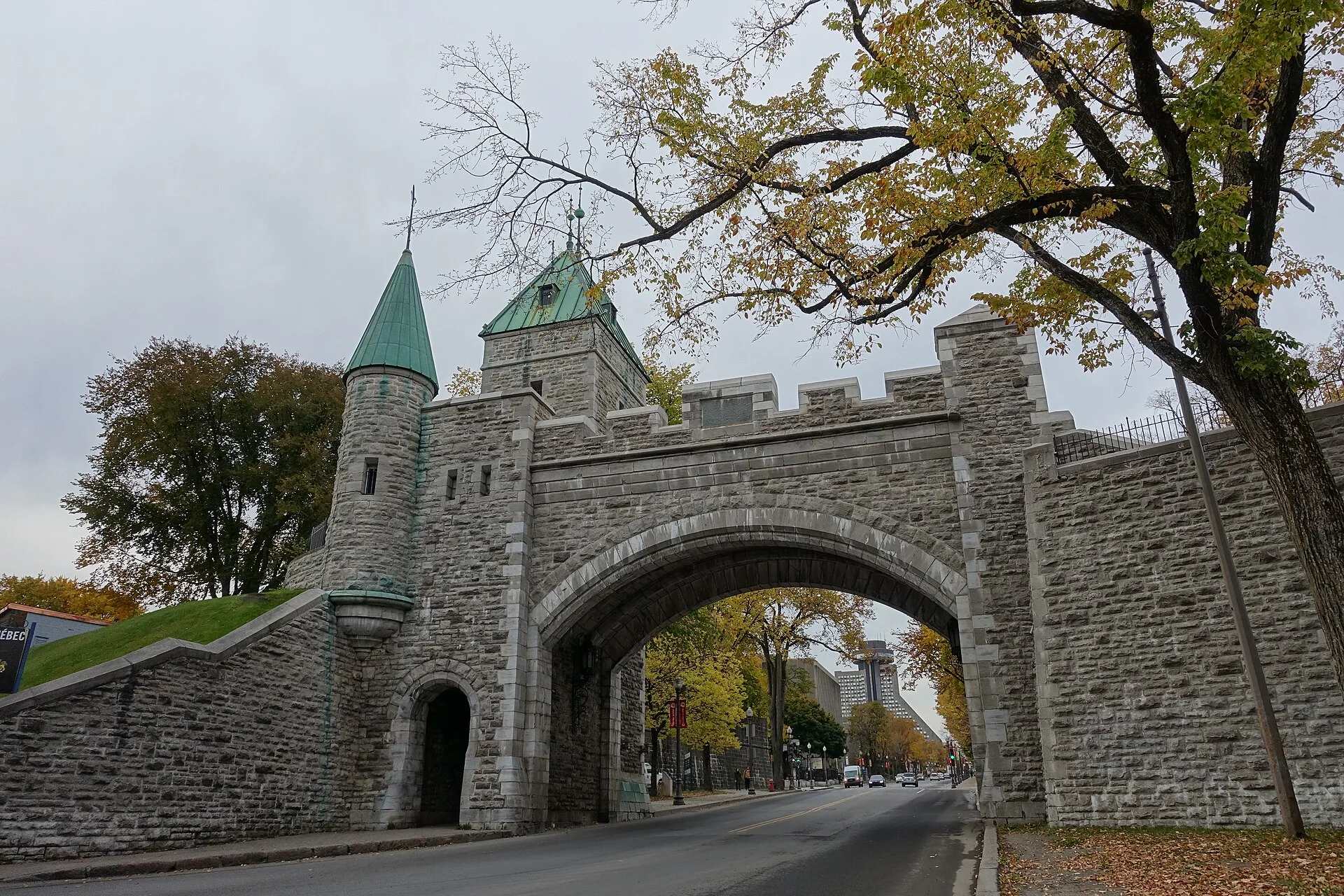
The city describes Dufferin’s intervention and an architect’s plan to preserve and improve the fortifications while addressing local concerns. A replacement entrance formed part of that attempt to reconcile a boundary with continued use.
Follow the walls beside the gate in the wider view. The towers do not stand alone as an ornamental object. Connections to the surrounding fabric explain why the question concerned an urban edge as well as an individual building.
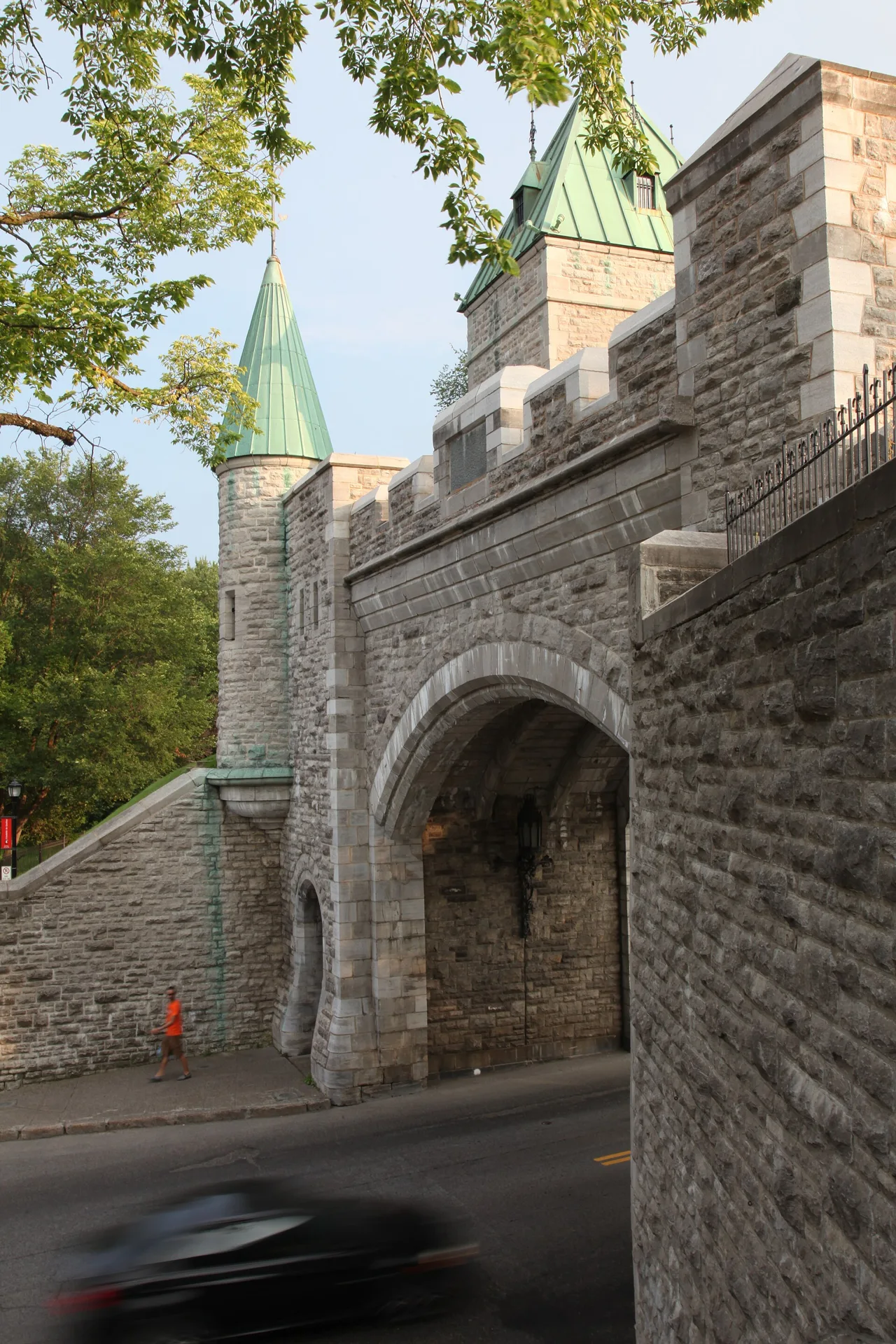
Look at the joints afterwards
The oblique photograph shifts attention towards masonry and the turret. Compare rough surfaces with more regular edges around openings, then return to the whole wall. Small decisions become visible within the distant silhouette.
Surface colour cannot reliably date a repair, and an exterior image is not a structural inspection. These photographs support observation of visible workmanship; a detailed repair chronology would require further architectural records.
Leave the passage usable
At the site, establish where pedestrians can go before seeking a photographic position. A car in an old image is no reason to wait in a traffic route, and photographed open ground does not prove present access.
The three views do not survey an accessible itinerary. They do supply a useful question for an introduction: how can a city retain a boundary while letting people pass through it? The nineteenth-century rebuilding gives that question a particular local history.
References
These sources inform the essay’s historical and local context. Its observations and interpretations are original to WalkThere.
Destination Québec cité
Porte Saint-LouisLocal introduction and the 1878 date of the present gate.
Ville de Québec
FortificationsMunicipal account of demolition, traffic pressures and fortification conservation.
More journey background
Related journey sources
- Place d’Armes — Destination Québec cité
- Three terraces — Parks Canada
- Saint-Louis Forts and Châteaux — Ville de Québec
- Rue du Petit-Champlain — Ville de Québec
- Explore Petit-Champlain — Destination Québec cité
- Place-Royale — Ville de Québec
- Place Royale archaeology — Ville de Québec
- Porte Saint-Jean — Destination Québec cité
- Cathedral of Holy Trinity — Ville de Québec
- Breakneck Steps — Destination Québec cité
- Bassin Louise — Ville de Québec