
Québec’s Place-Royale: choosing the appearance of an old town
Read stone houses, church frontage and the royal bust through Québec City’s accounts of restoration and archaeology, distinguishing a historic place from its present appearance.
Québec Old TownObservation essay
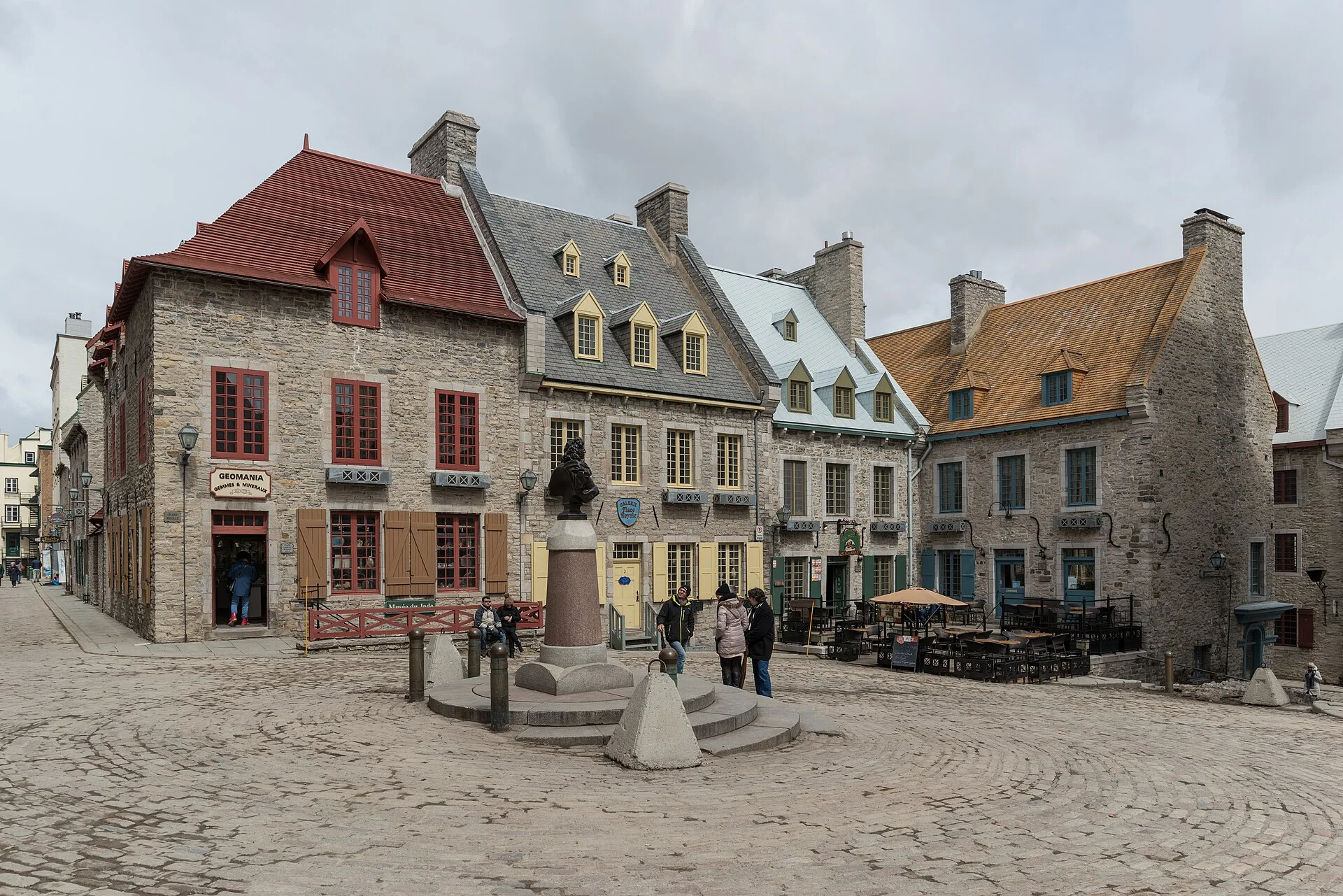
A coherent view is not a single age
Place-Royale’s stone walls, roofs and windows can appear to have survived together from one distant period. Similar scale and enclosure make the old-town image readily recognisable.
Québec City’s heritage account emphasises substantial twentieth-century rebuilding and restoration. A long history of place does not mean every visible wall remained unchanged. Separating those histories opens another way to examine the photographs.
Restoration chooses a view of the past
The city documents extensive work between 1960 and 1980, including rebuilding and partial renovation. Beyond dates and quantities lies a decision about which historical appearance to present.
An urban place contains several periods. Returning a frontage towards one can make later uses less apparent. The restored view can prompt two questions together: what does it show, and what has become harder to read on the surface?
Open ground for exchange
The city also describes the square’s earlier commercial and public role. It was more than space from which to admire façades: movement, information and trade needed room within it.
Present openness can look designed for photography, but uses change. Looking towards passages between houses brings everyday movement back into view, suggesting where people crossed, paused and encountered one another.
A royal image occupies ground
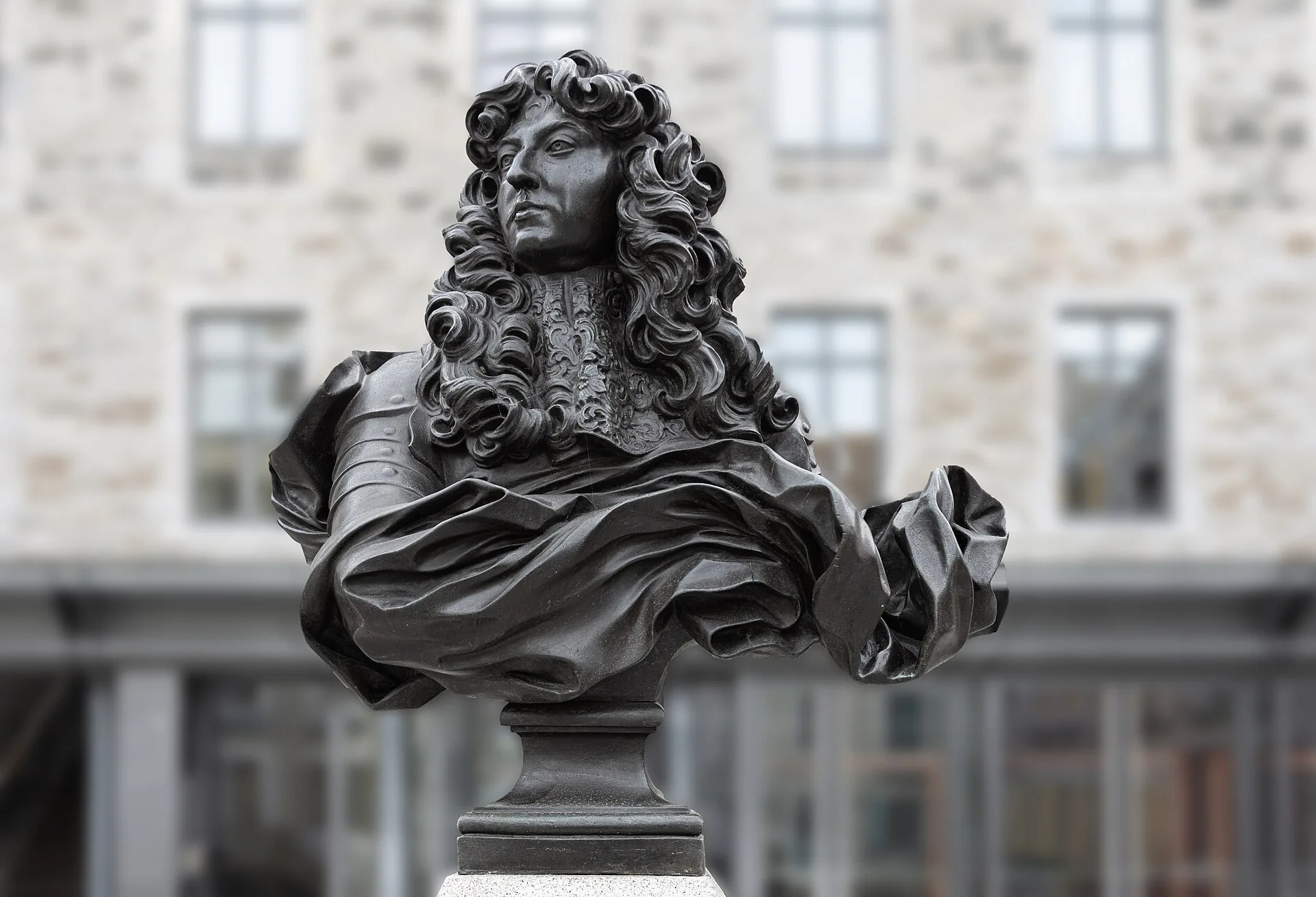
The Louis XIV bust photograph changes scale from the wider square. A figure absorbed into the distant arrangement becomes a face, pedestal and surrounding space when seen closer. Representation occupies a physical position.
A current image cannot establish an unchanging placement or compress every period into one scene. Local records help distinguish the person commemorated, the commemorative object and the city’s arrangement around it. Each has a history.
Evidence below the surface
The city’s archaeology account describes earlier stopping and habitation at the site, alongside investigation of later Habitation remains. The history does not begin with today’s visible façades or end with their restored coherence.
These photographs do not show excavations or finds. The references supply a separate route of inquiry: appearance explains the organisation encountered now, while archaeology asks about activities that did not survive as complete standing buildings.
Night gathers the outlines
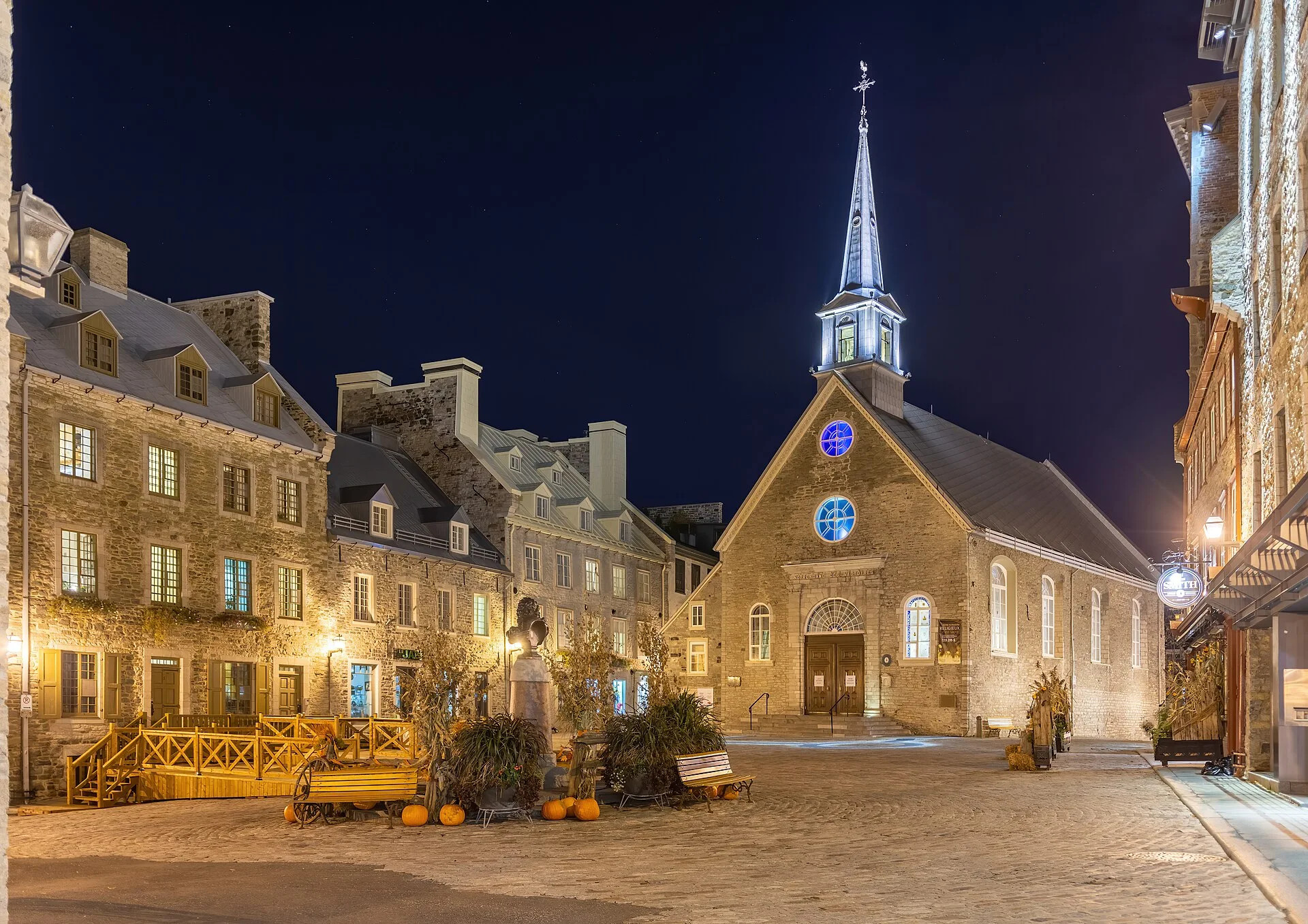
The night photograph brings church and square out of darkness through lighting. Surface differences can recede while doors, roofs and outlines become more concentrated. Atmosphere also influences an imagined past.
That does not diminish the image; it invites comparison under another light. Three separate photographs are not a complete chronological record. Alongside restoration and archaeology accounts, they leave a more precise question: which generations helped make this particular old-town view?
References
These sources inform the essay’s historical and local context. Its observations and interpretations are original to WalkThere.
Ville de Québec
Place-RoyaleCity heritage account of commerce, restoration and historical presentation.
Ville de Québec
Place Royale archaeologyArchaeological context for earlier activity and Habitation remains.
More journey background
Related journey sources
- Fortifications — Ville de Québec
- Porte Saint-Louis — Destination Québec cité
- Place d’Armes — Destination Québec cité
- Three terraces — Parks Canada
- Saint-Louis Forts and Châteaux — Ville de Québec
- Rue du Petit-Champlain — Ville de Québec
- Explore Petit-Champlain — Destination Québec cité
- Porte Saint-Jean — Destination Québec cité
- Cathedral of Holy Trinity — Ville de Québec
- Breakneck Steps — Destination Québec cité
- Bassin Louise — Ville de Québec