
Prague’s Astronomical Clock: More Than the Hour
Read the Old Town Hall clock through mechanical figures, astronomical and calendar displays, maintenance and the public life of the square beyond its hourly spectacle.
Prague Old TownObservation essay
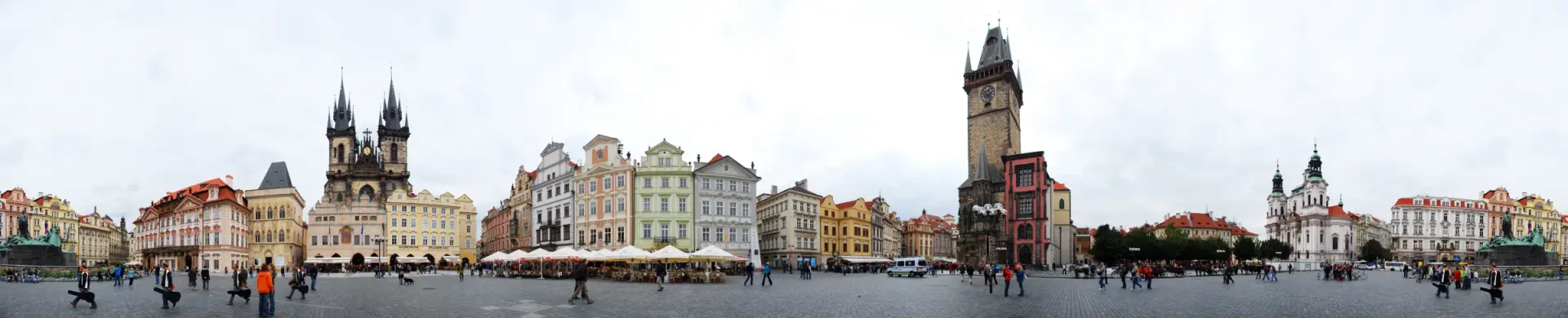
Waiting gives the square a shared direction
Near the hour, people gather on one side of Old Town Square and turn towards the clock. Waiting already changes how the space is used before a figure appears. Different individual visits temporarily share a focus.
That can reduce the landmark in memory to a brief show. Yet the dials and their markings remain after the crowd disperses. Missing an hourly event does not leave an object without other content to examine.
Separate the three parts first
Prague City Tourism describes mechanical figures, astronomical time information and a calendar as parts of the clock. Locating those zones is a useful first step before trying to interpret every marking.
A phone supplies a time directly; this façade presents several kinds of information through symbols and positions. Unfamiliar markings are not necessarily decoration, and guessing a hand’s function from appearance is no substitute for interpretation.
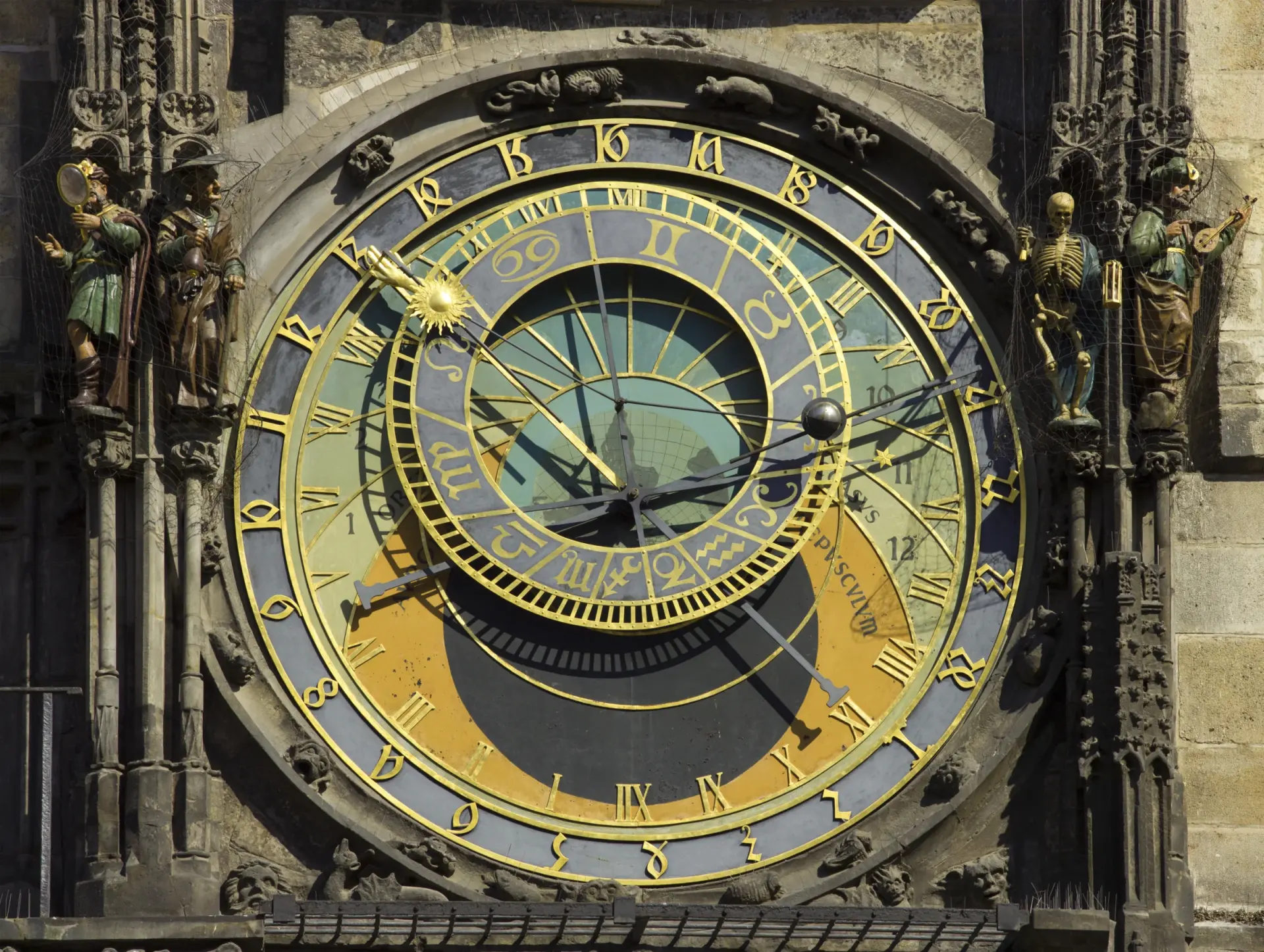
An hour and a date answer different questions
The hourly event divides a day, while a calendar places a moment within longer cycles. Together they extend the public display beyond the immediate question of what time it is.
Moving figures have a beginning and ending; dials invite attention between performances. Looking at one ring and then returning to the whole reveals how a dynamic attraction and a readable surface can coexist.
A landmark contains work from several periods
The official account traces the original clock to 1410 while describing subsequent repairs and replacement parts. Continuing operation requires care; it cannot be attributed only to the first act of construction.
Age does not mean that every component has remained untouched. More useful questions concern which parts belong to which phase and how repair maintains a function. One earliest date cannot assign the whole visible object to a single moment.
The town hall is more than a frame
From farther back, the clock returns to its position on a public building beside a square. Unlike a personal watch it addresses many people outside; unlike an indoor collection item it participates in street activity.
The approach from Celetná opens into enough space to perceive several buildings. The waiting audience is one use among movement, meetings and other visits. Enjoying the event can coexist with leaving space to pass.
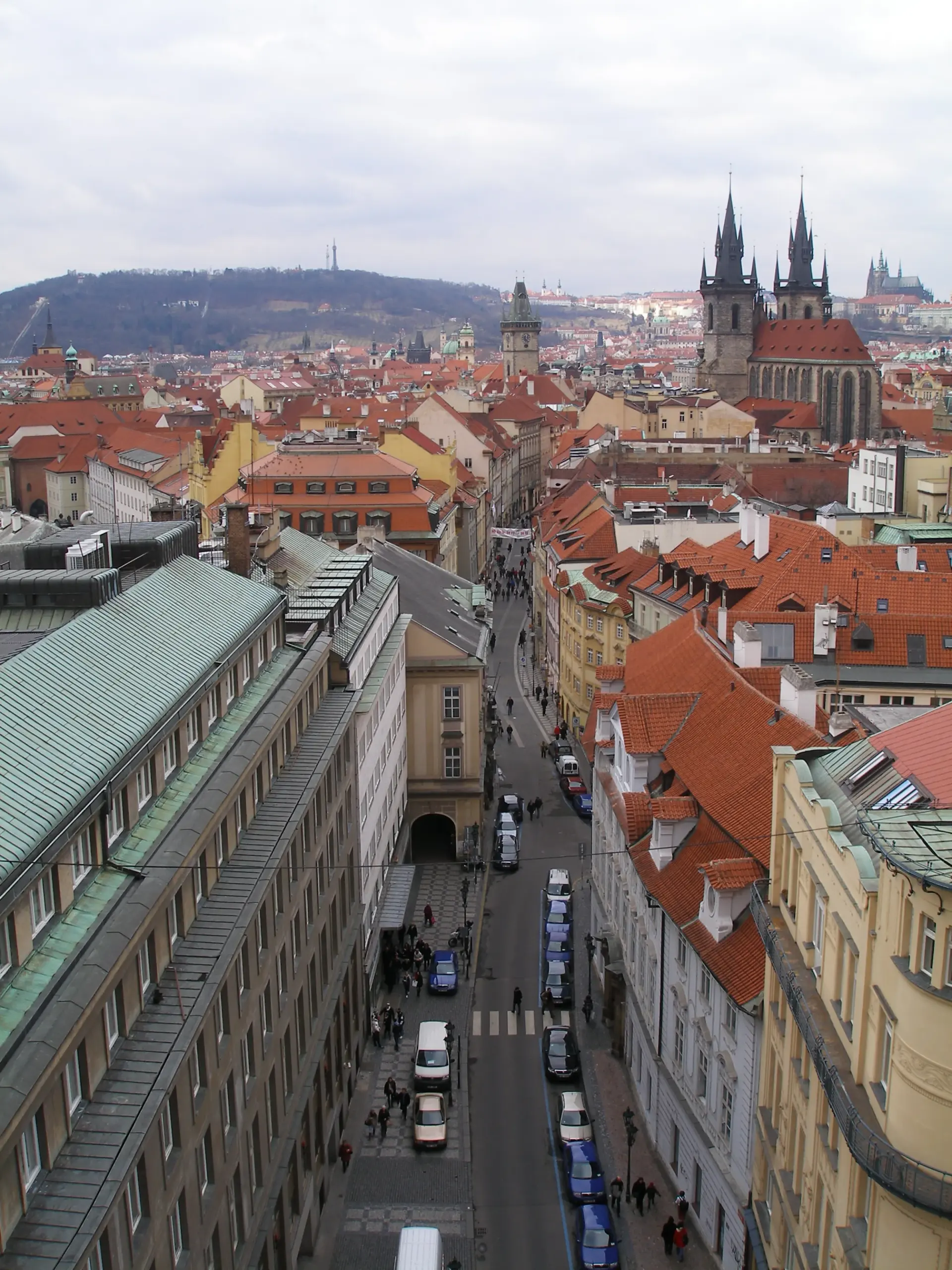
Stay a little after the spectacle
Check current official arrangements if the moving figures are important to the visit. Maintenance can change operation, and historical photographs do not guarantee a present-day performance. Choose a position that keeps circulation clear.
Afterwards, look again at the dials. The three-part arrangement may be easier to recognise as people leave. The memory can include not only an appearance of figures, but the way a public device lets strangers briefly share a moment.
References
These sources inform the essay’s historical and local context. Its observations and interpretations are original to WalkThere.
Prague City Tourism
Old Town Hall with Astronomical ClockOfficial context for the astronomical clock, calendar and Old Town Hall.
Prague City Tourism
Old Town SquareLocal context for Old Town Square and its civic buildings.
More journey background
Related journey sources
- Historic Centre of Prague — UNESCO World Heritage Centre
- Powder Gate Tower — Prague City Tourism
- Charles Bridge — Prague City Tourism
- Kampa — Prague City Tourism
- The Lesser Town without barriers — Prague City Tourism