
Porto: From Station Tiles to Two Riverbanks
Connect São Bento’s painted tiles, the cathedral’s hilltop setting, Rua das Flores and Gaia’s waterfront to understand Porto at several distances.
Porto old townObservation essay
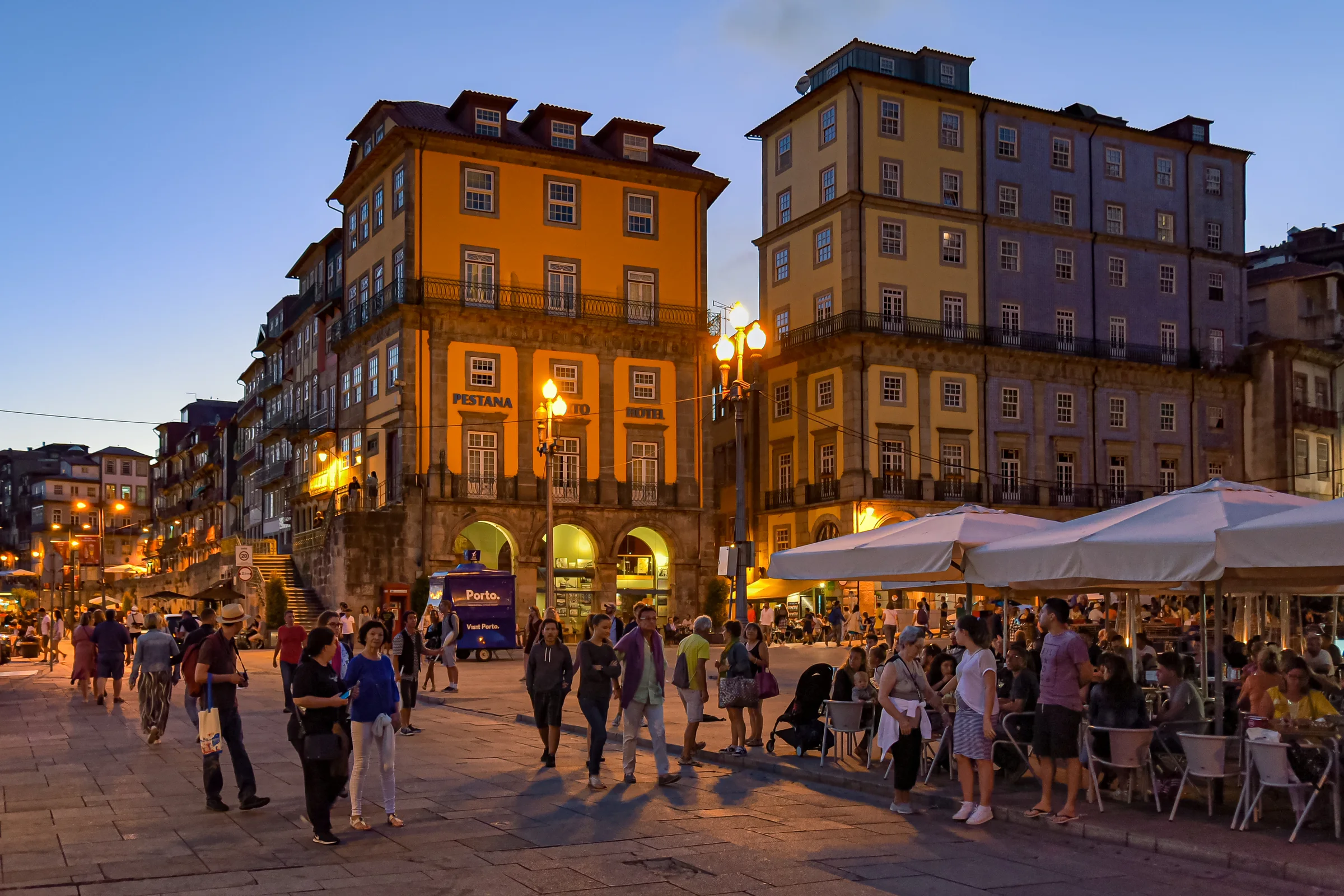
Looking at pictures while others catch trains
São Bento’s entrance hall is a compelling first stop. Its tiles invite lingering while the platforms remind visitors that the building serves journeys. Arriving passengers and people who have come to look share the same space.
Portugal’s railway heritage institution attributes the panels to Jorge Colaço and describes subjects including transport, history and rural work. These are compositions to read, not simply repeated blue-and-white patterns. Following a figure or an action within a panel can be more memorable than trying to photograph every wall at once.
A railway entrance on an earlier religious site
The railway heritage account places the station on the former convent site. Today’s place of arrivals and departures therefore occupies ground with an earlier use. The railway changed the historic centre rather than appearing in an empty setting.
São Bento complicates the idea of an old town as something entirely unchanged. Its pictures interpret history while the station itself belongs to a later urban transformation. Outside, the relationship between façade, square and streets is as revealing as the decoration within.
The cathedral makes height apparent
Places may appear close on a flat map of Porto, but their levels differ. Around the cathedral, stone paving, building mass and roofs below make the city’s height tangible. A short horizontal distance can conceal steps or a climb.
Height also changes how houses are understood. At street level, each has entrances and windows; from above, roofs overlap into a broader outline. The cathedral setting allows those local observations to be connected with the city descending towards the water.
Rua das Flores lifts attention above the shopfronts
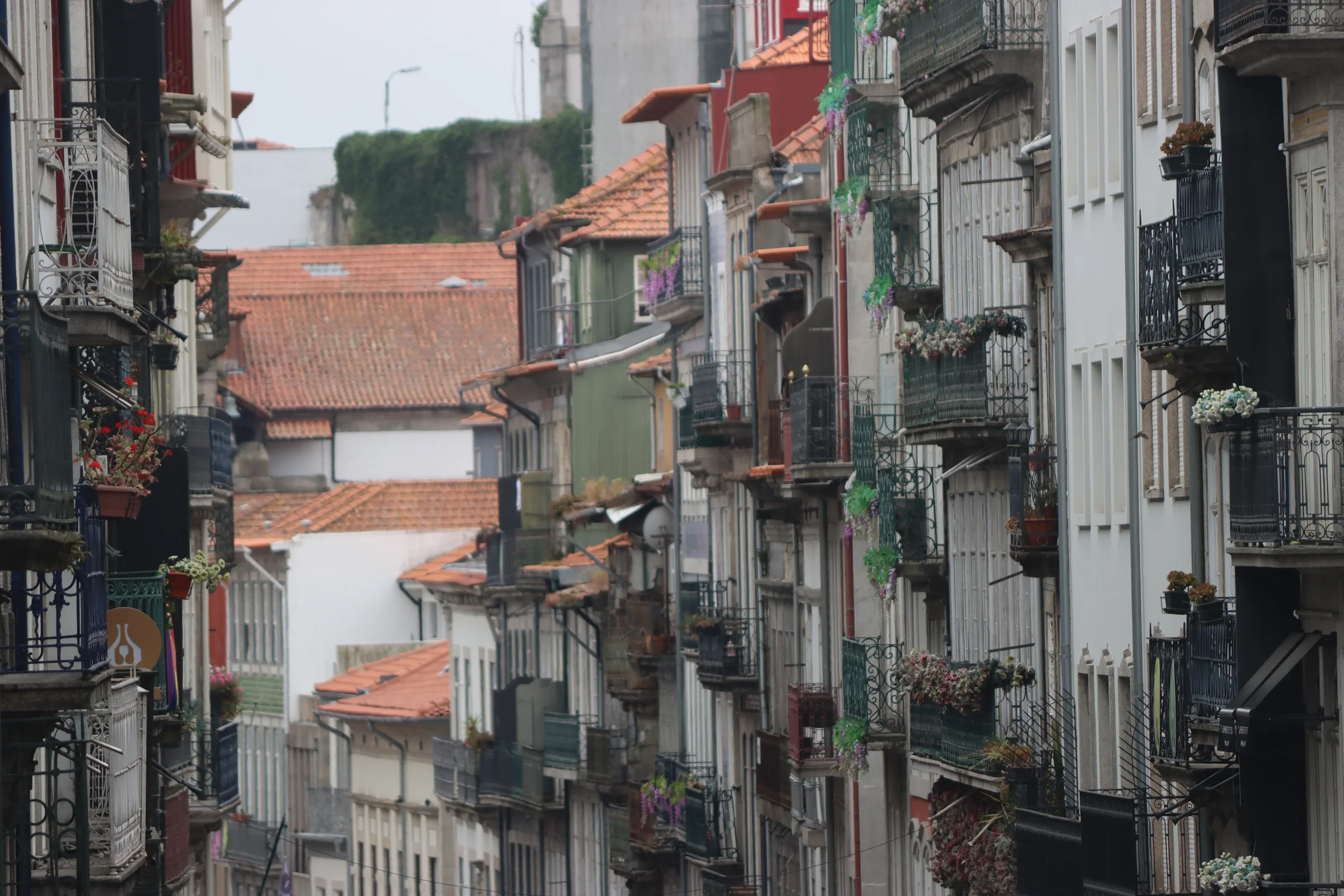
At ground level, Rua das Flores has entrances and commerce. Higher up, balconies, windows and wall surfaces form another sequence. Unlike the station’s concentrated collection, these details are distributed along a street and invite looking back as well as forwards.
One journey photograph records paper lanterns overhead in a particular year. They are not a permanent attraction. That distinction is useful: buildings provide a longer-lasting framework while decorations and shopfront uses change. Different timescales contribute to the same view.
Ribeira becomes an outline from across the water
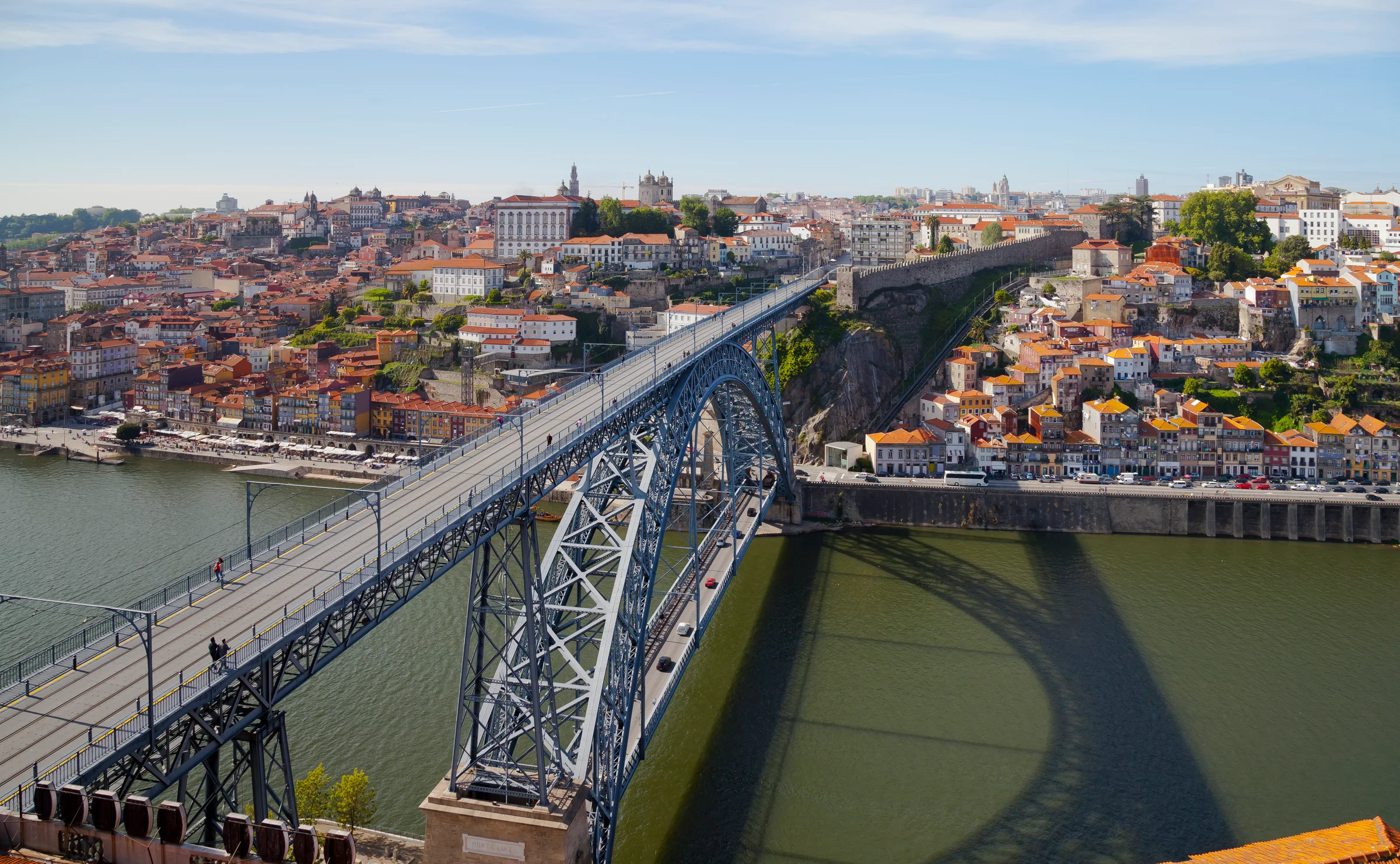
Close to Ribeira’s façades, individual doors and corners hold attention. Across the Douro, those separate buildings join into a hillside outline. A near view and a distant one offer complementary ways to understand the same setting.
Gaia is also a place in its own right. Portugal’s tourism material connects its Port wine lodges with visits to both banks, but Gaia should not be reduced to a camera platform. Changing banks also changes which part of the urban and commercial relationship occupies the foreground.
Leave energy for what follows the descent
An itinerary descending from the cathedral to the water can look effortless in a sequence of pictures. The finish is not necessarily the starting point for the journey home. Levels descended may need to be climbed again, and steps and paving affect pace.
The station, old-town streets and riverbanks need not all fit into one afternoon. Organise them around the experience and effort you want. Tiles encourage close attention, hills reveal layers and the river permits distance. Time to move between those scales offers more than a longer checklist.
References
These sources inform the essay’s historical and local context. Its observations and interpretations are original to WalkThere.
Visit Porto
Estação de São BentoContext for São Bento station and its tile panels.
Infraestruturas de Portugal
Estação de Porto – São BentoRailway information about the station’s architecture and history.
Visit Porto
Historic Centre – Ribeira itineraryUrban context for Ribeira and Porto’s historic centre.
More journey background
Related journey sources
- Porto in a few days — Turismo de Portugal
- Sé Catedral — Visit Porto
- Rua das Flores — Visit Porto