
Oslo Opera House: a public ground around the performance
Compare harbour reflections, glass and sloping roof surfaces to understand public space around Oslo Opera House, with references from the venue and Snøhetta.
Oslo Civic WaterfrontObservation essay
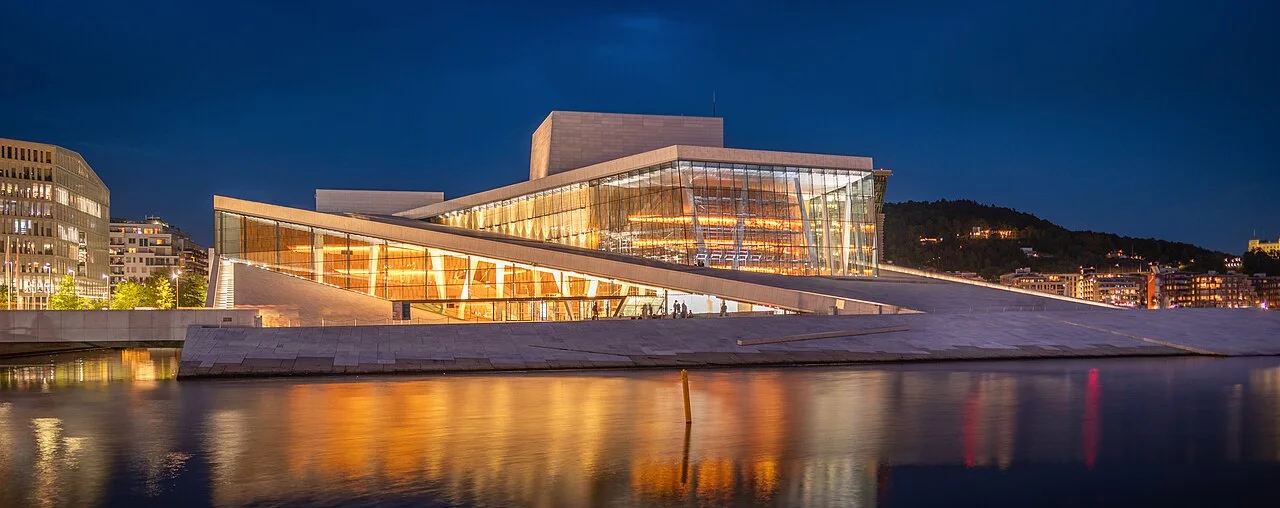
Light gives the building another outline
The opening photograph records an August night in 2025. Reflections stretch the illuminated building across the water, making its harbour setting part of the composition rather than a neutral background. The reflected shape has its own loose edges.
The approach does not centre on an immediately familiar monumental portico. Lower edges and rising surfaces invite questions about getting close before locating a door. The photograph introduces that relationship with the shore without establishing today’s entrance.
A roof conceived as public ground
Snøhetta describes the open plaza and walkable sloping roof as public space. People without performance tickets consequently have a reason to approach. A waterfront passer-by and someone attending an opera can encounter the same building through different purposes.
Design intention must remain distinct from present access. Weather, maintenance and events may affect local arrangements. A deliberately usable surface should not be interpreted as permission to climb every part of the structure in any condition.
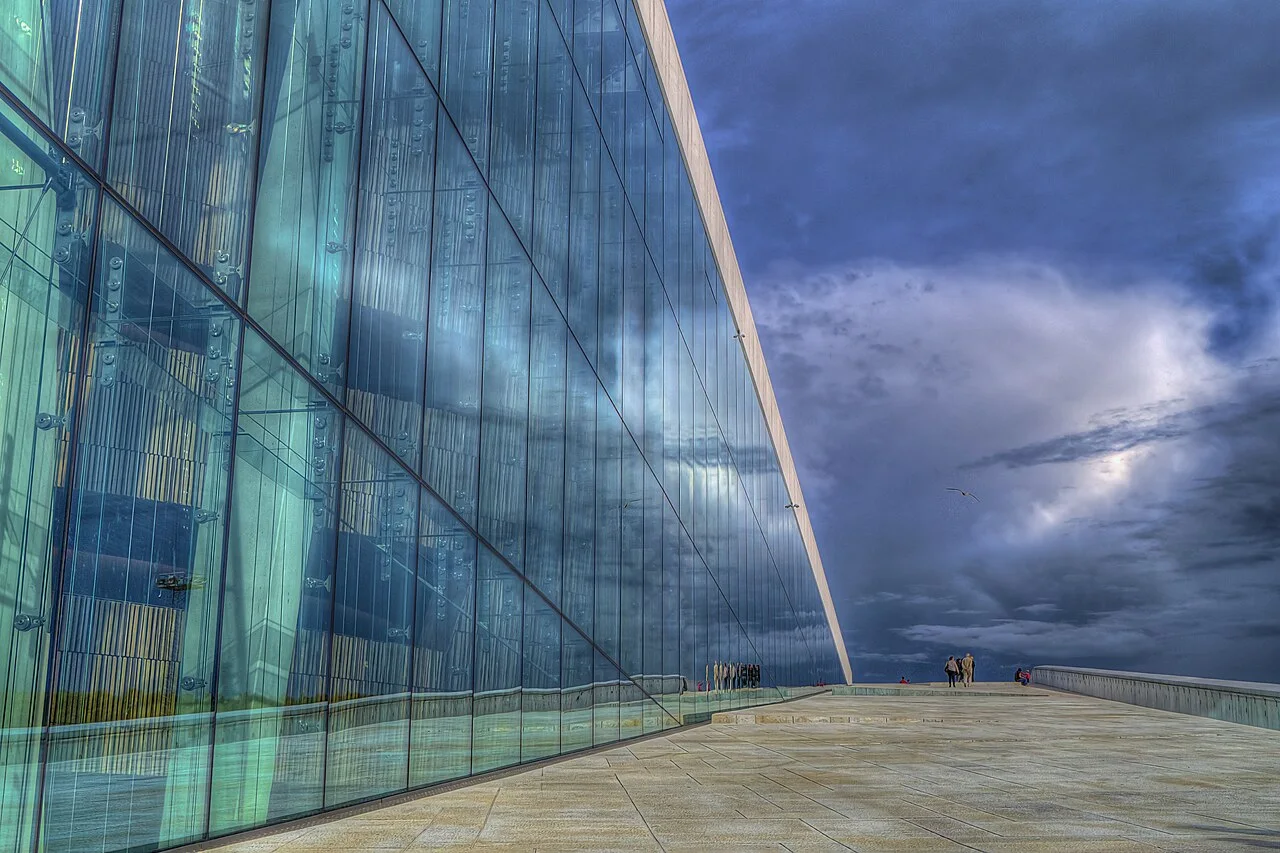
Glass meets the slope
The September 2013 photograph brings glass façade and sloping roof closer. A distant pale volume separates into transparent, reflective and opaque surfaces. Follow the glazing edge, then the direction of the stone, noticing how each handles light.
The opera house identifies white Carrara marble among its principal materials. That name cannot identify every light-coloured surface in a photograph. Exposure and illumination alter appearances; a detailed material or repair assessment would require further records and inspection.
The surface has named contributors
Snøhetta credits Kristian Blystad, Kalle Grude and Jorunn Sannes with the walkable marble roof. A surface used for movement also emerged from an artistic design process, giving the familiar word roof a more particular working history.
Images can support attention to joints, turns and light without allocating every visible detail to a named contributor. Begin with the documented collaborators, then consult the full project account rather than assigning an improvised symbolic meaning to each edge.
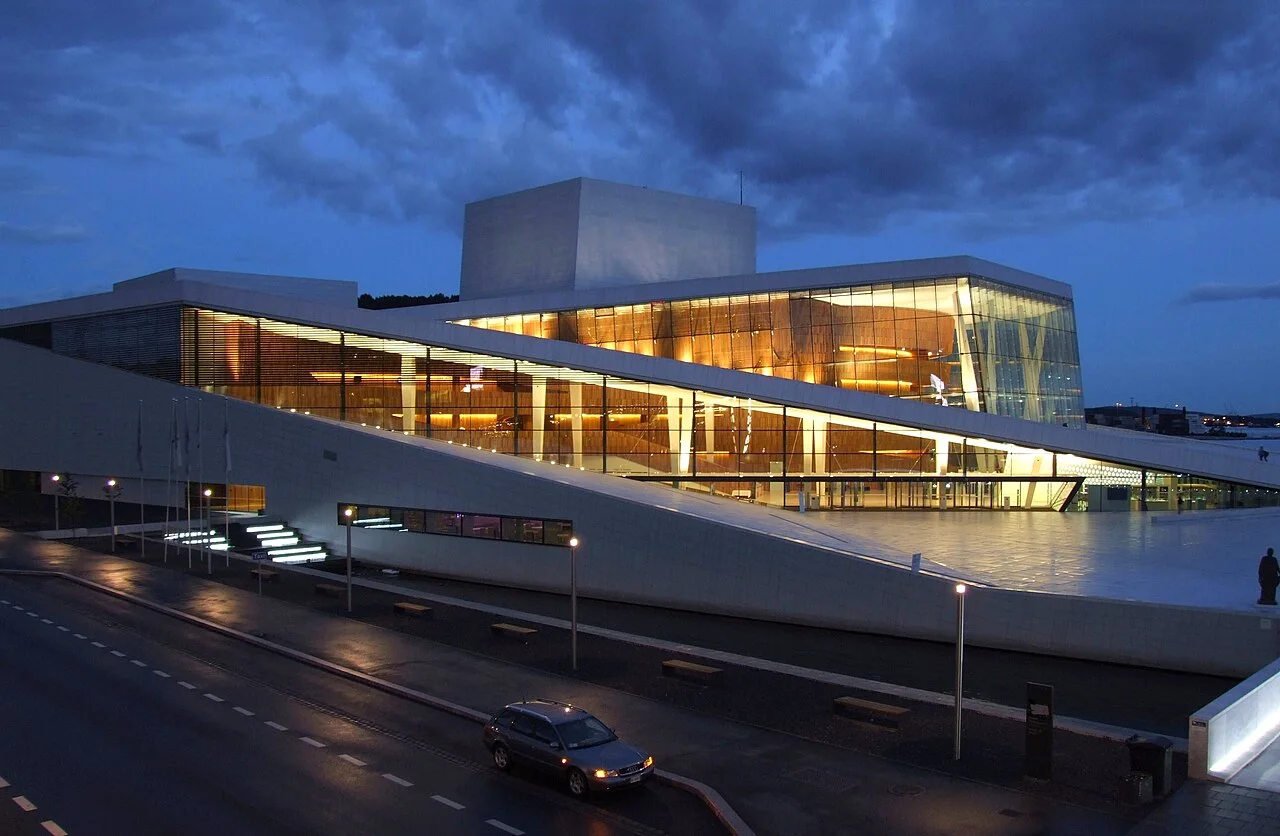
Work happens behind the performance
The venue describes rehearsal and production areas, including scenery, costume, hat and mask work, with some activity visible through large windows. Glazing can connect passers-by with awareness of preparation beyond the hours spent on stage.
These exterior photographs do not show those workshops or identify a particular day’s production. Lights behind glass do not confirm a rehearsal or permit entry to a working area. The dusk view offers a comparison of warm interior light and the sky outside.
Choose the visit you want
A waterfront exterior study, a permitted roof visit and a ticketed performance need different information. There is no requirement to combine them in one outing. Consult programming for a performance and current venue guidance for architectural visiting.
The photographs date from 2008, 2013 and 2025, not one continuous approach into an auditorium. They establish neither a currently open door nor a surveyed accessible route. Return to the reflection with another question: how does the building invite an encounter before anyone has chosen a performance?
References
These sources inform the essay’s historical and local context. Its observations and interpretations are original to WalkThere.
Norwegian National Opera and Ballet
Opera House: a shoreline made architecturalVenue account of public roof space, materials, glazing and production areas.
Snøhetta
Norwegian National Opera and BalletArchitect’s project account of public waterfront space and roof artists.
More journey background
Related journey sources
- Akershus: a fortified edge above the harbour — Forsvarsbygg
- City Hall: a civic silhouette facing the water — City of Oslo
- Karl Johan: the street as an urban room — VisitOSLO
- Royal Palace: a frontage and its setting — Royal Court of Norway
- Deichman Bjørvika opens — Royal House of Norway
- Christiania torv — VisitOSLO
- About the Nobel Peace Center — Nobel Peace Center
- National Theatre history — Nationaltheatret