
Nyhavn: keep the water in the picture
Compare colourful façades, a closer ship view and evening light to read Nyhavn’s harbour setting, with official context for the waterfront and neighbouring Kongens Nytorv.
Copenhagen Harbour & Royal QuarterObservation essay
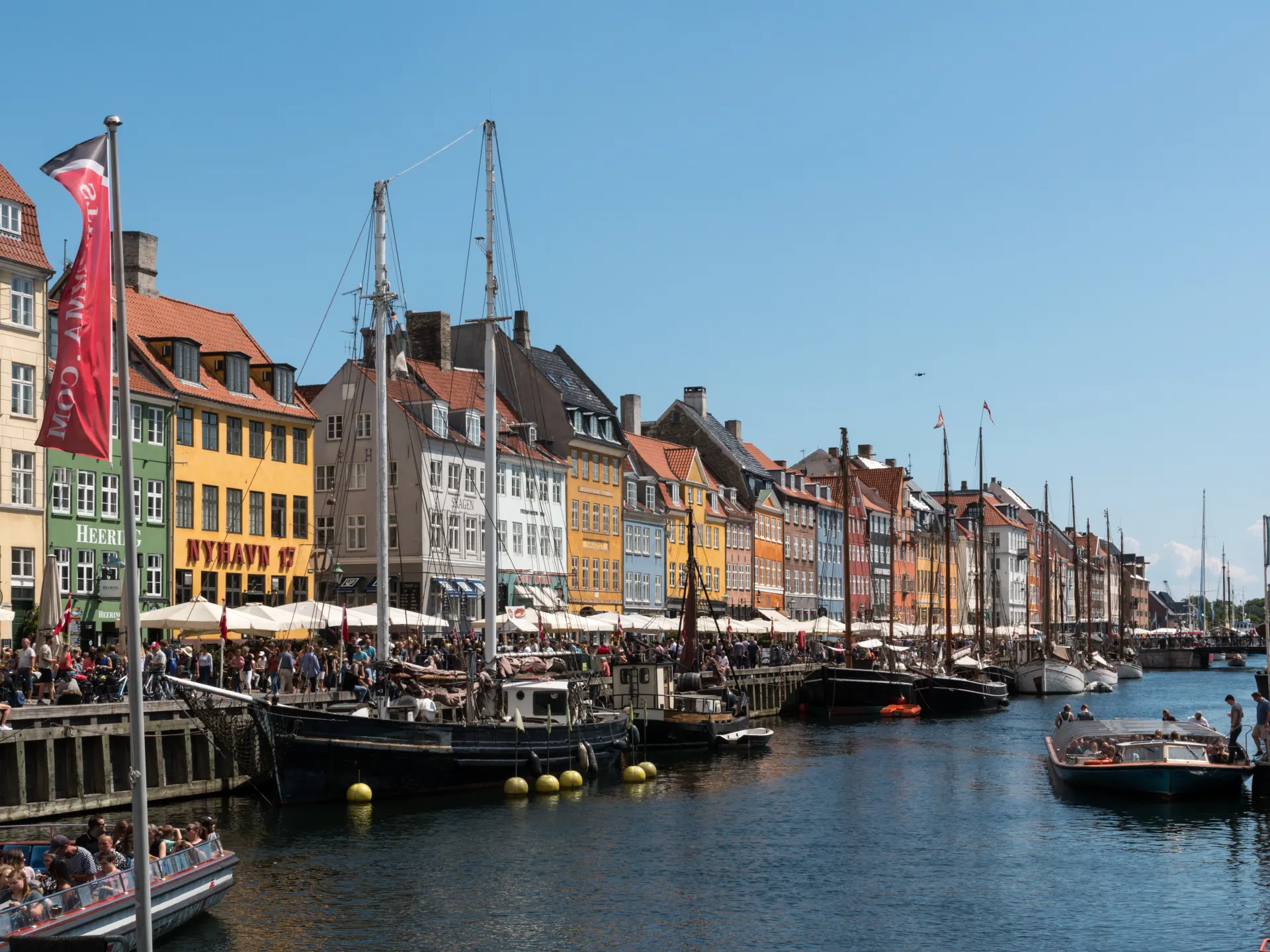
Move the houses into the background
Nyhavn’s colours are readily memorable: adjacent façades have distinct roofs and repeated windows. Water occupies a substantial foreground, allowing a view across while separating the viewer from the buildings.
Cropping tightly around the houses can turn them into a colour chart. Keeping the water restores distance and relationships between windows, quay and vessels. The picture describes a harbour rather than a collection of painted surfaces.
A port explains the water’s use
Visit Copenhagen describes Nyhavn’s earlier life as a busy port associated with visiting sailors and surrounding activity. That history returns practical meaning to water and quay behind the present dining and sightseeing image.
It does not justify inventing a sailor’s story for each house. It suggests another direction of attention: beside following the row of buildings, consider how vessels meet the bank and streets approach the water.
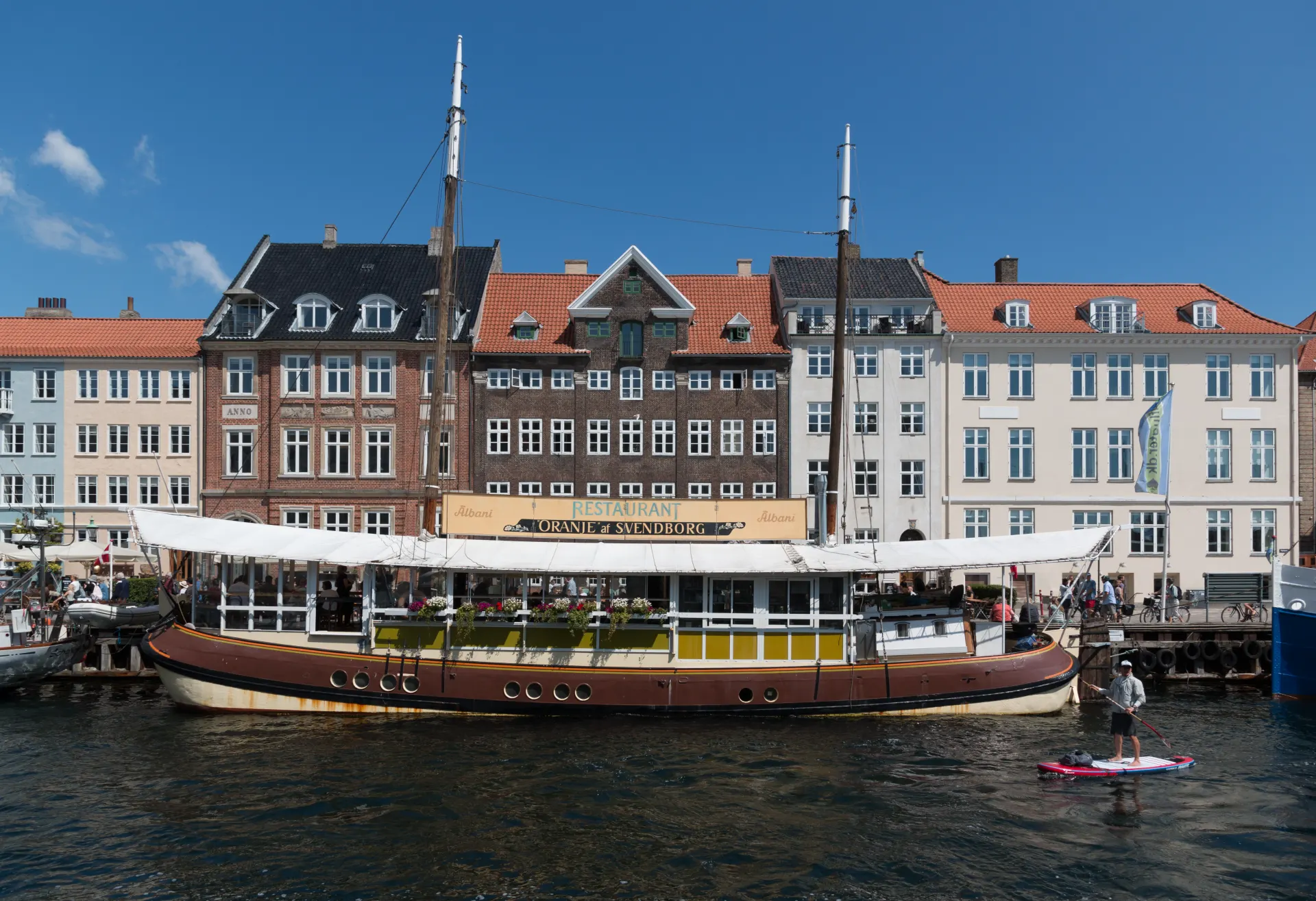
A vessel interrupts the row
The closer ship photograph conceals some of the background. Hull and upright elements break the continuous band of façades, making near and far easier to distinguish. An interruption supplies depth.
Specialist vocabulary need not come first. Locate waterline, deck and upright members, then notice which windows disappear behind them. Buildings occupy the bank and the vessel the water; the photograph brings their outlines together.
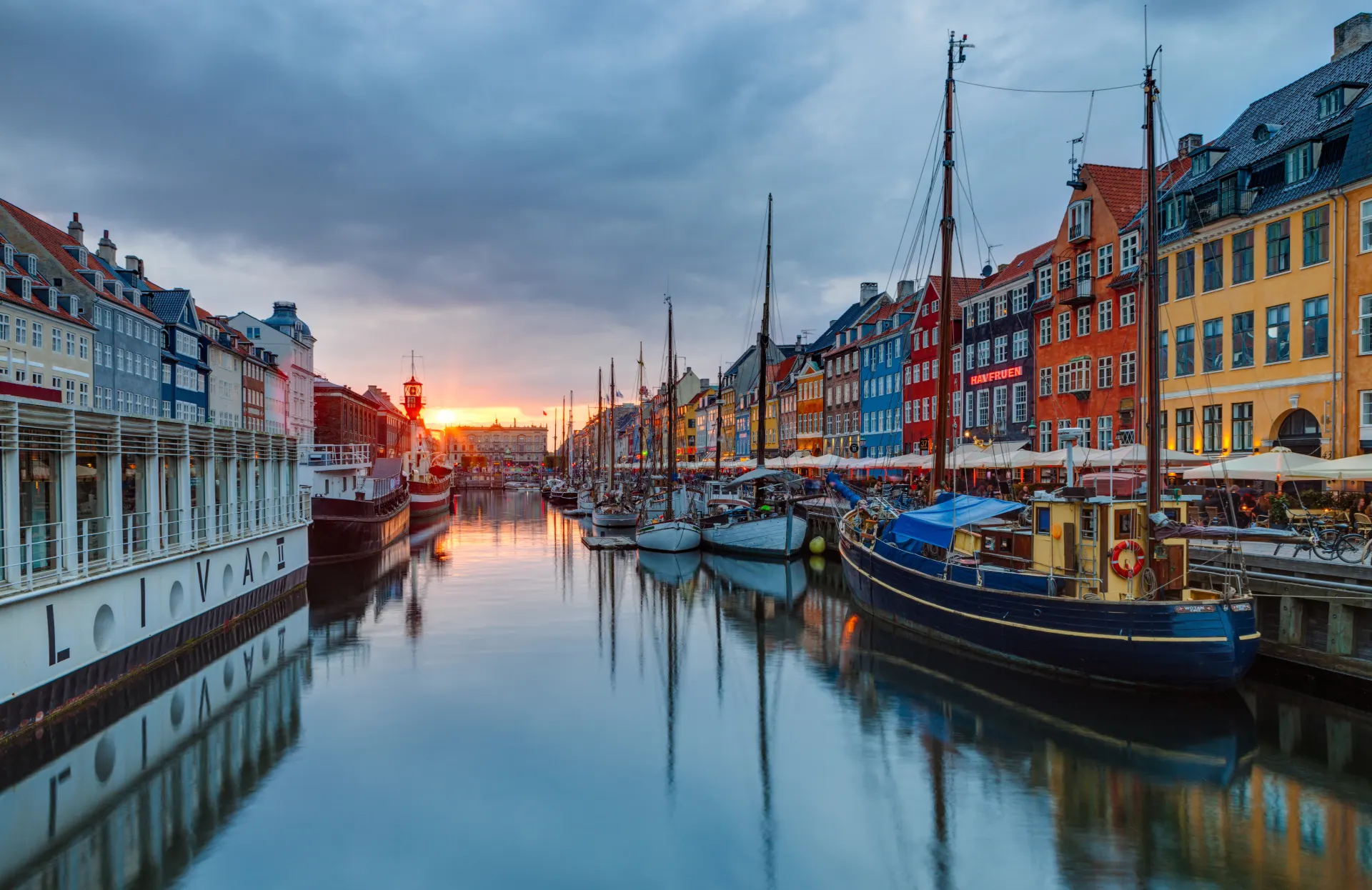
Evening changes the comparison
The evening image and daylight views come from separate dates. Lower light alters relationships between walls, sky and water. A colour prominent in daylight can become a darker background in another frame.
That difference does not independently establish repainting. Time, exposure and direction all influence appearance. Compare which edges become clearer—roofs, quay or a vessel’s outline—rather than requiring one image to supply the only true colour.
A square changes the shape of attention
Official information places Kongens Nytorv close to Nyhavn. Their proximity joins a narrow water corridor with a more open urban square. Neighbouring places can organise views quite differently.
The harbour encourages attention along an extended edge, while a square offers more lateral choices. A walk can change character through this shift without covering a great distance. Recognising the change helps establish orientation beyond a sequence of place names.
Leave room for the present
Photographs introduce the outlines before an actual visit, where crowds, moorings and arrangements may differ. These older images do not confirm current businesses. Pause somewhere that respects passing people and entrances.
Return to the water after examining the houses. It supplies reflection, distance and evidence of harbour use. Another waterfront can prompt the same question: what ways of understanding the place would disappear if the water were cropped away?
References
These sources inform the essay’s historical and local context. Its observations and interpretations are original to WalkThere.
Visit Copenhagen
NyhavnOfficial context for Nyhavn’s earlier port and present waterfront.
Visit Copenhagen
Kongens NytorvThe neighbouring square and its relationship with Nyhavn.
More journey background
Related journey sources
- Møllen — Danish Defence
- Nyhavn harbour — Visit Copenhagen
- Amalienborg Palace — Visit Copenhagen
- History of Frederik’s Church — Frederik’s Church
- Church admission and visiting — Frederik’s Church
- Kastellet — City of Copenhagen
- Use of Kastellet — Danish Defence
- Ofelia Plads — Ofelia Plads
- Amaliehaven — Visit Denmark / Visit Copenhagen
- History of St Alban’s Church — St Alban’s Church
- Gefion Fountain — Visit Copenhagen