
Melaka beyond Dutch Square: shophouses, a temple and surviving walls
Jonker Street, Cheng Hoon Teng and the ruins above Dutch Square reveal a port city through working places and incomplete remains.
Melaka old townObservation essay
Put the red buildings back into the city
Dutch Square is an easy image to recognise. Its red façades can also make Melaka look simpler than it is, as if one photograph could stand for the city’s important history. A trading port, however, leaves more than a single colour, architectural style or orderly civic space. The most memorable image is a beginning, not an adequate account.
UNESCO places Melaka within the history of exchange along the Straits of Malacca. Government buildings, religious places, urban quarters and defensive remains offer different parts of that story. Start at the square if you like, but let nearby streets, a temple entrance and incomplete walls complicate the picture rather than treating them as secondary attractions.
On Jonker Street, buildings and business share an address
Jonker Street is often introduced through its activity, leaving the buildings to serve as scenery. In the journey photographs, adjoining shophouses bring attention back to façades, entrances and signs facing the road. The scale is smaller than a square’s: a particular doorway can tell us where to begin looking without promising an entire architectural history at a glance.
A shophouse is interesting because its street-facing appearance cannot be entirely separated from use. Visitors may ask which shop to enter; people working there must also think about goods, access, labour and space. Both perspectives belong in a reading of the street. Even online, there is no need to turn a functioning neighbourhood into a backdrop awaiting tourist consumption.
Cheng Hoon Teng is more than a roofline
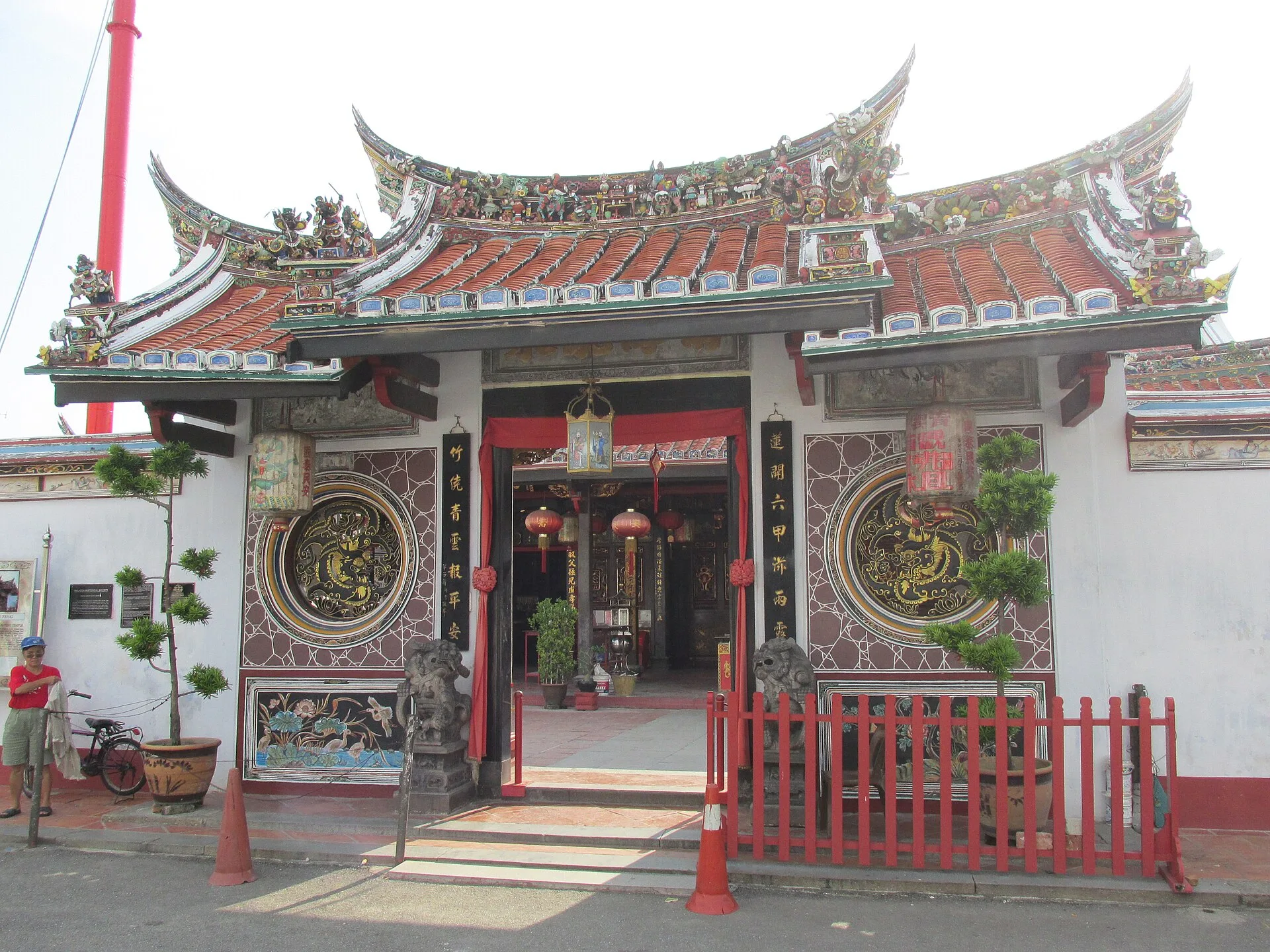
The roof and ornament at Cheng Hoon Teng’s entrance can catch attention first. Its relationship with the street deserves a second look: a boundary and approach bring a religious place close to everyday movement. The temple has an architectural form that can be studied and a continuing purpose that looking at the form alone will not explain.
The temple’s published history records two auxiliary halls added in 1704, substantial rebuilding in 1801, and a major repair in 1963 after further alterations. Those individual episodes say more than a superlative about age. Repairs and the work of craftspeople and communities keep a building in use. Entry and photography remain questions for the rules and activities on site; an attractive entrance does not make a place of worship a boundary-free exhibition.
At the square, colour cannot tell the whole history
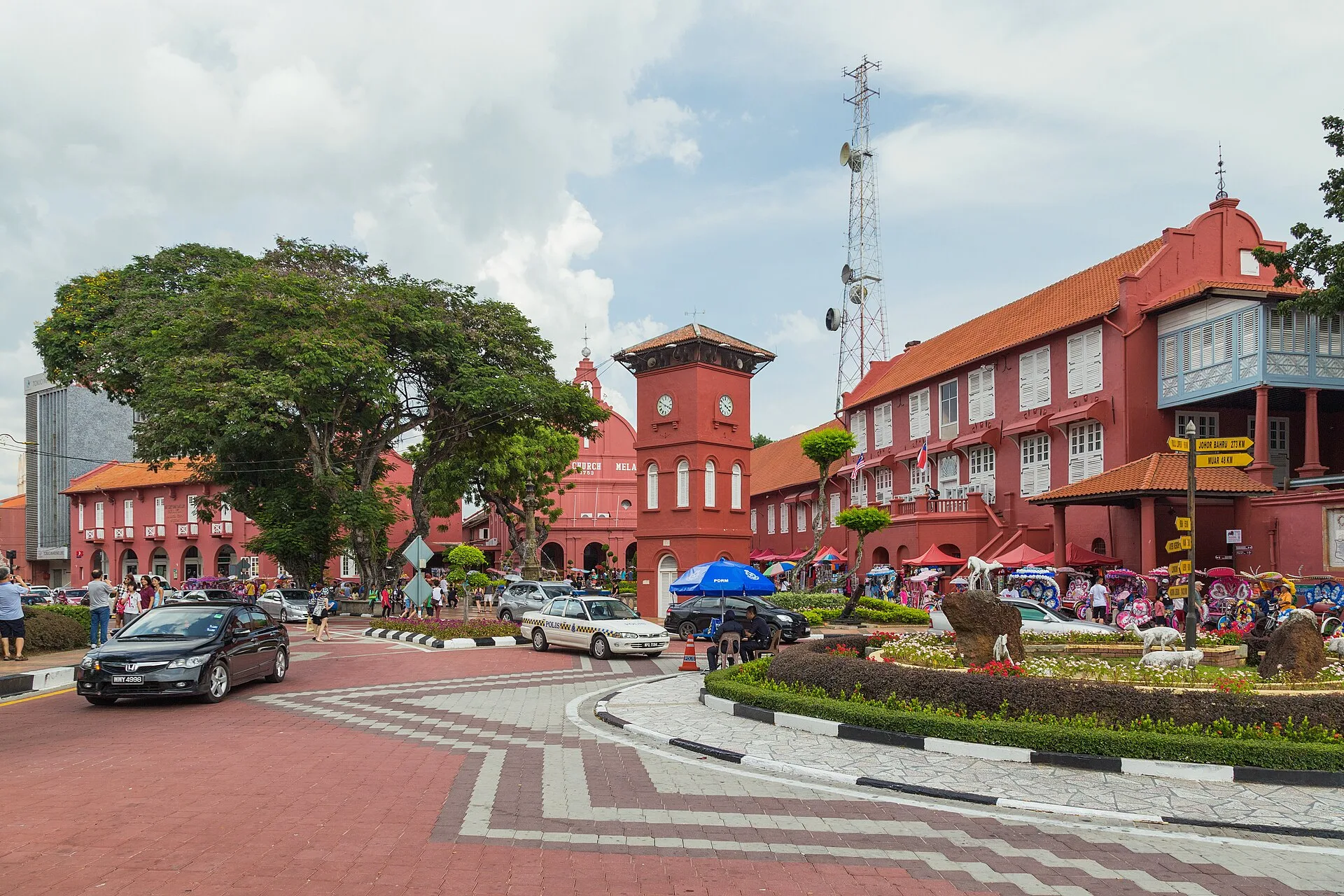
The shift from street to Dutch Square is a change in openness as much as colour. Buildings define a public setting shared with trees and people moving through it. Roads and passers-by in a photograph are not merely distractions from architecture. They are reminders that the square continues to occupy a place in an operating city.
Dutch heritage is an important part of this setting, but describing all Melaka as a Dutch-style town leaves too much outside the frame. The Malay sultanate, Portuguese and Dutch periods, and Asian trading communities belong to its history. A square can make one layer especially visible without representing them all. Continuing to the temple and ruins helps prevent the most photogenic part from doing all the historical work.
The gaps at St Paul’s Hill, and the fragment of a gate
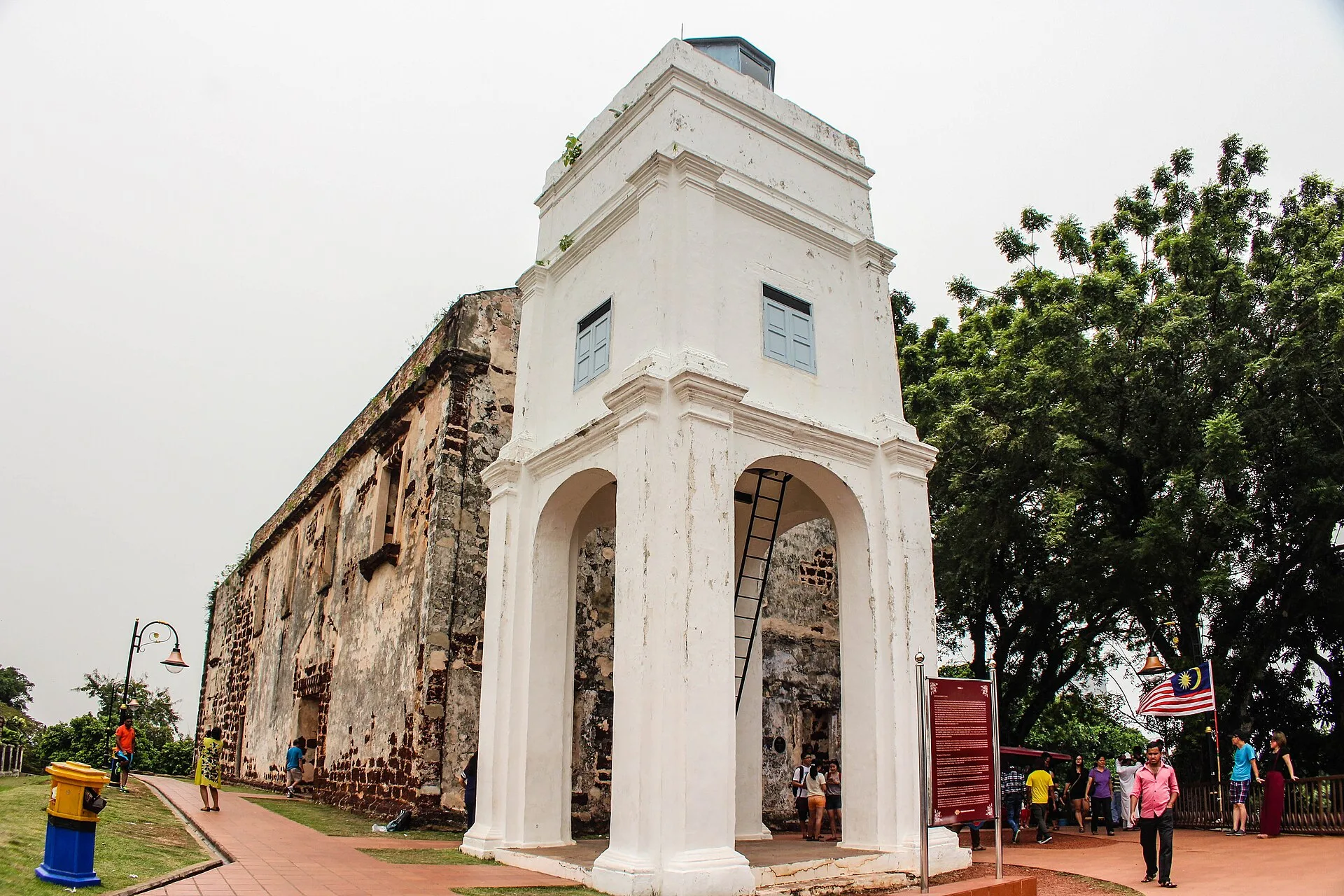
The church ruins on St Paul’s Hill offer a different visual experience from the square. Instead of colour joining buildings into a whole, openings and exposed walls make absence noticeable. Sky enters where enclosure once mattered, and the structure no longer performs its original function. What remains asks to be read alongside what has gone.
Porta de Santiago is likewise a fragment of a larger defensive setting. Its present scale can encourage underestimation, while storytelling can make it stand for more than it can show. Letting a fragment remain a fragment is useful: it points to a former fortification without recreating every wall, street or life around it. Missing parts invite care in separating surviving evidence from a later reconstruction in words.
A route through the old town needs more than one pace
Jonker Street, the temple, Dutch Square and the hill bring together buildings whose purposes have changed and places where trading, worship and movement continue. Historical references help explain the former; the latter also call for waiting, giving way and sometimes putting a camera down. Neither is fully captured by arriving, taking a photograph and leaving.
For a visit, distinguish the streets on level ground from the climb. An interest in shophouses and the temple need not require fitting the hill into the same day. If ruins matter most to you, leave energy and time for them. The linked journey assembles images and context to help make that choice. Its chapter order is an editorial connection, not a requirement to follow one itinerary regardless of circumstances.
Further reading and journey sources
This is an original WalkThere observation essay. These sources provide context for the related journey; imagery does not establish current conditions.
Place context
- Melaka and George Town, Historic Cities of the Straits of Malacca — UNESCO World Heritage Centre
- Dutch Square — Tourism Malaysia
- St Paul’s Hill: The Church of St Paul — Tourism Malaysia
- Melaka — Tourism Malaysia
- Built History — Cheng Hoon Teng Temple