
Lisbon’s Rossio: the waves beneath your feet
Follow a black-and-white curve back to its joints and makers. Portuguese paving is an image, a craft and a surface in daily use.
Lisbon Baixa & AlfamaObservation essay
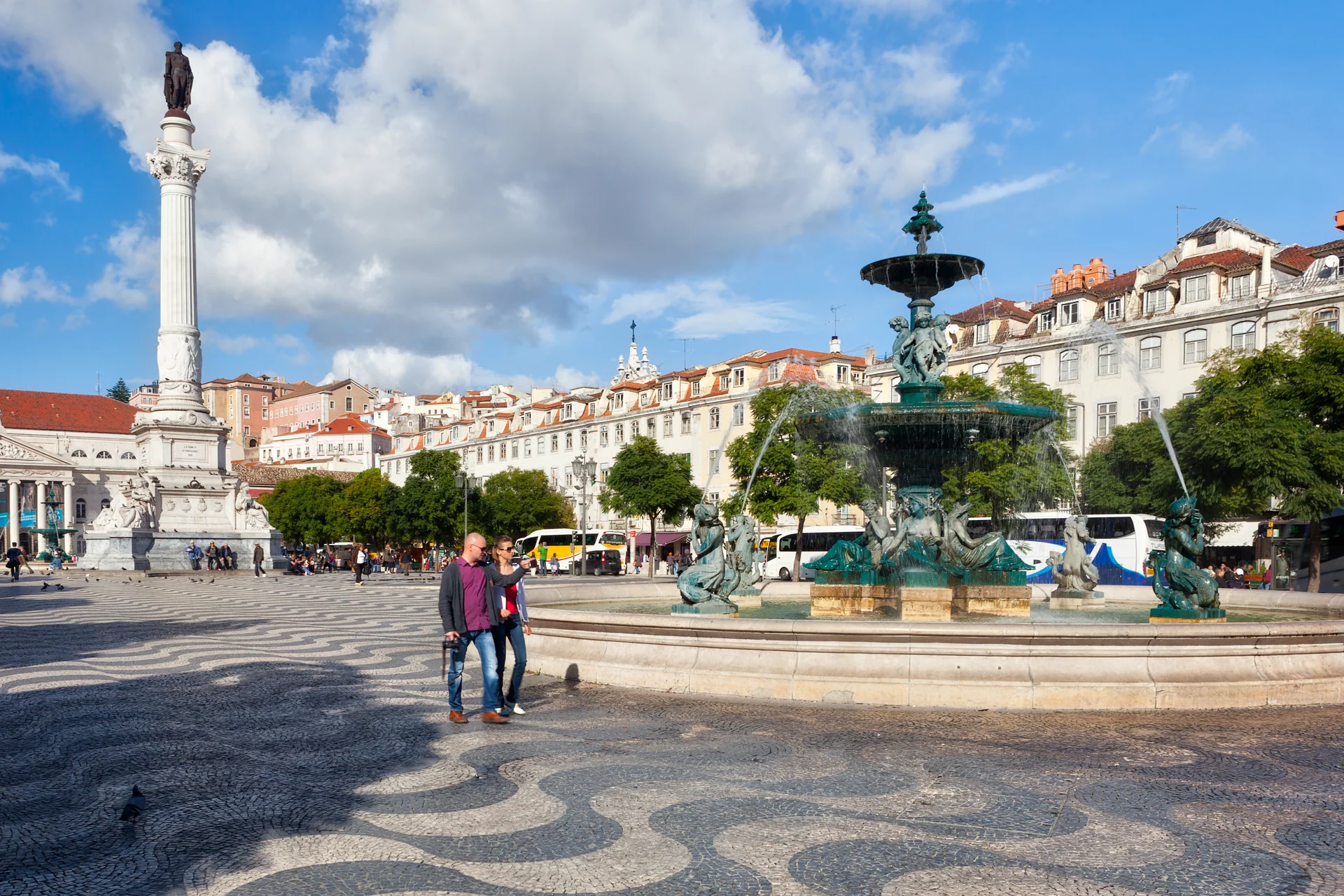
Look down and the square changes
Rossio encourages an upward glance at fountains, a monument and surrounding buildings. Lower the view and the paving connects those vertical objects. Wave-like bands continue past people and gathering places, giving direction to open ground.
Calçada portuguesa differs from decoration on a wall: entering the square means stepping onto it. The line must work at a distance while being assembled from stones that bear actual footsteps. Its visual effect and physical use occupy the same surface.
A smooth line becomes separate decisions
From a distance the curve seems continuous. Nearby it breaks into small stones and joints. Visit Lisboa describes craftsmen shaping and placing the stones by hand. The broad rhythm depends on many small judgements that disappear when the pattern is seen as a whole.
Choose one boundary between colours. How does a stone continue the edge established by its neighbour? This is not an instant lesson in paving. It is a way to make admiration specific, noticing work that rarely presents itself with an individual signature.
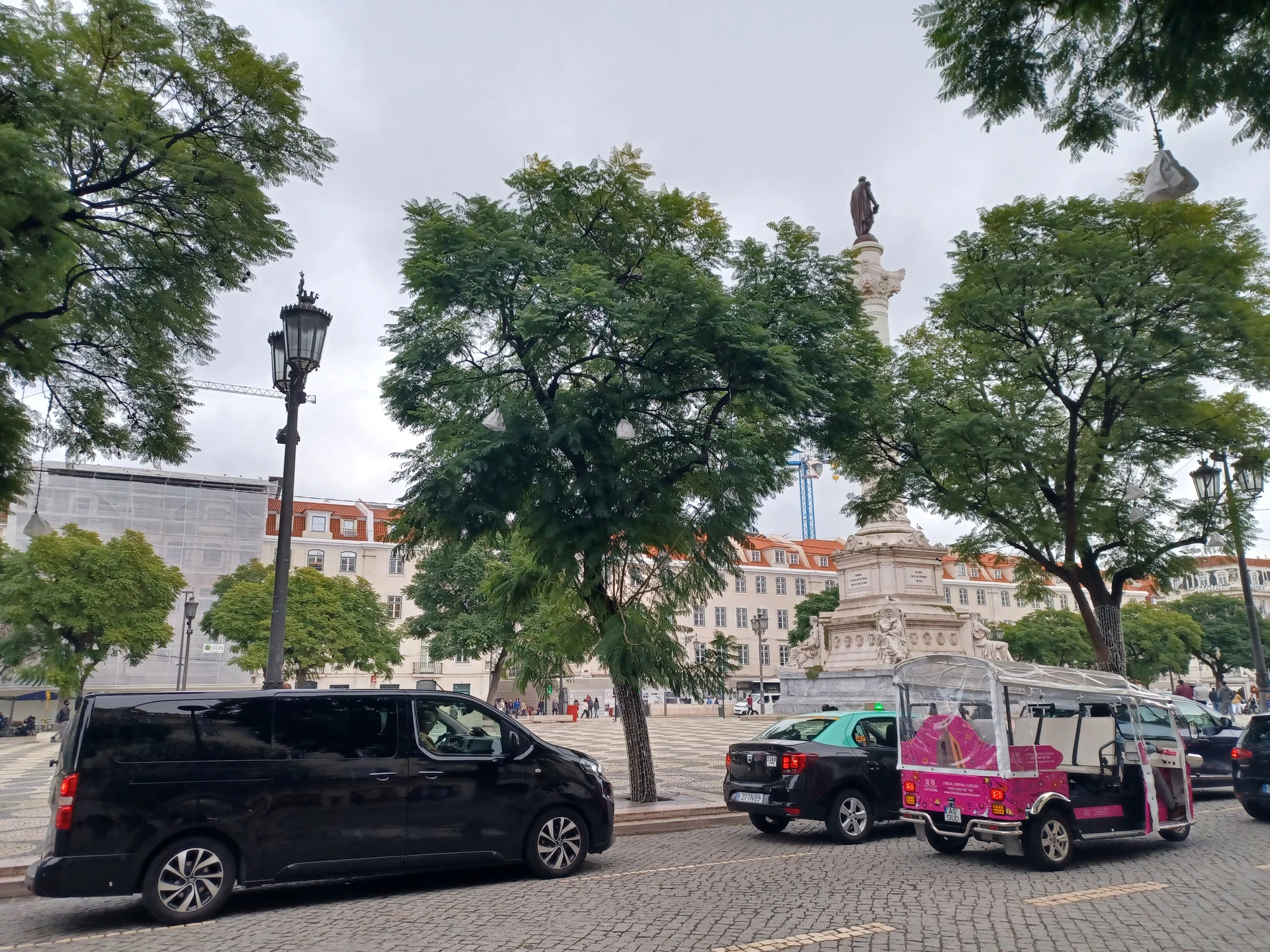
The eye moves between two scales
Alternating bands and compressed perspective can give the paving a sense of movement. People provide scale. The same ground can appear as numerous separate pieces or as a continuous wave, depending on viewing distance.
Two photographs of paving can therefore explain different things: how a pattern crosses a square, or how an edge is assembled. The three views here belong to separate dates. They do not document construction or establish that individual stones have never been replaced.
A craft needs people who can continue it
Preservation becomes difficult if only the finished image survives and practical knowledge disappears. Lisbon’s municipality established its Escola de Calceteiros in 1986 to pass on paving skills and help train practitioners. The subject is more than a catalogue of fixed designs.
Shaping a piece, turning a boundary and joining existing work require material judgement. The school’s existence changes the way a finished surface can be read: someone must remain able to continue it. If work is taking place, observe only from a permitted position without interrupting the workers.
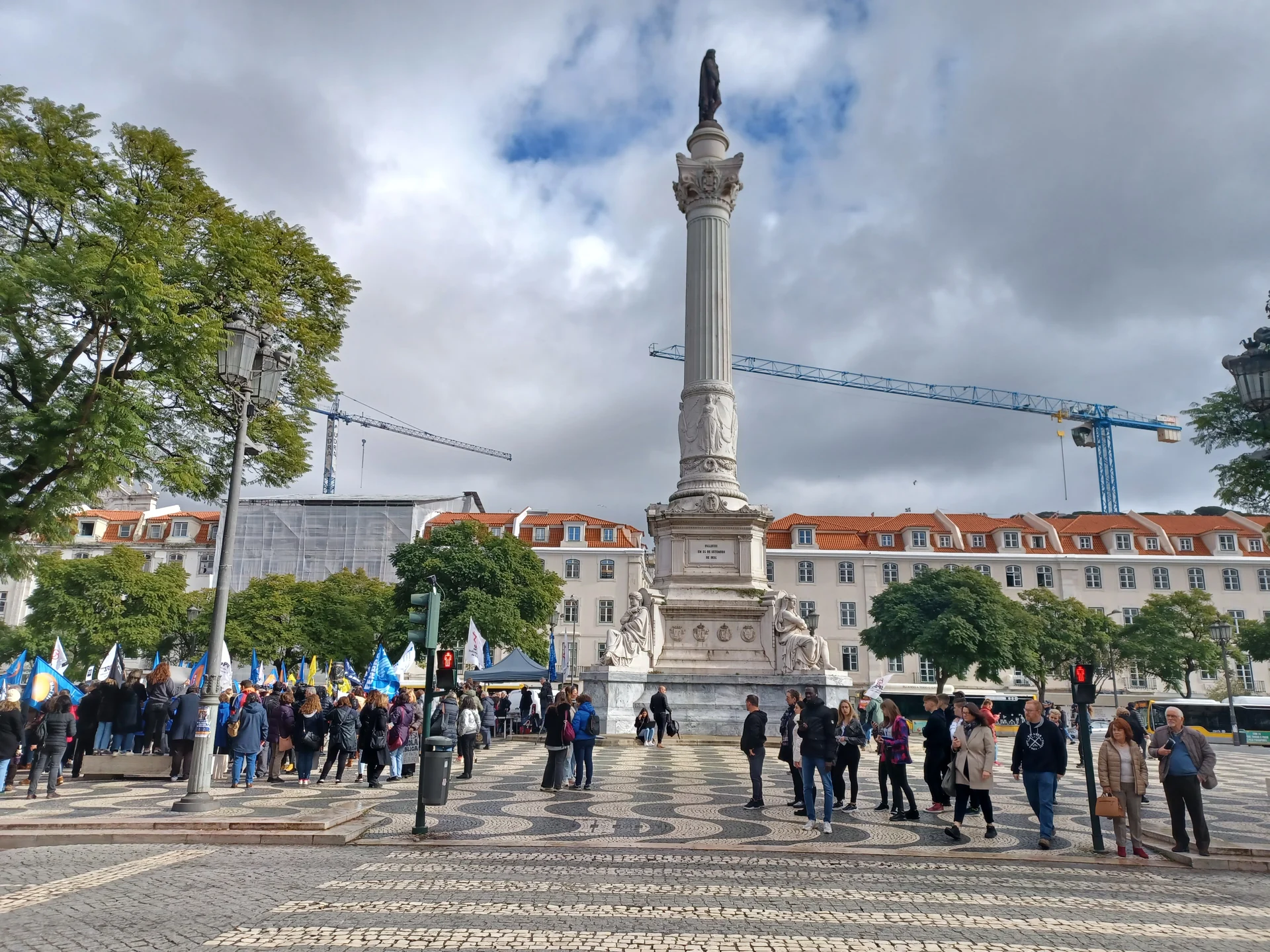
The ground must also carry people
A photographer may first notice composition. Someone moving luggage, pushing a buggy or using a walking aid encounters joints, changes of level and gradients. Both readings matter. Cultural value does not remove a surface’s practical responsibilities.
Separate visual interest from a judgement about access. An older photograph cannot establish today’s surface condition or suitability for an individual visitor. Let it explain the pattern while the actual ground and current conditions guide the walk.
Remember one turn in the line
You do not need to take away a complete overhead design. Remember one curve you understood, then watch how people cross it. Two kinds of time meet: the work of placing stones and the repeated passage of everyday feet.
Rossio has a long history as a meeting place. Its paving gives public life a tangible surface. What stays in mind may be the way careful labour enters ordinary use, so that the next similar pavement recalls not only a pattern but the people capable of making it.
References
These sources inform the essay’s historical and local context. Its observations and interpretations are original to WalkThere.
Visit Lisboa
Calçada PortuguesaBackground on hand-shaped stones and patterns in Portuguese paving.
Lisboa City Council
Escola de Calceteiros at Quinta Conde dos ArcosThe paving school founded in 1986 and its transmission of skills.
Visit Lisboa
RossioBackground on Rossio as a square and urban meeting place.
More journey background
Related journey sources
- Carmo Archaeological Museum — Visit Lisboa
- Praça do Comércio — Visit Lisboa
- Cathedral visiting rules — Sé de Lisboa
- Miradouro das Portas do Sol — Lisboa City Council
- Miradouro de Santa Luzia — Visit Lisboa
- Santa Justa viewing platform closure notice — Carris