
Ishikawamon Gate: more than a frontage
Compare a bridge-side view, timber interior and a later exterior photograph of Kanazawa Castle’s Ishikawamon Gate, with official local context.
Kanazawa castle townObservation essay
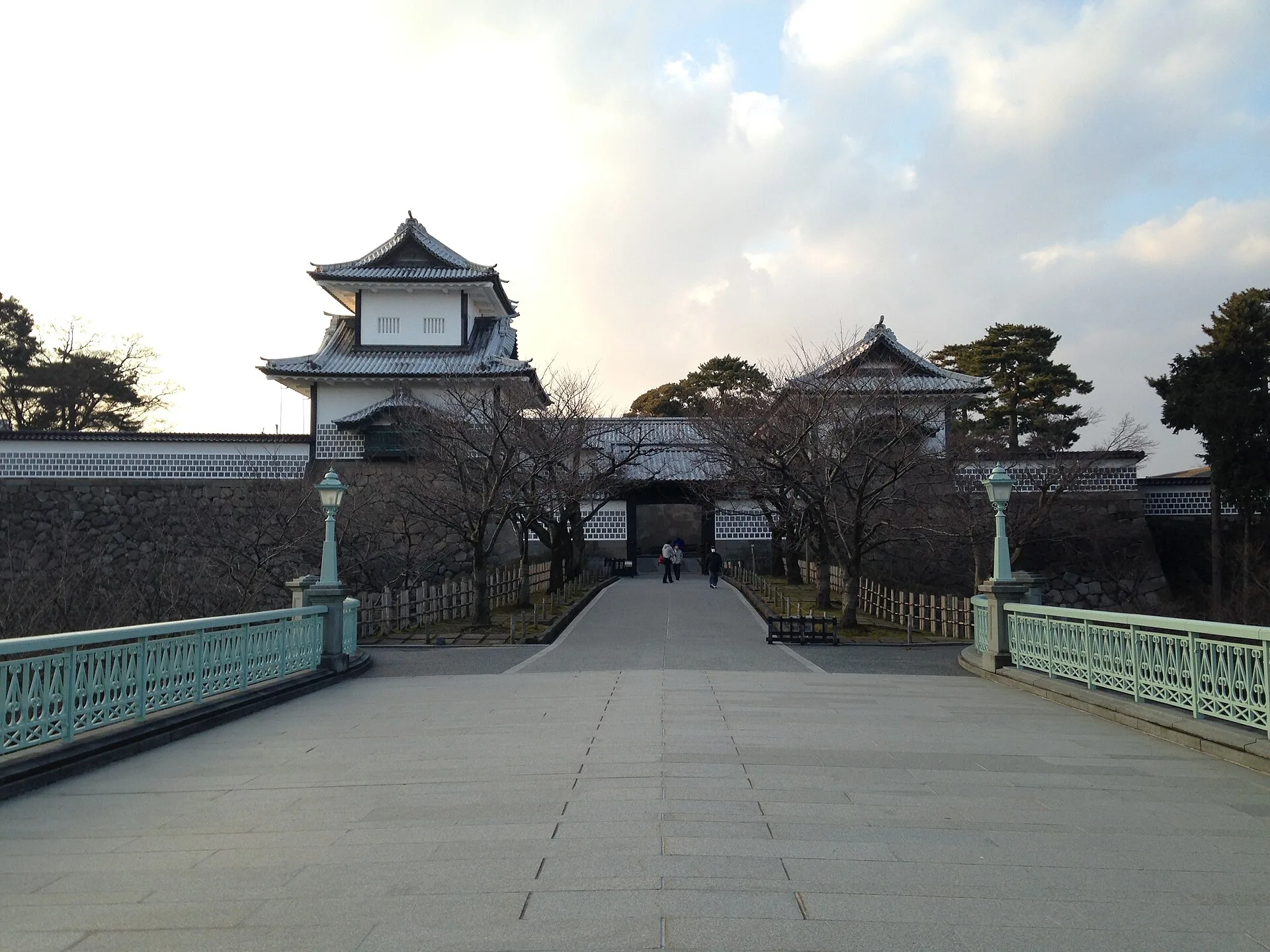
A complete-looking view
The broad photograph presents white walls, roofs, stonework and a bridge as a coherent image. Materials distinguish one another and the approach supplies a clear direction for looking. The entrance seems readily understandable.
A frontage nevertheless compresses depth. It cannot fully explain turns or the space beneath a roof. Treating the overview as a beginning leaves questions for the other photographs rather than making it stand for the entire building.
Stone and timber
Follow a corner of the stone wall, then return to the lighter wall above it. Material boundaries offer an accessible way to judge scale. Individual blocks have one set of dimensions; a continuous eave supplies another.
Specialist terminology need not come first. Comparing corners, surfaces and rooflines already reveals relationships of support, boundary and covering. The building becomes more than a pattern on a flat image.
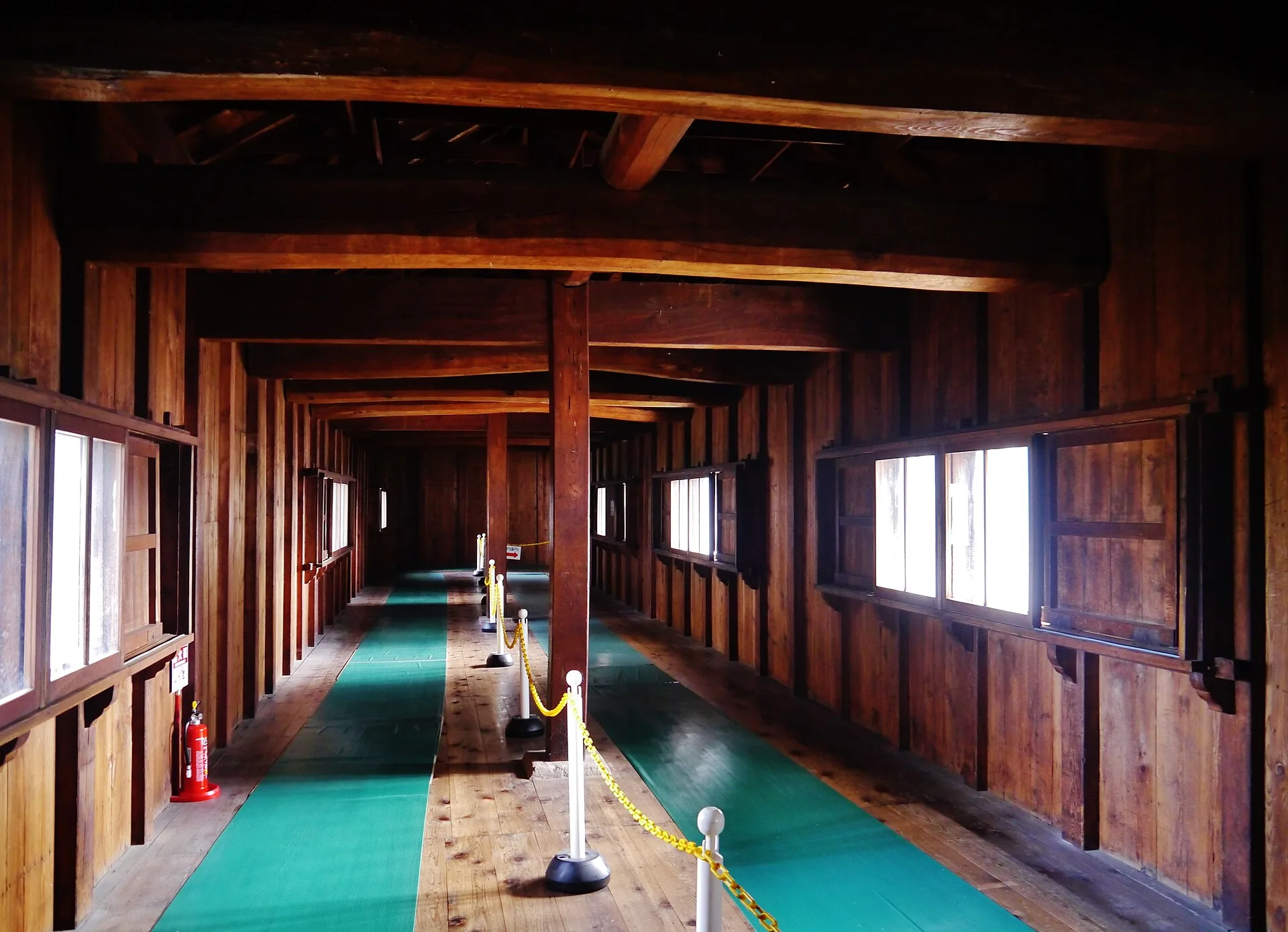
Inside, look upwards
The timber-passage photograph changes distance. A roof previously seen as an outline can now be approached through beams and connections. Attention moves from silhouette to how members cross and support one another.
This is an independently photographed interior, not the next frame of a continuous walk from the bridge or a guarantee of current access. It offers a comparison between outward appearance and construction rather than simply another picturesque angle.
Separate dates need careful comparison
The 2024 exterior comes from a different year than the other views. Foliage, light and camera position all affect appearance. Begin with persistent architectural relationships before considering details specific to a photographic moment.
Differences do not independently prove restoration. A lighter wall may reflect illumination, while an altered angle may conceal a feature. Claims about particular interventions require project or custodial records rather than image brightness alone.
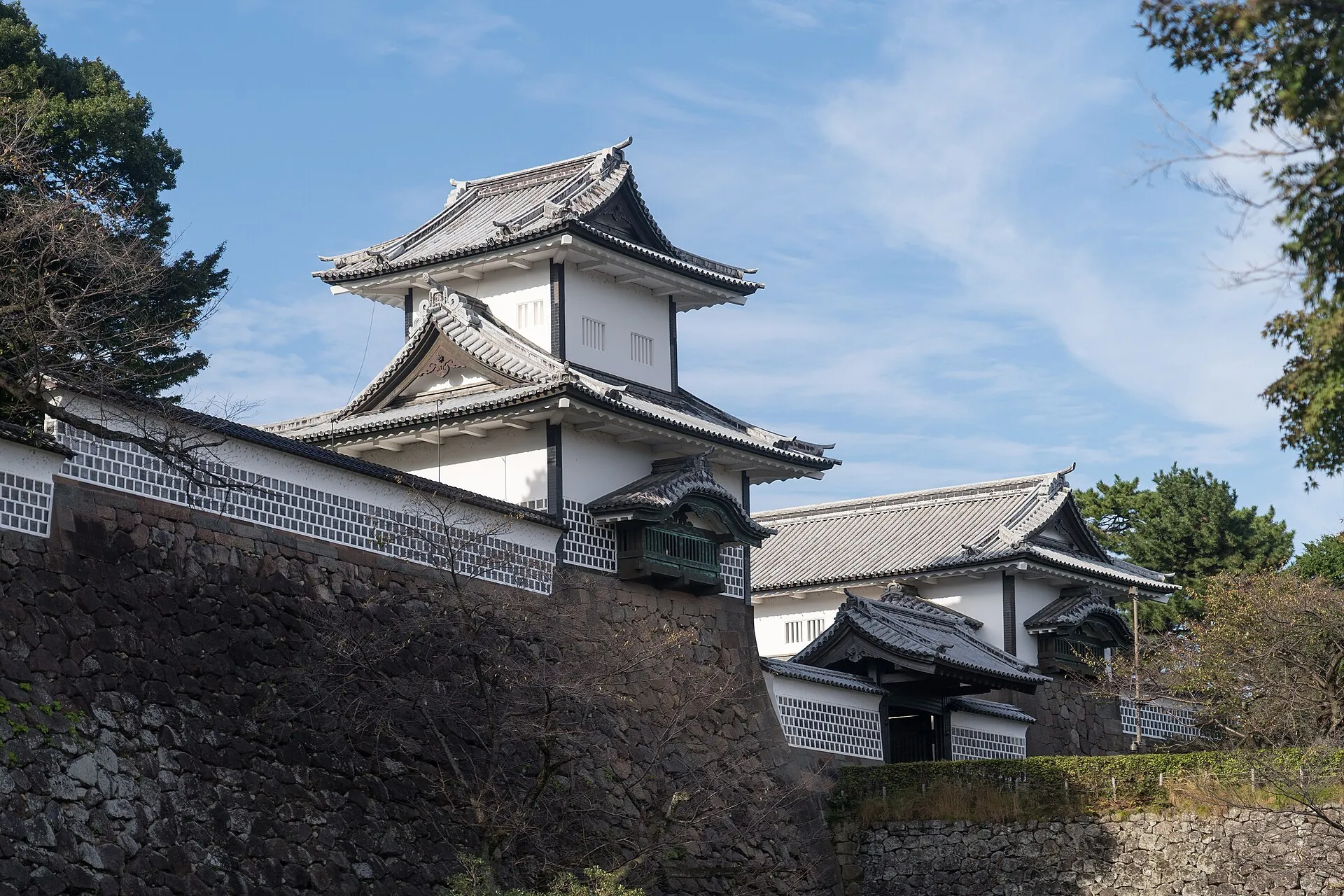
A gate within a city
Kanazawa’s official area guide places the castle park centrally in its explanation of the city’s layout. The gate can therefore help establish relationships between the castle grounds, Kenrokuen and surrounding streets rather than stand alone as an object.
Trees and open ground also participate in its appearance. Their spacing lets rooflines become visible and gives walkers room to regain orientation. An architectural image and the process of approaching it affect one another.
Leave some questions open
The tourism account identifies the gate’s cultural-property status and eastern location. Its heading and fire chronology need further reconciliation, so this essay does not turn them into a definitive timeline. A source can remain useful while a particular detail requires checking.
The photographs still offer three scales of observation: bridge approach, timber interior and a later exterior. Keep a modest question after the frontal view: how deep is the entrance behind it? That question can make another gateway more than a recognisable outline.
References
These sources inform the essay’s historical and local context. Its observations and interpretations are original to WalkThere.
VISIT KANAZAWA
Kanazawa Castle Ishikawamon GateGate location and heritage context; the page’s chronology requires reconciliation.
VISIT KANAZAWA
The Kanazawa Area GuideArea guide placing the gate within the castle park and the city layout.
More journey background
Related journey sources
- Kenrokuen Garden — VISIT KANAZAWA
- Kenrokuen Garden Visitor Guidance — Ishikawa Prefecture
- Omicho Market — VISIT KANAZAWA
- Higashi Chaya District — VISIT KANAZAWA
- Beginner’s Guide to Higashi Chaya District — VISIT KANAZAWA
- Getting Around in Kanazawa — VISIT KANAZAWA