
Kanazawa on foot: gardens, markets and the meaning of a teahouse
Garden ropes reveal maintenance, Omicho is more than a lunch stop, and a chaya was not simply a café. Four settings offer different ways to read Kanazawa.
Kanazawa castle townObservation essay
A garden, and the city beside it
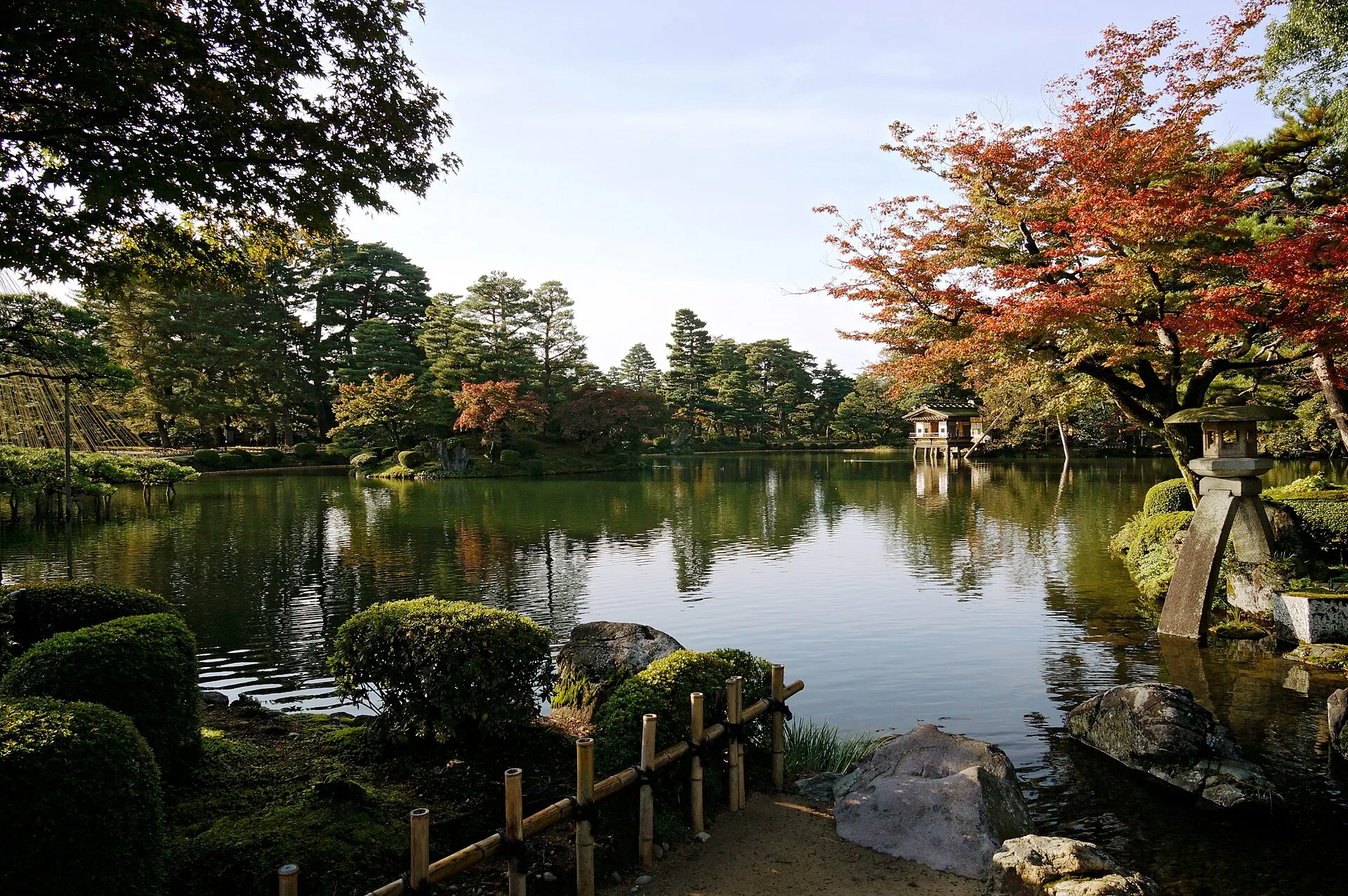
Kanazawa often arrives as a handful of photographs: a lantern beside Kenrokuen’s water, a white castle gate, a seafood bowl and wooden lattices in Higashi Chaya. They make an attractive sequence, but a sequence is not yet an explanation. Why is the garden beside the castle? What does the market offer beyond lunch? And what was a chaya before a visitor mistook it for a café?
This essay follows those questions through Kenrokuen, Ishikawamon, Omicho Market and Higashi Chaya. Each setting served a different kind of activity: maintaining a garden, controlling an approach, buying food or hosting entertainment. Their present roles as visitor attractions can obscure those differences. Putting the differences back makes the city more interesting.
Kenrokuen’s beauty includes the work of keeping it
The garden’s name refers to six qualities, including spaciousness, seclusion, artifice, antiquity, water and views. The official account also describes its cultivation by generations of the Maeda family. Artifice and antiquity make an intriguing pair. Trees and stones can appear settled and natural while depending on deliberate arrangement and continuing care.
Yukitsuri makes that care visible. Ropes spread from supports to help pine branches withstand heavy snow; in photographs they also create a striking conical pattern. Treating the ropes only as winter decoration misses the work they perform. The garden rewards attention to maintenance as well as seasonal colour: water, branches and practical structures belong to the same composition.
At Ishikawamon, “old” becomes a more precise question
The imagery at Ishikawamon introduces stonework, white walls, roofs and the timber of an interior passage. These belong to a castle setting, distinct from the garden’s open scenery. Comparing an exterior photograph with the passage view changes the emphasis from silhouette to structure and the space available for movement.
Calling a gate old is convenient, but it can conceal the difference between survival, reconstruction and repair. Kanazawa Castle Park includes both surviving structures and later reconstructions. A clean wall or fresh-looking piece of timber need not become a crude test of authenticity. Buildings can be repaired while retaining historical spatial relationships; their individual histories deserve more than a single age label.
Omicho Market has more work to do than provide lunch
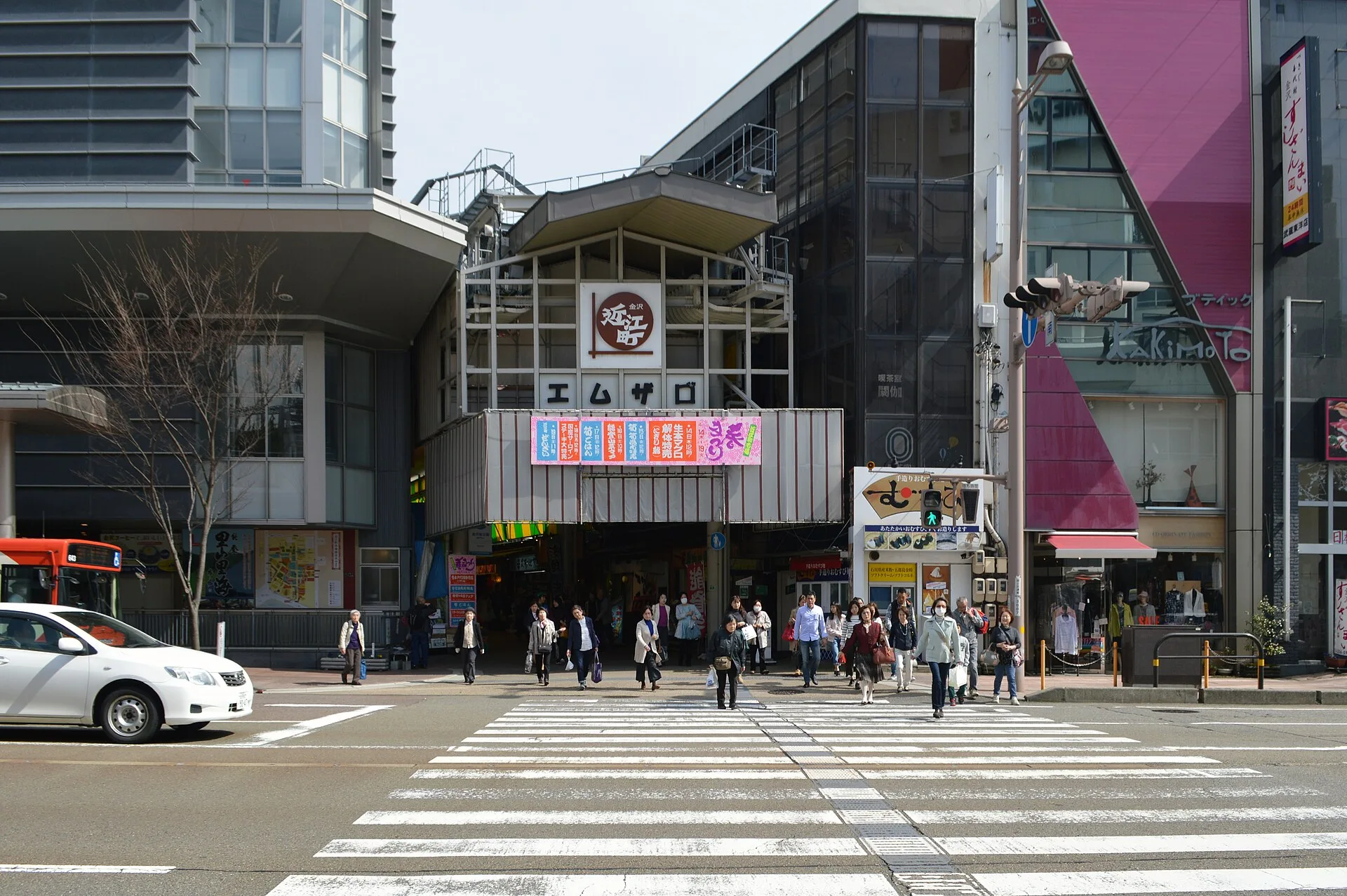
Omicho’s official introduction traces its history to the Edo period and describes fishmongers, produce sellers, grocery shops and restaurants. A seafood bowl may be a visitor’s destination, but ingredients on a stall have not yet become a meal. They still need choosing, weighing, packing and taking home. Eating out and shopping for dinner are different reasons to use the same place.
The journey’s fruit and fish photographs help make that distinction tangible. Displays, labels and the space between a stall and the passage give substance to the familiar phrase “the city’s kitchen.” Old images cannot settle whether a price is good today or a particular product is in season. They can show why ordinary purchasing deserves a place in our understanding of a heritage city.
A chaya was not simply somewhere to order tea
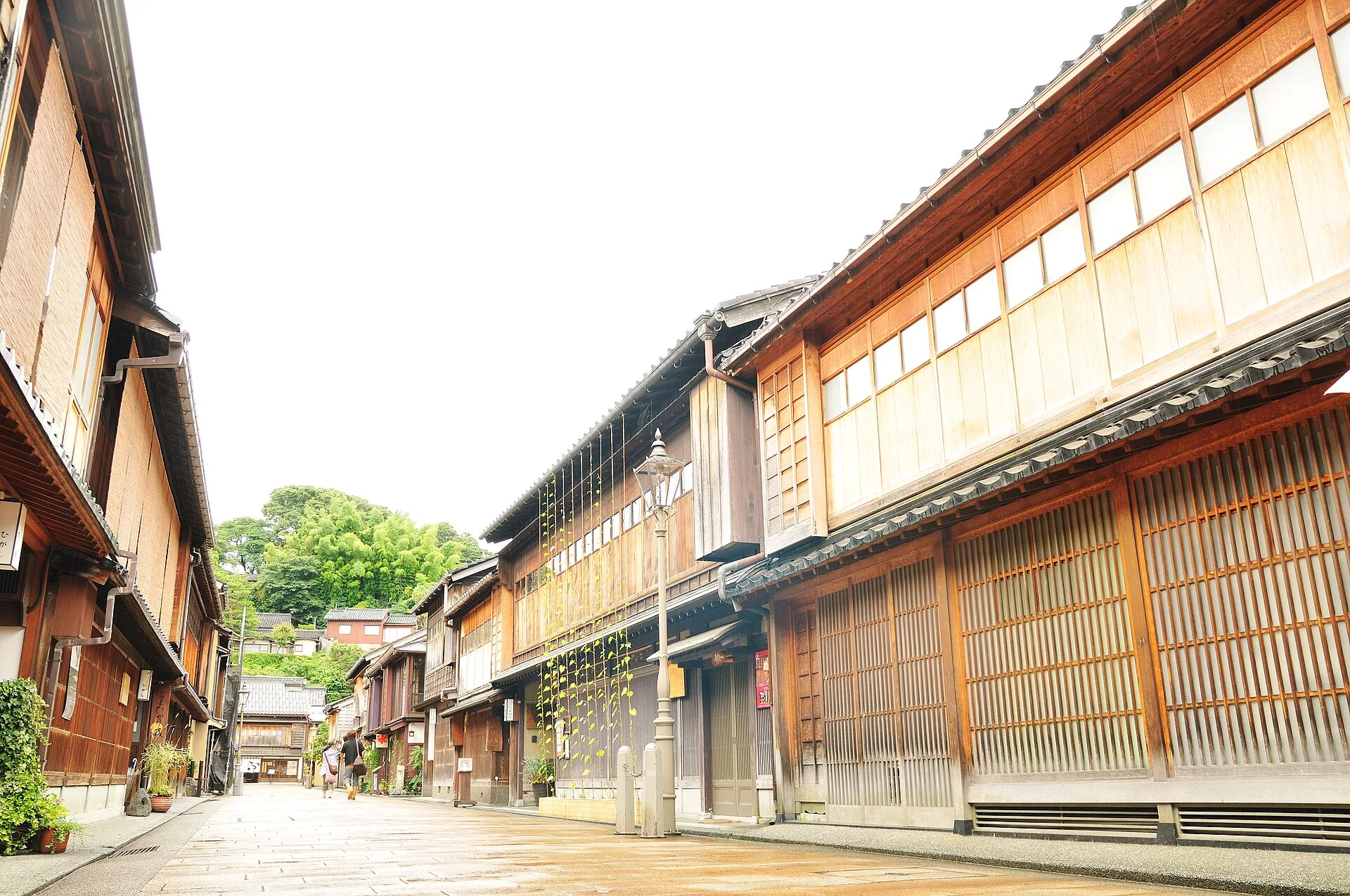
Traditional chaya hosted hospitality and entertainment, including geisha performance. Kanazawa’s official introduction records the concentration of these establishments in three designated districts in 1820, with Higashi Chaya the largest. This context connects the street-level lattices and rooms above to a history of use rather than an unspecified traditional appearance.
Some buildings now accommodate shops, restaurants or facilities open to visitors. What we see is preservation alongside adaptation. Buying something, visiting an accessible historic interior and looking at a façade are different encounters, with different boundaries. Describing the neighbourhood as frozen in time overlooks the continuing decisions about how its buildings can be used.
Give the place that interests you enough of the day
Garden care, castle repair, food trading and the reuse of tea houses do not add up to a motionless old town. They suggest several ways that a city continues: maintaining a form, sustaining an activity or finding another purpose. Kanazawa’s character emerges between those processes as well as within its most familiar landmarks.
With half a day, choosing a priority may be more rewarding than fitting all four stops into a checklist. A garden enthusiast might spend longer at Kenrokuen; someone interested in everyday urban life might give the market more attention. To understand a chaya interior, check a particular venue. The linked journey supplies image credits and planning references for further research, rather than prescribing the same day for everyone.
Further reading and journey sources
This is an original WalkThere observation essay. These sources provide context for the related journey; imagery does not establish current conditions.
Place context
- Kenrokuen Garden — VISIT KANAZAWA
- Kenrokuen Garden Visitor Guidance — Ishikawa Prefecture
- Kanazawa Castle Ishikawamon Gate — VISIT KANAZAWA
- The Kanazawa Area Guide — VISIT KANAZAWA
- Omicho Market — VISIT KANAZAWA
- Higashi Chaya District — VISIT KANAZAWA
- Beginner’s Guide to Higashi Chaya District — VISIT KANAZAWA
- Getting Around in Kanazawa — VISIT KANAZAWA