
Kamakura: Two Streets Towards the Shrine
Compare Komachi-dori’s shopfronts with the raised Dankazura approach, reading how commerce, ordinary roads and shrine space coexist between Kamakura Station and Hachimangu.
Kamakura shrine approachObservation essay
There is more than one way to arrive
The station-to-shrine walk can look like a simple task. Komachi-dori and the Wakamiya-oji approach offer different experiences: one repeatedly invites a stop at a shop, while the other establishes a stronger direction towards a destination. Similar distances need not mean similar walks.
Neither needs to be dismissed as commercial or idealised as traditional. Shops are part of the town’s use, and the formal approach remains beside present-day traffic. Choosing different outward and return walks reveals that coexistence.
Komachi-dori pulls attention sideways
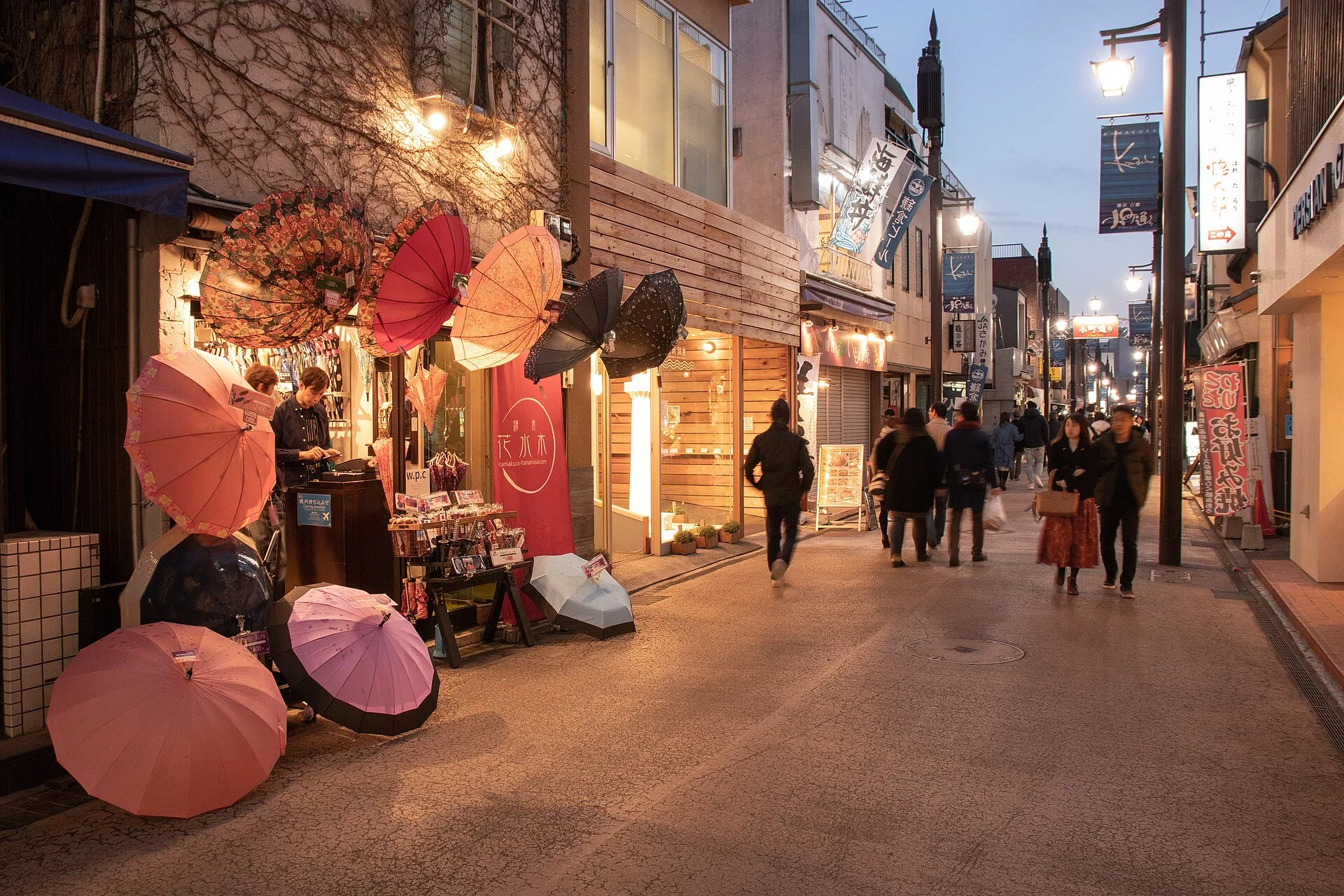
Shop names, entrances and displays invite provisional decisions. A person planning to continue may stop; companions may notice opposite sides. The street offers content throughout rather than reserving everything for an endpoint.
Pausing and passing therefore need to share space. The journey’s evening photograph records one moment, not current hours or daytime crowds. It helps explain frontage and street width without establishing a present-day shopping plan.
Dankazura puts walking on an axis
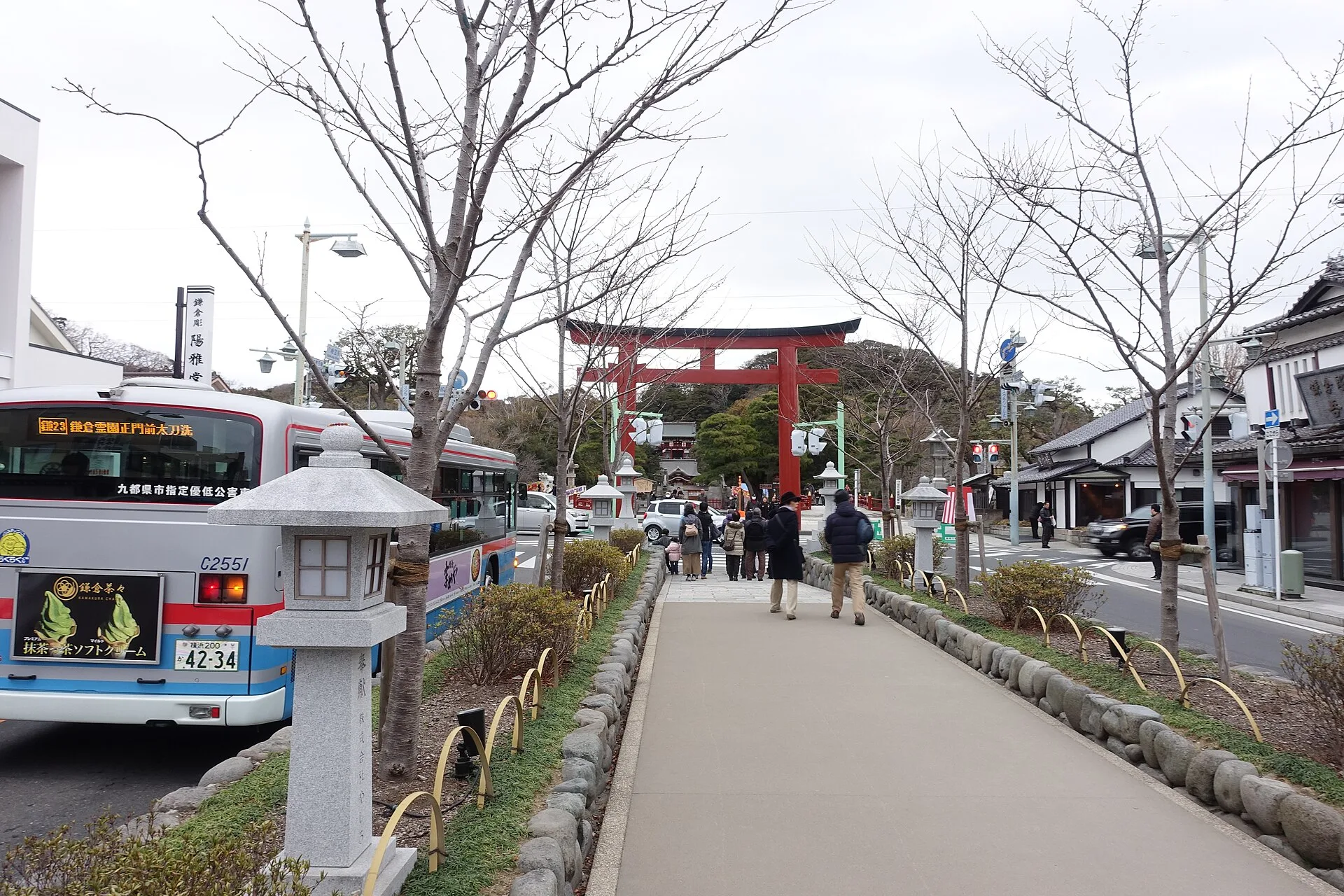
Kamakura City identifies Dankazura as the raised approach between the second and third torii on Wakamiya-oji. The modest change of level distinguishes walking space from the roads around it. Gates and rows of trees sustain a direction.
That axis remains within the town. Traffic and contemporary buildings do not disappear; a different order of movement is maintained beside them. Reaching and crossing into the approach still requires current signs and crossings.
The route has a structure outside blossom season
Dankazura is often associated with cherry blossom. The journey’s winter photograph makes another reading possible: branches, boundaries and the distant torii become more apparent. Seasonal colour changes the atmosphere without creating the entire spatial arrangement.
A spring view may explain the attraction while a winter view clarifies the structure. Neither must be treated as the only authentic version. The approach continues to guide people at times when flowers are absent.
The shrine’s position belongs to Kamakura’s history
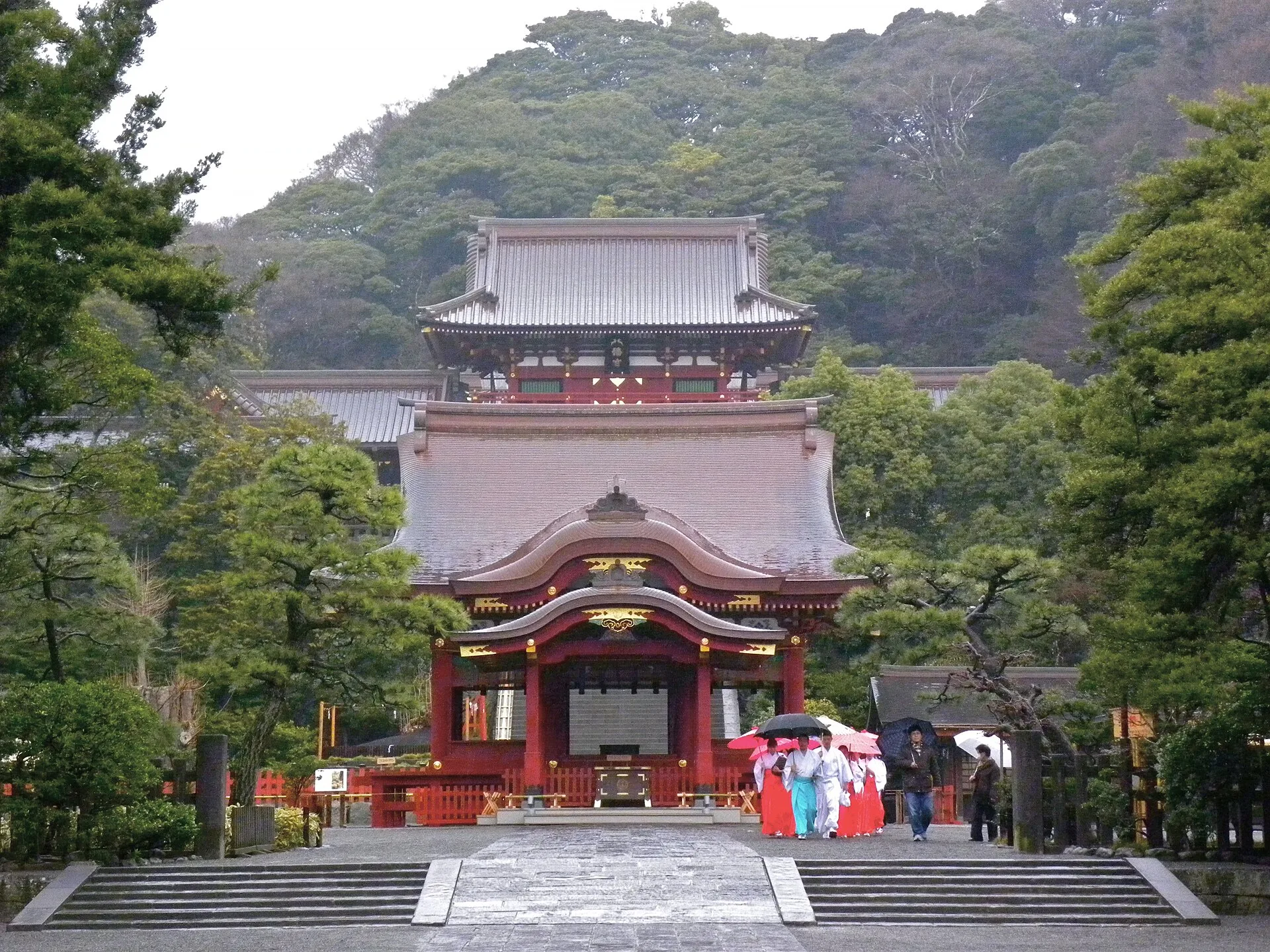
JNTO records the shrine’s move to its present site in 1180 in connection with Minamoto no Yoritomo. This gives the approach a historical setting: Hachimangu is not simply an arbitrary attraction at the end of a street.
Within the grounds, stairs and buildings introduce further levels after the long approach. Circulation below and structures above deserve separate attention. Worship continues alongside tourism, so photography is one use of the place rather than its governing purpose.
Returning can change the town’s emphasis
Returning by the other street shifts attention from distant alignment to nearby shopfronts, or the reverse. The same places can leave a different impression when encountered in another order.
A short itinerary need not be filled with additional temples to become substantial. Comparing how the streets encourage pauses, establish direction and approach the same shrine already reveals several relationships. Commerce and worship both help shape Kamakura before the visitor reaches the gate.
References
These sources inform the essay’s historical and local context. Its observations and interpretations are original to WalkThere.
Japan National Tourism Organization
Kamakura Komachi-dori StreetContext for Komachi-dori’s shops and street life.
Kamakura City
28 段葛The city’s historical and local account of the Dankazura approach.
Japan National Tourism Organization
Tsurugaoka Hachimangu ShrineBackground on Tsurugaoka Hachimangu at the end of the approach.