
Kamakura: from the station to Tsurugaoka Hachimangū
A compact Kamakura walking route through Komachi-dori and the Dankazura approach to Tsurugaoka Hachimangū, told with four sourced photographs.
Guided visual journey
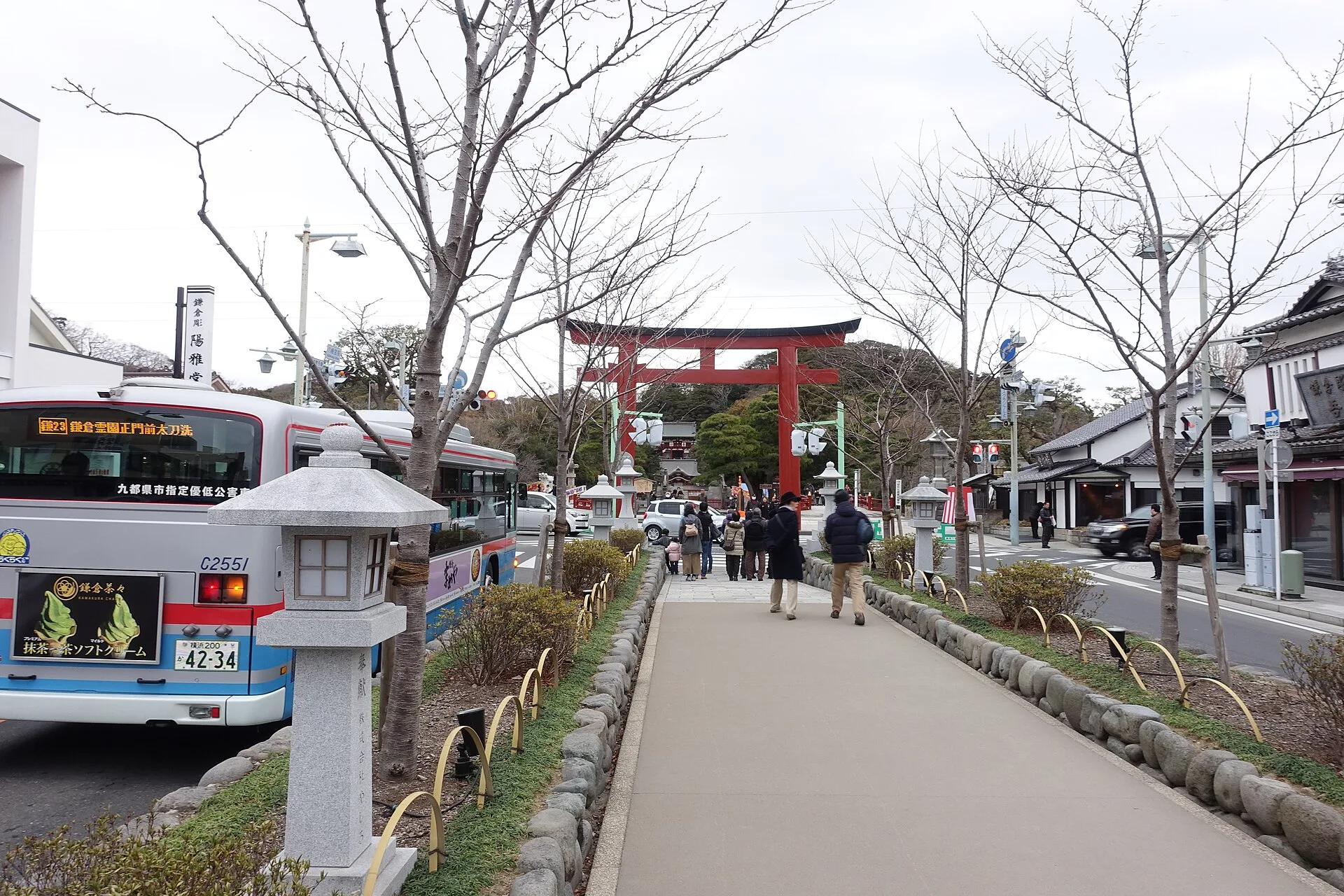
Dankazura raised approach and torii in winter · 豊嶋典七郎 · CC BY-SA 4.0
Reading mode
Place stories to read at your own pace
Chapter 1 · Arrive in Kamakura
Begin at Kamakura Station
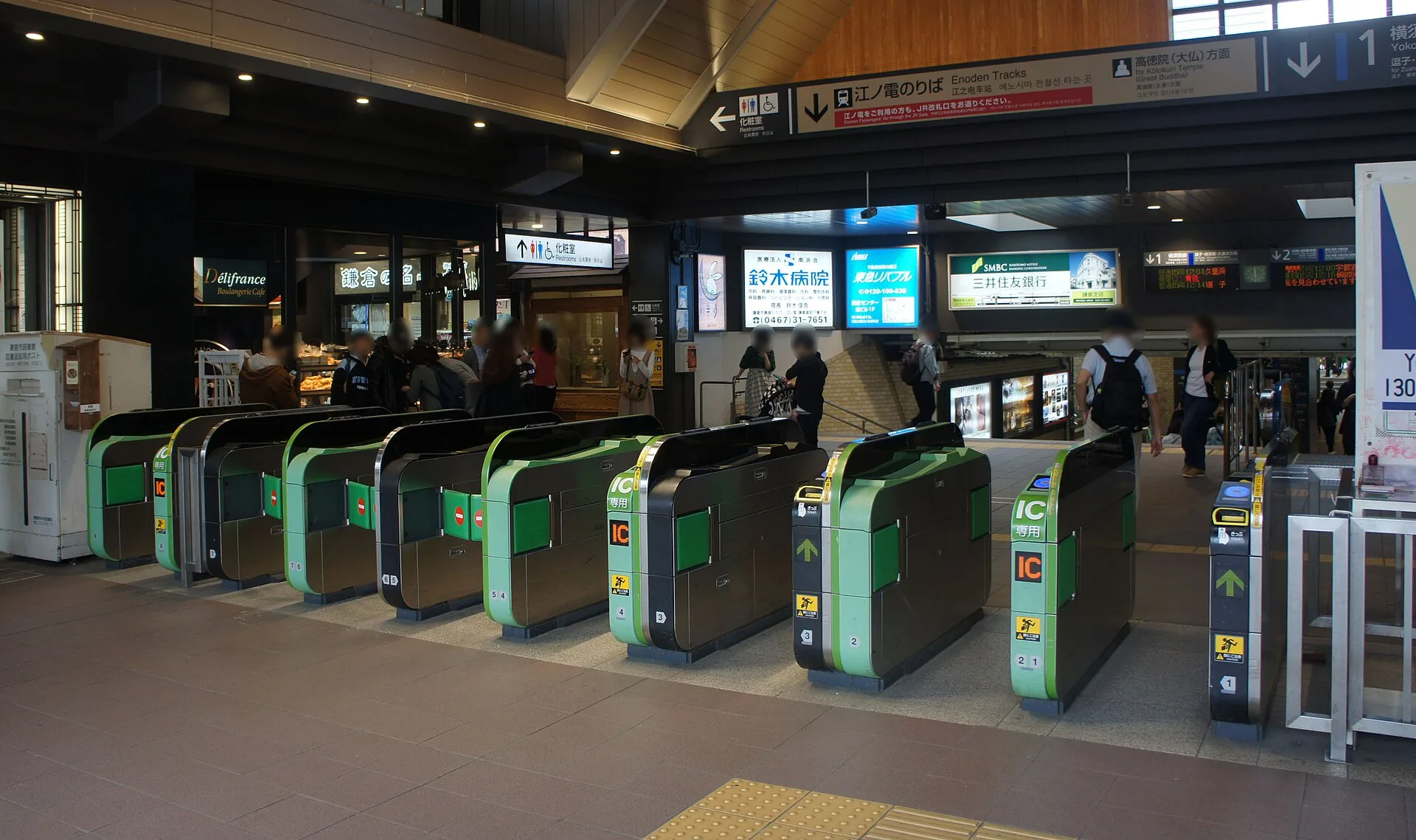
Kamakura first presents itself as an ordinary station. The green ticket gates, direction signs and passengers in this June 2019 photograph are not the timber façades or temple grounds many people imagine when they hear the city’s name. That contrast is useful: the historic centre is reached through a working town, not through a theme-park entrance. Leave through the east side if you want to follow this short introduction toward Komachi-dori and the shrine.
Japan’s national tourism organisation places Tsurugaoka Hachimangū about ten minutes’ walk from JR Kamakura Station. Treat that as orientation, not a timed promise for a visit that pauses to browse, cross streets and read the setting. Our four photographs were made on different days and years; they do not record one person walking between stops. The station frame itself is inside the east gates, so it cannot show the precise turn you will take outside.
You can walk straight toward the shrine along Wakamiya-ōji, but this journey first takes the parallel Komachi-dori. That deliberate detour changes the mood from transport concourse to shop street before meeting the formal approach. If you would rather avoid the busiest retail stretch, the avenue is an alternative; check a current map on the ground rather than relying on these editorial pins as live directions.
Real-travel note
Use the JR east side as the starting orientation. Check current train services and street crossings before travelling; this image is from 2019.
Chapter 2 · The lively street
Komachi-dori after dusk
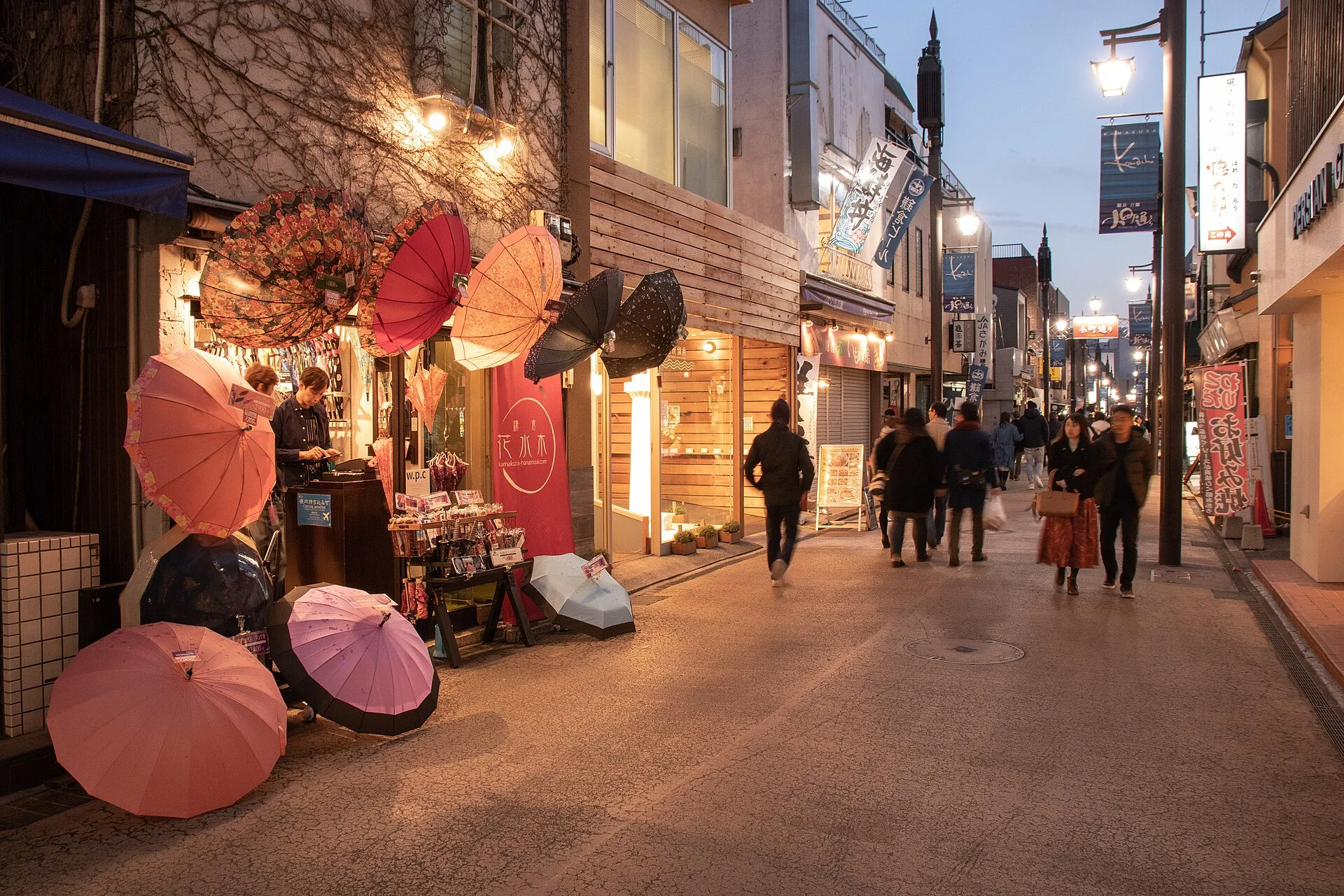
On Komachi-dori, the line toward the shrine becomes a street of shopfronts, snacks and small pauses. In this photograph, taken around 18:06 on 17 March 2019, lamps have come on and umbrellas fill the foreground. People drift through the centre of the lane. This is not a forecast of what you will find at the same hour now: individual shops change, and many visitors will encounter the street in daylight.
JNTO describes Komachi-dori as roughly 350 metres long and running parallel to Wakamiya-ōji, the avenue leading to Tsurugaoka Hachimangū. That parallel relationship is the important orientation here. You are not following a medieval ceremonial axis yet; you are seeing the contemporary town beside it. An optional 2019 panorama lets you turn and move within one Komachi-dori image sequence, but it is not a surveyed track from the station to the shrine.
The street rewards a slower pace if you like browsing, yet the atmosphere can be a poor fit if you came mainly for quiet. Make room for people who live or work here, pause out of the pedestrian flow, and keep food waste with you until you find an appropriate bin. The next photograph leaves the commercial lane for the raised Dankazura approach. It is an editorial change of viewpoint, not a captured walk through every intervening metre.
Real-travel note
Shop hours and pedestrian density vary. The image is a 2019 evening; do not treat it as current opening information.
Chapter 3 · The city’s axis
The raised Dankazura approach
The third image changes the geometry of the walk. Instead of shopfronts close to your shoulders, a raised path runs between traffic lanes toward a red torii. Bare trees frame the view because the photograph was made on 6 January 2019. In spring this setting can look quite different; a winter photograph is useful precisely because it reveals the shape of the approach without promising blossoms.
Kamakura City describes Wakamiya-ōji as a straight avenue extending from Tsurugaoka Hachimangū toward the sea. The raised Dankazura section leads from the second to the third torii. The city also records a tradition that links its construction to Minamoto no Yoritomo’s prayer for his wife Hōjō Masako’s safe delivery. That is a historical tradition, not something the present-day paving can prove by itself. The avenue has been repaired and altered over centuries; the photograph captures its 2019 form.
Notice the bus, crossing and modern buildings around the torii. The shrine approach is not detached from city traffic. Use actual crossings and current signs; do not infer a safe crossing point from this image. This page places a chapter at the approach but intentionally does not draw a precise route line from Komachi-dori. The next frame is already inside the shrine grounds, another honest editorial jump.
Real-travel note
The raised path sits within a working road corridor. Follow current crossings and signs; do not use the photo or map pin as navigation.
Chapter 4 · The shrine
At Tsurugaoka Hachimangū
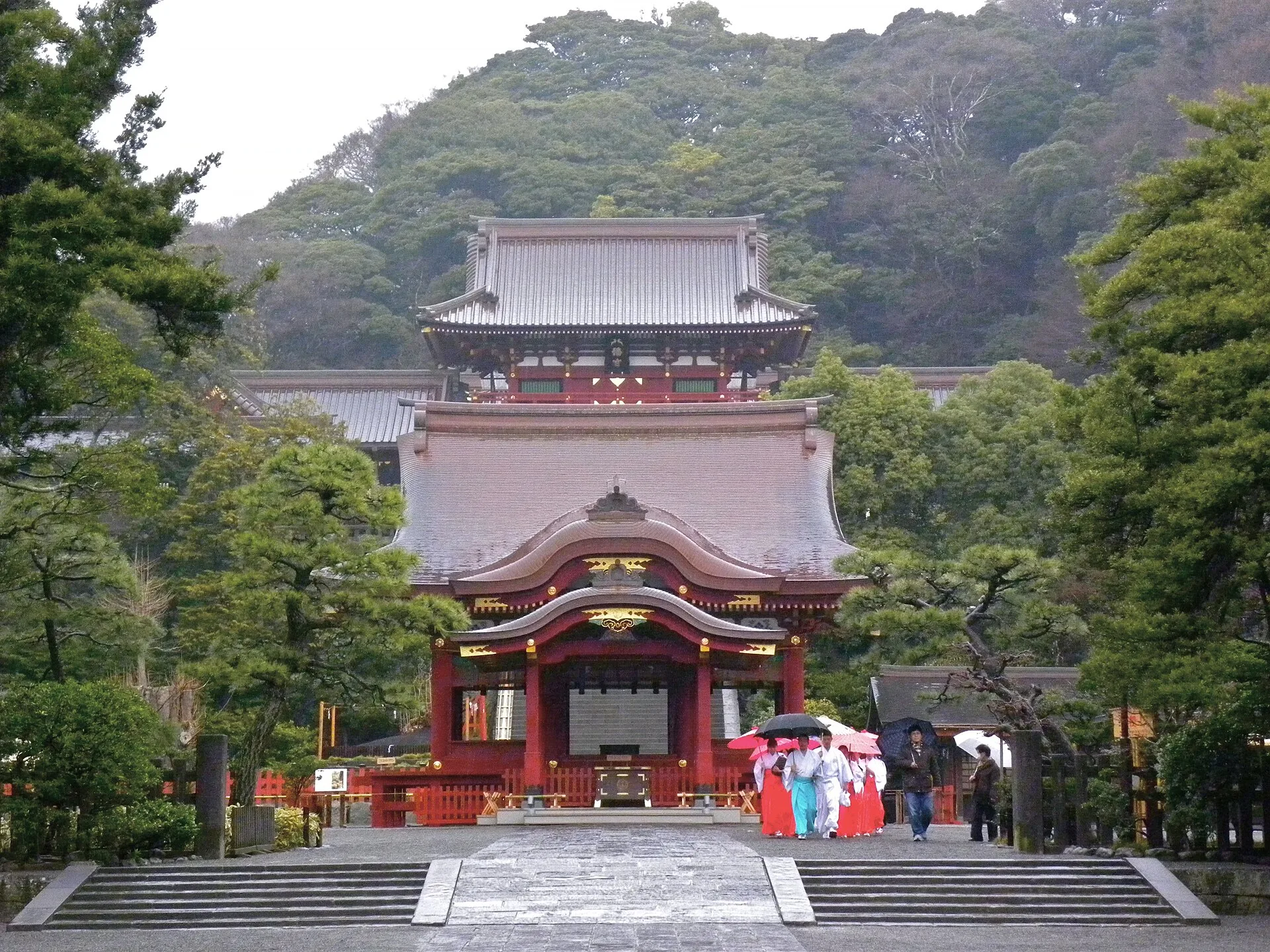
The route ends where its formal axis points: Tsurugaoka Hachimangū. This March 2011 photograph faces the shrine buildings through the grounds, with steps in the foreground and trees around the roofline. It is an older documentary view, not a current picture of ceremonies, structures or access. The scene makes a better ending than a generic postcard because it leaves room to notice the slope and the layered approach.
JNTO traces the shrine’s present location to Minamoto no Yoritomo’s move in 1180 and describes it as a living Shinto site associated with Hachiman. Those historical dates help explain why Wakamiya-ōji points here, but they do not turn the grounds into a static exhibit. Visitors may be taking photographs while others have come to pray. Give worshippers space, avoid blocking paths and follow current signs where photography or entry is restricted.
Four separate stills have brought you from a station interior to a shopping lane, a raised avenue and a shrine. The optional Komachi-dori panorama adds a short look around that street, not a linked walk between all four places. None of these dated images can show the exact conditions on your travel day. The most useful decision is simpler: would you enjoy the contrast between a lively town centre and a quieter religious destination? If yes, use this as an introduction, then verify current access and make the short walk yourself.
Real-travel note
This is an active shrine. Check current opening and event information, respect worshippers, and follow on-site photography rules.
Sources
- Kamakura Komachi-dori Street — Japan National Tourism Organization
- Tsurugaoka Hachimangu Shrine — Japan National Tourism Organization
- 28 段葛 — Kamakura City
- JR Yokosuka-Line Kamakura Station East Gates — Wikimedia Commons
- Komachi Street, Kanagawa 01 — Wikimedia Commons
- Dankazura — Wikimedia Commons
- Tsurugaoka Hachimangu Shrine — Wikimedia Commons


Your journey, remembered.
The keepsake unlocks when you reach this section.