
Istanbul’s Hippodrome: before the monuments came here
The racecourse has become a square. Its surviving monuments lead elsewhere—to Egypt, Delphi and the changing meanings of objects moved between cities.
Istanbul Historic PeninsulaObservation essay
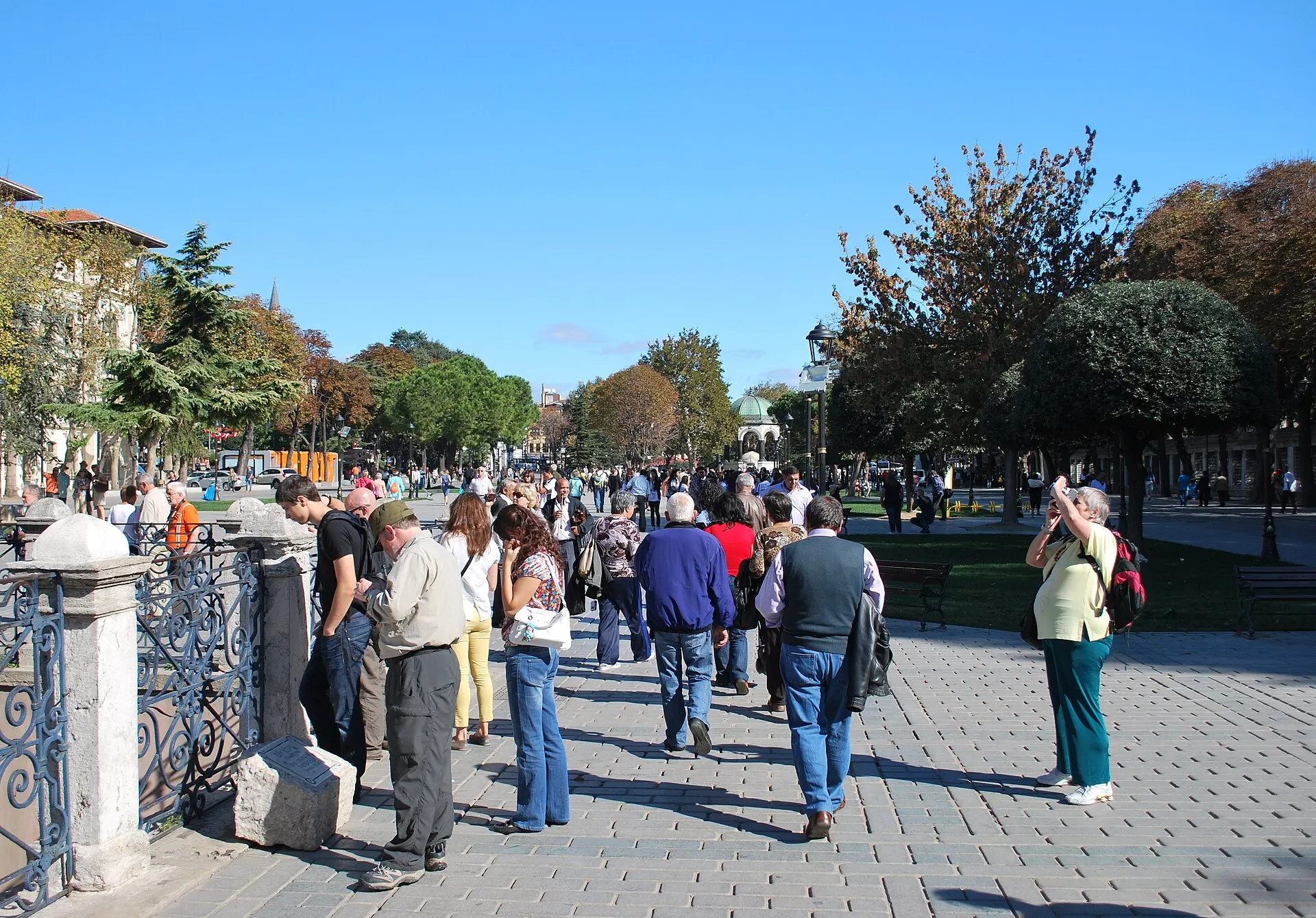
A racecourse without its race
The name Hippodrome suggests tiers of spectators and a track. Sultanahmet Square offers a different encounter: open ground and monuments of unequal height. GoTürkiye identifies the earlier chariot-racing setting and explains that the square now covers the track.
Start with that discrepancy instead of trying to assemble a complete stadium from the view. Follow the length of the space, then the distribution of monuments. Were these objects always here? Did they enter the setting together? What remains can raise useful questions without representing everything the place once did.
More than one place in a single obelisk
The Obelisk of Theodosius originated in ancient Egypt and was re-erected here during Eastern Roman rule. Egyptian writing on red granite and carvings on the pedestal should not be compressed into one undifferentiated account of ancient Istanbul. The object brings more than one history into view.
Use the closer photograph to distinguish shaft from base. Follow the stone upwards, then return to where it meets its support. One is an object that travelled; the other draws attention to its establishment in a new setting. The familiar pointed silhouette begins to acquire a journey.
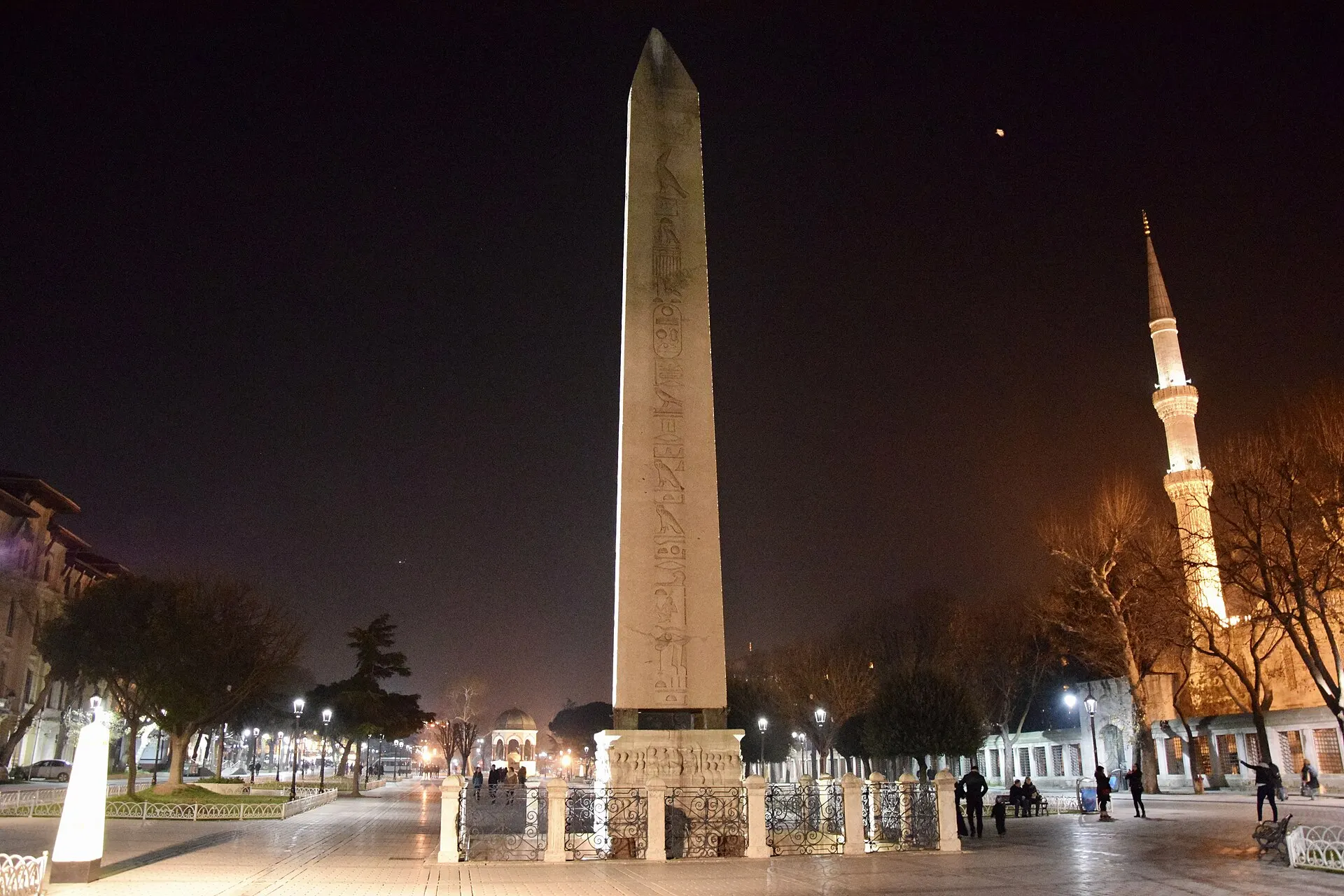
An address change can change an encounter
Moving a monument also changes its audience and neighbours. Old writing enters another city, surrounded by different buildings and political circumstances. An object already carrying historical weight can serve a new setting without losing every trace of an earlier one.
That is an interpretive starting point, not proof of a particular patron’s intentions. Transport and commissioning require documentary research. For a first encounter, asking why a monument appears here can nevertheless be more revealing than recording only its dimensions.
The Serpent Column points towards Delphi
The official Turkish tourism account connects the Serpent Column with commemoration of the Battle of Plataea in 479 BCE and locates its earlier setting before Apollo’s temple at Delphi. Its proximity to an Egyptian obelisk does not give the two objects a shared original context.
Compare their materials and outlines rather than ranking their visual impact. A tall shaft and a winding form provide different ways of recognising an object. Their present neighbours belong to a later arrangement: the square preserves things while also changing the relationships between them.
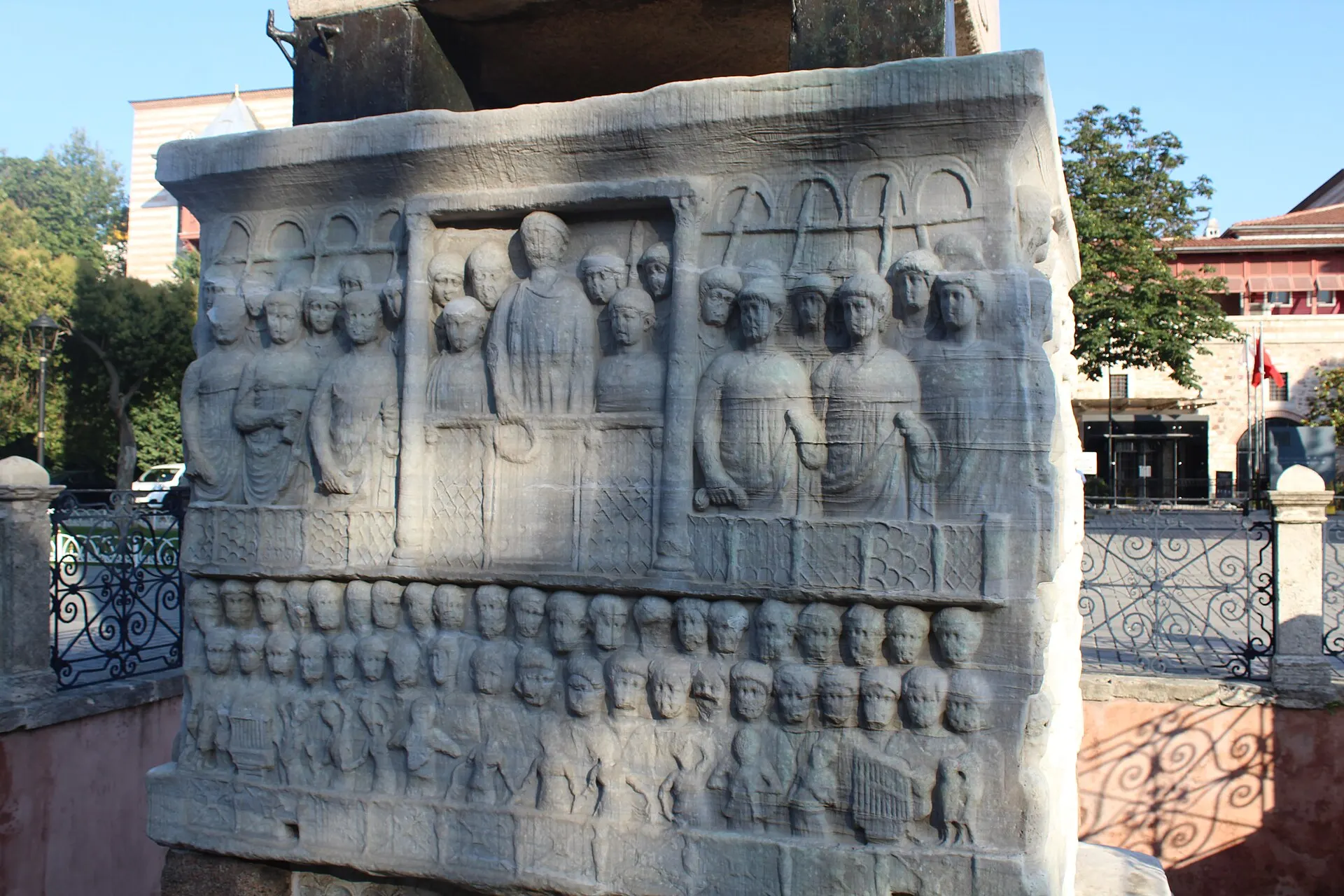
Keep similar names separate
Descriptions may also mention the masonry obelisk or Constantine’s Column. Similar names make it tempting to attach several accounts to one remembered photograph. Establish material, shape and location before matching an object to a text. Each monument deserves its own identification.
The present paving, barriers and trees also belong to the photographs’ individual dates. They explain approaches to monuments, not the complete ancient track. Keeping imagery and historical evidence distinct makes it easier to say which layer of the place you have actually understood.
Leave with one route of arrival
Choose one object and remember where it stood before. The square then connects a short walk with much greater distances between Egypt, Delphi and the Eastern Roman capital. A compact visitor space can contain an expansive geography.
There is no need to memorise every date. Distinguishing an earlier purpose, a later placement and today’s viewing conditions already gives the stop substance. The track is no longer apparent and the monuments remain, but sharing open ground has not turned their separate histories into one story.
References
These sources inform the essay’s historical and local context. Its observations and interpretations are original to WalkThere.
GoTürkiye
HippodromeOfficial context for the obelisk, Serpent Column and former racecourse.
UNESCO World Heritage Centre
Historic Areas of IstanbulWider heritage context for the historic area around the Hippodrome.
More journey background
Related journey sources
- Blue Mosque — GoTürkiye
- Hagia Sophia Mosque — Hagia Sophia Mosque official information
- Gülhane Park — GoTürkiye
- Golden Horn — GoTürkiye
- Istanbul Mosque Route — GoTürkiye