
Helsinki Market Square: the harbour behind the stalls
Compare a daytime harbour view, the 2018 Baltic Herring Market at dusk and an elevated overview to read seasonal trading beside passenger boats, with MyHelsinki references.
Helsinki Harbour & CentreObservation essay
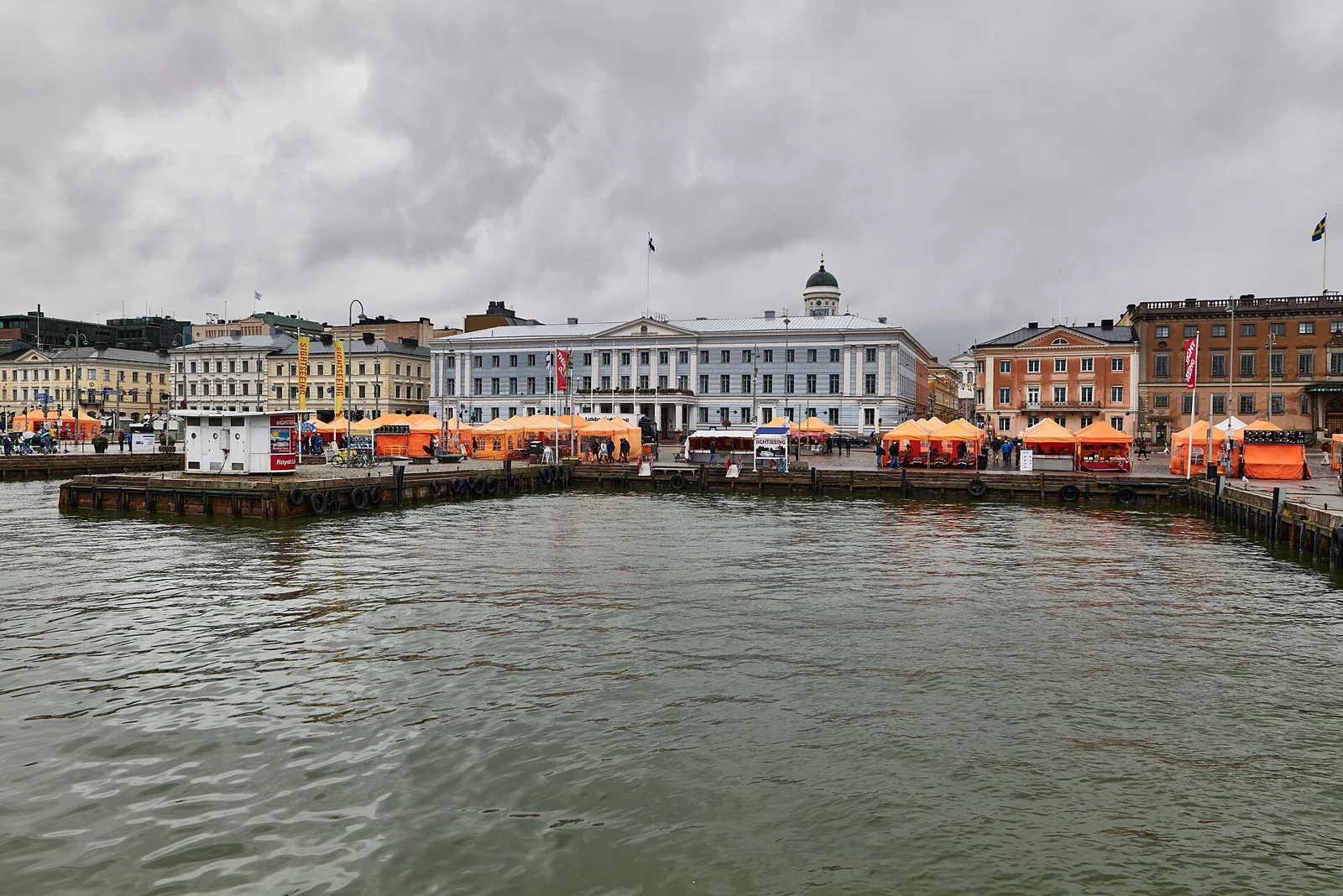
Begin across the water
The opening photograph looks across the harbour towards stalls and waterfront buildings. Water establishes a viewing distance before individual transactions become legible. Trading occupies a city edge exposed to weather and shared with other activities.
At this distance, canopies become small patches of colour against much larger buildings. Their arrangement changes the appearance of the shore. The picture establishes position rather than telling us what could be bought, smelled or tasted at a particular stall.
Ordinary trading has its own place
MyHelsinki’s official introduction lists food, handicrafts and souvenirs, along with heated café tents for colder conditions. The place can accommodate a modest purchase or a coffee without requiring a special festival to make a visit worthwhile.
That description cannot guarantee an individual vendor’s opening. Check the actual offer, prices and payment arrangements on arrival. Leave room for transactions when photographing canopies; a queue or collection point may only become apparent at close range.
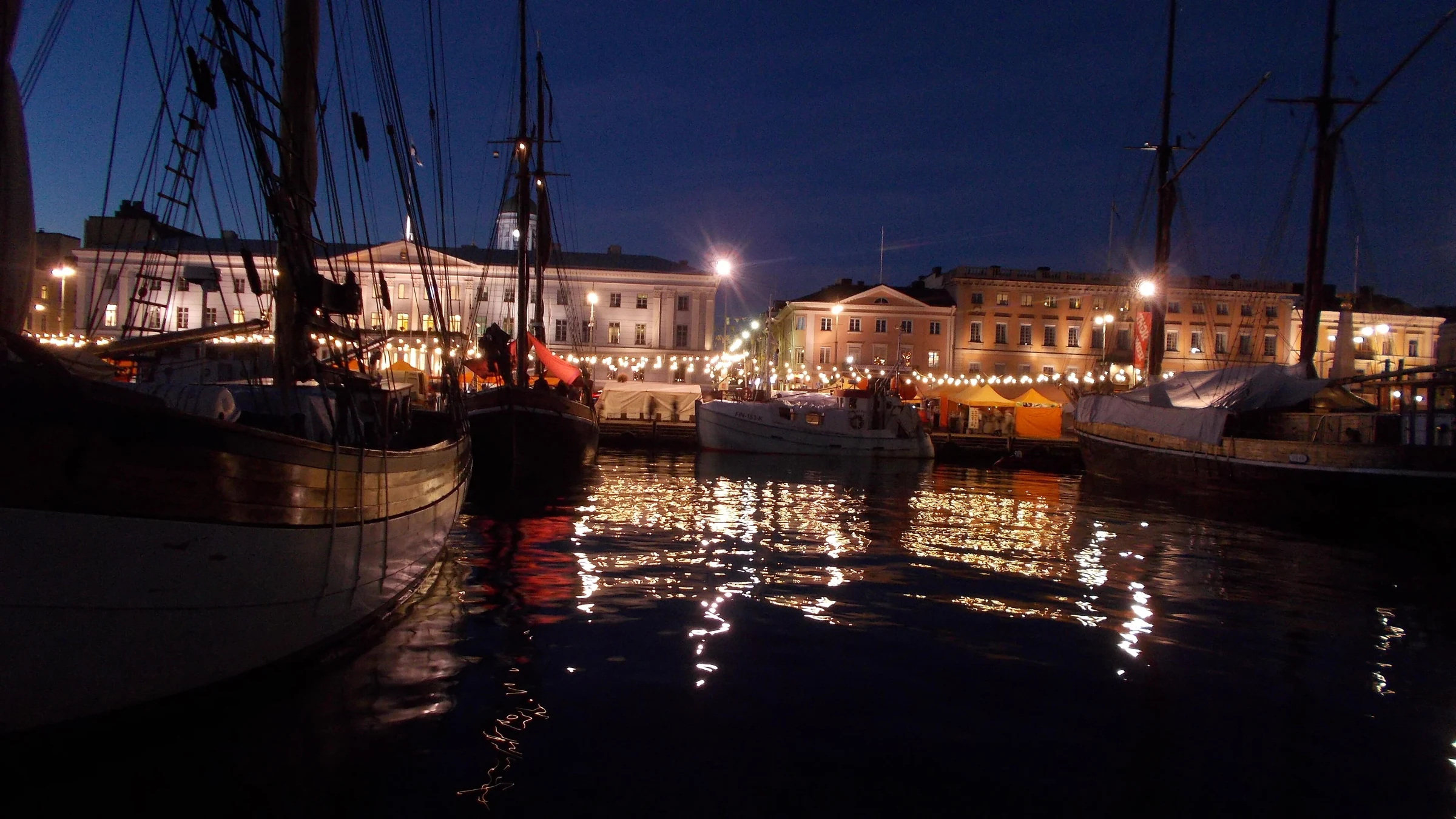
October introduces another setting
The second image explicitly records the Baltic Herring Market at dusk on 9 October 2018. Boats, stalls and waterfront buildings share the evening scene. It documents an event setting rather than a permanent arrangement available every evening.
The city dates the tradition to 1743 and places it in October. A future event requires its own confirmed dates and programme. Neither a named boat nor a particular trader in this historical photograph is promised for a subsequent edition.
Some people are waiting for a boat
The official introduction also identifies a year-round ferry connection to Suomenlinna from the square. A person passing the stalls may be heading elsewhere rather than browsing. The waterfront must accommodate departure as well as lingering.
This essay does not identify a particular photographed vessel with a service. For travel, consult the operator’s current departure point, timetable and ticketing. A seemingly convenient photographic position may also need to remain clear for boarding or queues.
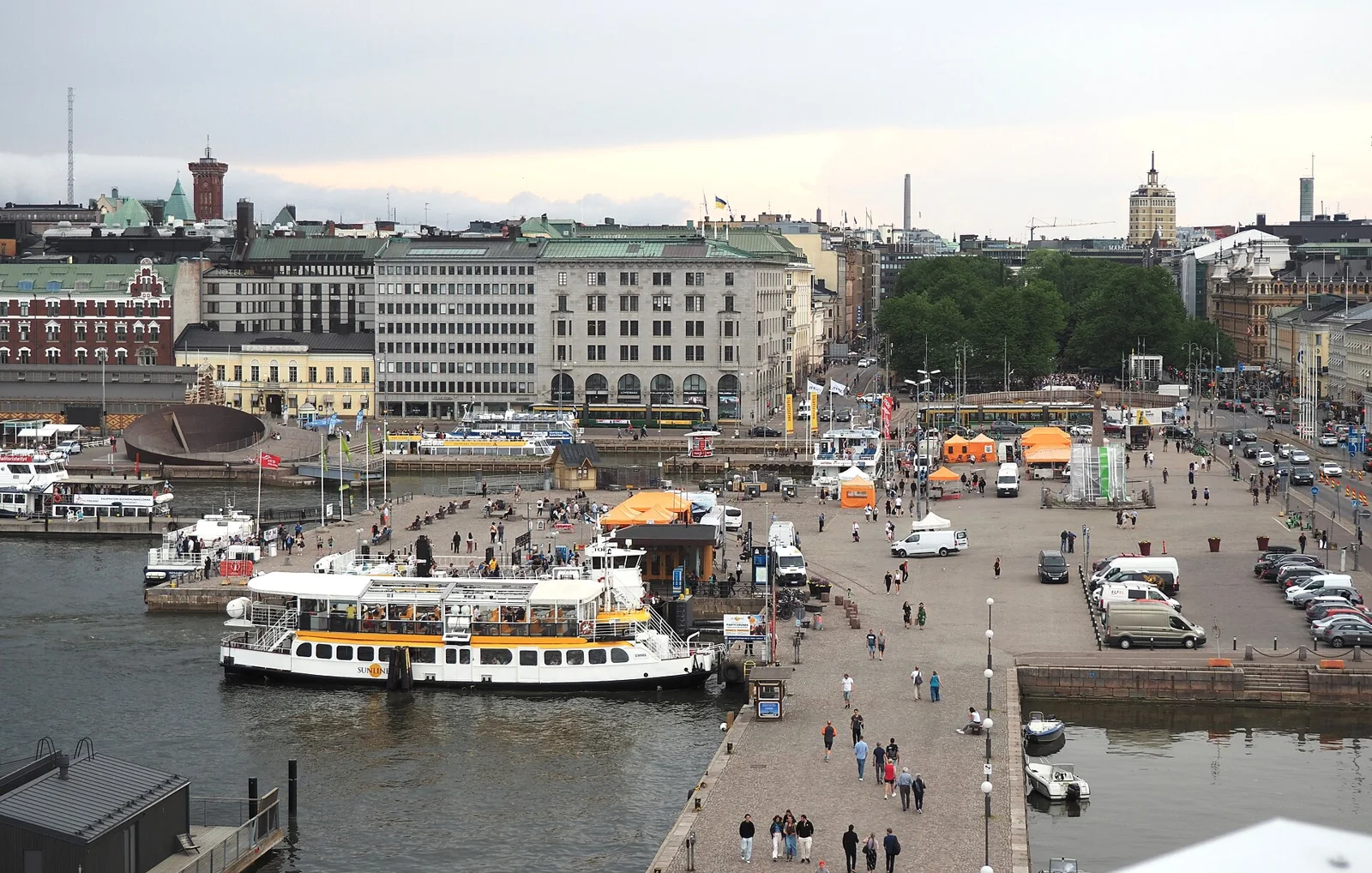
The overview reveals an arrangement
The elevated photograph dates from May 2024. It makes the relationship between trading ground, shore and moored passenger boats easier to compare, while reducing people and ground-level obstructions to smaller details.
The camera position supplies neither a public climbing route nor a surveyed accessible connection to a pier. Use it for broad orientation. Entrances, crossings and local signs still require attention at ground level, where adjacent-looking locations may not connect directly.
The hall is a separate choice
Nearby, the Old Market Hall offers an indoor setting. MyHelsinki’s market-hall guide dates its opening to 1889. Its roof and enclosed trading space provide a different kind of visit from standing beside the harbour; check present opening information when making plans.
None of these three images enters the hall or records one continuous outing. Retain the practical relationships instead: stalls beside water, room for boats and passengers, and a seasonal event arrangement. Buying something, taking a coffee or departing by ferry can remain separate decisions.
References
These sources inform the essay’s historical and local context. Its observations and interpretations are original to WalkThere.
MyHelsinki
Market SquareCity account of trading, café tents, the herring-market tradition and ferry connection.
MyHelsinki
Quick Guide: Helsinki market hallsContext for the nearby indoor market hall and its opening in 1889.
More journey background
Related journey sources
- Government Palace — Finnish Government
- History of Uspenski Cathedral — Orthodox Parish of Helsinki
- Esplanade Park — City of Helsinki
- History — Helsinki Central Railway Station
- History of Helsinki Cathedral — Helsinki Cathedral
- Visit the Presidential Palace online — Office of the President of the Republic
- Ateneumin taidemuseo — Senate Properties