
Galle Fort: Life Between the Walls and Verandas
Step beyond Galle’s lighthouse to examine shaded verandas, courtyards and ramparts, where a fortified town meets Sri Lanka’s terrain and everyday life.
Galle FortObservation essay
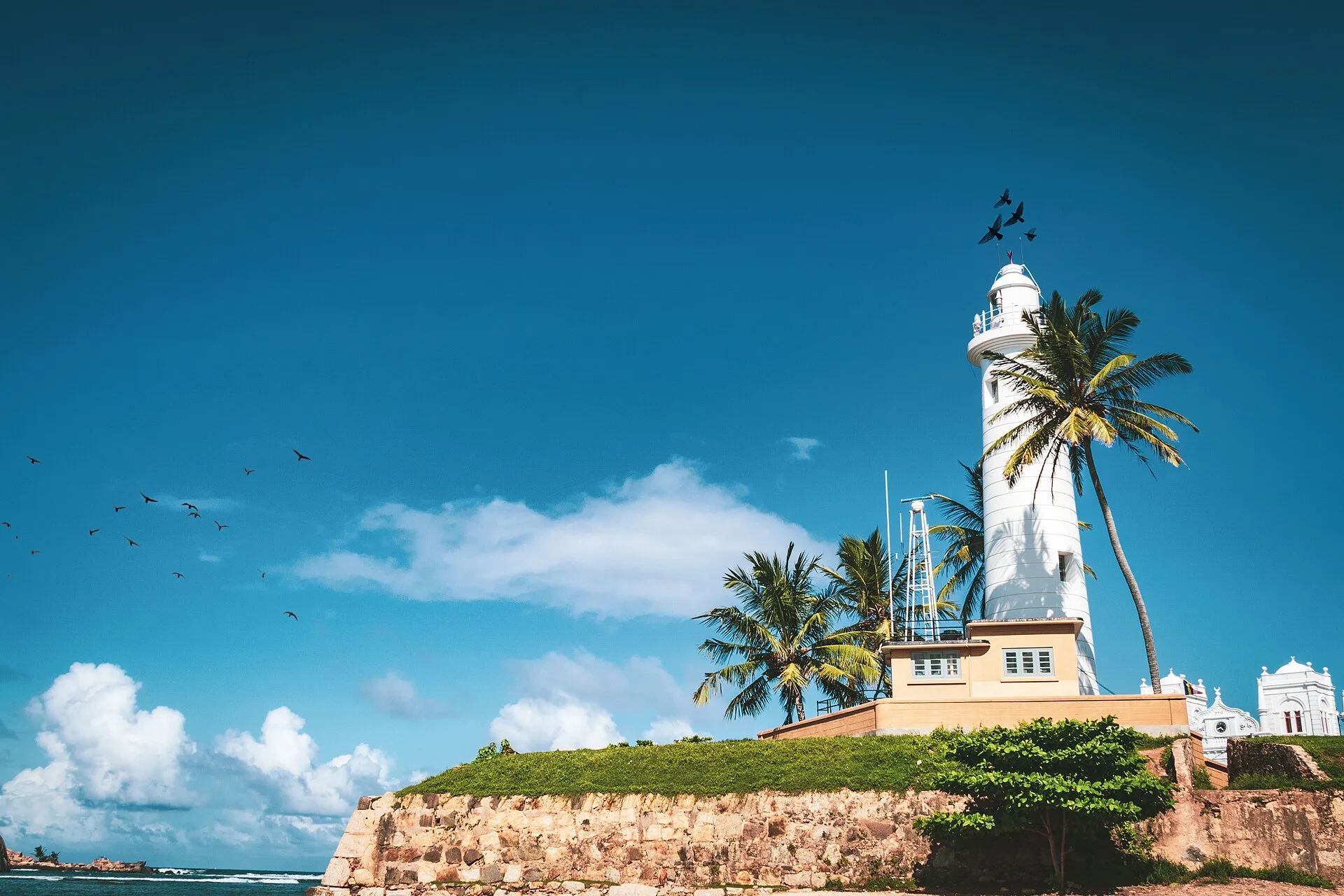
A fort at the scale of a town
The word fort can suggest a single large building. At Galle, the walls enclose streets, houses, places of worship and public buildings. The clock tower and lighthouse are landmarks within that larger inhabited setting.
Approaching from land makes the defensive boundary prominent. Inside, attention moves closer: to doors, walls and eaves. One distant view gives a strong outline but cannot explain the town. Its smaller spaces require a different pace.
Dutch is a useful label, but an incomplete one
UNESCO describes Portuguese beginnings and extensive development under Dutch colonial rule. Calling Galle a Dutch town is convenient, yet it can make local craftsmanship and environmental conditions disappear from the account.
A plan still had to become buildings suited to this setting. Sun, rain and daily movement posed practical questions. Architectural history becomes more revealing when it includes those adaptations, rather than treating a style as something transferred intact from one continent to another.
A veranda gives the doorway depth
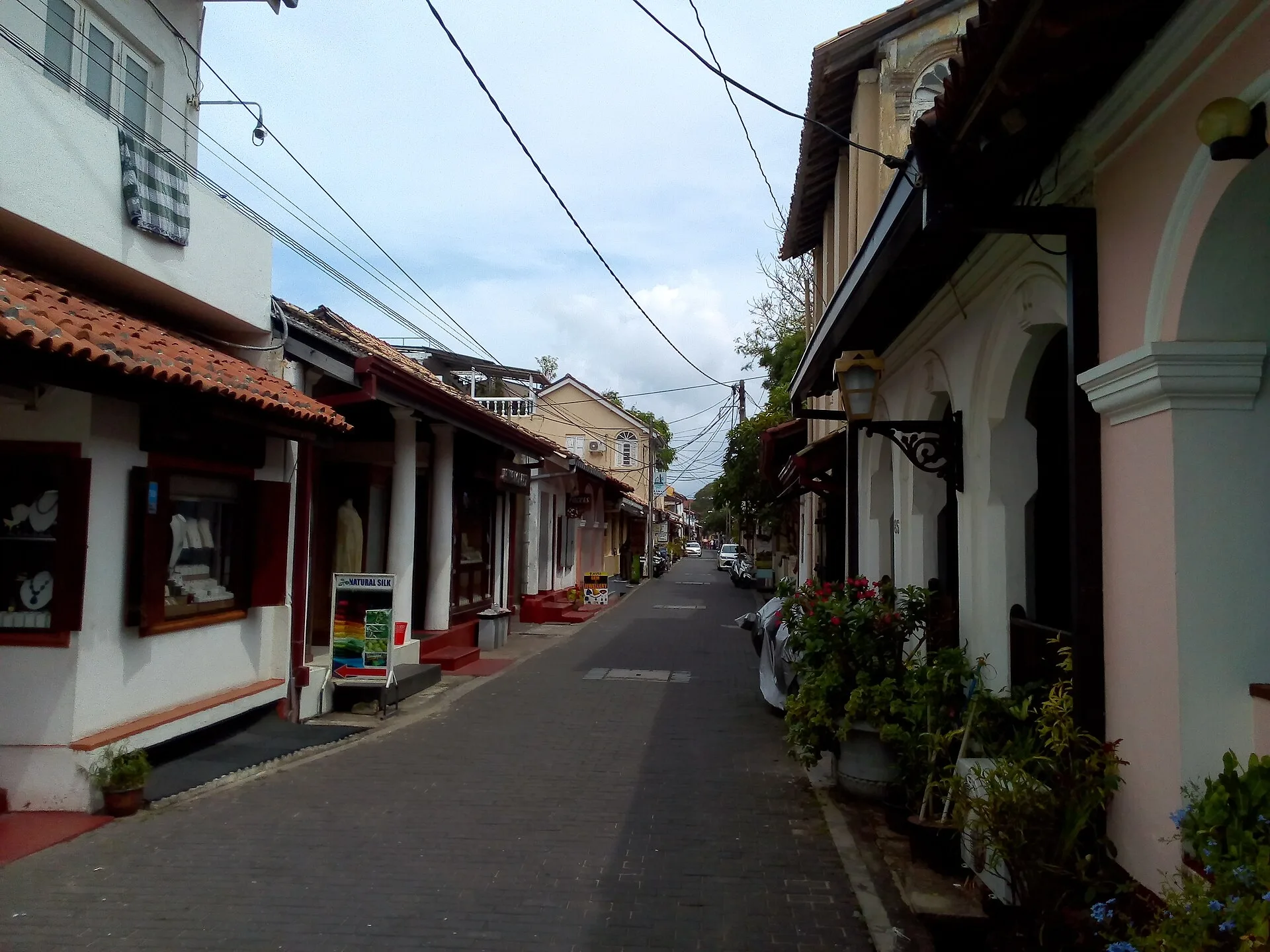
Shaded verandas, columns and internal courtyards are among the South Asian features identified in UNESCO’s account. They are useful spaces between an enclosed room and the street, not simply ornaments attached to a façade.
That intermediate space allows a doorway to be more than a sharp division between inside and outside. Columns establish an edge without closing it completely. Compared with the ramparts, the scale is intimate: one arrangement serves the threshold of a house, the other the boundary of a town.
Religious buildings have purposes beyond their façades
The Dutch Reformed Church and the mosque near the lighthouse broaden the journey beyond military architecture. Their exteriors can be photographed, but worship and community use do not stop when a visitor arrives.
A visible façade does not guarantee entry, and permission to enter does not automatically permit photography. Let the building’s purpose shape the visit. Waiting during worship or staying outside a closed door can be a sensible part of an itinerary rather than a failure to complete it.
The walls follow a particular piece of coast
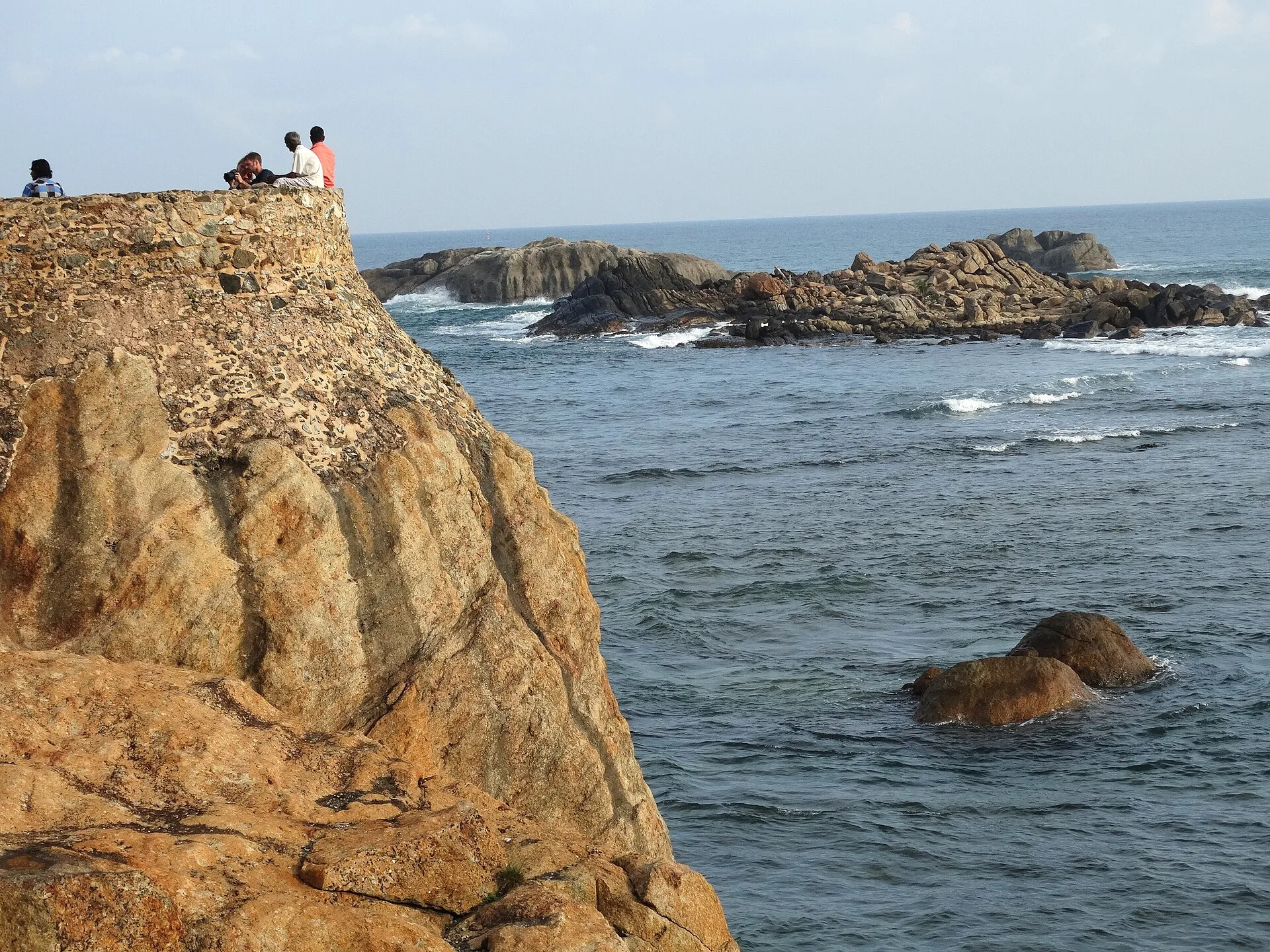
At the seaward edge, look at the turns of the wall as well as the horizon. UNESCO explains that the fortifications respond to the promontory and its rocks rather than following a purely regular European geometric plan.
The open sea and closely built interior offer contrasting scales. Between them lie questions of defence, access and habitation. Understanding one stretch of wall in relation to the ground can be more rewarding than feeling obliged to complete an entire circuit.
Preservation includes people who live here
The military function has ended, while residential and public uses continue. Conservation therefore concerns more than masonry: it must also accommodate repair, changing uses and the needs of people living within the boundary.
For visitors, that translates into small choices. Keep entrances clear, ask before entering a domestic courtyard and leave an exposed wall when conditions are uncomfortable. Galle is more than a checklist between clock tower and lighthouse. The ordinary doors between those landmarks are part of the reason the town matters.
Further reading and journey sources
This is an original WalkThere observation essay. These sources provide context for the related journey; imagery does not establish current conditions.
Place context
- Old Town of Galle and its Fortifications — UNESCO World Heritage Centre