
Fushimi Inari: The Wishes Behind the Torii
Follow the meaning of donated torii from the famous red corridor to Okusha and the sacred mountain, with fox messengers, inscriptions and stone offerings along the way.
Fushimi Inari TaishaObservation essay
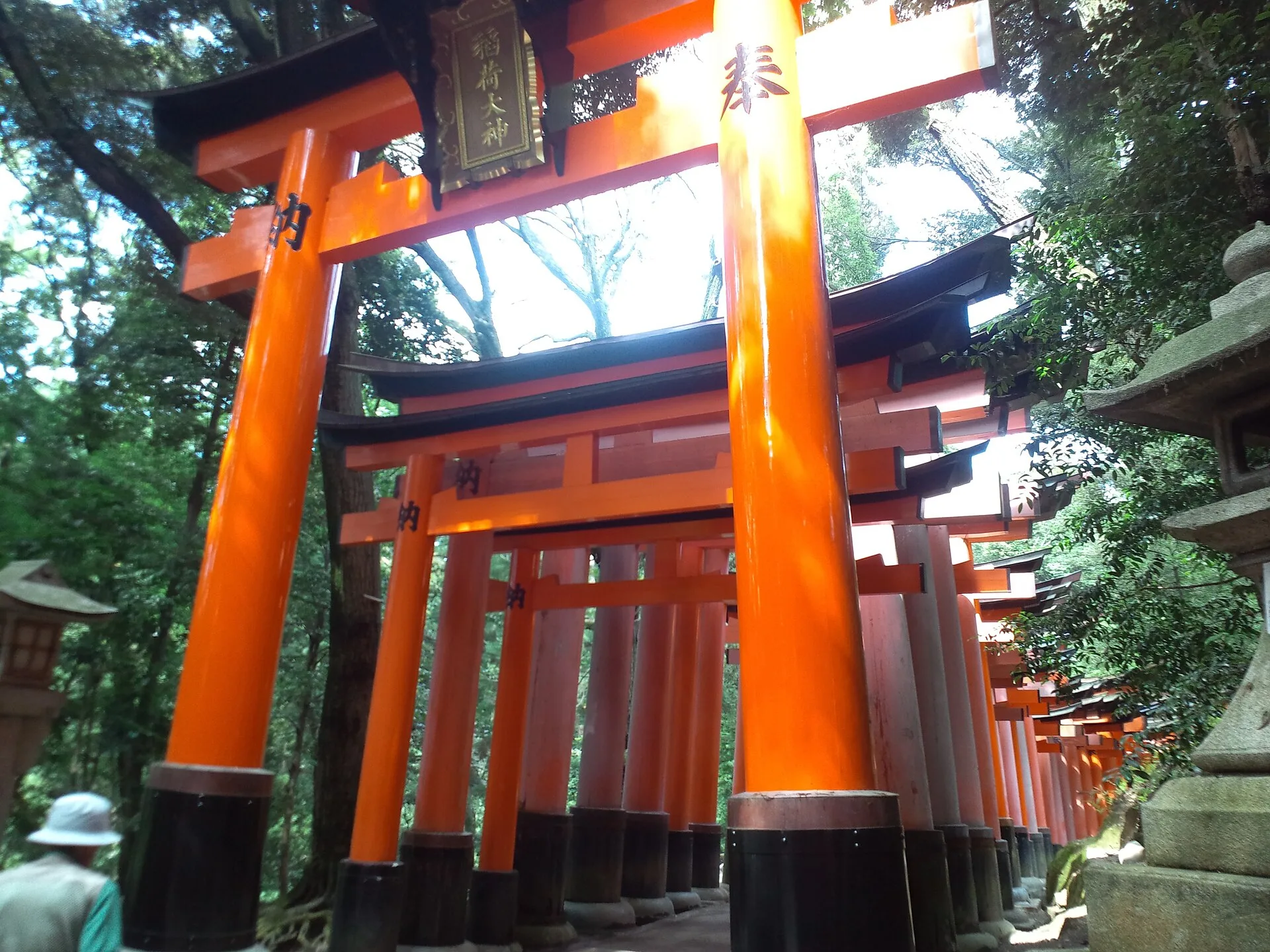
A corridor in photographs, a mountain in practice
A familiar photograph of Fushimi Inari places one vermilion gate inside another, repeating until the path disappears. It can suggest a single corridor with an end to reach. The precinct extends over Inariyama, however, with junctions, prayer places and spaces for pausing. The famous passage is an introduction to a larger setting.
The broad entrance around the Romon and the close spacing of the torii already offer different scales. An empty photograph strengthens the sense of enclosure but removes the passage’s everyday use. People arriving, returning and preparing to pray need to share the same space.
Inscriptions return the view to individual people
The shrine explains that donating torii to express prayer and gratitude became widespread from the Edo period. The repeated forms therefore record separate offerings, not merely a decision to create a coordinated visual effect. A visitor sees a continuous field of colour; each donation represents a particular act.
Names and dates on the pillars deserve attention for that reason. They are less immediately striking than the red paint, yet they make the landscape less anonymous. We rarely know the concern, hope or gratitude behind an inscription. There is no need to invent a donor’s story to recognise that the gateway belongs to a relationship beyond the photograph.
Foxes are messengers, and red has a meaning
Fox sculptures are another recognisable feature. The shrine makes a distinction that is easy to miss: foxes are understood as messengers of Inari Okami, rather than Inari Okami being a fox. An appealing or mysterious animal image does not by itself explain the figure’s religious role.
The shrine also connects vermilion with abundance, while its torii interpretation discusses brightness and hope. Visitors need not share the belief to understand that colour has a purpose beyond appearance. The gates, their offerings and the messengers belong together in the interpretation of the precinct.
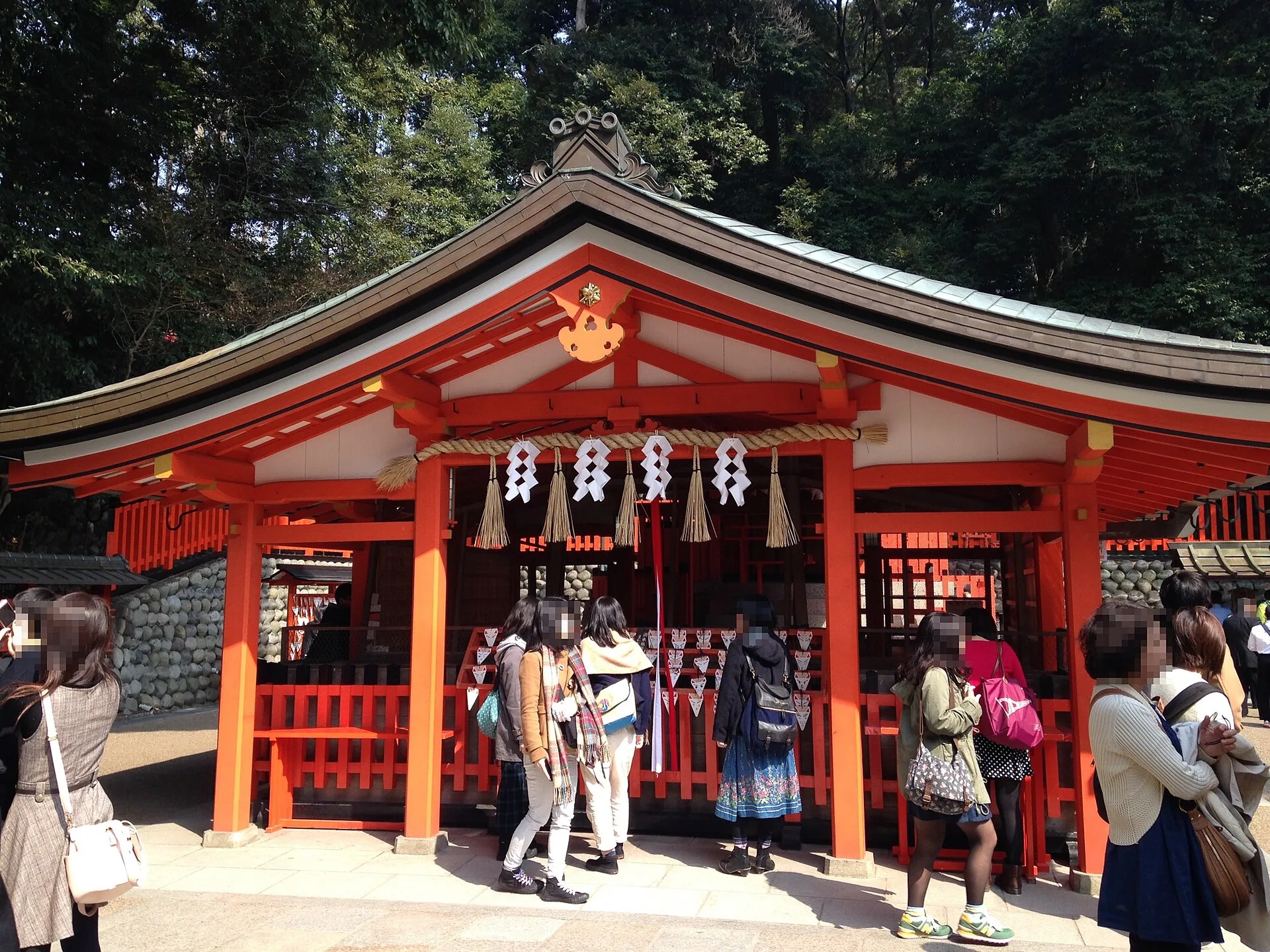
Okusha gives the walk a place to stop
At the end of the Senbon Torii stands Okusha Hohaisho, where worshippers pray towards Inariyama’s three peaks. For someone intent on climbing, it may feel like a stage along the way. For someone coming to pray, it can be the destination. The path repeatedly brings movement into contact with places to remain.
The shrine describes a custom at the Omokaruishi stone lanterns: making a wish and lifting the top stone, with its apparent weight interpreted in relation to that wish. This is a religious custom, not a reliable test of a future outcome. It is also a small action that interrupts the forward momentum of a walk.
A city view and the less familiar stone offerings
Around Yotsutsuji, an open view of Kyoto changes the distance at which the mountain is experienced. The torii passage directs attention to the next few steps; a clearing brings the city back into view. The ascent is not one unbroken repetition of the same red scene.
Elsewhere on Inariyama are otsuka, stones bearing deity names. The shrine relates these offerings to individual expressions of faith. Less visually uniform than the famous gates, they help explain why the mountain cannot be reduced to a scenic trail. Different forms of devotion occupy different places.
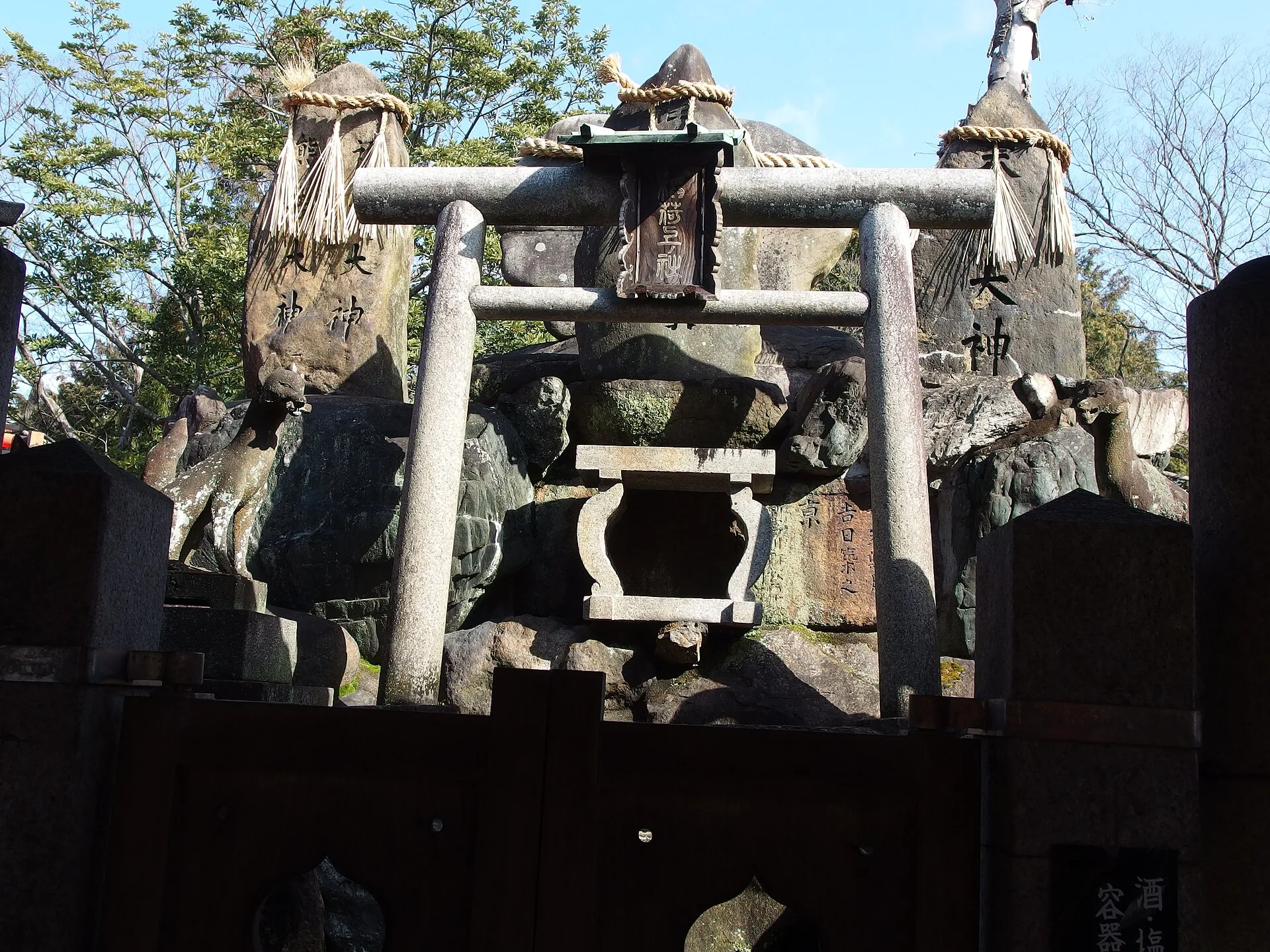
The summit need not be the only measure of a visit
Choose how far to walk by what you want to understand. The entrance, Senbon Torii and Okusha provide substantial context for the offering tradition. Continuing higher offers other relationships between city, path and sacred sites. Turning back at one stage does not cancel the attention given to what came before.
The familiar image is remarkably unified, but understanding it involves noticing its separate parts: names on pillars, fox messengers, the direction of prayer and stone offerings. Remembering even two of those details gives the mountain a more particular identity than a recollection of red paint and many steps.
Further reading and journey sources
This is an original WalkThere observation essay. These sources provide context for the related journey; imagery does not establish current conditions.
Place context
- Frequently Asked Questions — Fushimi Inari Taisha
- Rōmon Gate — Fushimi Inari Taisha
- Senbon Torii — Fushimi Inari Taisha
- Okusha Hōhaisho — Fushimi Inari Taisha
- Inariyama — Fushimi Inari Taisha
- Ichinomine — Fushimi Inari Taisha
- Requests to Visitors — Fushimi Inari Taisha
- Trail Running and Trekking: Beginners Course — Kyoto City Official Travel Guide
- Comfortable Access to Fushimi Inari Taisha Shrine — Kyoto City Official Travel Guide
- Romon, Fushimi Inari-taisha (location reference) — Wikimedia Commons
