
Mount Emei beyond the summit: temples, Qingyin Pavilion and forest views
Look from Mount Emei’s foothill temples and Qingyin Pavilion toward Golden Summit imagery before choosing how to visit.
Mount EmeiObservation essay
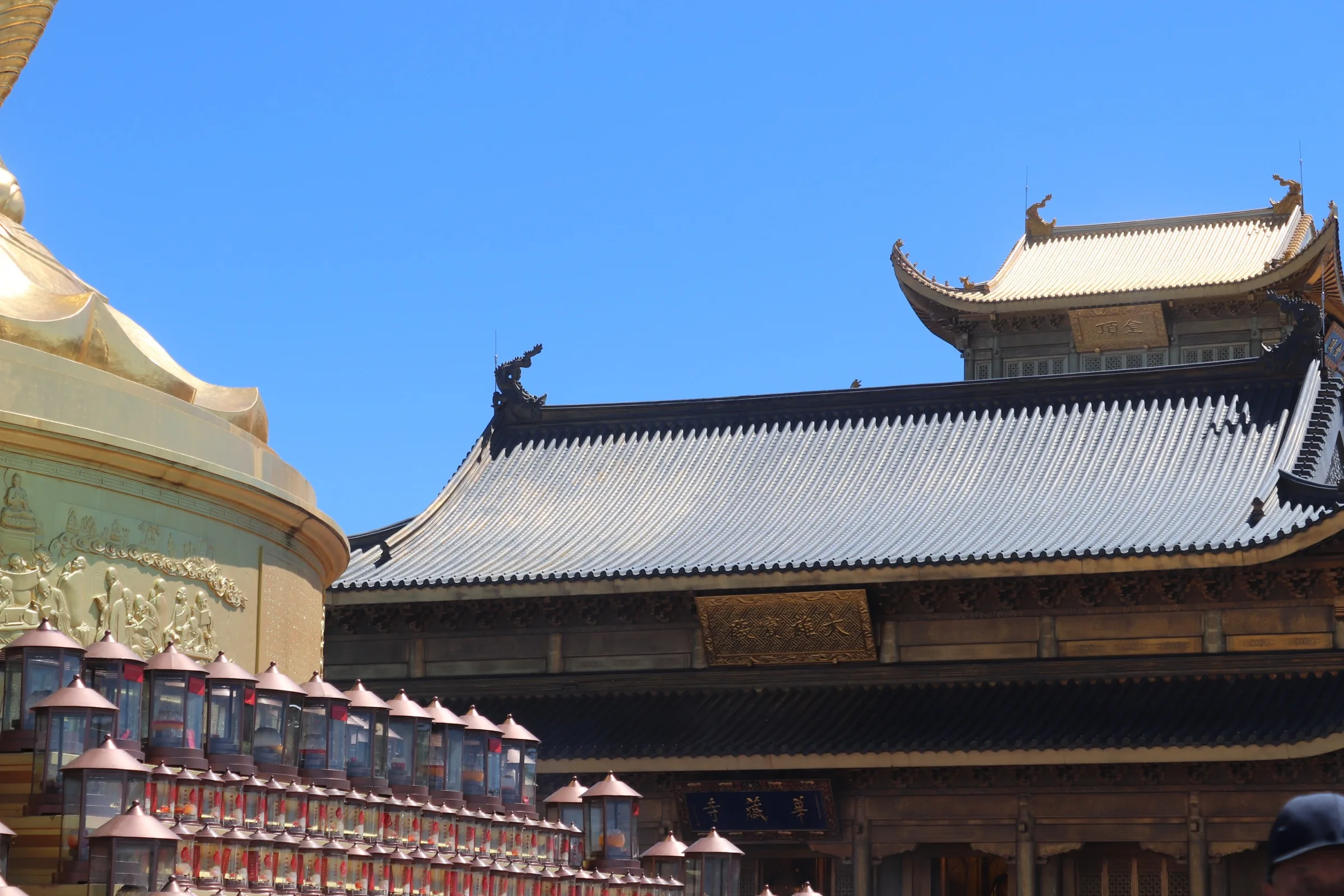
Set the destination aside for a moment
A mountain journey is easily reduced to a summit photograph. Put that frame aside and look at entrances, buildings and woodland lower down. An online journey lets us pause, return and compare. There is no need to rush straight to the highest view.
Begin with just two images: one that brings attention close to a building and one that carries it into the distance. Describe what draws you to each, then compare their effect. The summit does not become unimportant; the journey’s value simply need not be concentrated in its final scene.
Compare the layers of space
At each stop, notice how much space surrounds a building, how vegetation enters the frame and where the mountain blocks the view. Asking the same questions of different images can create a stronger personal impression than remembering names alone.
Notice how a repeated element changes. A path may fill much of one frame but appear only as a turn in another. A building can dominate a view or recede behind trees. Such differences do not establish the difficulty of the terrain, but they help reveal distinct ways of seeing each stop.
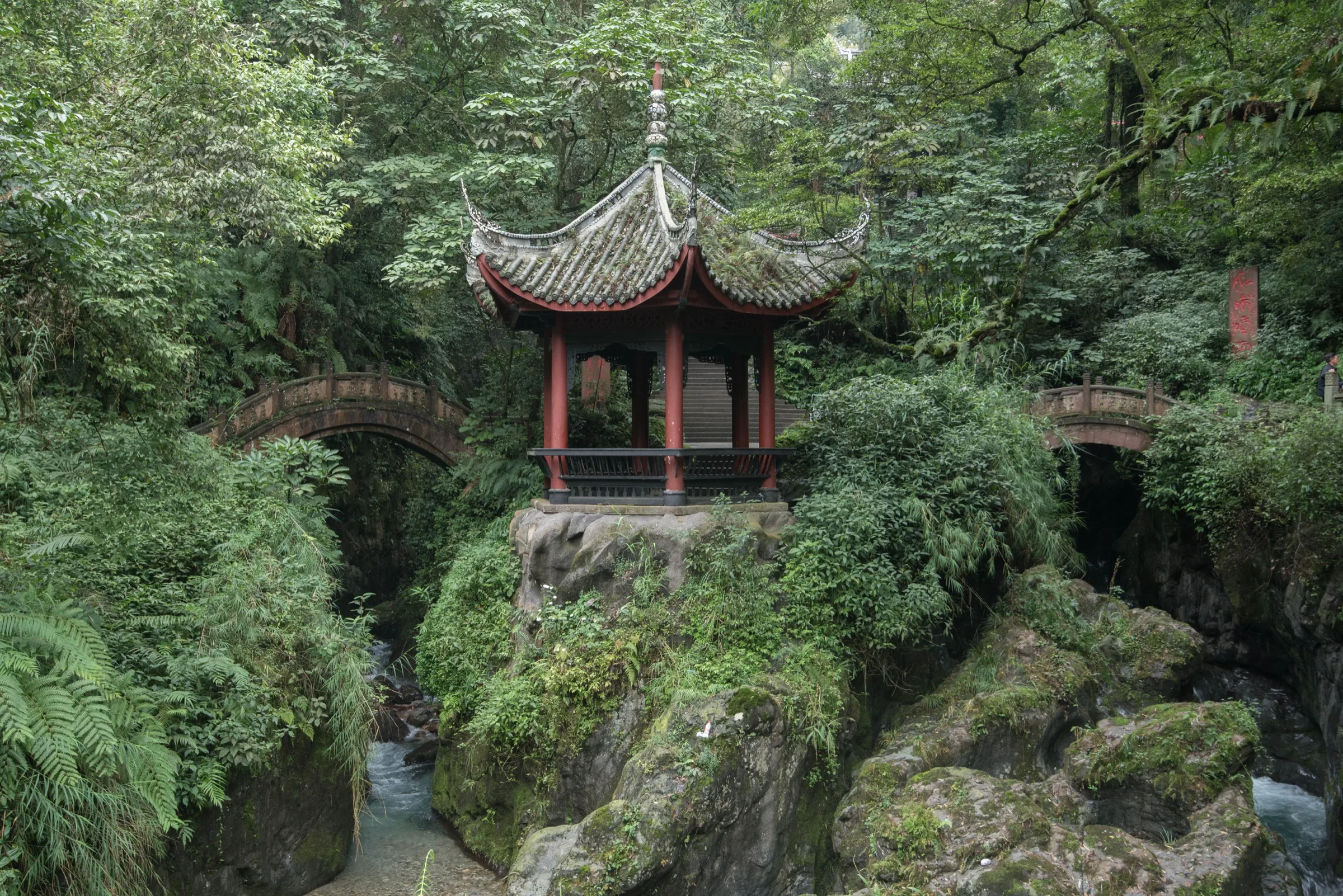
Qingyin Pavilion: between buildings and woodland
In the imagery associated with Qingyin Pavilion, start at the meeting of building and setting. What is partly hidden by trees and what remains in the open? How do paths and railings direct attention onward? The exercise is not to find the most spectacular scene, but to understand how your eye moves.
If the frame feels crowded, choose one element: an eave, a tree trunk or a stretch of passage. Follow its direction through the image, then widen your attention again. Moving between detail and whole can turn an apparent scene on the way into a stop worth considering in its own right.
Between images is not necessarily a walking route
A chapter change helps connect places in our understanding. It does not establish walking distance, gradient or duration. Weather in a photograph is not a current forecast either. A real visit requires separate decisions about transport, opening arrangements and a pace suited to you.
The ease of moving through online chapters should not be mistaken for easy movement on the ground. A few clicks do not show waiting for transport, physical effort or a changed plan. Remembering the distinction need not weaken the appeal of the landscape; it helps make a later visit fit the day you actually want.
Read a wide view through the scale of its foreground
At the Golden Summit chapter, look first at buildings and platforms nearby before sending your attention into the distance. A wide view often needs a close reference: we establish a possible position before feeling space open beyond it. A photograph offers this comparison without guaranteeing the same visibility on another day.
That is also why several images belong in one essay. Woodland details and summit views can explain each other without either replacing the other. Return to the first image at the end and ask what you now want to understand: architecture, surroundings or the practical shape of a visit. Take that question into the journey.
Plan from what you want to notice
After reading, choose two kinds of scenes you would like to spend time with: temple architecture, woodland details or open views. Then consult the official information in the preparation section. Knowing your interests makes it easier to leave time for them instead of rushing through a route checklist.
Give your plan a priority: which experience matters most, and which parts would be additions if circumstances allow? When transport, weather or opening arrangements change, those priorities can guide a fresh choice. A memorable visit need not reproduce the order or number of online chapters.
Further reading and journey sources
This is an original WalkThere observation essay. These sources provide context for the related journey; imagery does not establish current conditions.
Place context
- Mount Emei Scenic Area, including Leshan Giant Buddha Scenic Area — UNESCO World Heritage Centre
- World Heritage Property Data for Mount Emei Scenic Area — UNESCO World Heritage Centre
- Scenic places of Emeishan — Sichuan Local Records Office
- The beamless brick hall of Wannian Temple — Sichuan Seismological Bureau
- Protecting the dual World Heritage values of Mount Emei — National Forestry and Grassland Administration
- Adjusted visitor management for the Golden Summit precinct — Leshan Municipal People’s Government
- Baoguo Temple on Mount Emei — Shisheng Culture
- Leidongping to Jieyin Hall path and transfer record — Emeishan Municipal People’s Government
- Mount Emei — Chinese Wikipedia
- Wanfo Summit reopens, 20 metres above the Golden Summit — The Paper
- Baoguo Temple — OpenStreetMap
- Qingyin Pavilion — OpenStreetMap
- Wannian Temple — OpenStreetMap
- Elephant Bathing Pool — OpenStreetMap
- Leidongping — OpenStreetMap
- Jieyin Hall (接引殿) — DILA Buddhist Studies Place Authority
- Jinding, Mount Emei — Wikidata