
Dublin’s Ha’penny Bridge: the price that stayed in the name
Read the pedestrian bridge through its 1816 opening, former toll and 2017 commemorative coin, with three different photographs and official references.
Dublin Old TownObservation essay
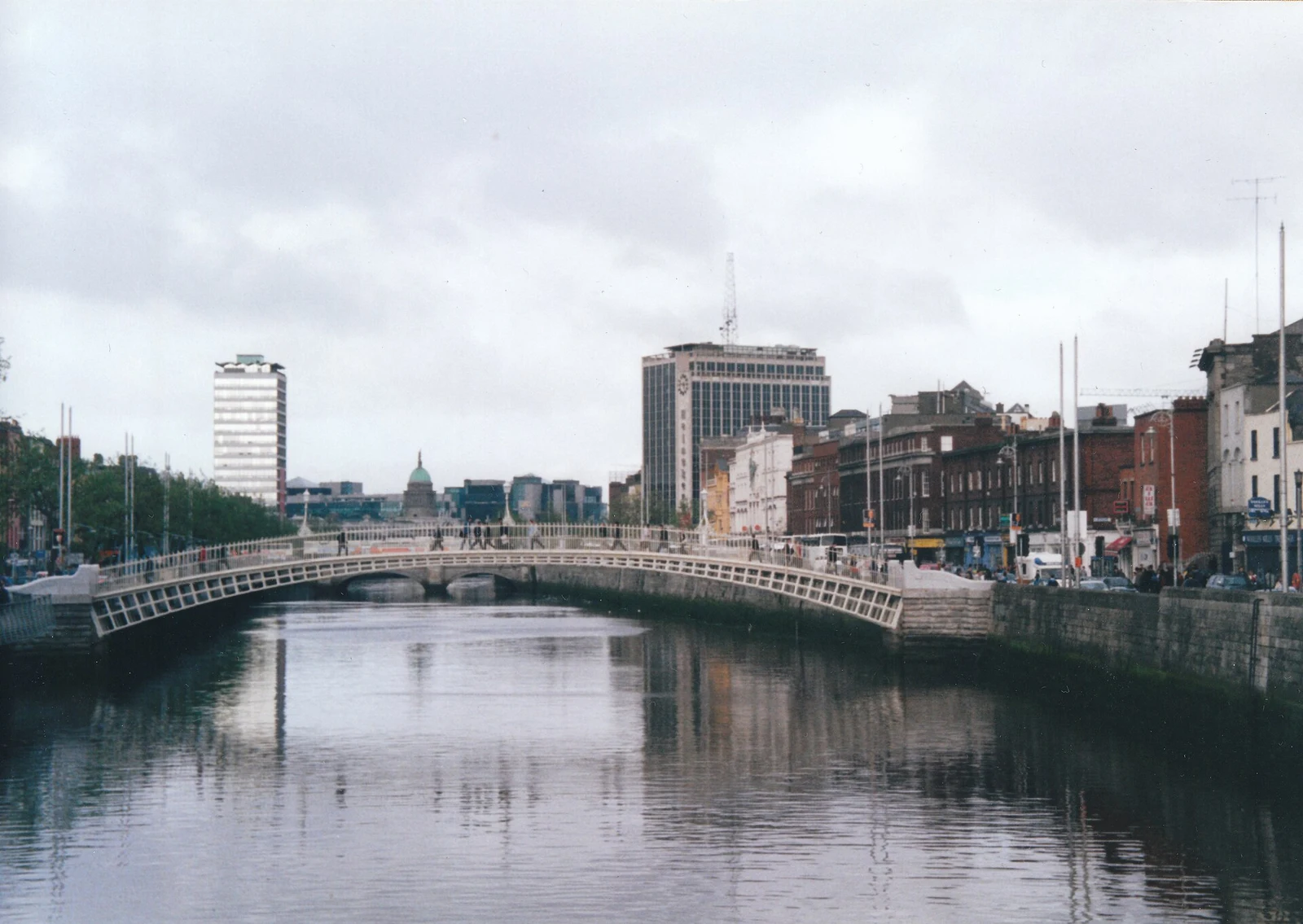
A name records a payment
Ha’penny Bridge sounds informal beside names honouring public figures. It preserves something more ordinary: the price once attached to crossing the river. A small repeated transaction became part of the landmark’s identity.
Visit Dublin dates the bridge to 1816 and explains the nickname through the old toll. Other names included Wellington Bridge. Formal naming and everyday usage coexisted, with the price proving especially memorable.
The price of a different crossing
The Central Bank of Ireland’s historical account says the bridge toll matched that of the ferry it replaced: one half-penny. The payment connects a fixed crossing with an earlier way of reaching the opposite bank.
That does not establish how affordable everyone found it. Income and frequency of travel affect the weight of a small charge. The name brings transport back to individual use rather than allowing the structure alone to stand for progress.
Iron beyond the silhouette
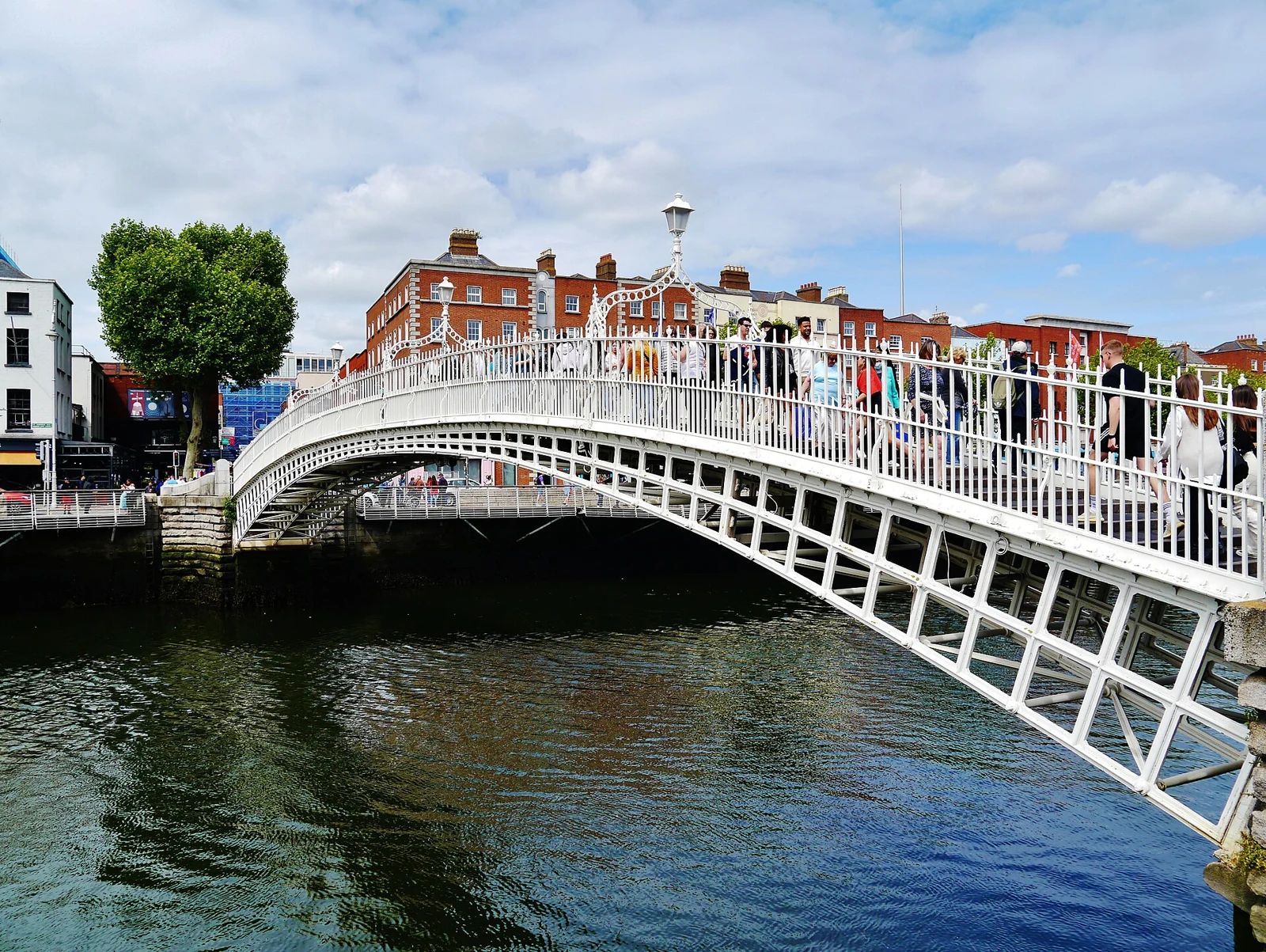
Visit Dublin identifies the bridge as an early cast-iron example. Begin with its overall curve, then follow railings and repeated members. A distant outline makes the bridge recognisable; closer intervals return it to bodily scale.
From the bank, it seems like a line across water. On the deck, railings divide the view and people need room to pass. A piece of engineering also becomes an ordinary setting for meeting strangers moving in the opposite direction.
The toll ended, the name continued
The Central Bank dates abolition of the toll to 1919. The arrangement disappeared while the familiar name remained useful. Later generations could arrange to meet here without ever having paid the original charge.
Language preserves a vanished practice without requiring a surviving toll booth. Directions, conversation and map searches keep a fragment of the earlier city in circulation. The memory rests within a word people still need.
Back onto a coin
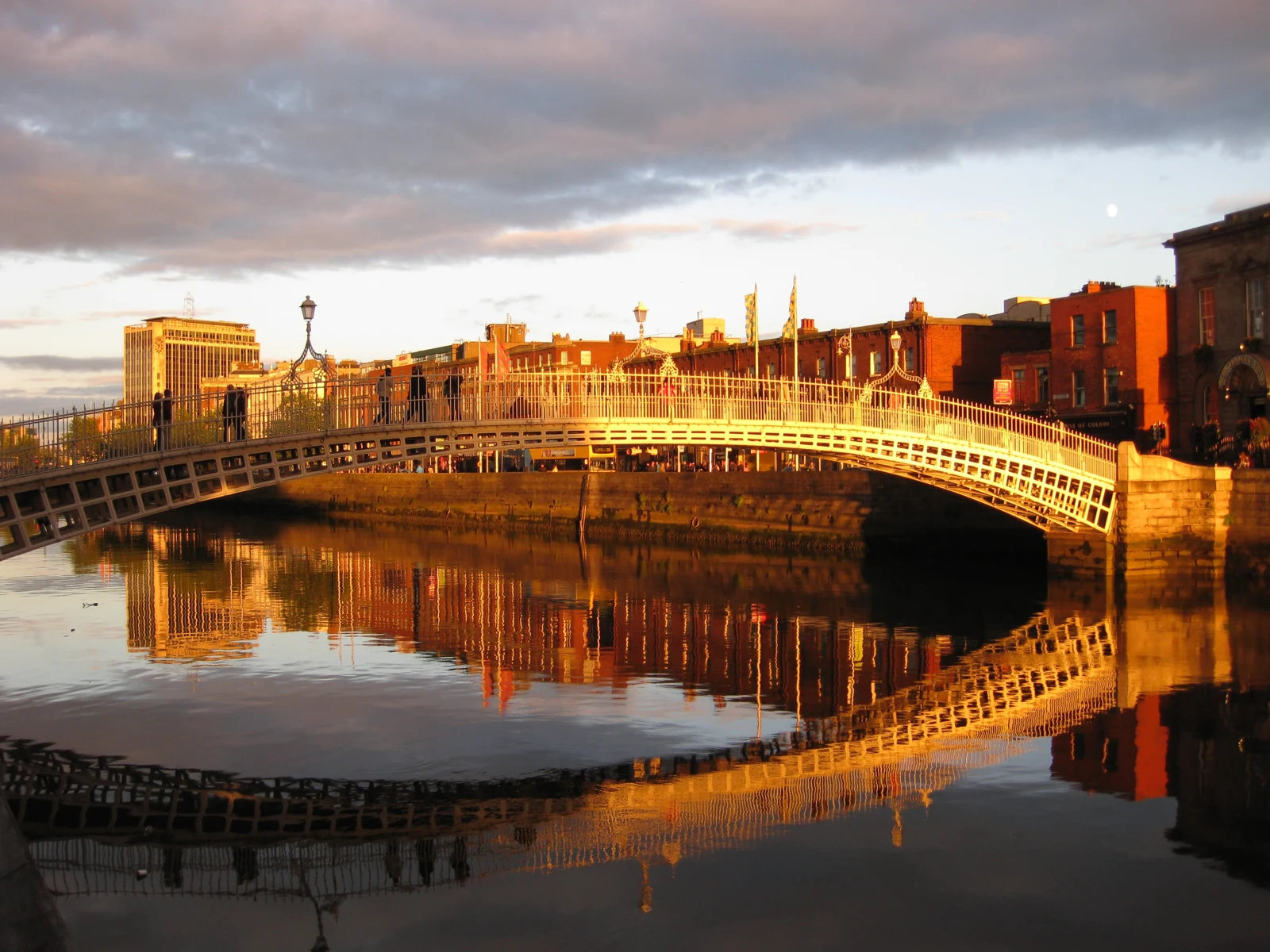
In 2017 the Central Bank issued a silver proof coin commemorating the bridge. Its design used a pedestrian’s view towards the distinctive archway. A bridge named after a payment became the subject of a different monetary object.
This is historical context rather than a recommendation to buy a collectible. It shows another choice of viewpoint: the landmark can be understood from within a crossing as well as through its distant profile above the water.
Pause without stopping the passage
The name records a toll, the members shape a crossing and passing people show its continuing role as a route. Looking behind before pausing for a detail respects that everyday function.
These separate photographs do not establish a continuous recorded crossing or current access. They leave a question for another city: which familiar names preserve an old price, occupation or mode of transport after the practice itself has gone?
References
These sources inform the essay’s historical and local context. Its observations and interpretations are original to WalkThere.
Central Bank of Ireland
Ha’penny Bridge commemorative coinThe former ferry charge, abolition of tolls and the 2017 commemorative coin.
Fáilte Ireland · Visit Dublin
Ha’penny BridgeOfficial visitor context for the 1816 bridge, nickname and cast iron.
More journey background
Related journey sources
- History of Trinity — Trinity College Dublin
- History — Office of Public Works · Dublin Castle
- History — Christ Church Cathedral
- Jonathan Swift, Dean 1713–1745 — Saint Patrick’s Cathedral
- Report on Molly Malone Statue — Dublin City Council
- Chester Beatty — Chester Beatty
- Art in Parks, Civic Offices — Dublin City Council
- Plan a Trinity visit — Trinity Visitors
- Visitor FAQ — Office of Public Works · Dublin Castle
- Visiting — Christ Church Cathedral
- Visit — Saint Patrick’s Cathedral
- Temple Bar district — Dublin City Council Film Office
- Visit Chester Beatty — Chester Beatty
- Wood Quay Venue — Dublin City Council