
Dublin Castle: a courtyard after the fortress
Compare the courtyard, Bedford Tower and adjoining façades with the castle’s transformation after the 1684 fire, using official history and visitor guidance.
Dublin Old TownObservation essay
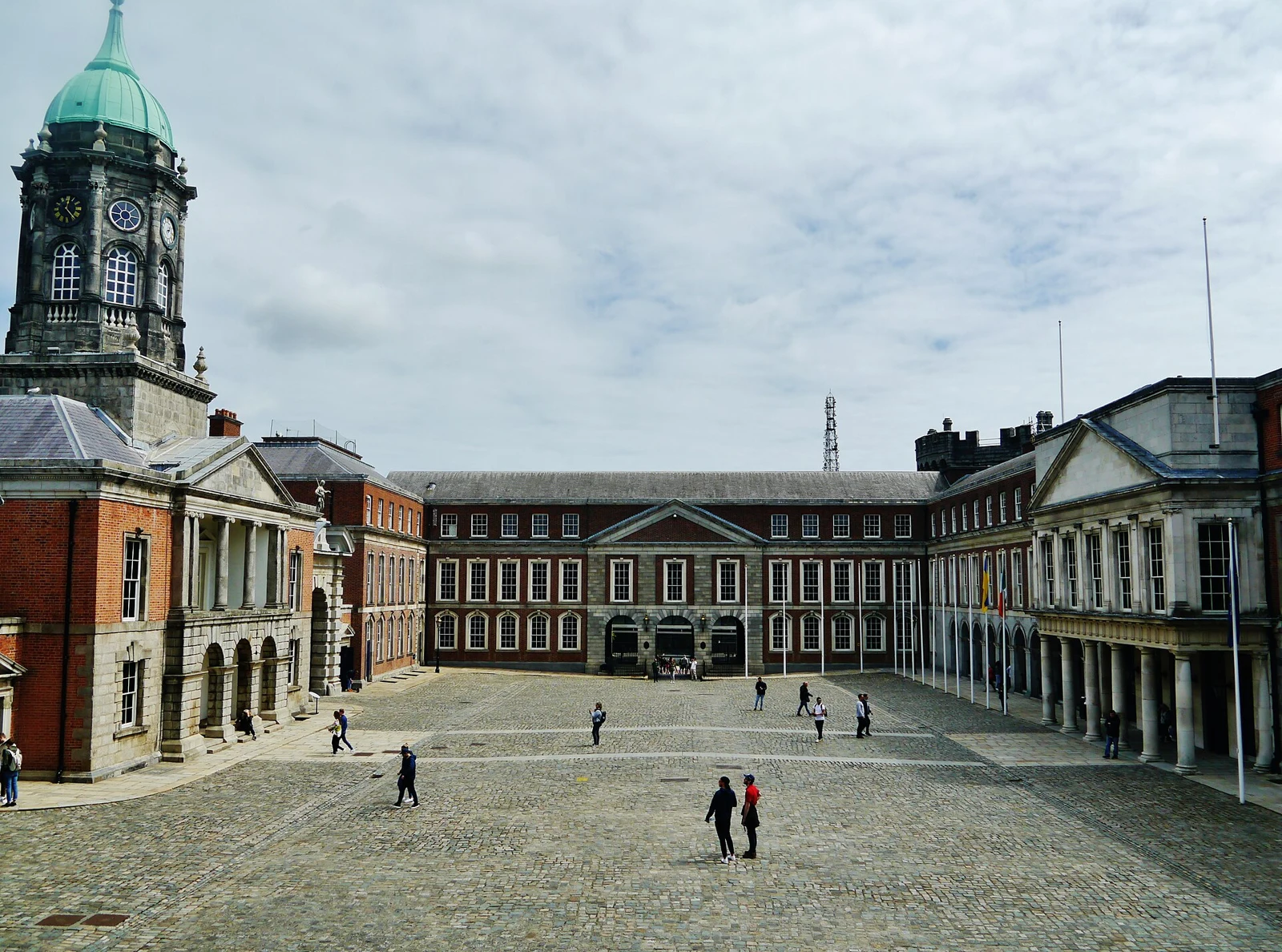
A courtyard before an imagined fortress
Paving and courtyard-facing buildings occupy much of the wide photograph. Bedford Tower provides a reference on the left, but the scene does not supply every defensive feature that the word castle might suggest. That difference is a useful starting question.
Follow windows before locating doors and passages. The broad view establishes distance; the tower detail concentrates attention on a clock. Both belong to the site, even when only one seems to match an initial expectation.
Fire interrupted the earlier layout
The official history describes four corner towers joined by curtain walls around an enclosure. A major fire in April 1684 damaged much of the structure, although medieval and earlier remains survived. The exterior photographs cannot recover that entire arrangement.
Keep fortress and subsequent rebuilding as separate stages before trying to assign dates to visible features. Locating particular remains requires their own documentation. Height alone does not identify a surviving medieval tower.
Rebuilding changed the work of the place
The castle’s account describes late-seventeenth- and eighteenth-century rebuilding into a Georgian palace, including State Apartments for reception and ceremony. The address continued while the activities and architectural presentation changed.
Repeated windows and distinct entrances give that account visible points of comparison. They do not reveal the furnishings inside or reconstruct a banquet. Interior interpretation needs separate evidence beyond a view across the courtyard.
Bedford Tower concentrates the view
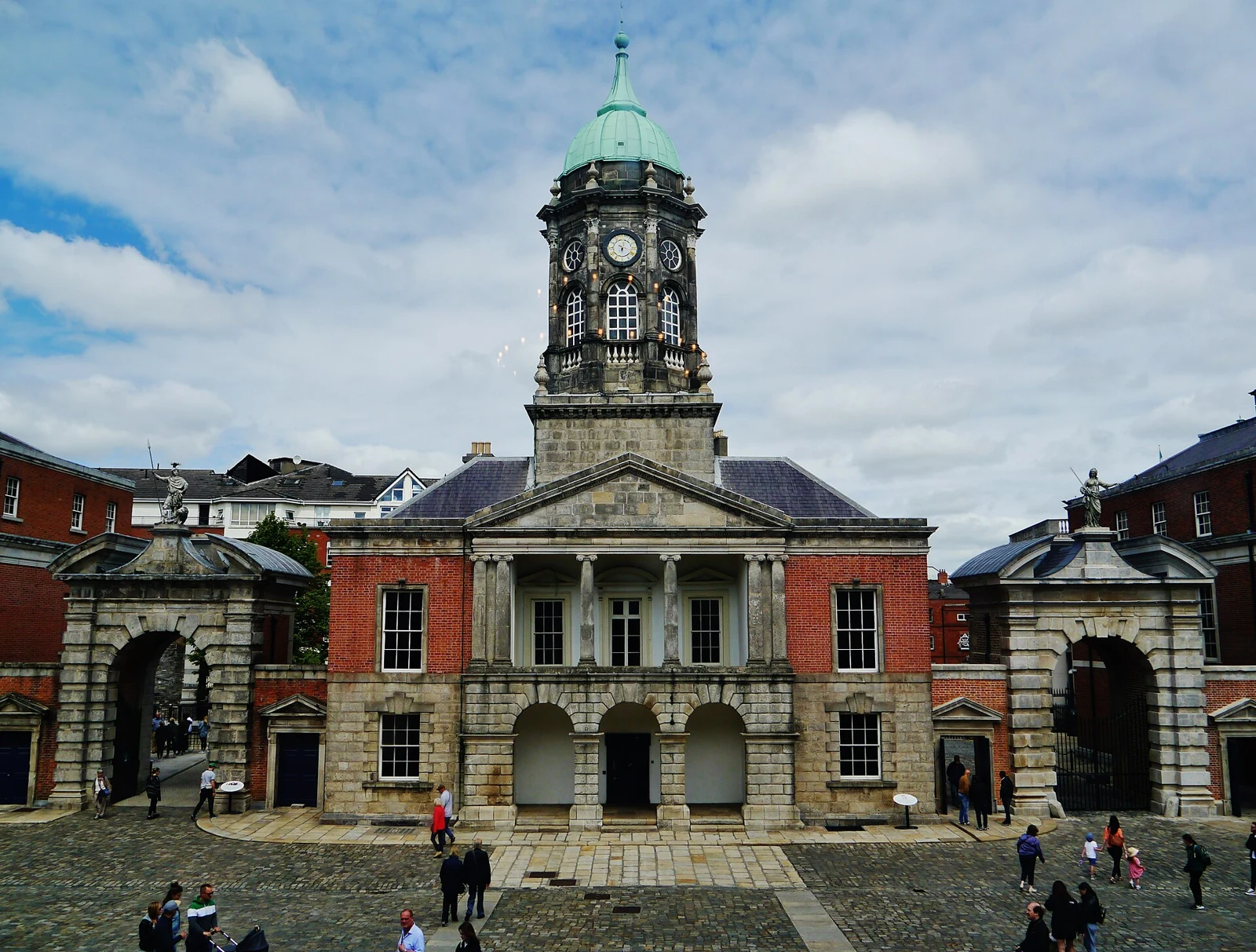
The closer photograph brings clock and cupola into focus. Something used as a distant orientation point becomes an arrangement of borders, shadows and proportions. Follow the clock’s position relative to the façade beneath it.
An elevated feature need not belong to the earliest fortress. The photograph identifies Bedford Tower specifically; this essay does not substitute it for another surviving structure. Medieval history is better pursued through the relevant site material than through an assumption about silhouettes.
Different walls share the paving
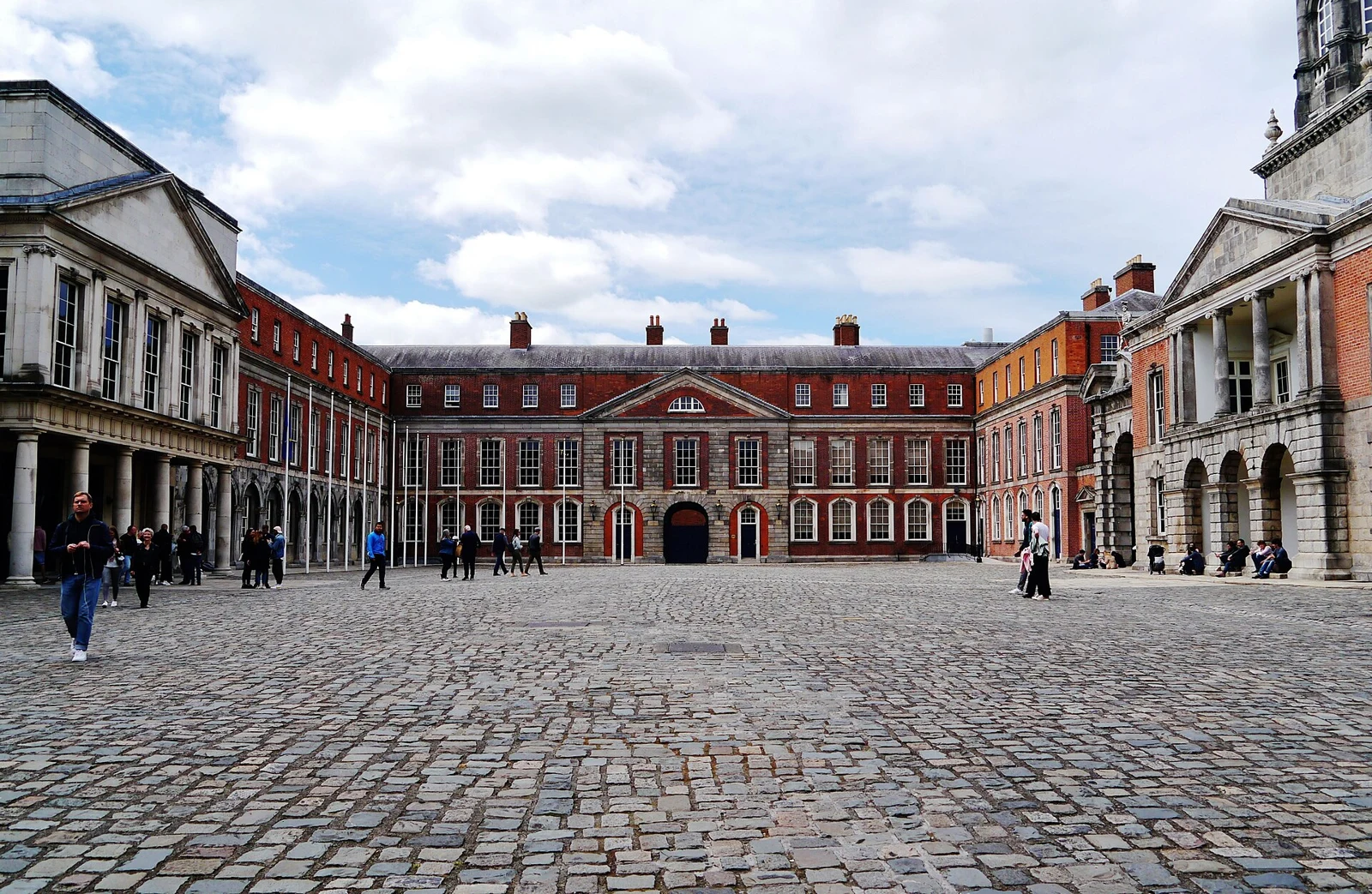
The third photograph includes red and stone façades across a continuous courtyard surface. Colour distinguishes adjoining buildings while the ground connects them within one setting. Compare the window rhythms and places where an elevation turns.
The image cannot date every wall or establish a political meaning for each colour. Describing the visible differences first leaves room for construction records to explain how a complicated site acquired its current arrangement.
Choose the next visit separately
The official FAQ distinguishes self-guided visiting from guided access to particular areas. Check present ticketing and arrangements for the specific parts that interest you; reaching a courtyard does not include admission to every building.
These three photographs record exterior positions on one day, without entering apartments or excavations. They introduce a place whose name continued while use and appearance changed. The castle’s own material provides the next step towards identifying its earlier remains.
References
These sources inform the essay’s historical and local context. Its observations and interpretations are original to WalkThere.
Office of Public Works · Dublin Castle
HistoryOfficial account of the fortress, 1684 fire and later palace rebuilding.
Office of Public Works · Dublin Castle
Visitor FAQCheck guided and self-guided visiting arrangements for individual areas.
More journey background
Related journey sources
- History of Trinity — Trinity College Dublin
- History — Christ Church Cathedral
- Jonathan Swift, Dean 1713–1745 — Saint Patrick’s Cathedral
- Ha’penny Bridge commemorative coin — Central Bank of Ireland
- Ha’penny Bridge — Fáilte Ireland · Visit Dublin
- Report on Molly Malone Statue — Dublin City Council
- Chester Beatty — Chester Beatty
- Art in Parks, Civic Offices — Dublin City Council
- Plan a Trinity visit — Trinity Visitors
- Visiting — Christ Church Cathedral
- Visit — Saint Patrick’s Cathedral
- Temple Bar district — Dublin City Council Film Office
- Visit Chester Beatty — Chester Beatty
- Wood Quay Venue — Dublin City Council