
Copenhagen’s Kastellet: why a fortress needs a windmill
Barracks, a working machine and grassy ramparts bring the fortress back to supplies, labour and the business of keeping a place going.
Copenhagen Harbour & Royal QuarterObservation essay
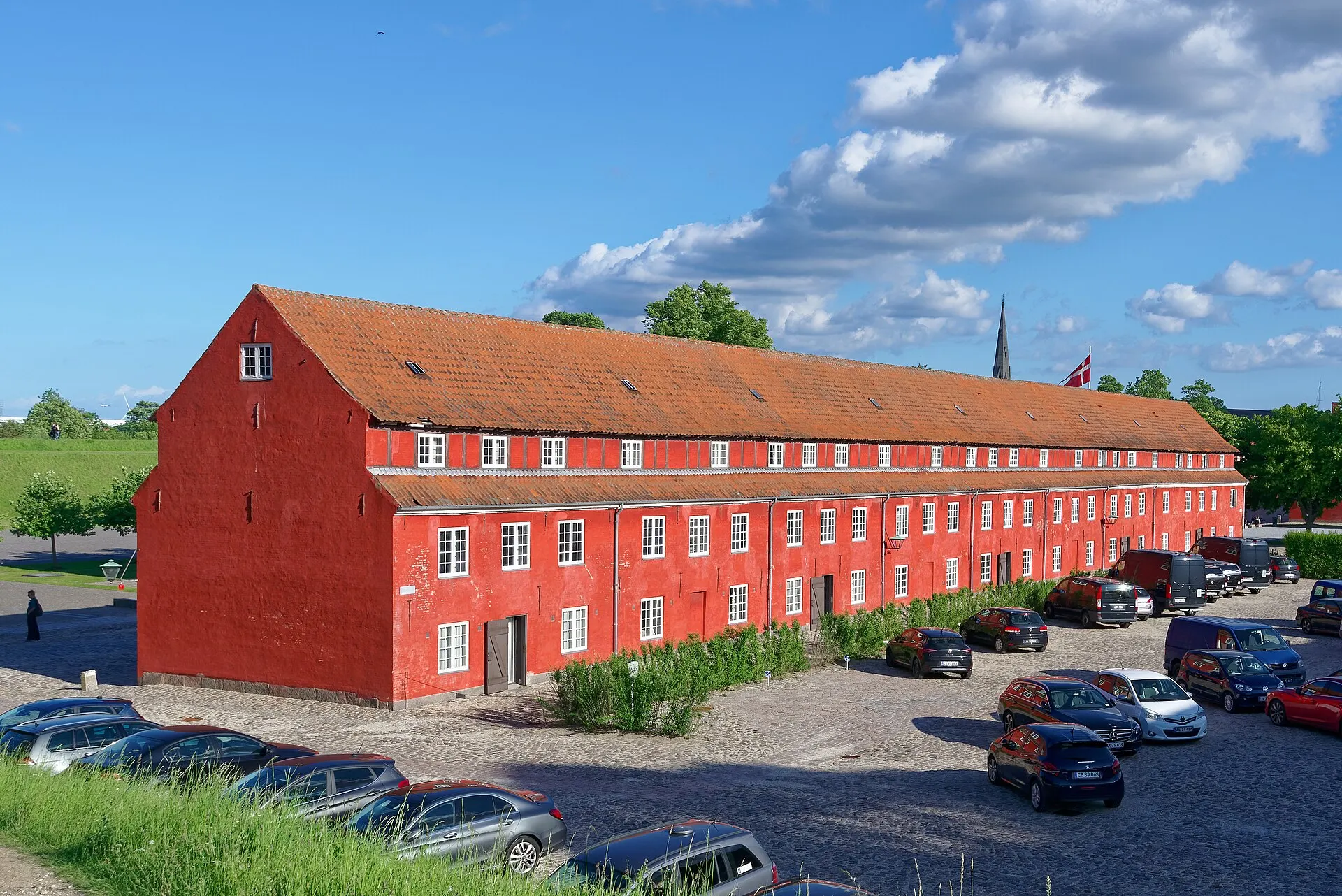
Do not start by finding the whole star
Kastellet is instantly legible on a map. At ground level the experience is more fragmentary: a slope, a gate, a red building. You cannot hold the entire outline in one view. Begin with what those pieces do rather than trying to reproduce an aerial image.
Copenhagen’s municipality describes a military barracks surrounded by a green setting. The presence of walkers does not erase the first identity. The combination explains both the pleasure of looking around and the importance of recognising a place where people still work.
Barracks bring defence back to daily life
The red buildings can become tidy blocks of colour in a photograph. Calling them barracks raises more practical questions: where people lived, how supplies arrived and what labour supported ordinary days. Fortress history easily becomes a sequence of construction and conflict, leaving maintenance and routine out of the account.
Pairing barracks with a windmill brings supply back into view. A garrison needed more than an outward-looking defensive edge. Food, storage and functioning equipment made it an inhabitable system, not simply a shell intended to appear strong.
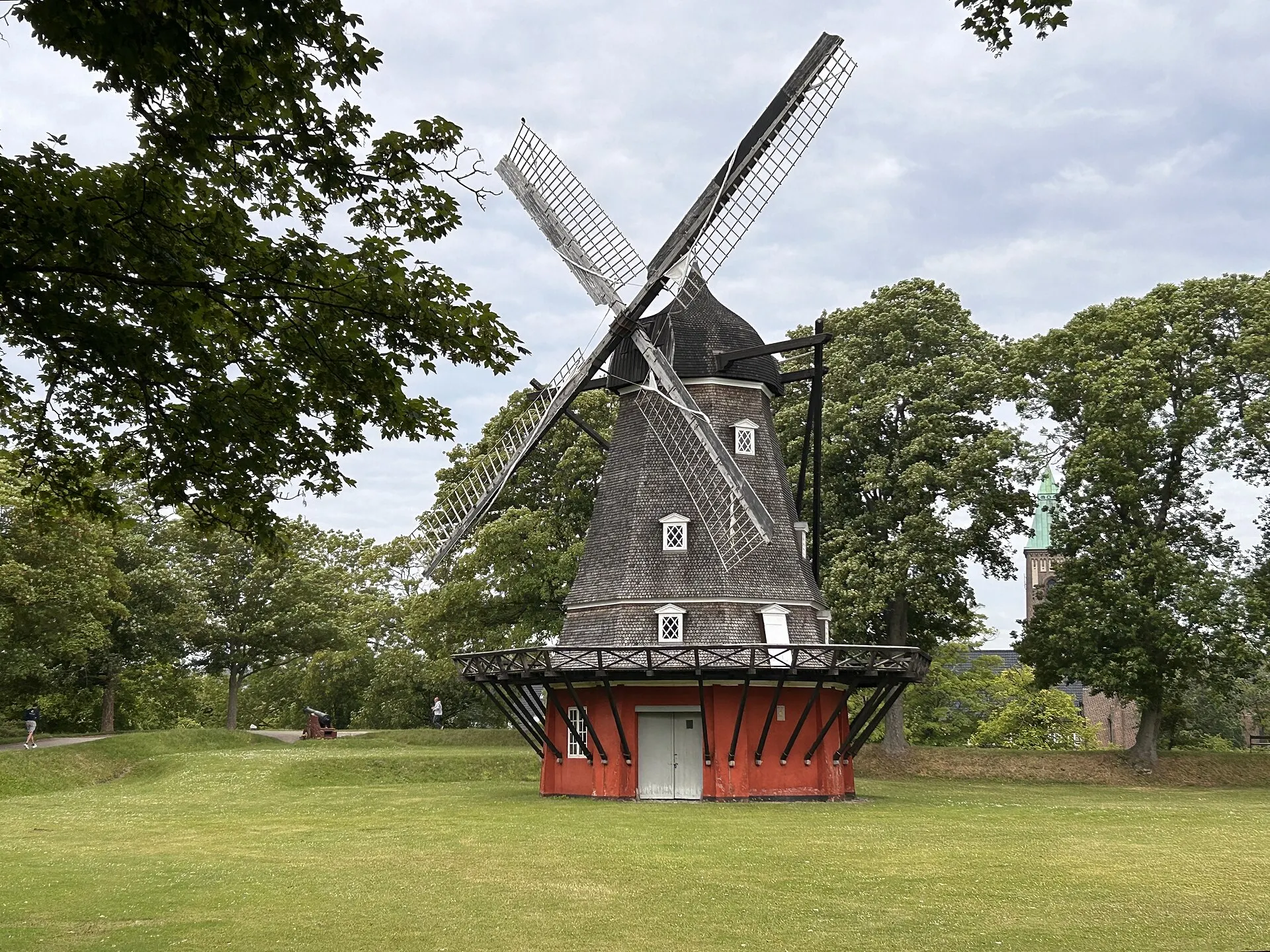
Follow the flour rather than the silhouette
Danish Defence dates the surviving mill to 1847 and describes earlier mills supplying flour to Kastellet’s bakery. The conspicuous sails therefore lead to a concrete destination: machinery and human work turned grain into flour for bread.
That connection is more revealing than treating the mill as a picturesque surprise. A landmark visible from a distance belonged to an everyday requirement. The 2024 photograph shows the building beside the green rampart; it does not document a milling demonstration or establish whether the interior will be open on a future visit.
Work was stacked through the building
The official description identifies a five-storey Dutch-style gallery mill, with spaces for grinding and lifting sacks. The compact exterior contained arrangements for materials, power and people. Its few visible openings cannot explain that entire process.
The useful question is not only whether the sails turn. How did grain enter, how did power reach the machinery and how did the product leave? These questions restore the building’s identity as equipment with an internal organisation rather than a decorative outline.
Looking after a machine can require movement
A telling detail in the official maintenance account concerns periodically changing the sails’ position so the timber can dry more evenly. Remaining motionless may look reassuring to a visitor; it is not automatically the best treatment for a historic machine.
Survival therefore involves more than retaining an external shape. Materials, cooperating parts and appropriate operation demand continuing attention. An apparently unchanged mill can conceal a great deal of work, much of it impossible to record in one photograph.
A green walk through a working military place
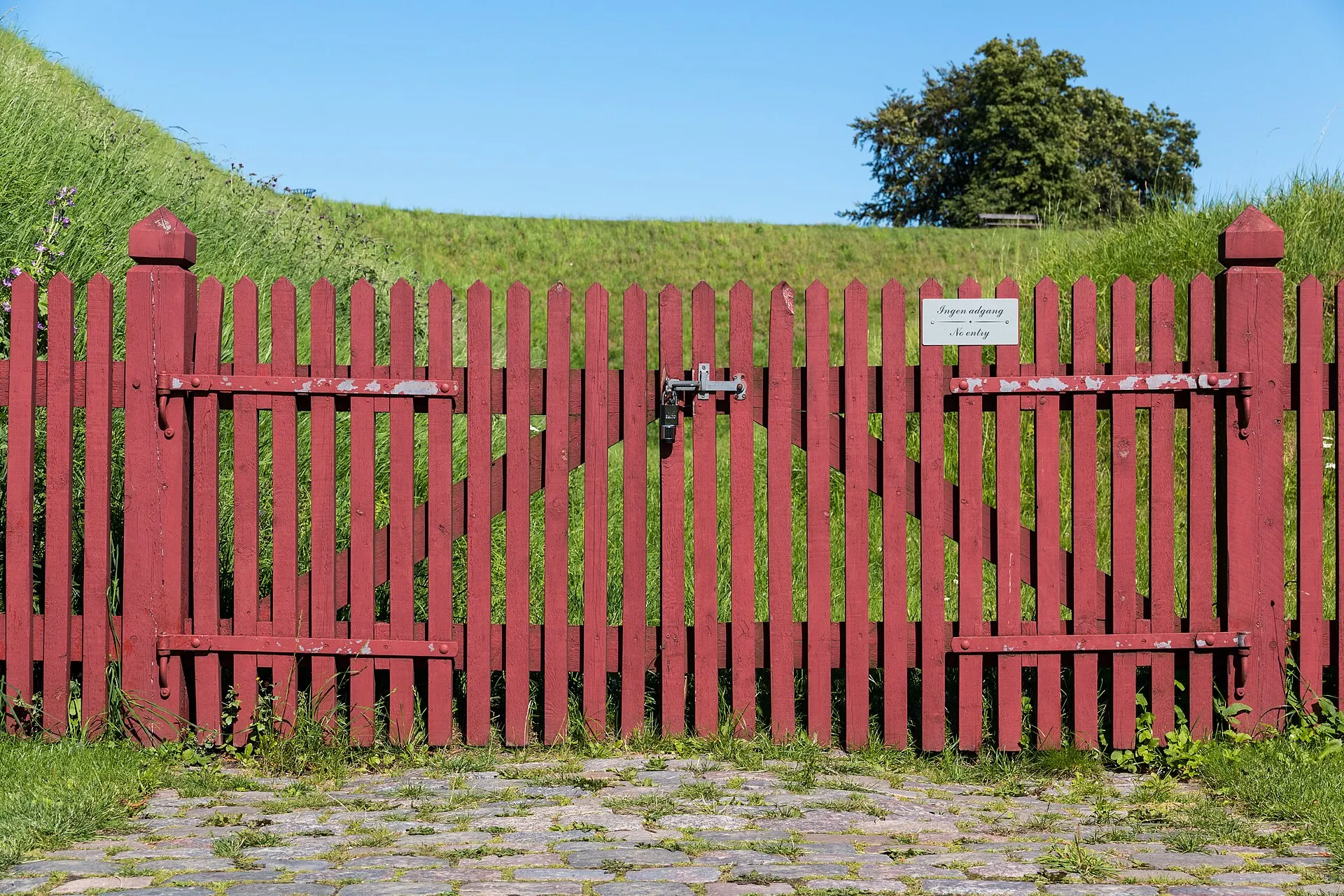
The red gate beside the grassy bank brings two scales together: an opening a person can pass through and the larger raised edge of the fortification. Follow permitted paths and examine those boundaries rather than seeking an unauthorised shortcut to complete the star.
Danish Defence identifies Kastellet as military land with limited public access. Follow current official information and on-site instructions; interior visits require separate confirmation. Those conditions connect mill, barracks and ramparts to one place still in use, instead of three unrelated postcard subjects.
References
These sources inform the essay’s historical and local context. Its observations and interpretations are original to WalkThere.
Danish Defence
MøllenThe 1847 mill, flour supply, internal arrangement and maintenance.
City of Copenhagen
KastelletMunicipal context for the star fort, green ramparts and barracks.
Danish Defence
Use of KastelletConfirms the military workplace and limited public access.
More journey background
Related journey sources
- Kongens Nytorv — Visit Copenhagen
- Nyhavn — Visit Copenhagen
- Nyhavn harbour — Visit Copenhagen
- Amalienborg Palace — Visit Copenhagen
- History of Frederik’s Church — Frederik’s Church
- Church admission and visiting — Frederik’s Church
- Ofelia Plads — Ofelia Plads
- Amaliehaven — Visit Denmark / Visit Copenhagen
- History of St Alban’s Church — St Alban’s Church
- Gefion Fountain — Visit Copenhagen