
Budapest’s Chain Bridge: a crossing before one city
The permanent link of 1849 and the municipal unification of 1873 were related but different changes. Read the bridge through its structure and approaches.
Budapest Castle & DanubeObservation essay
Look at Buda and Pest separately first
One name now gathers both banks into Budapest. Beside the Danube, the division remains tangible: reaching the other side requires an actual crossing, not simply following a street a little further. The bridge begins with that practical problem.
The Chain Bridge was completed in 1849; Buda, Pest and Óbuda united in 1873. The interval matters. A fixed engineering connection preceded the administrative change, so the opening day should not be mistaken for the instant creation of today’s city.
Crossing was possible before the permanent bridge
BKV’s transport history describes earlier ferry and boat-bridge connections. The Chain Bridge did not introduce the two banks to each other. It changed how journeys between them could be organised. No permanent bridge is not the same as no contact.
Consider the water’s width from that perspective. A photographer sees distance and a skyline; someone moving goods or making repeated trips faces a route to negotiate. The bridge made a durable link, while onward streets and transport still required their own arrangements.
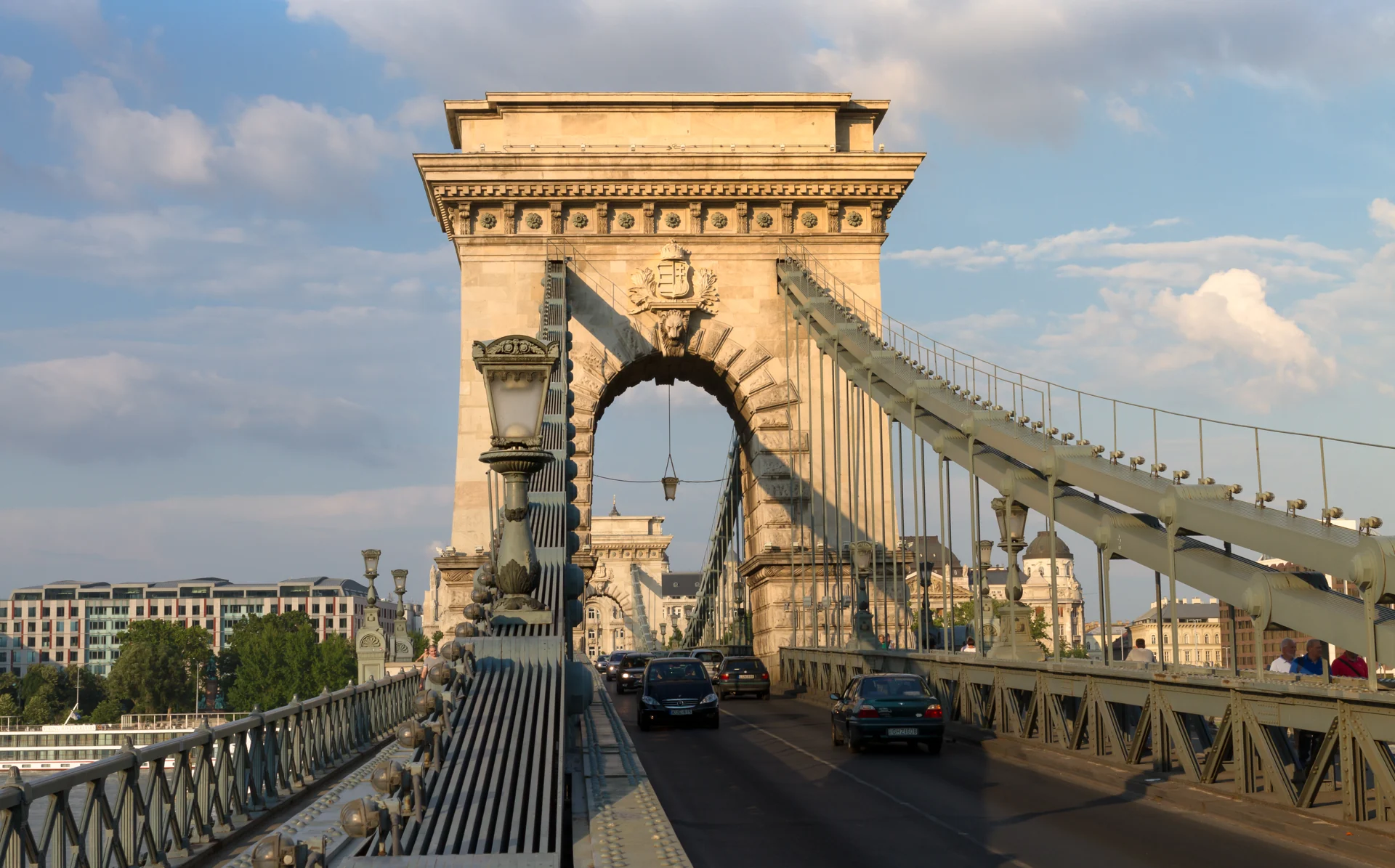
Follow the chain as well as the stone
The towers attract attention, but follow the suspended chains towards their relationship with the deck too. The Institution of Civil Engineers places the project within the development of chain suspension bridges. Several kinds of component cooperate rather than stone arches simply carrying the entire crossing.
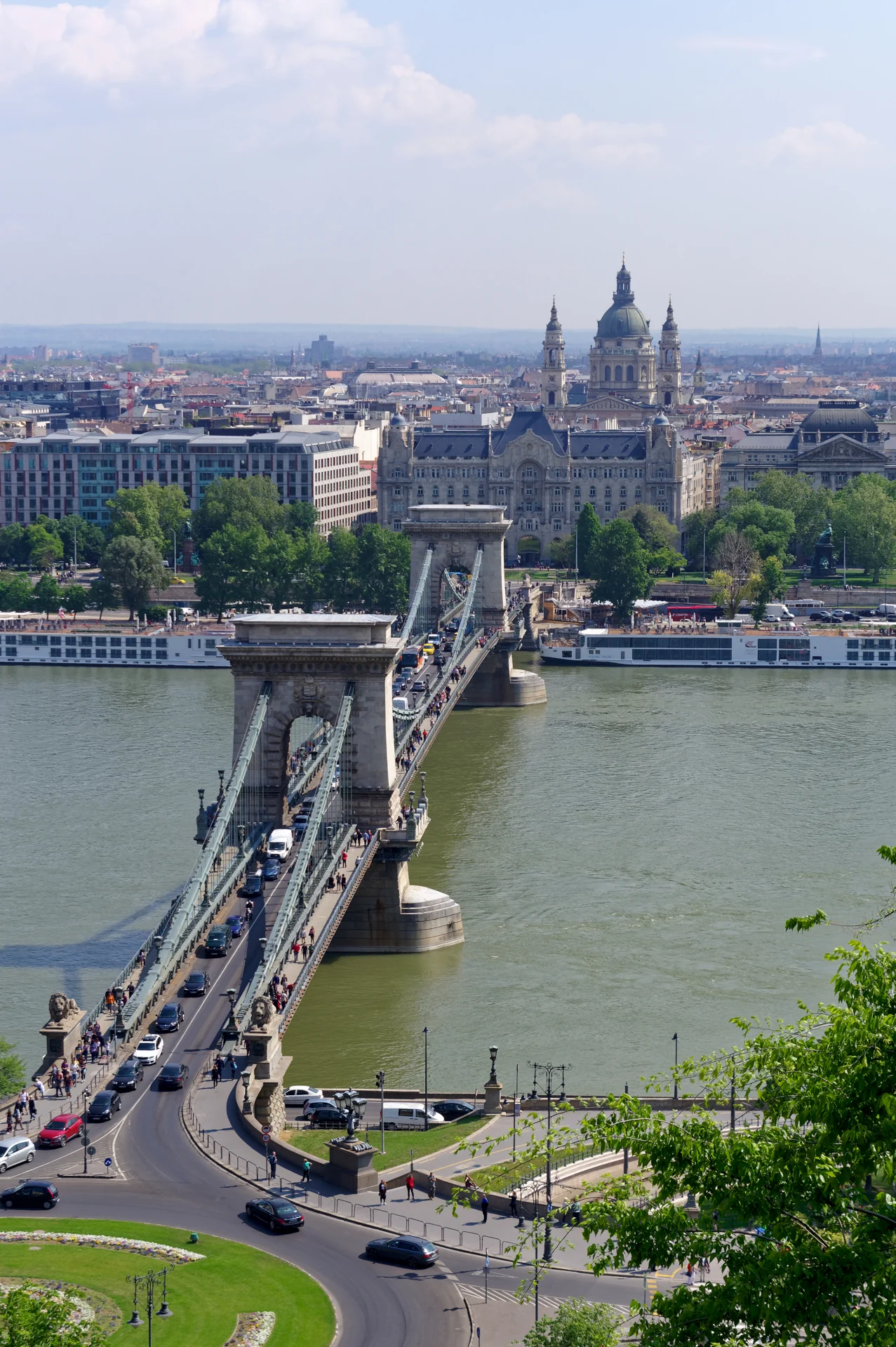
The elevated photograph brings the bridge and its approaches into one view. It is not an ordinary pedestrian eye level. Use it for the overall arrangement, then return to the lower riverside perspective to look for structural relationships within the familiar outline.
Two engineers shared a surname
William Tierney Clark designed the bridge; Adam Clark supervised construction. Keeping the two roles distinct improves the question of who built it. Drawing an engineering scheme and delivering it over a river involved connected but different responsibilities.
The historical account published by the research institute also describes material supply and construction organisation. An object that now fits into one photograph once depended on people and materials reaching the site from several places. Two names provide entry points into that larger collaboration, not a complete list of its labour.
The bridgehead brings the city back into view
The deck demonstrates crossing; the bridgehead asks what happens next. BKV describes the transport node that developed after the bridge opened and its connections with later modes of travel. The effects of a river crossing continue into streets and interchanges.
After studying the span, look at how it meets land. Historical photographs cannot establish today’s lane uses, restrictions or pedestrian entrances, which need current checking. They can show why the bridge’s significance does not stop at the edge of the water.
Night makes a completed outline persuasive
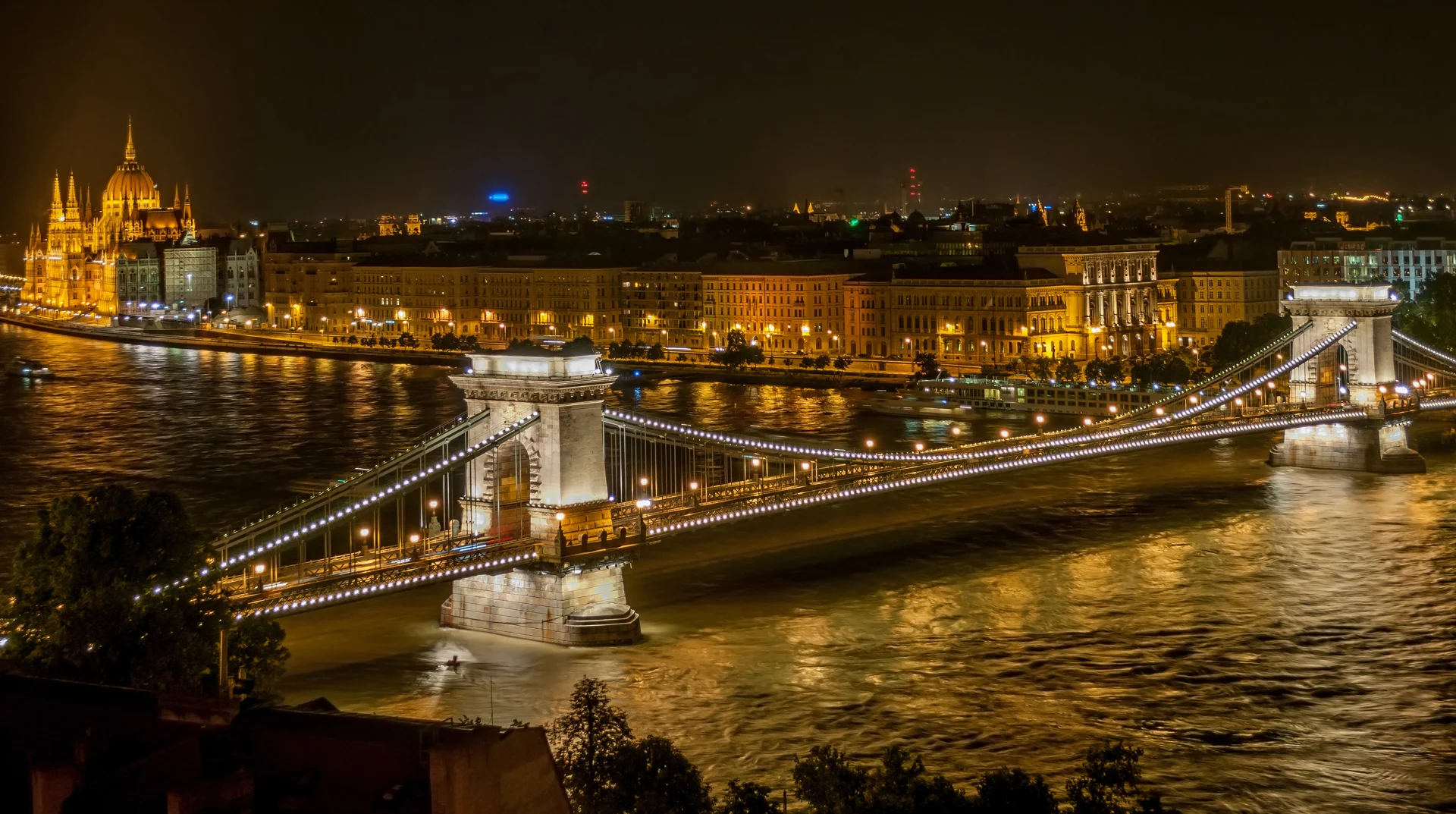
The night photograph from the Buda Castle direction separates the bridge from the river with light. The crossing looks like a finished answer. This image records a night in 2013, not a promise about the current lighting programme.
With the chronology in mind, the finished outline regains a process. The bridge changed the conditions of crossing; urban relationships continued to change afterwards. Remembering 1849 alongside 1873 leaves room for the distinct banks that preceded the familiar single name.
References
These sources inform the essay’s historical and local context. Its observations and interpretations are original to WalkThere.
Institution of Civil Engineers
Chain Bridge BudapestEngineering context for the chain suspension bridge completed in 1849.
The Castle of Buda · Zoltán Fónagy
Chain BridgeDistinguishes the two Clark engineers and describes construction and supply.
BKV
Early development of Budapest transportEarlier river crossings and the later bridgehead transport node.
More journey background
Related journey sources
- Top attractions of Budapest — Budapest Tourist Board
- Church of Our Lady of Buda Castle — Matthias Church
- Saint Stephen’s Basilica — Saint Stephen’s Basilica
- Buda Castle Funicular — BKK
- Visitor route at the House of Parliament — Hungarian National Assembly