
Brussels Grand-Place: guilds behind the gilding
Read the guildhouse façades as claims to a place in the city, then trace the square’s rebuilding after 1695 through municipal and museum sources.
Brussels Historic CentreObservation essay
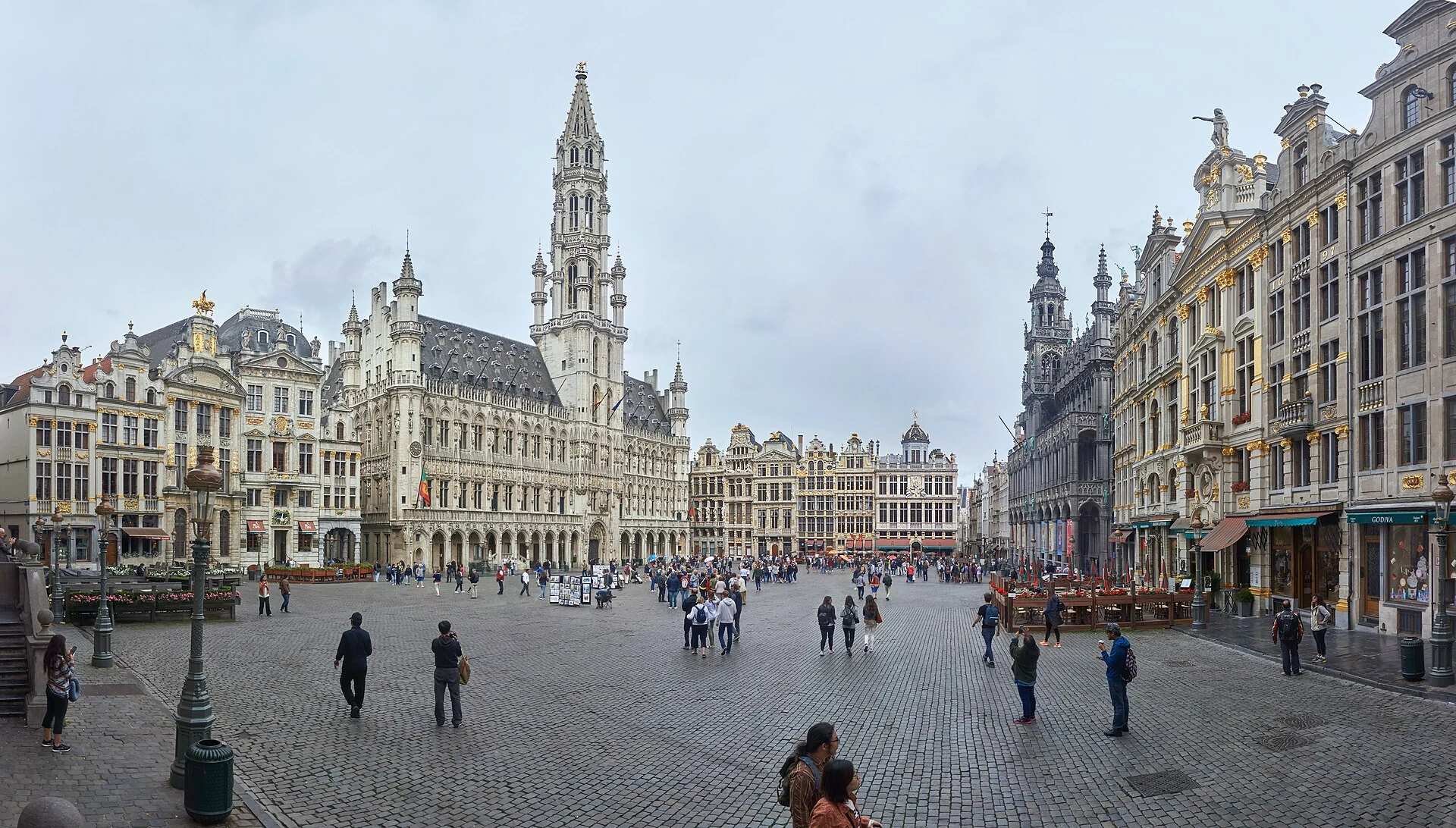
Give the tower some company
The Town Hall tower is an efficient way of remembering Grand-Place. It is less useful if it makes everything beside it disappear. Lower the gaze to the neighbouring roofs: separate gables compete for attention above closely packed windows and ornament.
Choose one doorway and follow its windows upwards, then repeat the exercise next door. Some lines seem to climb without interruption; others pause emphatically at each floor. The square’s richness begins with those differences, before any architectural vocabulary is needed.
A business address made public
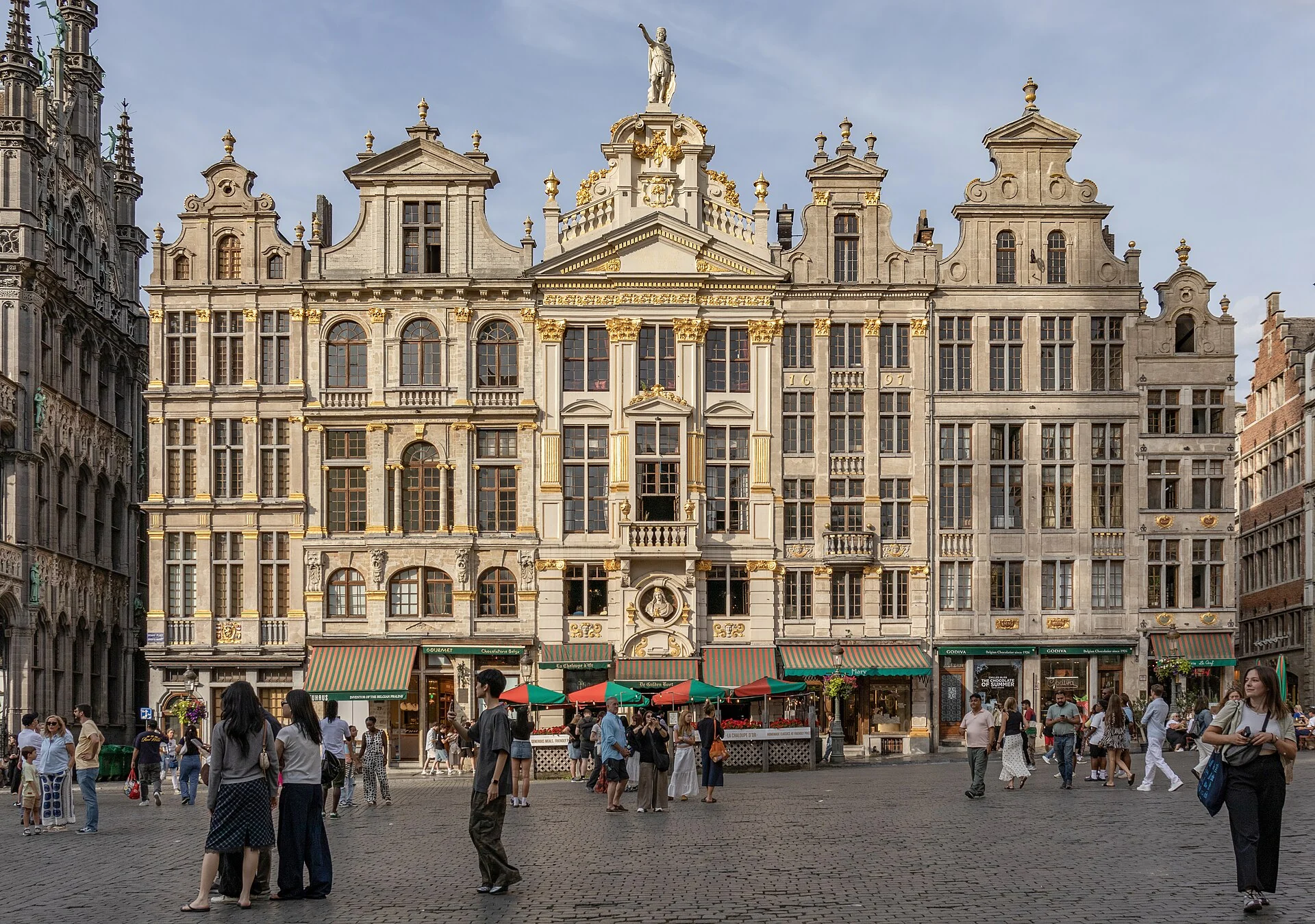
The municipal account places guildhouses alongside the Town Hall and King’s House. Civic authority did not occupy the square alone. Associations connected with commerce also claimed a visible address at the centre of the city.
UNESCO notes the houses’ individual names and attributes. That makes decoration potentially useful for identification, rather than merely an abundance of expensive-looking detail. Identifying a particular emblem still requires a house-by-house source; gold alone does not tell us which trade occupied a building.
The interruption of 1695
An anonymous painting held by Brussels City Museum depicts fire following the bombardment of 1695. The museum describes extensive destruction around the square and the rebuilding that began soon afterwards. The present concentration of façades therefore has a history of rupture as well as continuity.
Keep that historical image distinct from a contemporary photograph. One helps explain destruction; the other shows a later urban setting. Construction, repair and everyday occupation lie between them. An attractive current view cannot be expected to narrate that entire interval unaided.
First, make a usable house
The City records the guilds rebuilding in stone. This brings the idea of civic recovery down to decisions about material, construction and occupation. Before an elaborate frontage could announce a restored presence, a building had to become usable again.
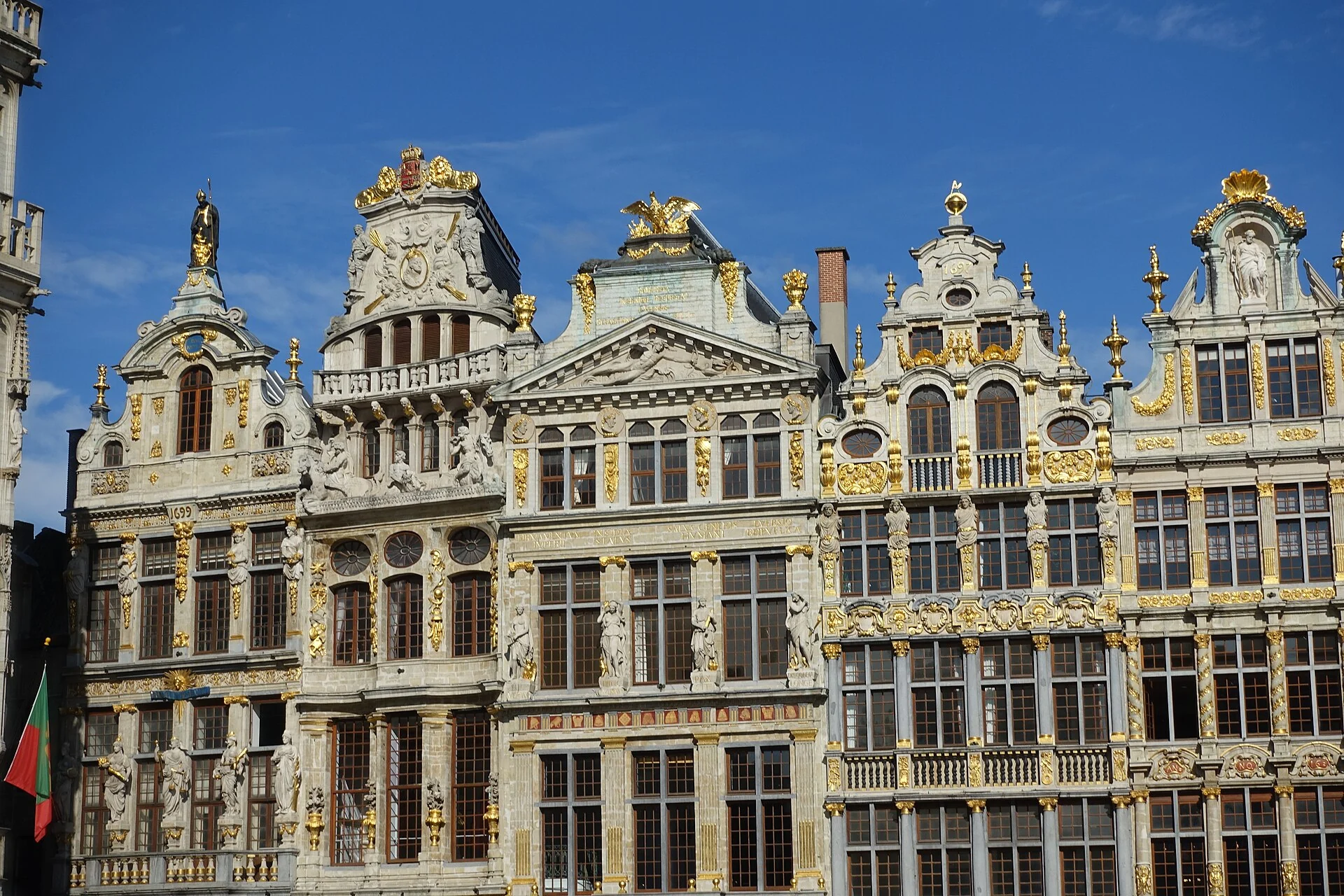
The closer view shows ornament working within narrow widths and repeated openings. It cannot expand indefinitely. Each frontage must make its claim within a limited space while remaining a neighbour to other claims. That tension is easier to observe than a style label on its own.
The pavement has its own demands
The third photograph changes light and framing. Compare the upper façades with the lowest level: above, ornament commands attention; below, doors and windows must negotiate people approaching, entering and stopping beside a building.
A former guild’s identity should not be assigned to every business operating there today. Nor does a preserved exterior prove an unchanged interior. The square accommodates use alongside admiration, and treating it only as scenery misses that practical relationship.
Return to the tower afterwards
Pick two adjoining houses and describe what distinguishes each. A window pattern, roof outline or clearly visible emblem is enough. The exercise produces a more precise memory than simply calling the whole square ornate.
Then return the tower to the composition. Its neighbours now have individual outlines rather than serving as anonymous background. The museum reference offers a next step into the bombardment’s history; current municipal information covers events. These three independently dated photographs do not document a single visit.
References
These sources inform the essay’s historical and local context. Its observations and interpretations are original to WalkThere.
City of Brussels
Grand-Place of BrusselsMunicipal account of rebuilding in stone and the square’s public uses.
UNESCO World Heritage Centre
La Grand-Place, BrusselsHeritage context for house identities and the mercantile ensemble.
Brussels City Museum
The bombardment of 1695The City Museum interprets the destruction through its painting of the 1695 fire.
More journey background
Related journey sources
- 17 – Manneken-Pis — Brussels City Museum
- Enjoy a safe break in Brussels — visit.brussels
- Mont des Arts — Brussels architectural heritage inventory
- Royal Palace of Brussels — The Belgian Monarchy
- L’Église Gothique — Cathedral of Saints Michael and Gudula
- Bourse Brussels — City of Brussels
- Église Notre-Dame du Sablon — visit.brussels
- Histoire du palais — Coudenberg Palace
- Galeries Royales Saint-Hubert — visit.brussels