
Berlin’s Reichstag: stone frontage, glass roof
Compare the complete façade, pediment and dome detail, and riverside view to read the relationship between the historic exterior and later transformation, with Bundestag references.
Berlin Historic CentreObservation essay
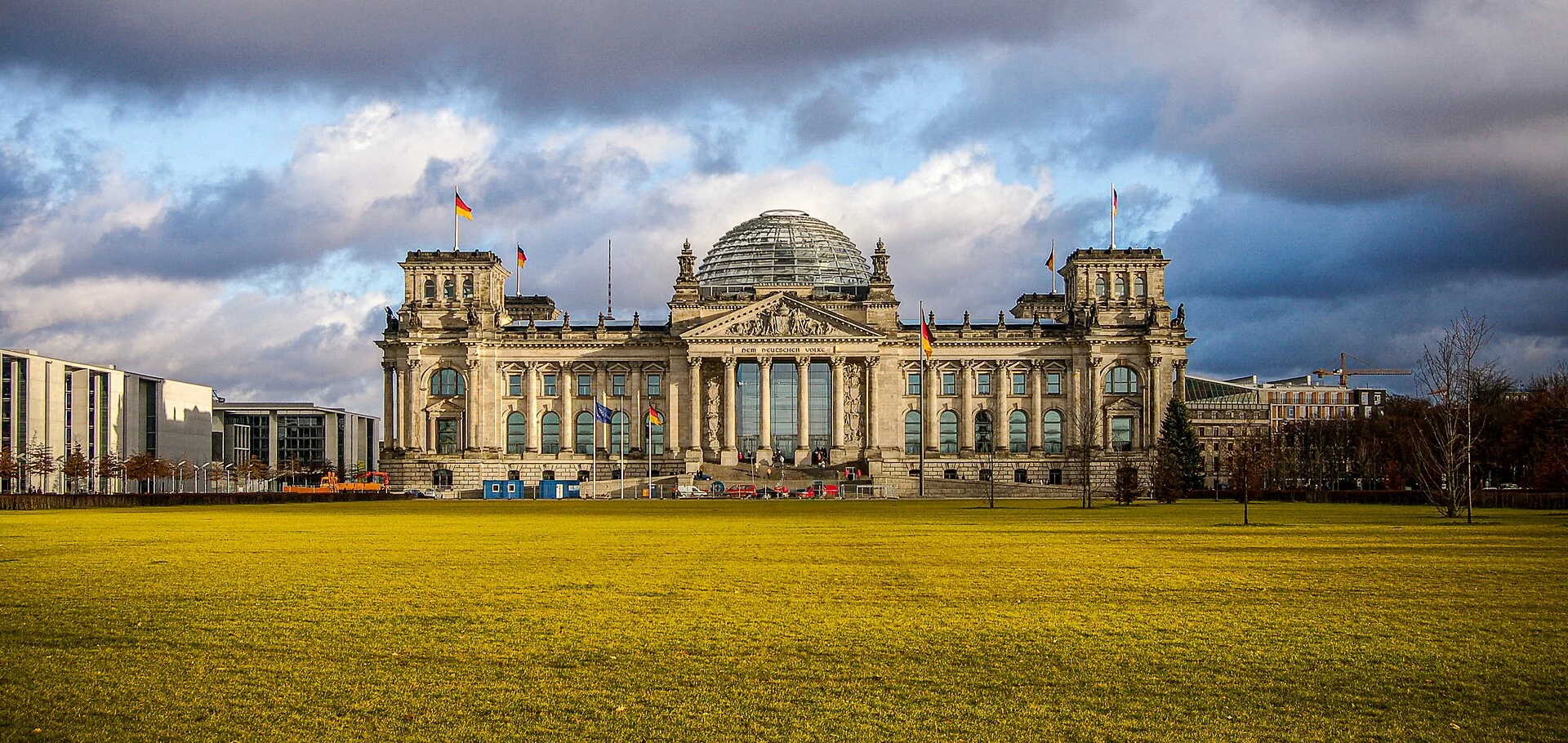
Two forms at once
The wide view places a substantial stone frontage below the arc of a glass dome. Walls, columns and sculpture establish one kind of presence; finer lines and transmitted light establish another above it.
Glass need not immediately become a political slogan. Describing the visible differences first leaves more room to understand how the building accommodates work from different periods within one recognisable whole.
Continued use through change
The Bundestag’s history records post-war reconstruction, later conversion and the transformed building’s role as its permanent parliamentary seat in 1999. Those stages contribute to the building encountered now rather than form unrelated objects.
Retention and alteration can coexist. An established exterior can orient the city while roof and interior serve changed arrangements. Asking only whether everything is original risks overlooking how the place continues to work.
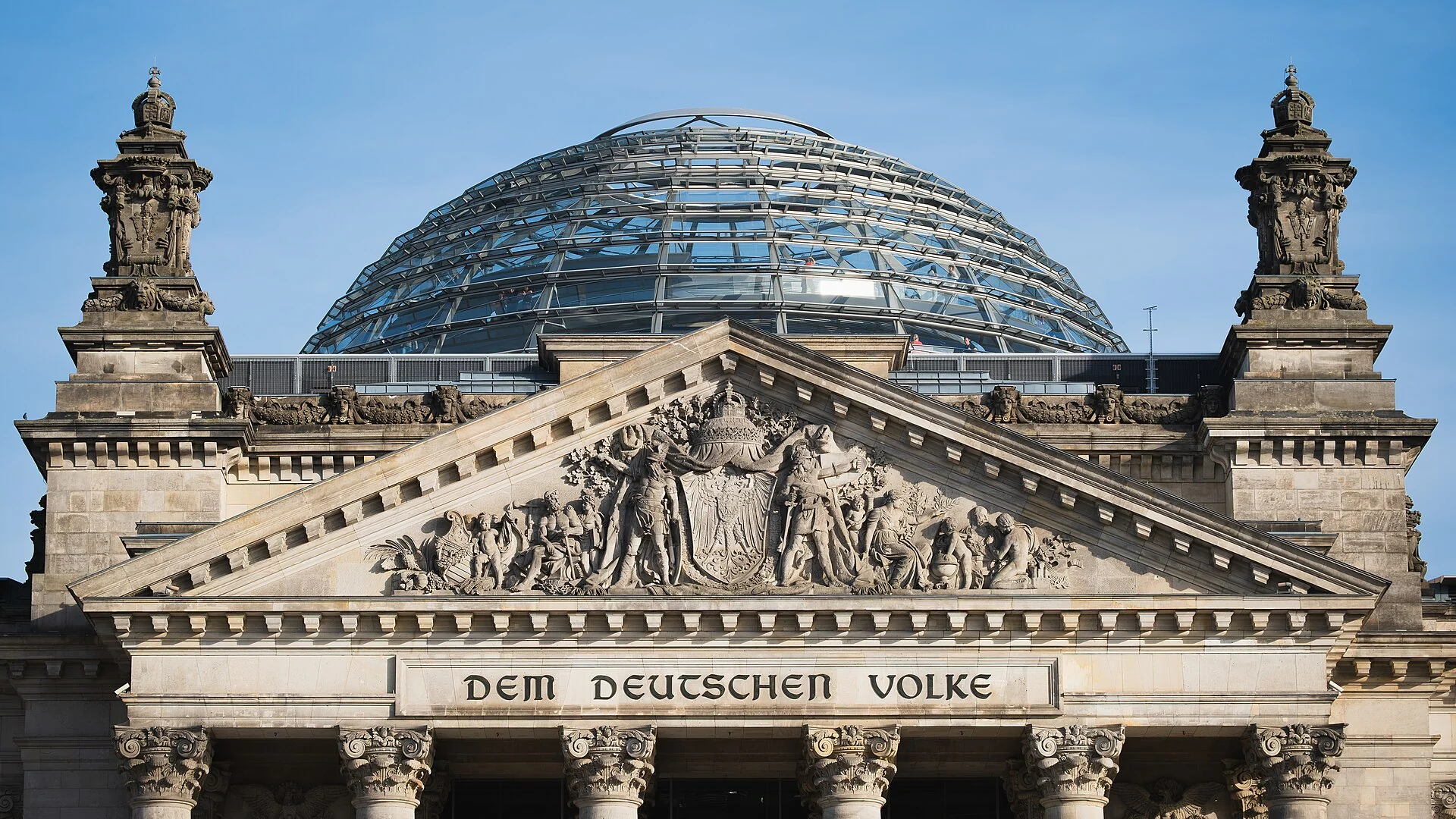
The pediment beside the dome
The closer photograph includes pediment sculpture and glass within one frame. Elements that merge into a distant landmark separate into volumes, shadows and repeated structural lines. Surface becomes easier to distinguish.
Follow a heavier stone edge, then the finer outline behind it. Material differences organise attention differently. Their relationship becomes tangible within a small portion of the façade rather than only through a broad account of architectural history.
An institution moves into a building
The parliamentary history documents the 1999 reopening, while its official dome exhibition timeline records the key handover for the new parliamentary seat. The roof belongs within a working institutional setting rather than only a skyline composition.
Exterior photographs cannot verify every internal activity, and transparent material alone cannot establish how an institution operates. Records provide context and images provide observations. Neither needs to claim the work of the other.
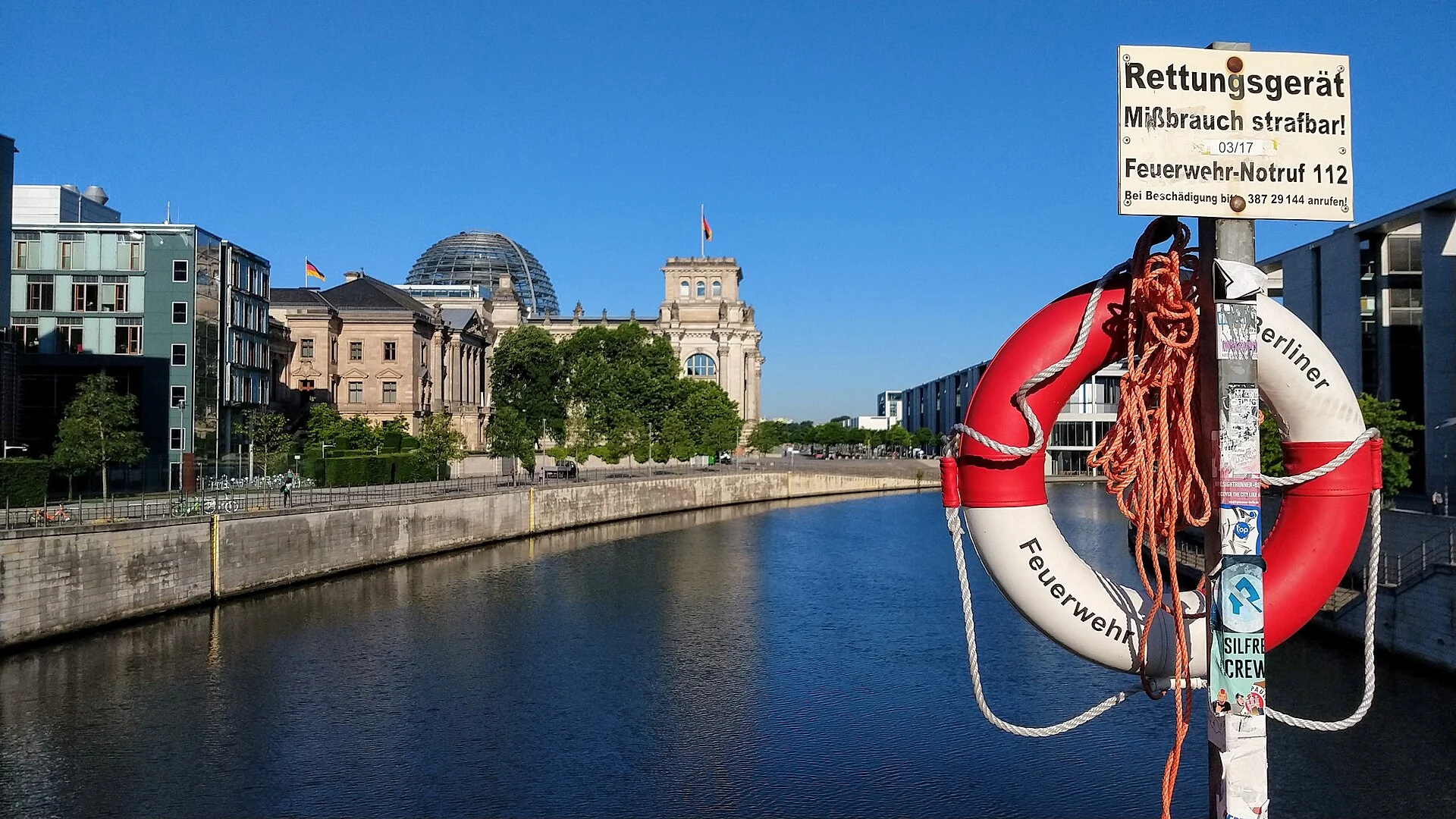
The river supplies another distance
The Spree-side photograph brings ordinary riverside elements into the foreground. Unlike the frontal lawn view, it sets the building among water, nearby objects and a more oblique line of sight.
Landmarks are also encountered away from their central axes. Someone moving beside the river may notice everyday infrastructure first and the façade afterwards. Including those surroundings returns a monumental building to its city rather than diminishing it.
Visibility is not admission
These independent exterior photographs do not show an interior dome route. Actual visits require current parliamentary guidance on booking, entry and security. A clear view of a building does not establish its entrance.
An exterior study still offers three comparisons: the whole frontage, adjacent pediment and dome surfaces, and the river’s sideways distance. The glass arc need not replace the stone in memory. Together they make the building’s time less uniform.
References
These sources inform the essay’s historical and local context. Its observations and interpretations are original to WalkThere.
German Bundestag
History of the Reichstag buildingOfficial history of post-war rebuilding, conversion and parliamentary use in 1999.
Deutscher Bundestag
Dome exhibition: 1990–1999The parliamentary dome exhibition’s 1990–1999 timeline and key handover.
More journey background
Related journey sources
- Brandenburg Gate and Pariser Platz — visitBerlin
- Memorial to the Murdered Jews of Europe — Memorial Foundation
- Gendarmenmarkt — visitBerlin
- Museumsinsel, Berlin — UNESCO World Heritage Centre
- Tiergarten — visitBerlin
- Checkpoint Charlie — visitBerlin
- Bebelplatz — visitBerlin