
Berlin: power, borders and civic memory
Read Berlin through the Reichstag, Brandenburg Gate, Holocaust remembrance, Gendarmenmarkt and Museum Island.
Begin the visual journeyPlan a real visit to Berlin Historic CentreExplore 9 reviewed views along the routeGuided visual journey
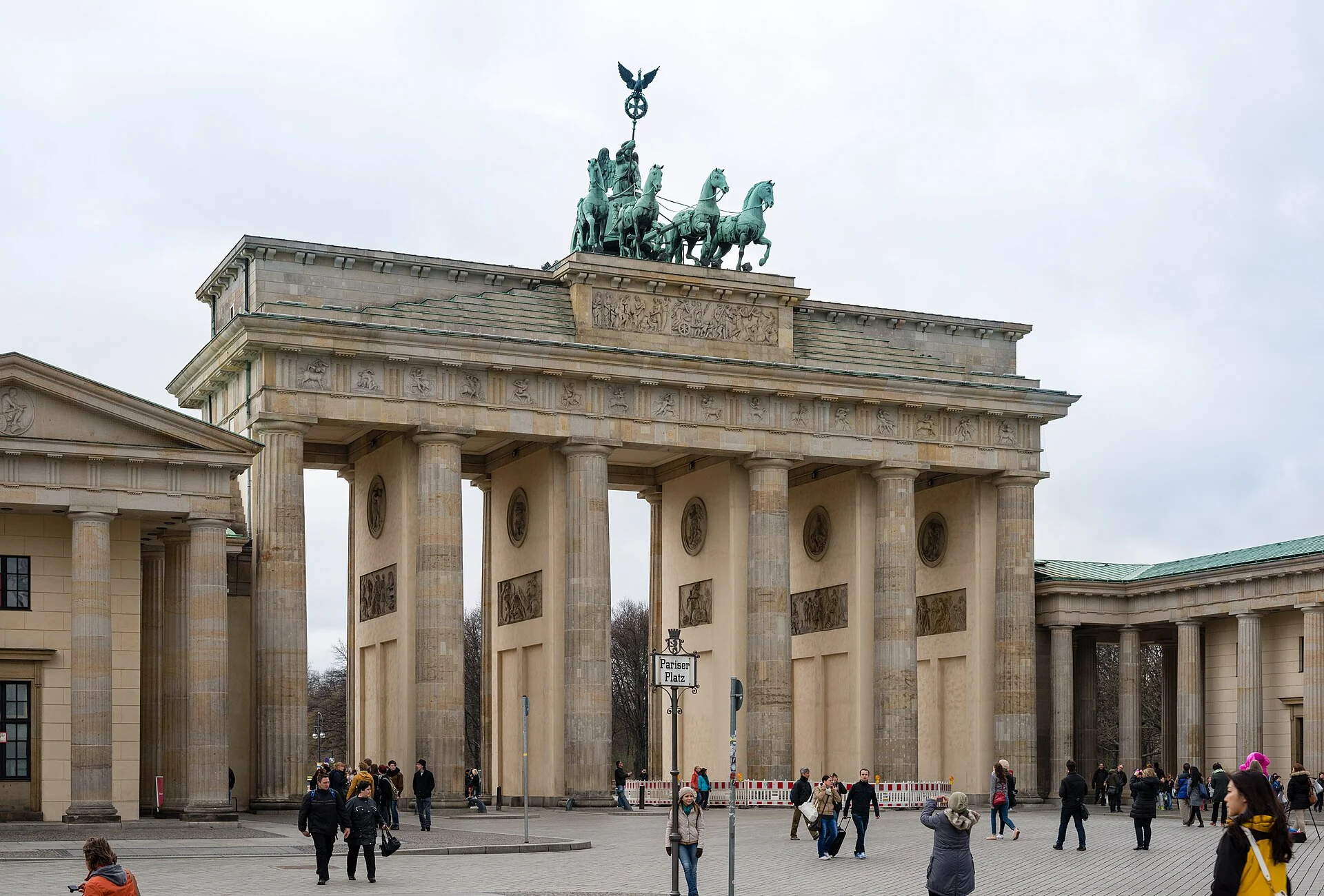
Oblique view of Brandenburg Gate and pedestrians on the square · Norbert Nagel · CC BY-SA 3.0 · Resized and converted to WebP
Reading mode
Place stories to read at your own pace
Compare independently captured photographs and viewpoints, each with its own date.
Chapter 1
Reichstag: a parliament across ruptures
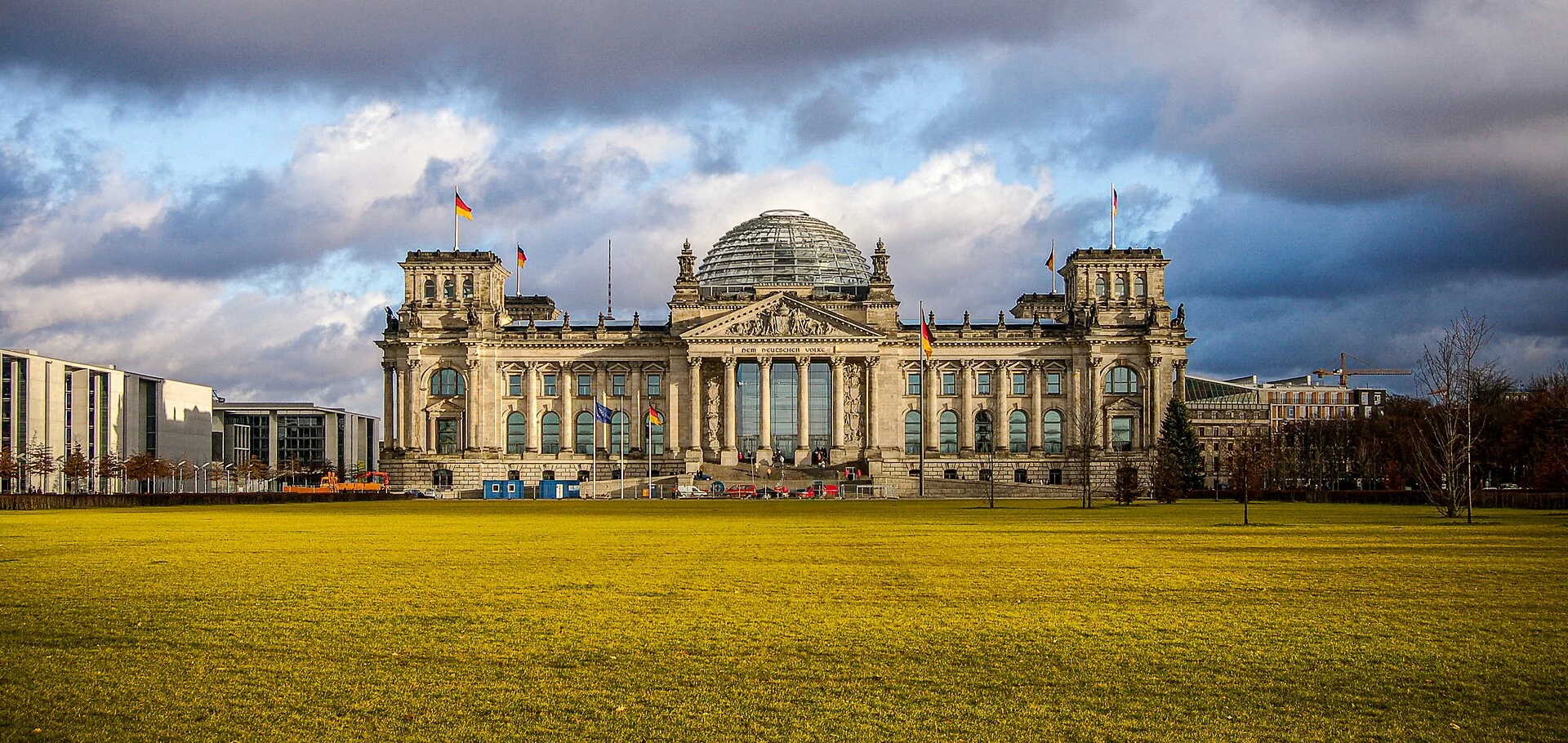
Begin Berlin with the difference between a building and the political institutions that have occupied it. The Bundestag’s architectural history dates the completion of Paul Wallot’s Reichstag to 1894. Its account places the inauguration of the transformed building in April 1999, following Norman Foster’s rebuilding. Those dates frame substantial changes rather than a single, uninterrupted parliamentary tradition. Read the old stone frontage and the later dome as elements belonging to different decisions about how government should appear in public.
Start with the outline: corner towers give the broad block a firm frame, while the dome establishes a different centre above it. Compare the proportions of the entrance with the repeated openings along the façade. A wider photograph can help you locate these parts; a closer photograph can make surface, lettering and the depth of an opening easier to inspect. Where an image does not show a feature, use another view rather than mentally filling it in. The relationship between weight and lightness is a visual question, not proof that a government has always been open or democratic.
The building invites a difficult distinction between architectural survival and political continuity. An old exterior can accommodate a radically changed institution, and a recent intervention can become the most recognizable part of a historic landmark. Keep that distinction in mind as the sequence turns toward Brandenburg Gate, another structure whose public meaning has shifted. Tiergarten offers an optional change of scale from a monumental façade to a landscape shaped for public use. Photographs and local interactive imagery represent separate recorded encounters; this chapter does not establish an arrival on foot or a visit inside the chamber or dome. Consult the Bundestag separately for admission and security arrangements.
Read further: Berlin’s Reichstag: stone frontage, glass roofReal-travel note
Images have independent capture moments; connections are editorial transitions.
Compare independently captured photographs and viewpoints, each with its own date.
Chapter 2
Brandenburg Gate: a changing threshold
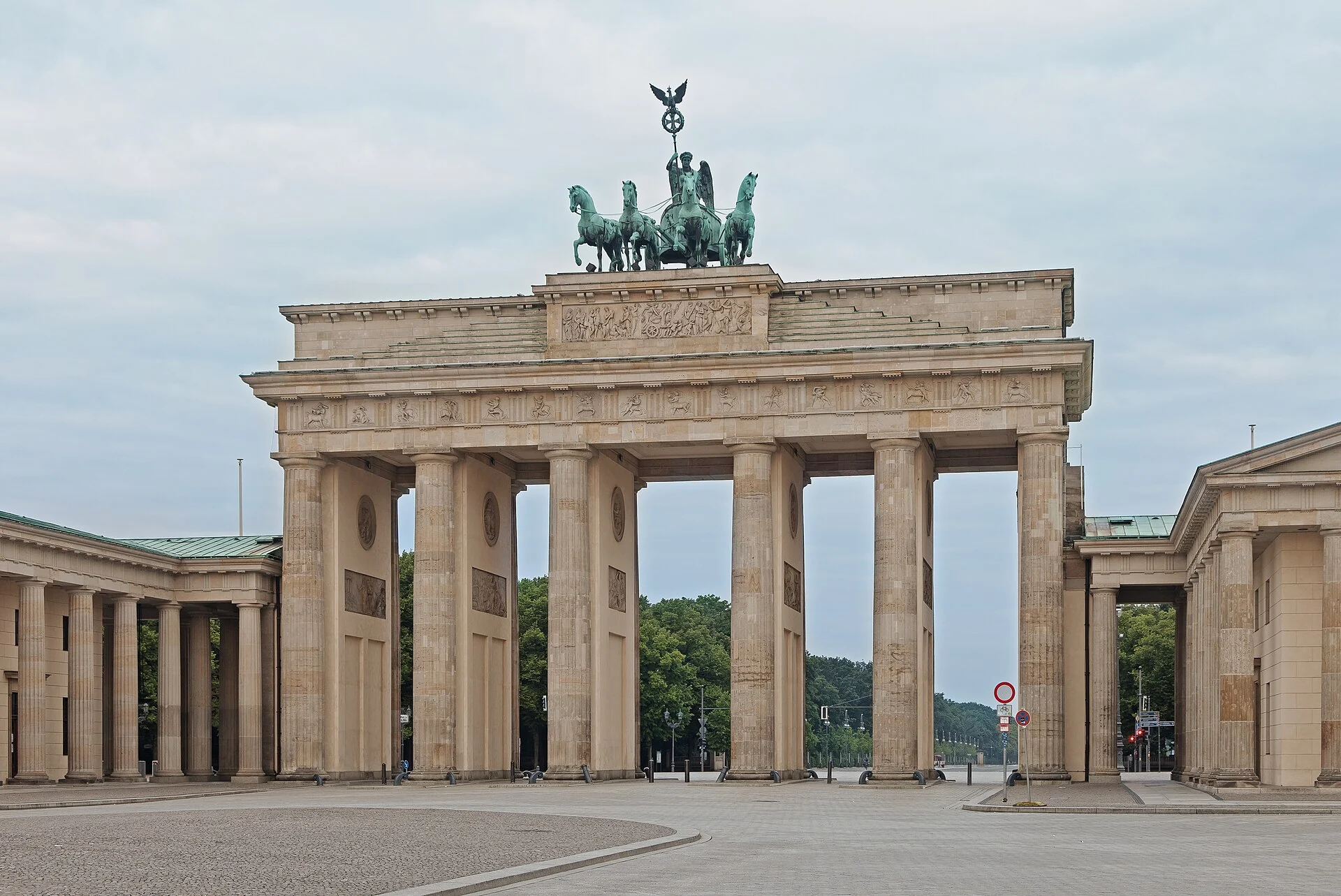
Brandenburg Gate gives Berlin a familiar silhouette, but recognizing an outline is only the beginning of reading it. The city’s official tourism account dates construction to 1788–1791 and names Carl Gotthard Langhans as its architect. The same account records the gate’s official reopening on 22 December 1989 after decades associated with the divided city. An eighteenth-century gateway thus became a powerful setting for much later events. Its age and its symbolic meaning do not come from the same moment.
Compare the strong horizontal entablature with the vertical rhythm of the columns beneath it. The gaps matter as much as the supports: a gate organizes a view through a structure as well as a view of it. Then look upward toward the sculptural group, where the silhouette becomes more intricate. Depending on the selected photograph, distance may clarify the whole composition while obscuring the carving. A closer view reverses that exchange. Neither kind of image needs to be treated as the definitive experience of the place.
Now consider what it means for a threshold to become inaccessible. The architecture may suggest passage, yet historical borders could prevent the movement its openings appear to invite. That tension is more revealing than treating the monument as a timeless emblem of freedom. The optional Pariser Platz discovery turns the attention toward the urban room east of the gate, where later frontages frame an older landmark. In the main sequence, the next chapter changes the tone toward remembrance at the Memorial to the Murdered Jews of Europe. Take time to separate celebration of reunification from the different historical responsibilities of that memorial. Independent images do not establish a continuous crossing between these places or today’s arrangements for events and circulation.
Real-travel note
Images have independent capture moments; connections are editorial transitions.
Compare independently captured photographs and viewpoints, each with its own date.
Chapter 3
Memorial: remembrance beyond abstraction
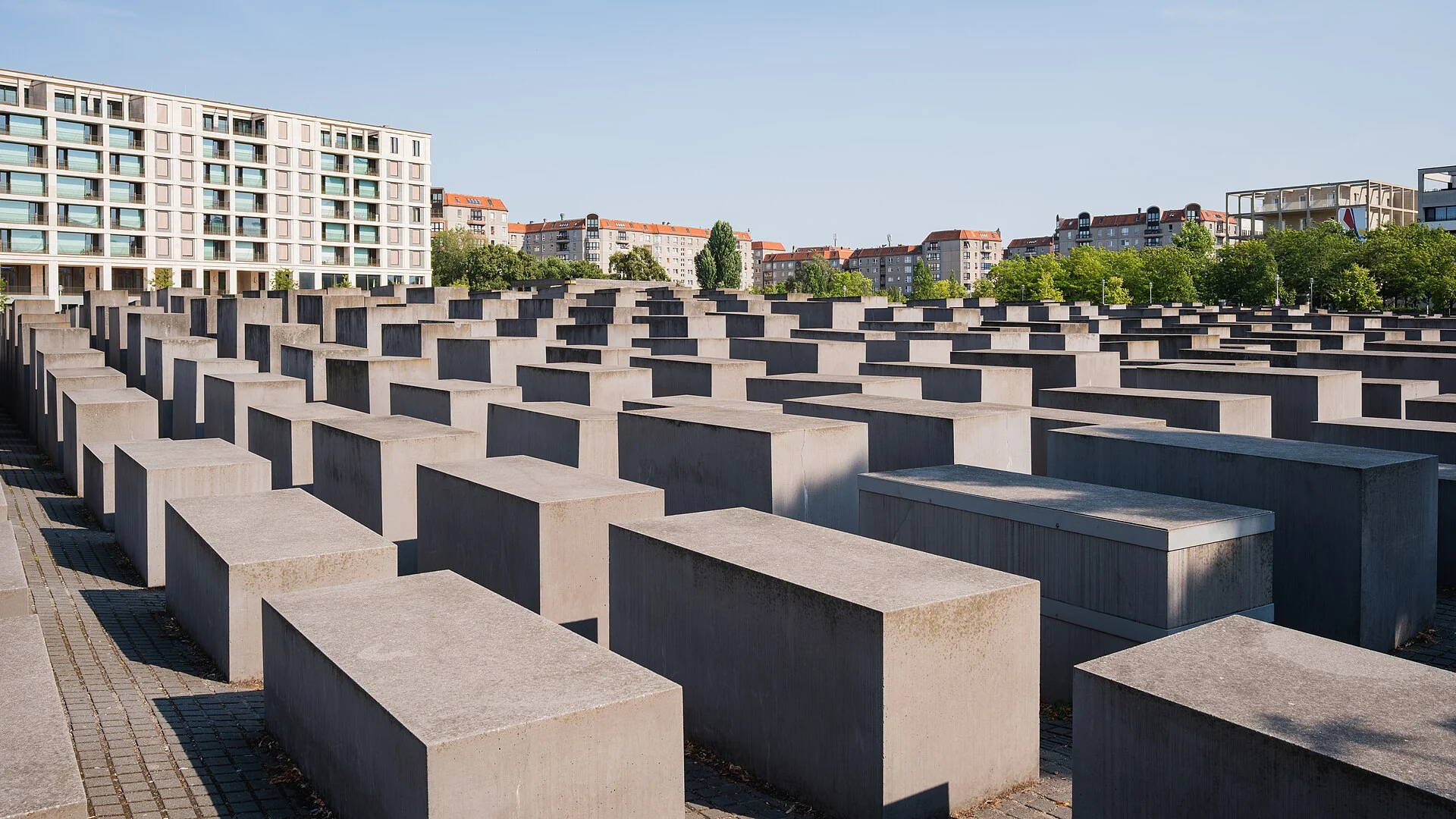
The Memorial to the Murdered Jews of Europe requires a different pace of attention. Its foundation identifies it as Germany’s central memorial to the Jewish victims of the Holocaust and records its opening on 10 May 2005. The memorial combines Peter Eisenman’s field of concrete stelae with an underground Information Centre. Keep its dedication explicit: this is a place of remembrance for people murdered in the Holocaust, not simply an unusual arrangement of architectural forms.
From a wider view, notice the repeated rectangular units and the relationship of the field to the surrounding city. Where a closer image shows a passage, compare the narrow interval with the much larger extent suggested by the overall composition. Changes in apparent height depend on the position of the viewer as well as the ground and the stelae. Describe what a particular frame actually shows. A photograph cannot prescribe an emotional response, and no single feeling should be presented as the required way to understand the memorial.
Abstraction can direct attention toward absence, but historical learning must also return to individual lives and documented persecution. The Information Centre is a distinct part of the memorial, with its own interpretation and visiting arrangements. Exterior photographs do not reproduce that exhibition. Consider what is gained by moving between a field without a narrative inscribed on every surface and records that restore names, families and historical specificity. Allow room for reflection without turning the setting into a challenge, a playground or a decorative backdrop.
The optional Checkpoint Charlie discovery concerns another historical context, the Cold War border, and must not merge those histories. Our next main chapter, Gendarmenmarkt, returns to the relationship between buildings and public squares. That editorial transition is a change of subject rather than a resolution of the responsibilities raised here. Check the memorial foundation’s current visitor guidance before an in-person visit.
Real-travel note
Images have independent capture moments; connections are editorial transitions.
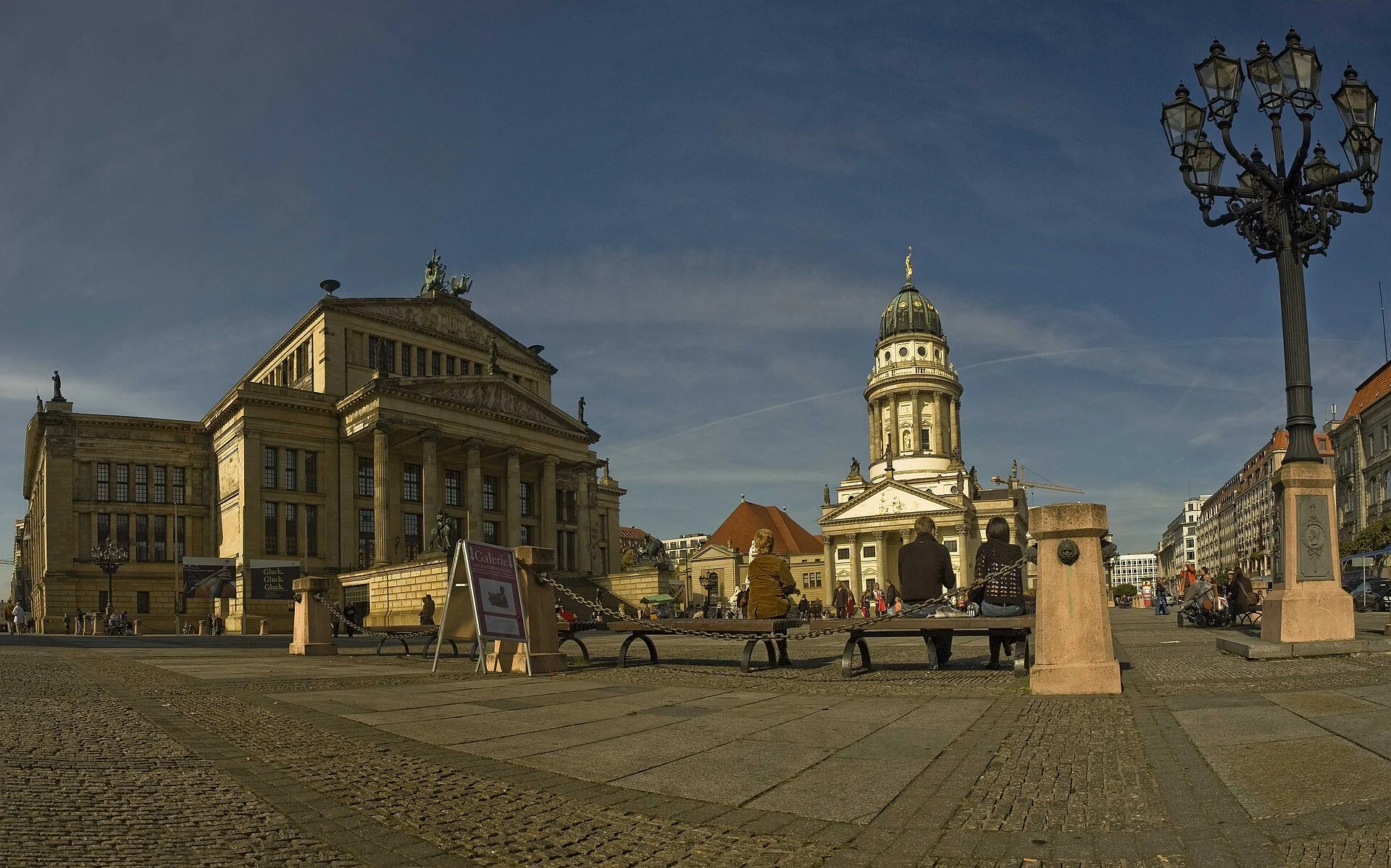
Compare independently captured photographs and viewpoints, each with its own date.
Chapter 4
Gendarmenmarkt: an ensemble, not a single building
At Gendarmenmarkt, shift from recognizing one landmark to reading a relationship among several buildings. Berlin’s official tourism account describes the square through its concert house and the paired domed towers associated with the French and German churches. It also explains that the towers commonly called Dom are not themselves churches. Names can encourage an easy misunderstanding: the most prominent silhouette does not necessarily reveal the original purpose of every part beneath it.
Look first for the open space that allows the façades to be compared. A square is not merely leftover ground between attractions; it sets the distance at which a building can be read and makes separate structures appear as an ensemble. Compare vertical accents with long horizontal fronts, then notice how steps and entrances mediate between monumental scale and a person approaching at ground level. Different photographs may isolate one building or show several together. That difference changes the argument of the image, even when all the images concern the same square.
The official account links the name Gendarmenmarkt to the Gens d’armes regiment and notes that the square regained that name in 1991 after being called Platz der Akademie. Names, like buildings, can record changing political decisions. It is useful to hold the visual impression of order alongside that history of renaming, rather than assuming a symmetrical composition means an unchanging civic identity. Present surfaces also have their own maintenance and reconstruction histories; an old-looking ensemble should not be treated as untouched fabric.
Bebelplatz offers an optional comparison with another square whose cultural architecture stands beside a difficult history of public action. The final main chapter turns toward Museum Island and the question of how institutions present knowledge. Independently recorded imagery does not establish a surveyed route across the squares or admission to their surrounding buildings.
Real-travel note
Images have independent capture moments; connections are editorial transitions.
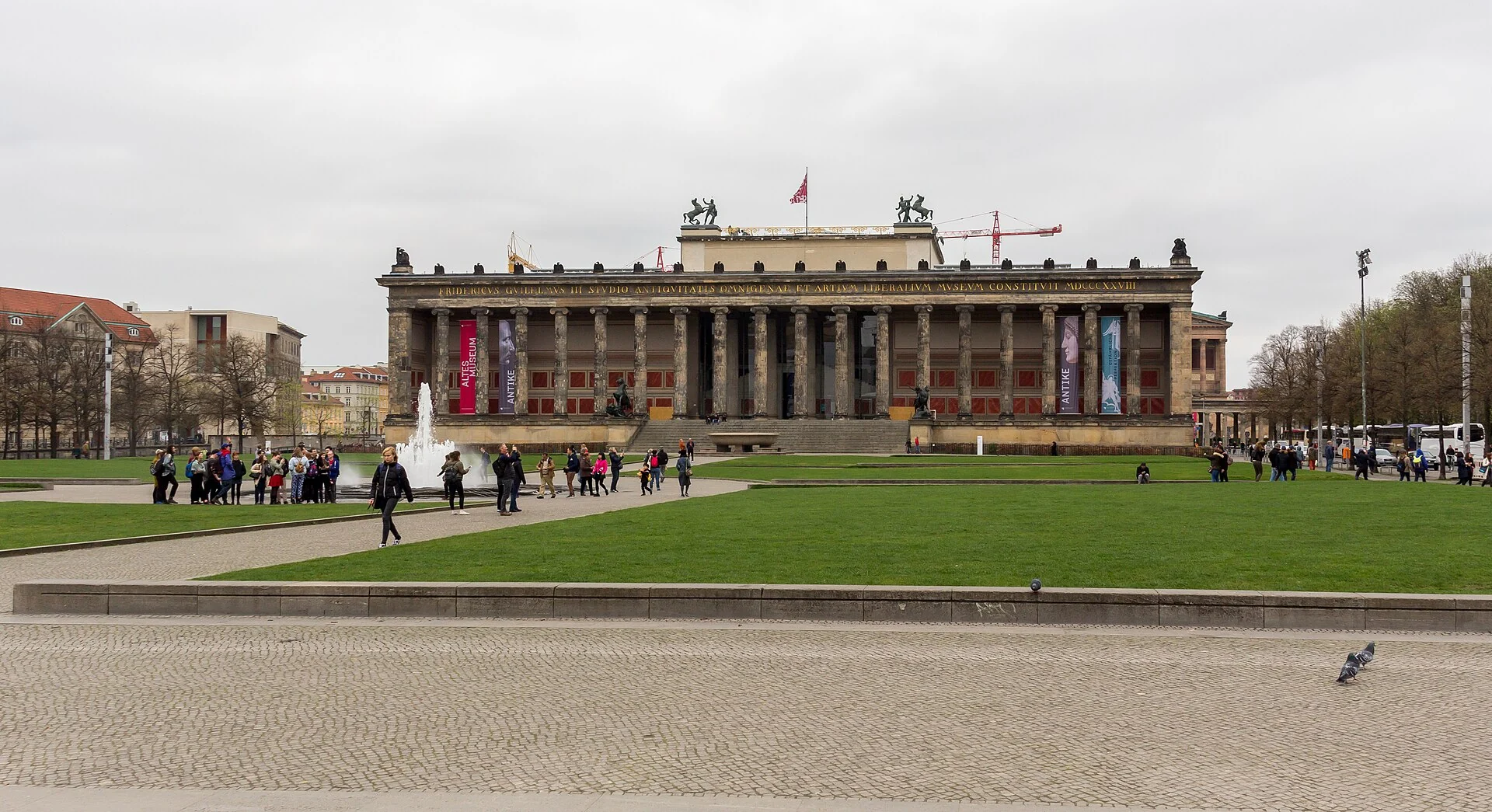
Compare independently captured photographs and viewpoints, each with its own date.
Chapter 5
Museum Island: architecture for knowledge
End on Museum Island by treating the museum itself as a historical idea. UNESCO describes five museums built between 1824 and 1930 and identifies the ensemble as a World Heritage property. Its account connects their architectural development with changing ways of displaying collections. The buildings are therefore more than containers for famous objects: they express decisions about organizing knowledge, creating a public audience and giving cultural institutions a visible place in the city.
Begin with the edges of the island setting. Where a photograph includes water, compare the horizontal river surface with the mass of the buildings above it. Where it concentrates on a façade, look at how columns, steps or repeated windows organize an approach. Do not assume that every prominent structure in the surrounding skyline belongs to UNESCO’s five-museum ensemble. A city view can include adjacent landmarks whose institutional histories and heritage status are different. Identifying what a frame contains is part of understanding the place, rather than a distraction from appreciation.
Now imagine the boundary between looking at a museum and looking within one. Exterior form can suggest ceremony or accessibility, but it cannot establish what is currently on display, how an object reached a collection or how that object should be interpreted. Those questions require collection records and the institution’s own research. An attractive façade does not settle debates about collecting, provenance or the representation of other cultures. The architectural journey opens those questions without inventing answers for particular objects that have not been examined here.
Return in thought to the Reichstag. Across these five chapters, buildings have framed political authority, borders, remembrance, public culture and the presentation of knowledge. They share a city without sharing one simple story. Finish by comparing the scale of an institution with the scale of an individual encounter. Museum admission, construction phases and the availability of particular interiors need separate checks with the museums before an actual visit.
Real-travel note
Images have independent capture moments; connections are editorial transitions.
9 reviewed experiences
Explore along the route
Step into the places along this journey. Choose a view independently of the story chapters. Free previews do not count toward chapter progress. Return to the journey above to continue through its stops.
Reichstag: a parliament across ruptures Short observation sequence
2022-03 · 5 connected local positions and return. Street-side view northeast toward the Reichstag beyond its forecourt; this does not enter the building or dome.
Reviewed 2026-11-03 · Nearby viewpoint
Explore at your own pace; these views do not count toward chapter completion. Check each point's coverage note before navigating provider imagery. Availability may change.
Sources
- Dome exhibition: 1990–1999 — Deutscher Bundestag
- History of the Reichstag building — German Bundestag
- Brandenburg Gate and Pariser Platz — visitBerlin
- Memorial to the Murdered Jews of Europe — Memorial Foundation
- Gendarmenmarkt — visitBerlin
- Museumsinsel, Berlin — UNESCO World Heritage Centre
- Tiergarten — visitBerlin
- Checkpoint Charlie — visitBerlin
- Bebelplatz — visitBerlin
- Reichstag building, Berlin, Germany (wide view) 01.jpg — Rafael Lemieszek
- Pediment and dome of the Reichstag building, Berlin.jpg — Christian David
- Reichstag in Berlin, with Spree.jpg — Lwd-fotograaf
- Brandenburger Tor morgens.jpg — Thomas Wolf (www.foto-tw.de)
- Brandenburg Gate Quadriga at Night.jpg — א (Aleph); sculpture: Johann Gottfried Schadow
- Brandenburg Gate - Brandenburger Tor - Berlin - Germany - 02.jpg — Norbert Nagel
- Memorial to the Murdered Jews of Europe, stelae field, Berlin 1.jpg — Christian David
- Inside the Memorial to the Murdered Jews of Europe - May 2025.jpg — LR.127
- Memorial to the Murdered Jews of Europe in Berlin Germany.jpg — Joseolgon
- Gendarmenmarkt panorama.jpg — Rene Ehrhardt
- Berlin (DE), Gendarmenmarkt, Konzerthaus -- 2021 -- 9131.jpg — Anil Öztas
- Gendarmenmarkt French Cathedral.jpg — Daniel Eggert
- Museum Island, Berlin 2017 001.jpg — Mike Peel (www.mikepeel.net)
- Säulengang Alte Nationalgalerie Berlin.jpg — Thomas Wolf (www.foto-tw.de)
- Berlin Museumsinsel Fernsehturm.jpg — Thomas Wolf (www.foto-tw.de)
- Berlin Neuer See-20241207-RM-110844.jpg — Reinhold Möller (Ermell)
- Pariser Platz (Berlin-Mitte) msu-1602-.jpg — Matthias Süßen
- Checkpoint Charlie, 2024 (02).jpg — Bahnfrend
- Bebelplatz, Berlin, July 2024.jpg — Steven1991


Your journey, remembered.
Explored 0 of 5 stops. Explore every stop to unlock your keepsake.
5 stops to your keepsakeExplore every stop to share or download your keepsake.
Plan separate Berlin visits
Allow half a day to a day as a planning estimate for public settings; interiors and connections need additional time.
Official sources checked:
Independent sites and actual connections
Five chapters and four discoveries link independent local imagery through editorial transitions. No continuous Berlin walk has been surveyed. Check streets, crossings, construction, security and individual access needs separately; continuous or step-free passage is not established.
Memorial context and interiors
Approach the memorial with respect for its victims. The Information Centre, parliamentary dome and museums have separate visiting arrangements. Imagery has its own capture dates and does not establish current opening or admission.