
Barcelona’s Rambla de Mar: a bridge that makes way
Compare walkway, elevated harbour view and waterside setting to understand a pedestrian connection with a movable section for boats, using official port references.
Barcelona La Rambla & Port VellObservation essay
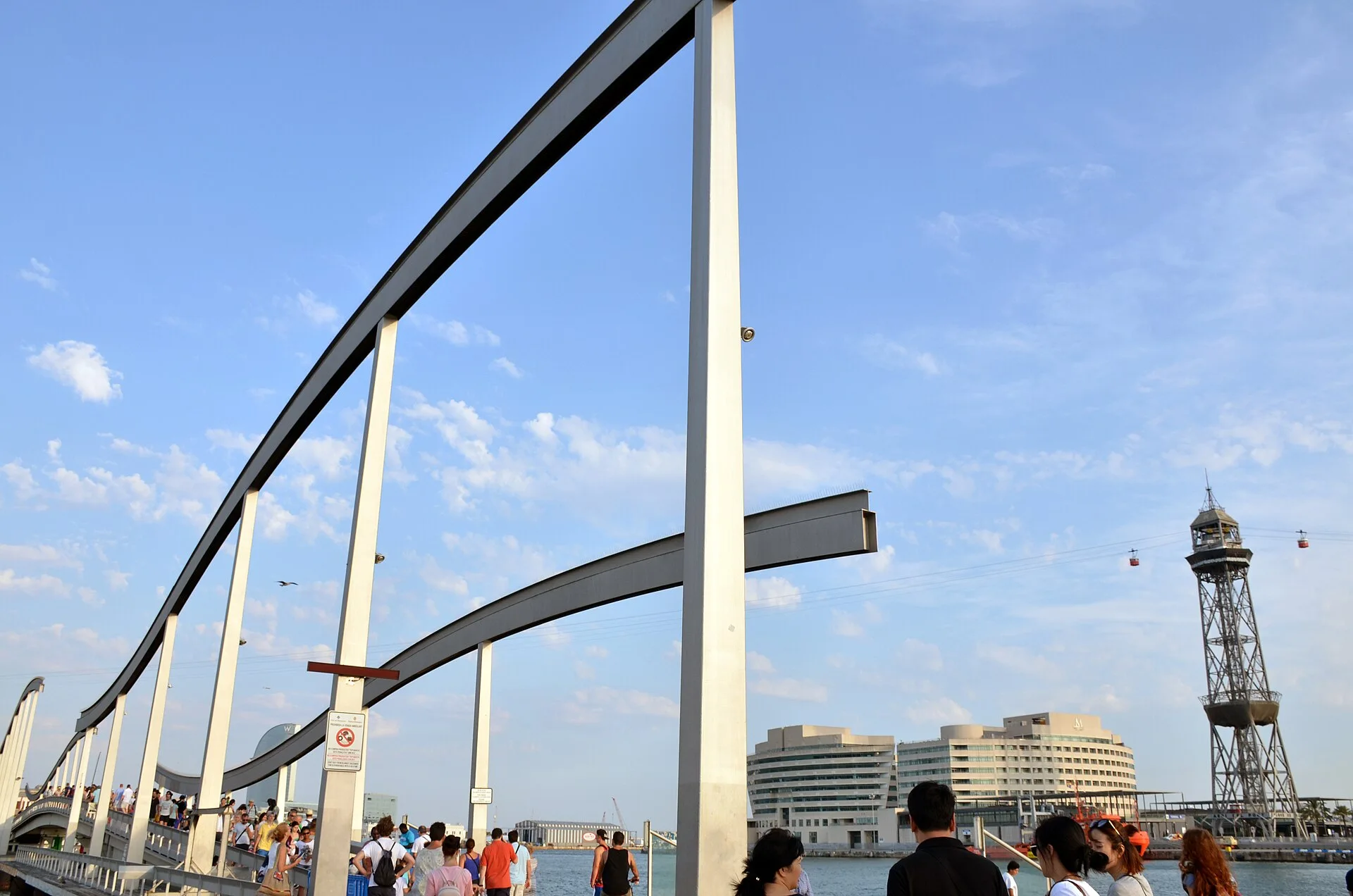
The walking direction reaches the water
The walkway carries an established direction out across the harbour. Its edges remain clear while neighbouring buildings withdraw, giving the eye more freedom over water even as the feet follow a defined surface.
Look at the deck’s turns and the shore’s position before treating the scene simply as a seafront view. The photographs help with orientation; finding the actual entrance still requires current signs and the streets encountered on arrival.
A modern connection
Port Vell identifies the promenade as a continuation of the Ramblas towards the Moll d’Espanya, designed in 1994 by Albert Viaplana and Helio Piñón. Its relationship with the old city belongs to a particular period of harbour transformation.
Connecting a street to water involves practical choices about entry, direction and the harbour’s continued use. A light-looking curve should be considered alongside those requirements rather than read only as an ornamental line across the basin.
The deck can make way
The port authority describes a rotating bridge section that allows leisure boats to enter and leave the inner basins. Walking and navigation need to share a crossing, with a passage on water taking priority when the bridge is opened.
None of these photographs documents the full opening sequence or promises a demonstration during a visit. Knowing about the mechanism still gives the viewer a useful question: which part of the pedestrian connection must stop serving walkers when boats require passage?
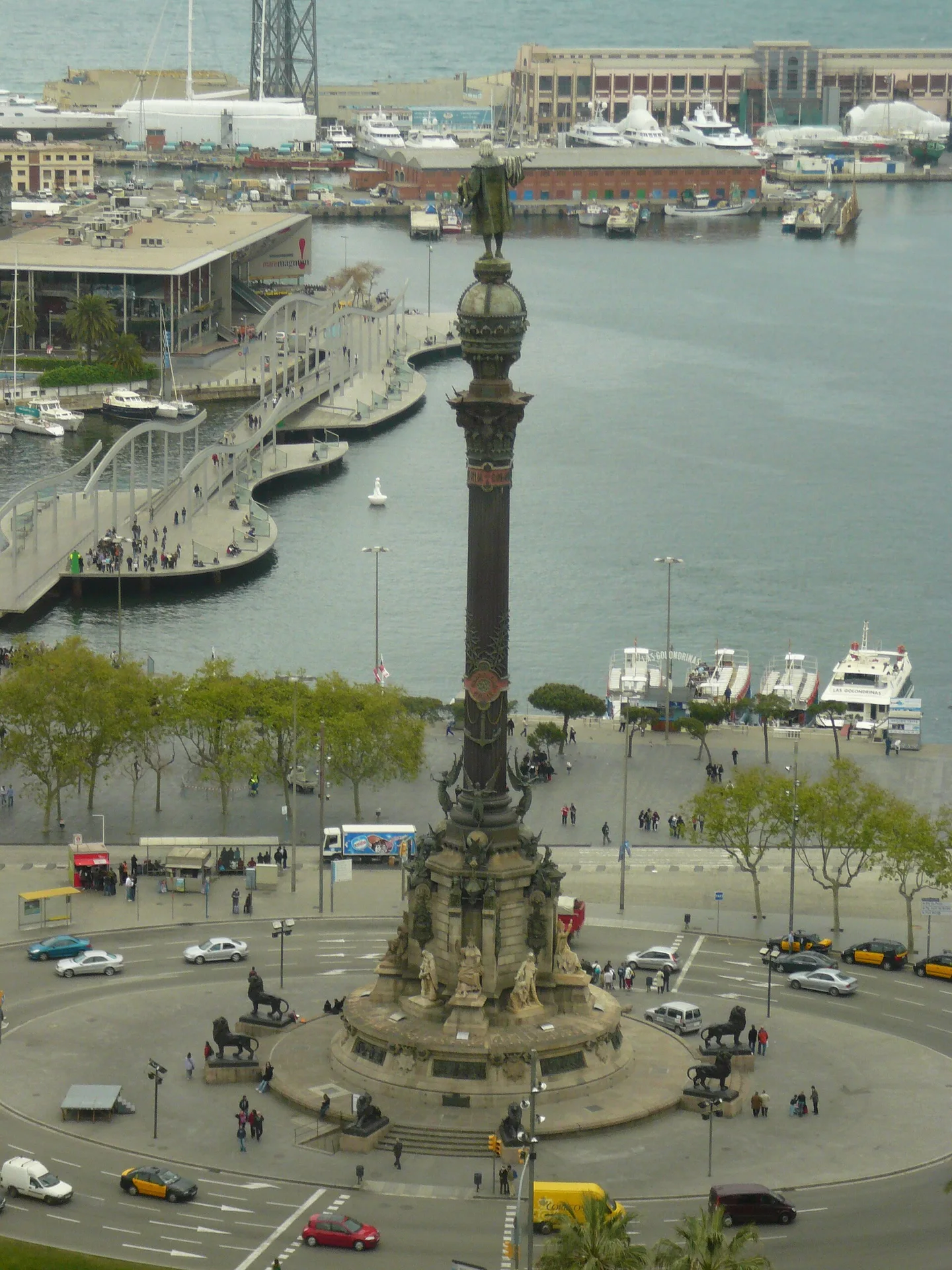
The overview comes from above
The second photograph looks down from a nearby building towards the Columbus monument and Rambla de Mar. This height clarifies the relative positions of shoreline, harbour and pedestrian link, separating landmarks that merge more readily at ground level.
Its camera position is not a promise of public rooftop access. A person on the bridge will see a different arrangement. Use the overview for context without inventing a climbing route or trying to reproduce it from an impossible pavement position.
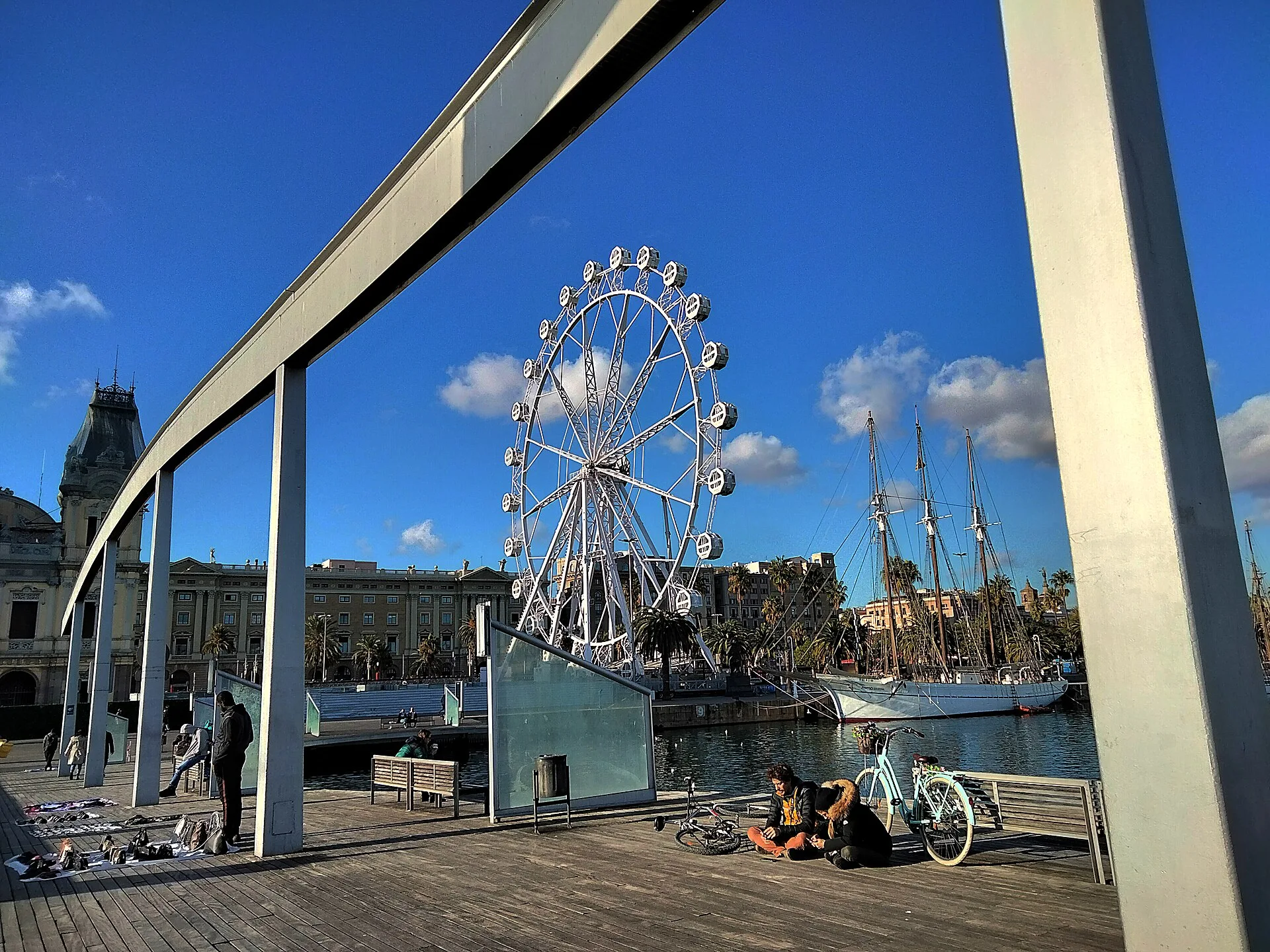
Pausing shares space with passing
The third view returns attention to the waterside walkway. Water encourages people to pause, while a bridge remains a route for others. Those activities require different speeds and amounts of space within the same connection.
Choose a stopping place that leaves passage clear, and follow any local controls. Historical photographs cannot establish present crowd levels, surface conditions or accessibility facilities. Those details need current information and observation.
Read the bridge within the harbour
Keep two directions in mind: where people are going on the deck, and where boats need to travel on water. The movable section becomes easier to understand as part of a functioning harbour rather than only a photographic attraction.
For a real visit, check current port information and the approach to the walkway. These independently dated images cannot predict opening times for the bridge. An ordinary waterside walk needs no unverified rooftop or boat excursion added merely to collect every pictured angle.
References
These sources inform the essay’s historical and local context. Its observations and interpretations are original to WalkThere.
Port Vell
Rambla de MarPort authority description of the 1994 design, connections and rotating bridge.
Barcelona Turisme
Port VellOfficial tourism context for Port Vell and the urban waterfront.
More journey background
Related journey sources
- Plaça de Catalunya — Barcelona Turisme
- Boqueria Market — Barcelona Turisme
- La Boqueria Market — Generalitat de Catalunya
- History of La Boqueria — La Boqueria
- La Boqueria market — La Boqueria
- Plaça Reial — Barcelona Turisme
- Mirador de Colom — Barcelona Turisme
- 19th-century Barcelona — Barcelona Maritime Museum
- Rethinking Columbus Day — Smithsonian National Museum of the American Indian
- La Rambla transformation — Barcelona City Council
- La Virreina Centre de la Imatge — Barcelona Turisme
- The history of the Liceu — Gran Teatre del Liceu
- Basilica of Santa Maria del Pi — Barcelona Turisme
- The Royal Shipyards of Barcelona — Barcelona Maritime Museum