
Bangkok Old City: beyond the palace wall, find the gate
Read walls, thresholds and river approaches around the Grand Palace, Wat Pho and Tha Tien through three different photographs and official visitor references.
Bangkok Old CityObservation essay
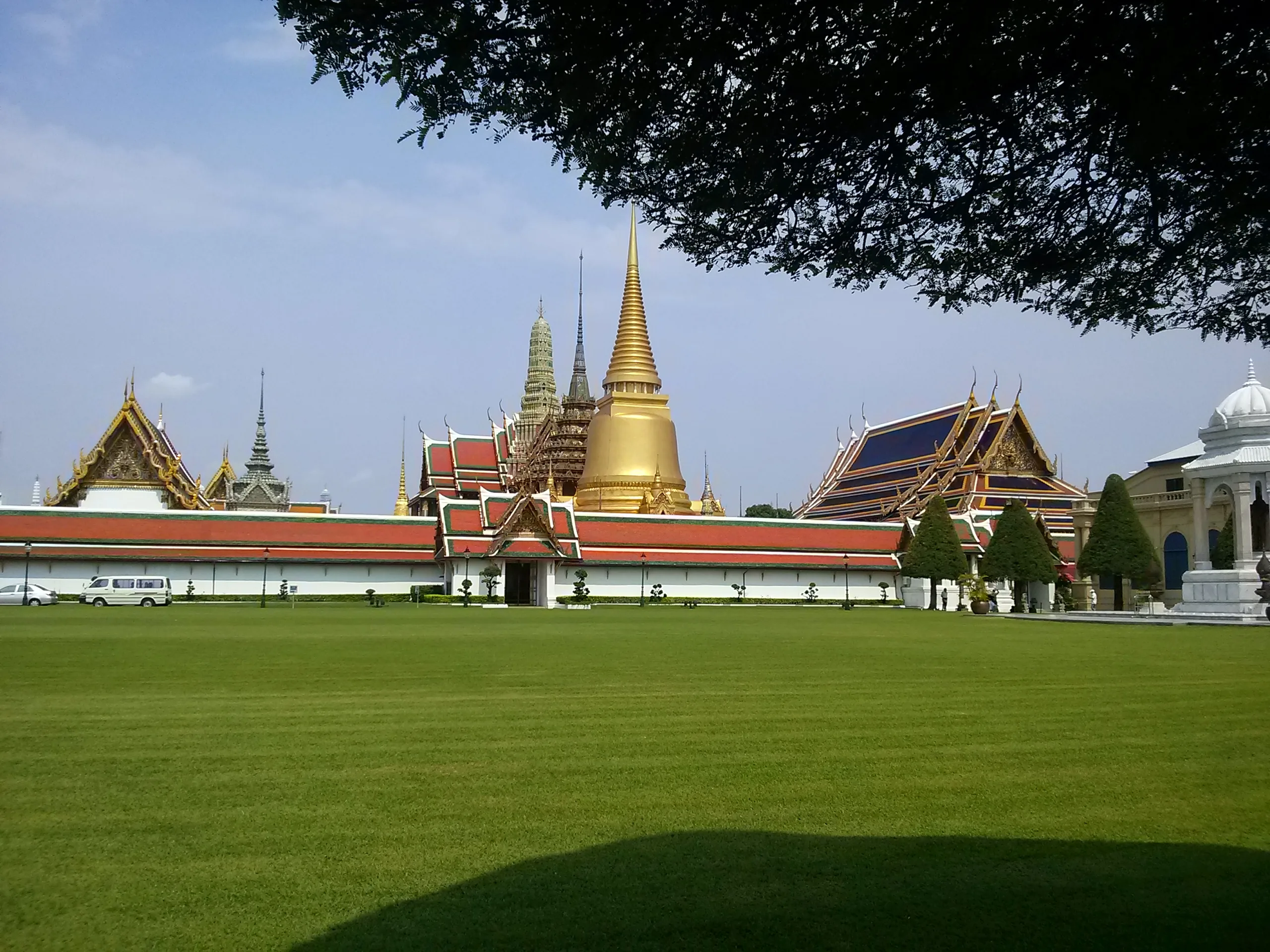
A roof arrives before an entrance
The palace photograph makes its white wall and rising roofs immediately recognisable. Recognition is not the same as access. The eye may feel that it has arrived while the route along the boundary still continues.
A map reduces a destination to a point and a photograph presents a frontage. On foot, it may be a long edge with a particular opening. Reading the wall as a line before choosing a door makes the setting easier to understand.
Gate names carry dates
The palace FAQ records a visitor entrance change from Viset Chaisri Gate to Mani Noppharat Gate from 10 January 2024. The building retained its identity while the opening used by visitors changed. An older image cannot automatically provide current directions.
Gate names seem less memorable than decorated roofs, yet omitting them can leave the visitor to discover the extra distance. In this kind of information, a name and date may be more useful than another description of grandeur.

The street continues its work
Public space beside the palace remains part of a working city. Roads, corners and waiting places have their own uses. Looking away from the roofs helps distinguish somewhere to pause from somewhere needed by people passing through.
Destination photographs often remove competing activity. Walking means sharing routes with others. A small group consulting a map can occupy a substantial part of a passage; stepping aside first is a simple way to make the encounter easier.
The temple brings the view closer
The Wat Pho photograph shifts attention to the reclining figure and nearby interior elements. A single position does not easily encompass the whole. The distance changes from roofs glimpsed beyond a wall to details enclosed within a building.
These images do not establish a continuous passage off the street. Admission and local etiquette belong to a separate visit. Together, they show different ways of directing attention: withholding much of a place behind a boundary, or bringing portions of it close to the viewer.

At Tha Tien, the threshold faces water
The Tha Tien frontage returns openings to a more familiar human scale. Repeated shop entrances offer different possibilities from a long palace wall funnelling access towards a specified gate. Doorway scale helps shape how a street is used.
The palace’s transport information includes a river approach. The waterfront may therefore begin someone’s route rather than conclude it. Looking towards the water from a street and searching for a street after landing reverse the order in which the neighbourhood becomes legible.
Leave room to choose
A list containing the palace, Wat Pho and Tha Tien appears straightforward. Decisions about entry, gates and returning to the street account for part of the actual journey. Current official information should guide tickets, clothing and opening arrangements.
Remaining on public streets is also a valid choice. Walls, gates and waterside approaches supply their own sequence of observations: what can be recognised from afar, what requires closer checking, and what appears only after turning a corner. Ordinary movements begin to explain the old city’s structure.
References
These sources inform the essay’s historical and local context. Its observations and interpretations are original to WalkThere.
The Grand Palace
FAQDocuments the names and date of the 2024 visitor entrance change.
The Grand Palace
Practical InformationOfficial information on transport approaches, clothing and visitor preparation.
More journey background
Related journey sources
- Schedules — The Grand Palace
- Buy tickets — The Grand Palace
- Visit plan — Wat Pho
- Wat Pho — Wat Pho
- Pak Khlong Talat Night Market — Tourism Authority of Thailand