
Asakusa: An Old Landmark with a Younger Gate
Follow Kaminarimon’s rebuilding, Nakamise’s shops and Senso-ji’s traditions to the Sumida River, separating a place’s long history from the age of its buildings.
Asakusa and the SumidaObservation essay
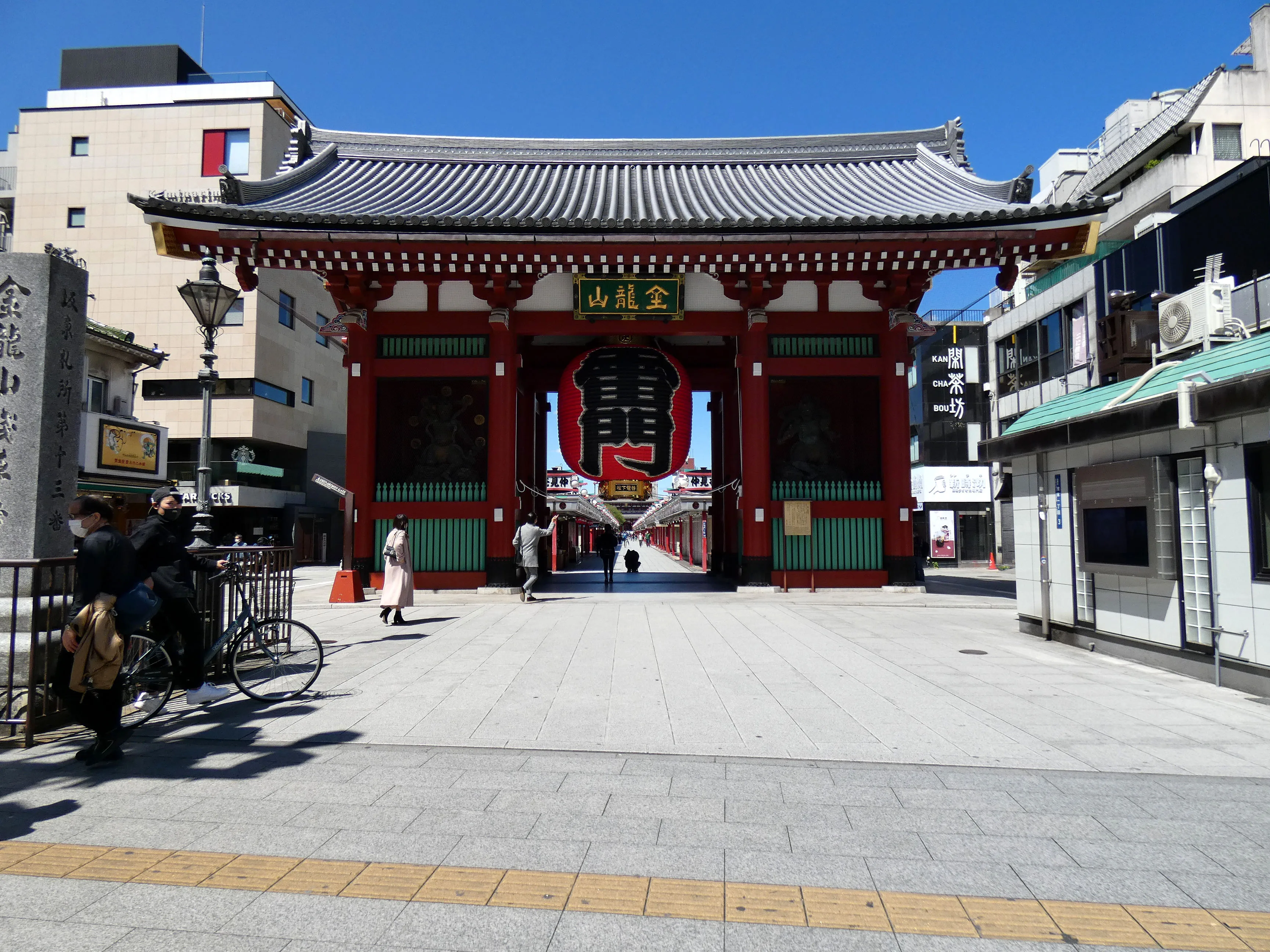
A familiar gate has a more recent date
Kaminarimon’s lantern can make the gate seem as old as Asakusa’s identity. Senso-ji records its destruction by fire in 1865 and the rebuilding of the present gate in 1960 through a donation from Konosuke Matsushita. The history of a place and the age of its standing structure are different questions.
That date does not diminish the landmark. Rebuilding restored a point of arrival, recognition and gathering after an interruption. The familiar form carries a history of recovery as well as continuity.
Commerce shares the approach
Beyond the gate, Nakamise lines the approach with shops. The temple’s introduction names traditional toys, cakes and souvenirs. Beyond a shopping list, their position shows everyday commerce meeting the journey towards a religious destination.
People move at different speeds: some continue along the centre, others stop to choose something. Shops encourage pauses while the axis draws visitors onwards. A frontal photograph can make this look like one orderly corridor, although its use requires constant negotiation of space.
The origin account belongs to religious tradition
Senso-ji relates its beginnings through fishermen finding a Kannon image in the Sumida River. This should be presented as the temple’s inherited religious account rather than an event independently established by a photograph of the river. It connects water, local livelihoods and devotion.
The distinction allows the tradition to be taken seriously without changing its evidential status. A visitor can understand how a place narrates itself while remaining clear about the nature of that narrative. The later walk to the water gains context without becoming proof of the story.
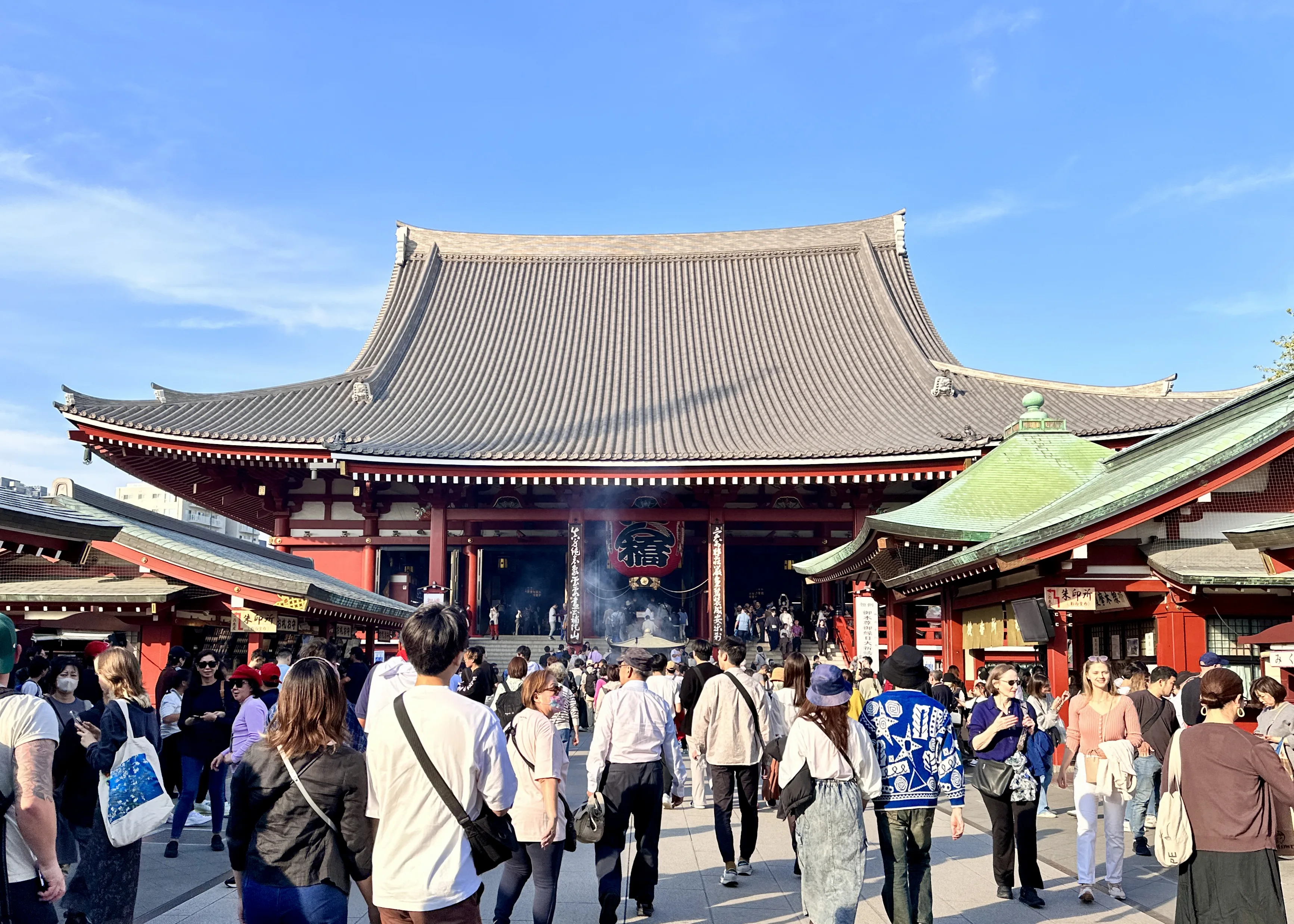
A Buddhist temple beside a Shinto shrine
Senso-ji and nearby Asakusa Shrine are easily merged by unfamiliar visitors because of their names and proximity. Their religious identities and spaces should be distinguished. Following the main axis towards the temple hall explains only part of the precinct.
This matters to the visit: leaving the busiest approach does not necessarily mean leaving a religious setting. Entrances and courtyards organise different activities. Recognising the place one is entering is more useful than treating every roof as part of one generic temple image.
At the river, the scale changes
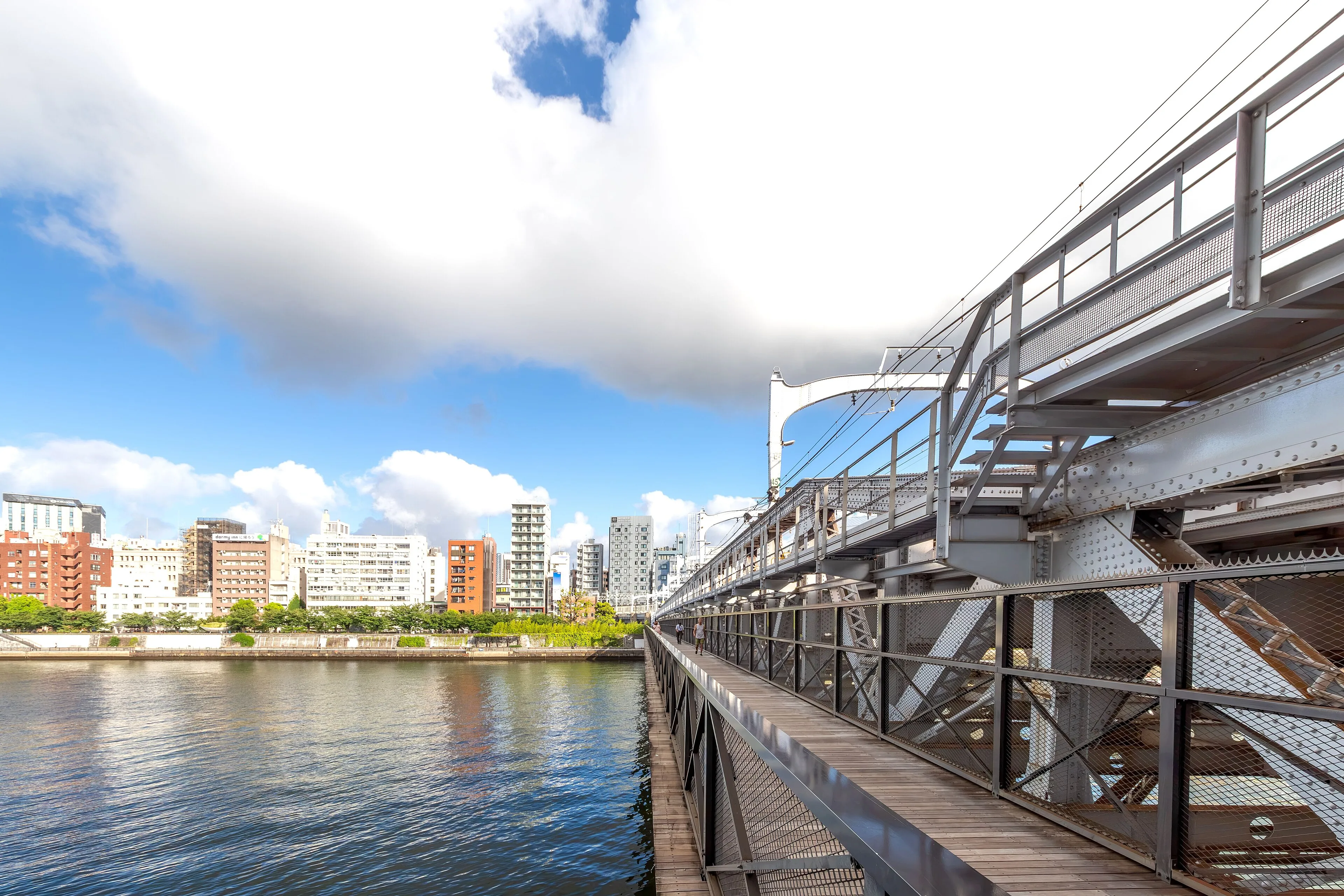
The Sumida opens a view that the gates and shopfronts enclose. Buildings across the water have distance between them; bridges make connections legible. A gateway and a river crossing both organise passage, but at very different scales.
Tokyo’s tourism authority introduces the Sumida River Walk connection towards the Skytree side. Crossing offers another way to experience the water, subject to current access arrangements. The riverbank reconnects Asakusa with the wider city rather than simply ending a temple itinerary.
An old place need not contain only old materials
Rebuilt gates, working shops, religious narratives and newer connections coexist in Asakusa. They need not be forced into the image of an unchanged Edo streetscape. Different ages are part of the place’s present identity.
Follow those threads through a short visit: rebuilding, trade along the approach, the temple’s account and connections across the water. They leave a more particular memory than lantern and crowd alone. Longstanding identity and younger buildings can belong to the same landmark.
References
These sources inform the essay’s historical and local context. Its observations and interpretations are original to WalkThere.
Senso-ji
Senso-jiTemple information on Senso-ji’s history and rebuilding.
Go Tokyo
Sumida River WalkUrban context for the Sumida riverbank and the Asakusa area.
More journey background
Related journey sources
- Asakusa — Go Tokyo
- Riverside walks — Go Tokyo
- ご案内 — Senso-ji
- 浅草神社について — Asakusa Shrine