
Florence’s Piazza della Signoria: why the David copy matters
Separate an artwork from its original object and its public setting, from the palace doorway to the Loggia dei Lanzi.
Florence Historic CentreObservation essay
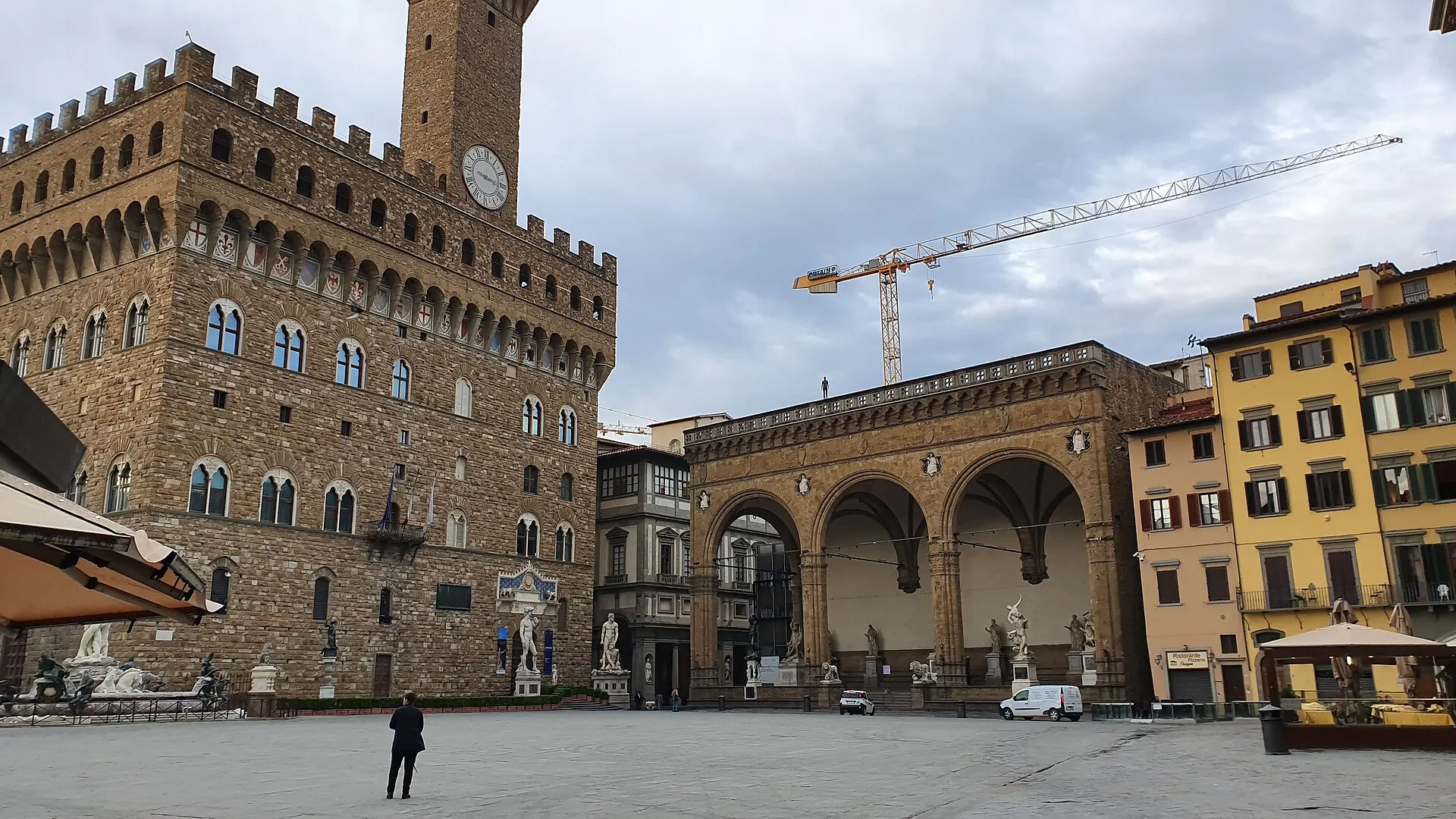
Which David are you looking at?
Recognising David is not the same as identifying the object in front of you. The figure outside Palazzo Vecchio is a copy; Michelangelo’s original is in the Accademia. Establish that distinction before a photograph becomes an inaccurate account of a museum visit.
There is still a reason to look. A gallery offers an encounter with the original object. The square offers a relationship between a figure, a government building and people passing its entrance. Those are different questions, and the copy can help answer the second.
Keep the doorway in the frame
A tightly framed statue becomes an isolated silhouette. Widen the view and the palace entrance provides a scale: a human figure stands beside a door, and that door belongs to a much larger wall. Follow those proportions before concentrating on the familiar pose.
Try making two records of the same position, one of the sculpture and one including its surroundings. The first identifies the subject; the second explains the encounter. The outdoor copy’s connection to the city is easier to describe when the city remains in the picture.
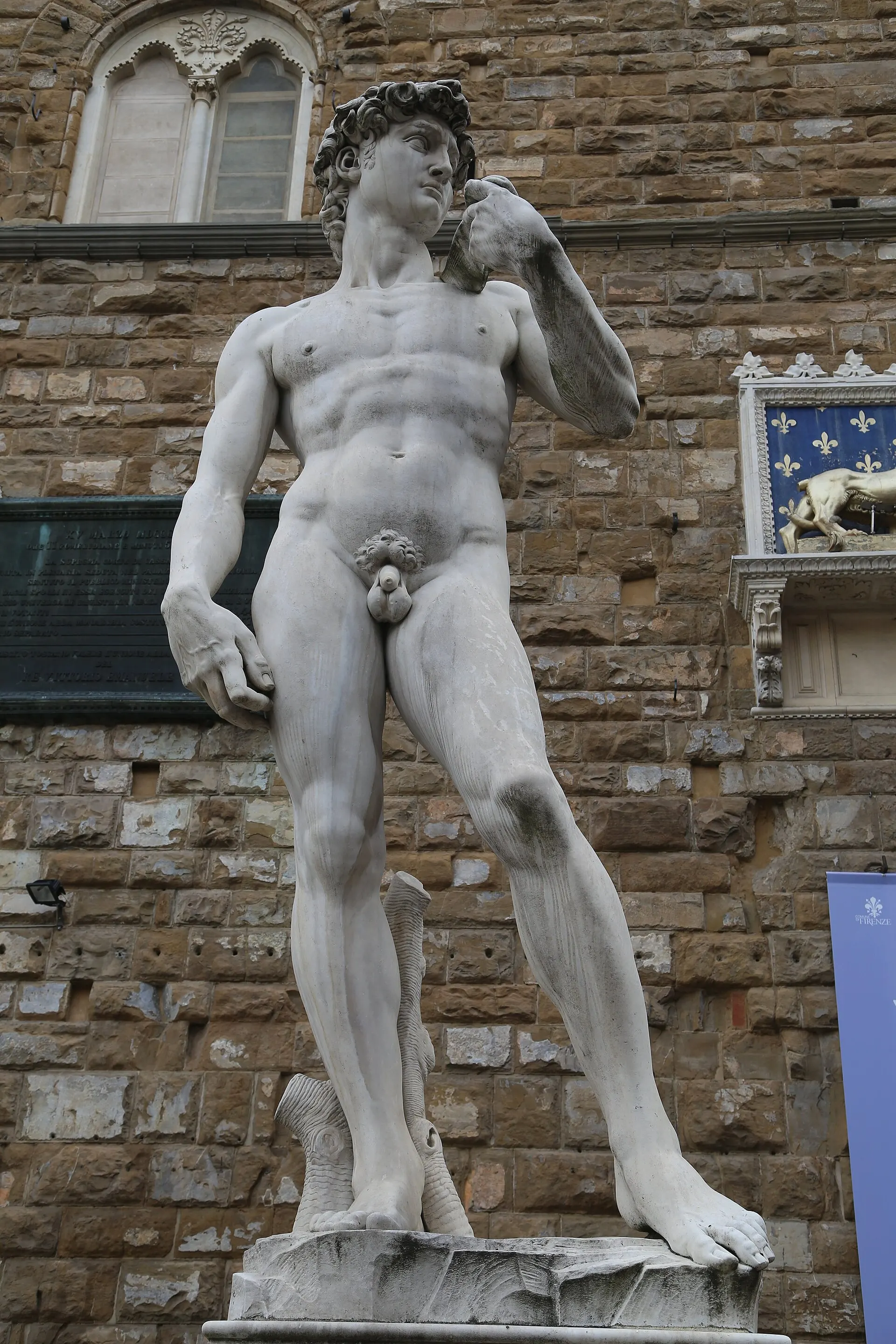
Identify objects individually
The municipal guide also identifies the outdoor Marzocco and Judith and Holofernes as copies, with the originals in the Bargello and Palazzo Vecchio respectively. This information belongs to particular works. It does not justify calling every sculpture nearby a replica.
A useful note separates four things: title, maker, material and whether the object on display is an original. An aged surface cannot settle all those questions. Reading a label is more reliable than guessing from appearance, and a short accurate list is more useful than a long uncertain one.
A roof for public life before sculpture
The Loggia dei Lanzi began as a covered setting for public ceremonies and gatherings, according to Florence’s official account. Its later use for sculpture gives those large openings a second role. The architecture is part of how the works are encountered.
The roof closes off the sky while the arches retain a connection to the square. A person looking at a sculpture can still register movement outside. Compare the view from the paving with the arrangement visible from permitted viewing positions: the individual work becomes part of a larger display.
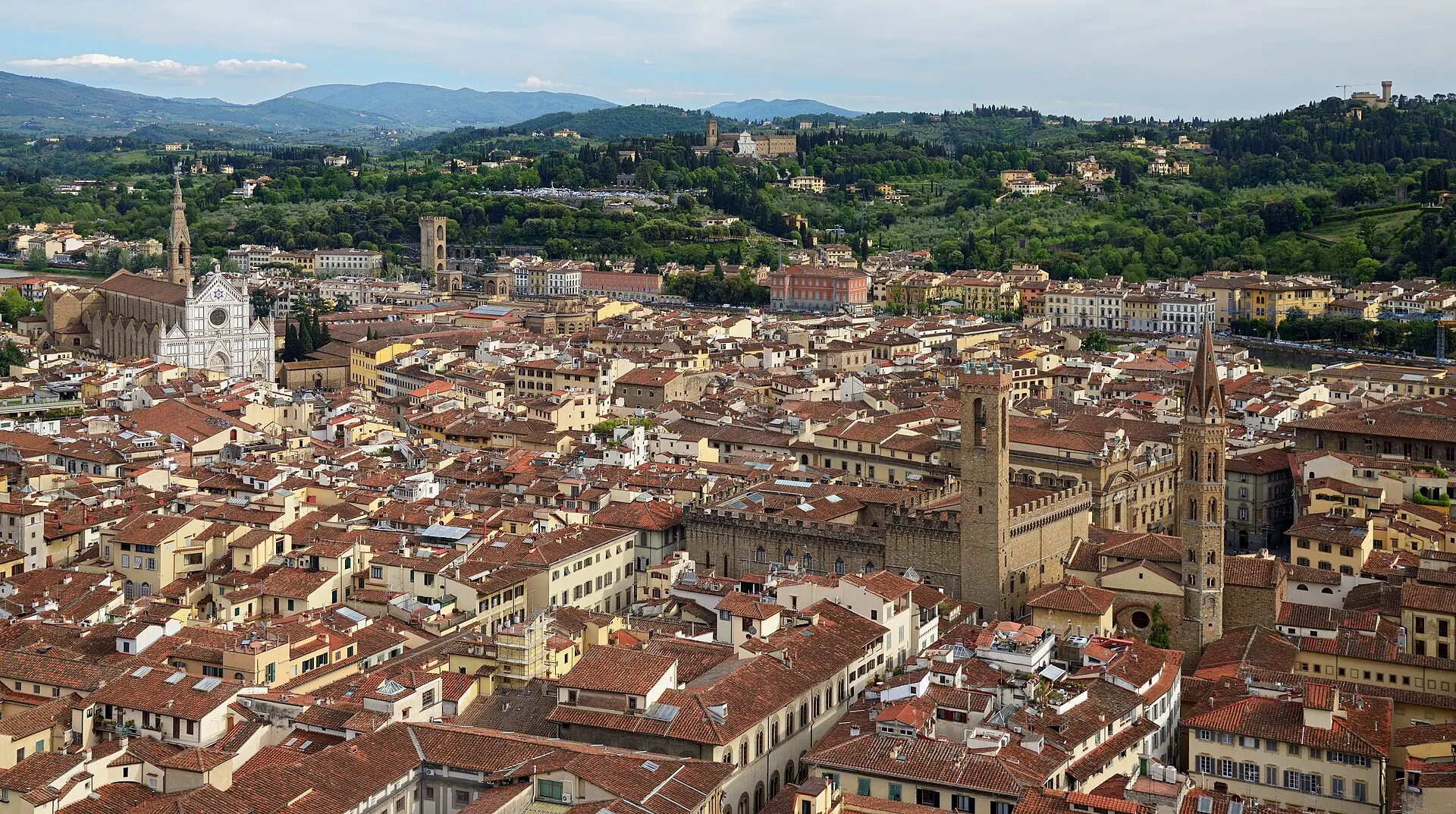
A distant photograph answers another question
The elevated photograph here was taken from Giotto’s bell tower. It explains the square’s place among surrounding streets and roofs; it is not the view from the paving. Sculptural detail recedes as the pattern of openings and built edges becomes easier to recognise.
Pair that image with the close view rather than asking either to do both jobs. One helps identify an object, the other locates it. Recording the elevated camera position also prevents a useful contextual photograph from being mistaken for an ordinary street-level view.
Leave with a question for the original
If you plan to visit the Accademia, ask what you might notice when the palace doorway no longer frames the figure. If you remain outdoors, study the relationship between palace, sculpture and loggia. Check museum admission separately when arranging an interior visit.
A precise caption can simply say “the David copy outside Palazzo Vecchio”. That wording does not diminish the experience. It keeps the object and its setting distinct, allowing a very familiar image to raise a worthwhile question about how a city displays its art.
References
These sources inform the essay’s historical and local context. Its observations and interpretations are original to WalkThere.
FeelFlorence · Municipality of Florence
Piazza della SignoriaIdentifies outdoor copies and the locations of their originals.
FeelFlorence · Municipality of Florence
Loggia de’ LanziThe loggia’s change from civic gathering space to sculpture display.
More journey background
Related journey sources
- Piazza del Duomo — FeelFlorence · Municipality of Florence
- Piazza della Repubblica — FeelFlorence · Municipality of Florence
- Ponte Vecchio — FeelFlorence · Municipality of Florence
- History of Pitti Palace — Uffizi Galleries
- In Oltrarno, between Pitti, Santo Spirito and Porta Romana — FeelFlorence · Municipality of Florence
- Orsanmichele, cuore della città — FeelFlorence · Municipality of Florence